
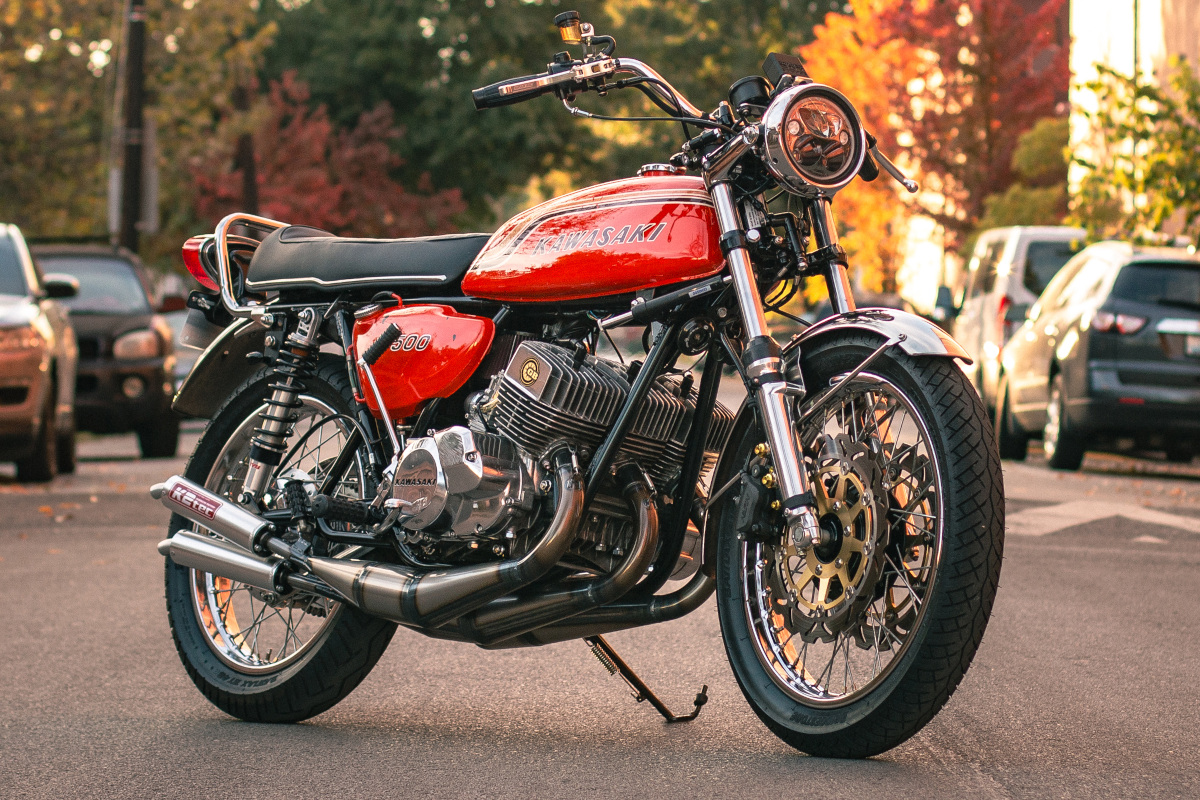
 H1 Mach III from Golden Boy Garage: “This thing feels possessed by a demon…”
The Kawasaki H1 Mach III 500 remains one of the most storied — and feared — motorcycles ever produced. At the time, acceleration was the name of the game, and Kawasaki went all-out to build a 500 two-stroke triple capable of producing 60 bhp and quarter-mile times of 13 seconds or less. At its introduction in 1969, Kawasaki claimed it was “the fastest and best accelerating road machine ever produced, being capable of 124 mph and 12.4 sec. for the standing start quarter mile.”

For $995, the aspirant speed freak could buy a machine that could, in stock trim, out-accelerate nearly anything on two or four wheels…if you could survive it.
“It wasn’t the technology which socked everyone between the eyes, it was its unique combination of raw, bad-mannered power and supposedly homicidal handling. Nearly 60bhp was claimed for the Mach III, most of it crammed into a powerband which bit like a starving Mako shark at 6000rpm and ran out just 2000 revs later. If the performance was supposed to make your hair stand on end, the handling was said to be enough to make it fall out.” –Bike magazine, 1983
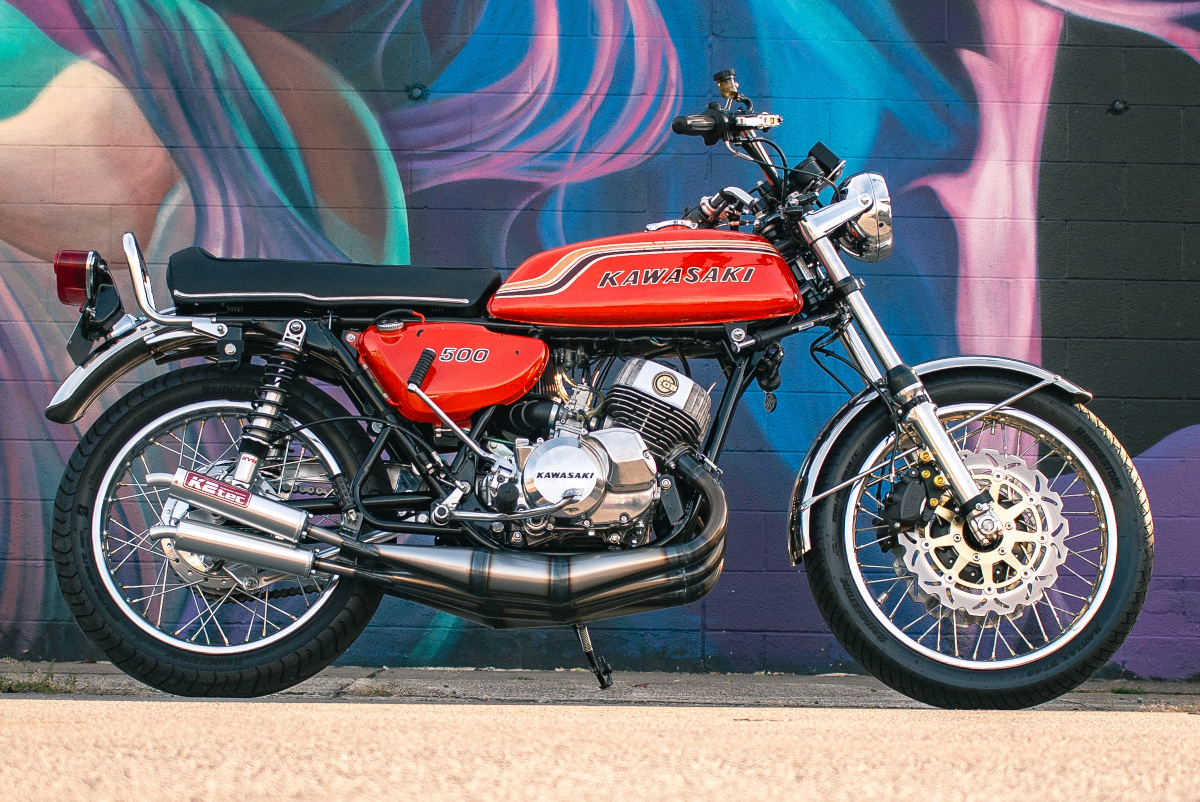 The H1 soon earned the nickname “The Widowmaker” — a moniker it carries to this day. During this year’s Barber Vintage Festival, our buddy Jared Morris of Bullet Bob Moto — a bit of a two-stroke freak himself — put us onto this 1972 Kawasaki H1 build by Nate Berrier of Kentucky’s Golden Boy Garage.
Growing up, Nate’s father made it clear he wasn’t supposed to “get any bright ideas about motorcycles”…possibly because he himself had owned a Kawasaki triple in college.
“He’d said it had an electronic ignition and it felt like flipping a light switch when you opened the throttle. It was the fastest thing around, wasn’t worth racing anyone till a guy came by on a Z1. I presume that this bike, and his throttle discipline, were the reasons I wasn’t allowed to have a bike.” -Nate
Sadly, Nate’s father is no longer with us, but Nate thought an H1 might be a way to connect to his late father.
“I decided that when I felt I could handle it, I would find a triple of my own. I figured if I had an H1 I could feel the same things he did. He would be pretty upset if he knew I had one — I might not have had the balls to do it if he was still around.”
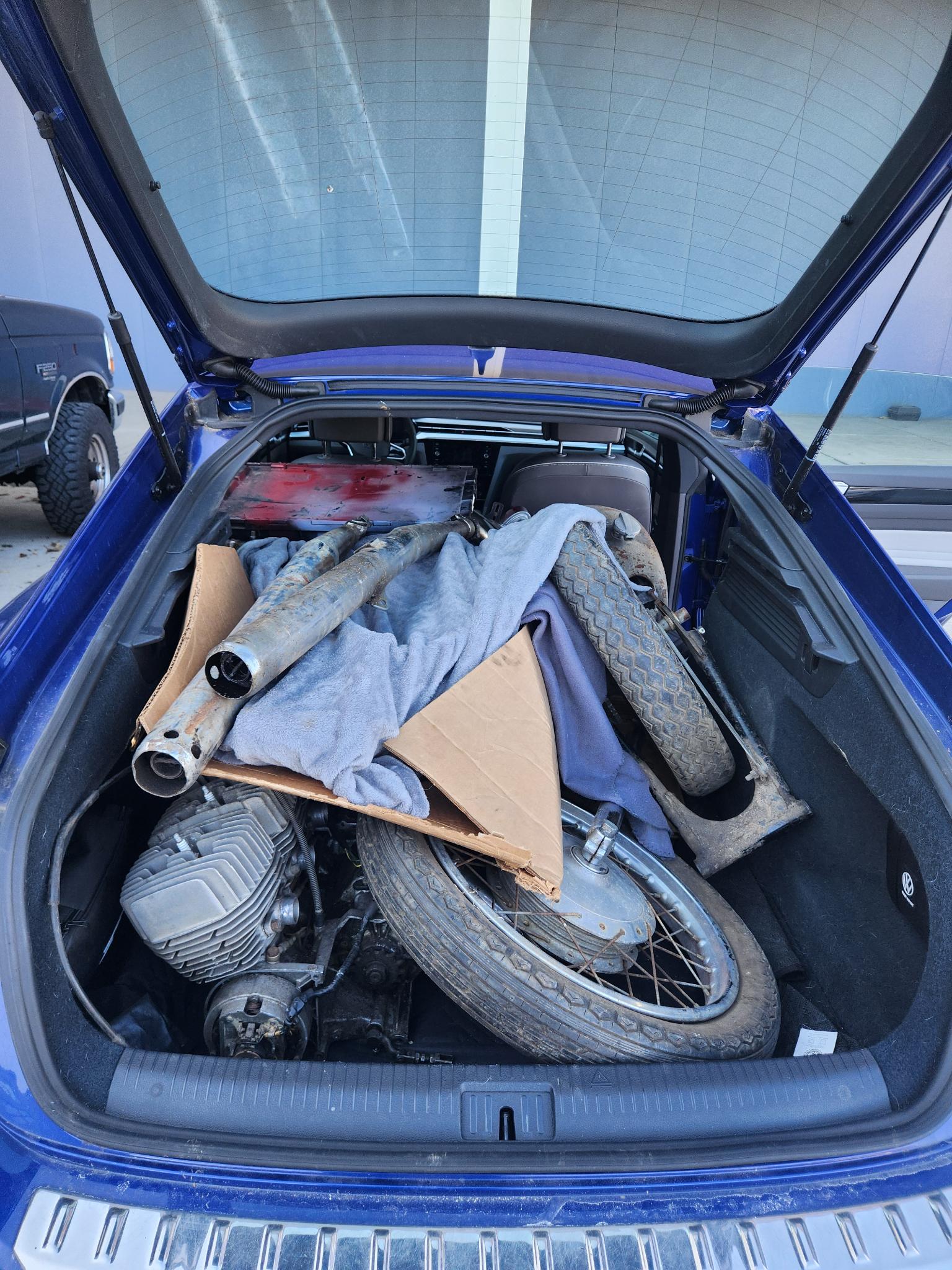
Nate picked up a ’72 Kawasaki H1C basket case from a friend. Initially, his goal was to build a “rough rider” that he could thrash without worrying about scratching the paint. However, when some friends in Louisville organized a big bike show called The Abyss, the project began to snowball — a process that so many of us know only too well…
“I am very particular in most things that I do. Knowing that my bike would be scrutinized by peers, the project enjoyed a bit more effort than I would have otherwise employed. (Some might say it spiraled a bit.)”
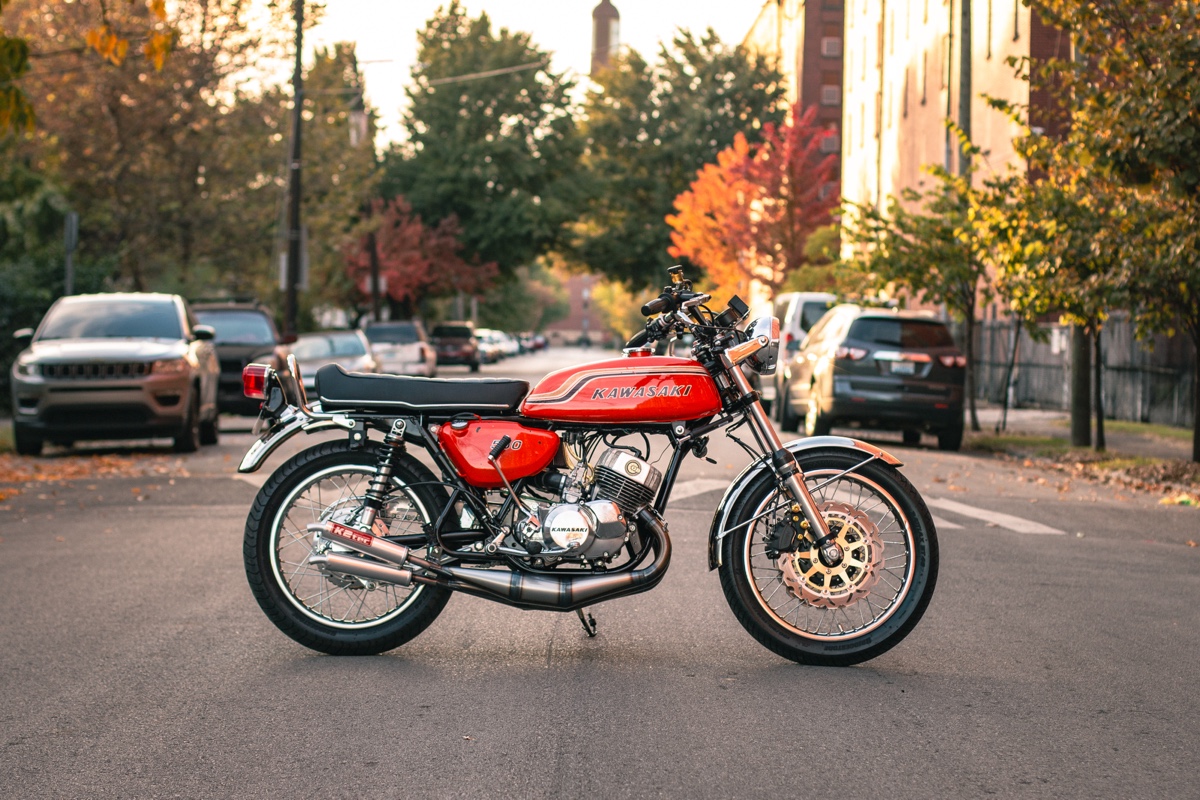
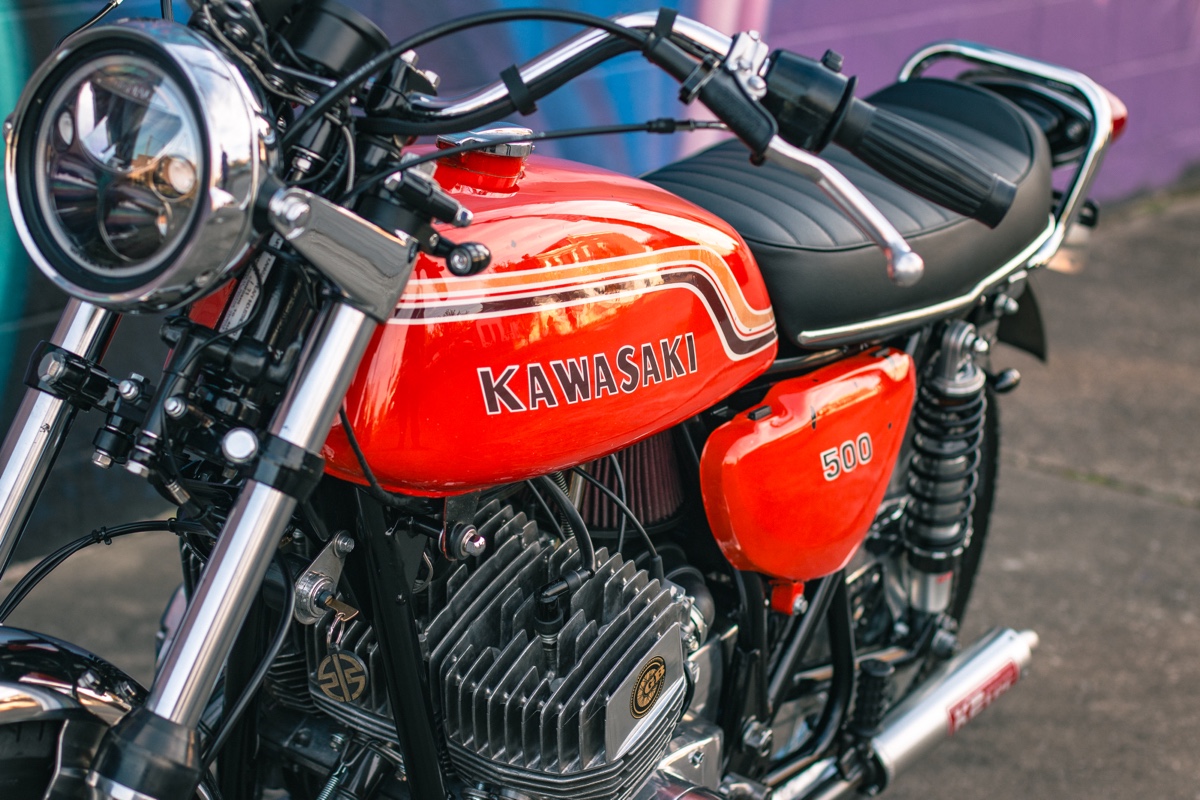
Nate goes into great detail in our interview below, enumerating the various modifications. Highlights include a very sexy dual front disc brake conversion with Ninja 650 calipers and a radial-mount master cylinder, custom-fabricated mount for the stainless front fender, 1974 (H1E) controls and wiring harness, ’74 triple-coil ignition with Rick’s Motorsport CDI and regulator/rectifier, CAD-designed / CNC-cut replacement frame mounts, and an arsenal of other parts that Nate designed in CAD and 3D-printed: headlight mount, indicator brackets, brake hose brackets, speedo sensor, CDI bracket, and even the throttle tube.
“I did a lot of CAD design and printing of exotic materials, which was quite the learning curve. It was immensely satisfying to see my own design come back in metal and have it fit perfectly. Two years ago I didn’t know how to weld, design parts, or 3D print!”
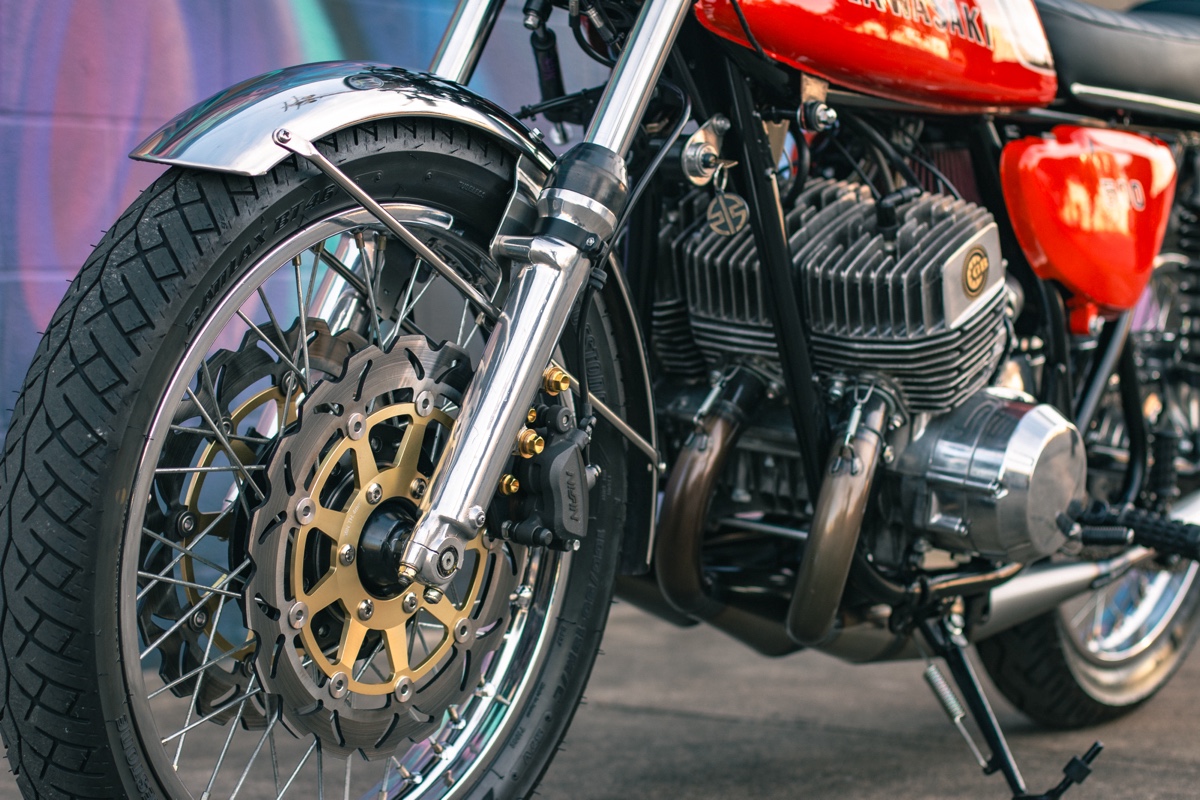
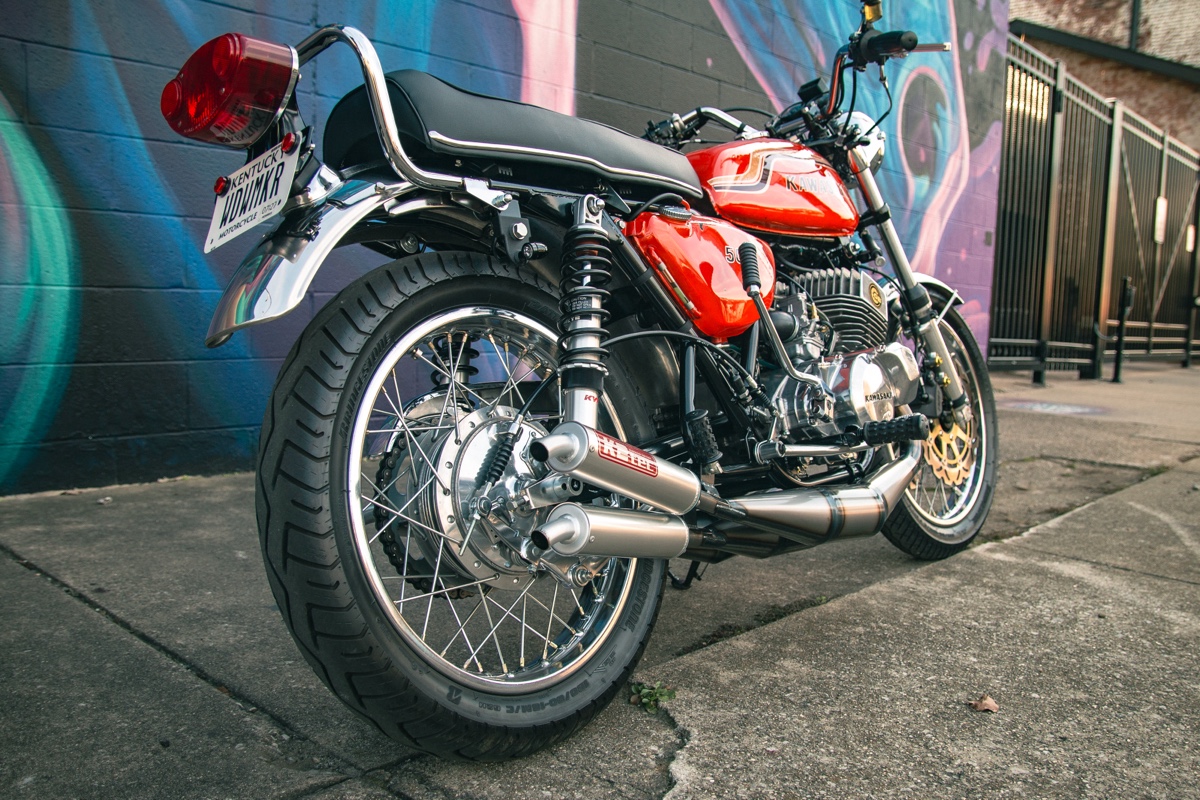
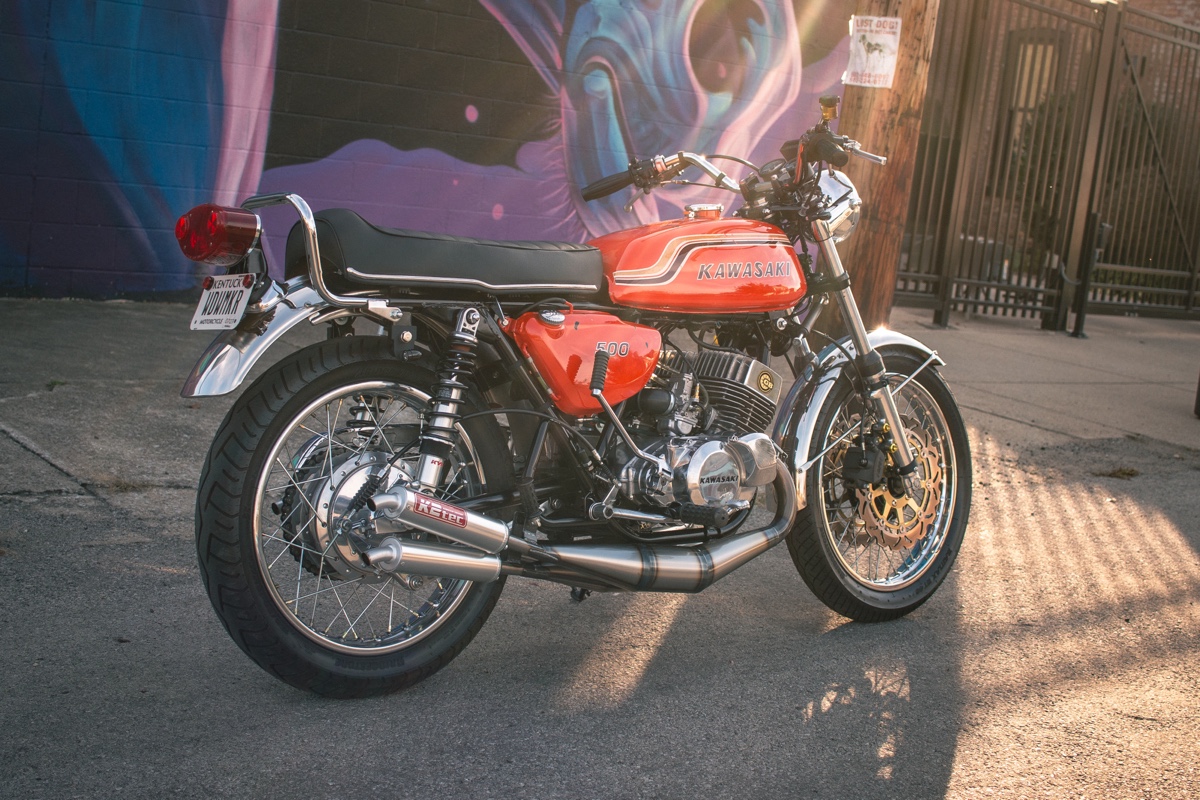
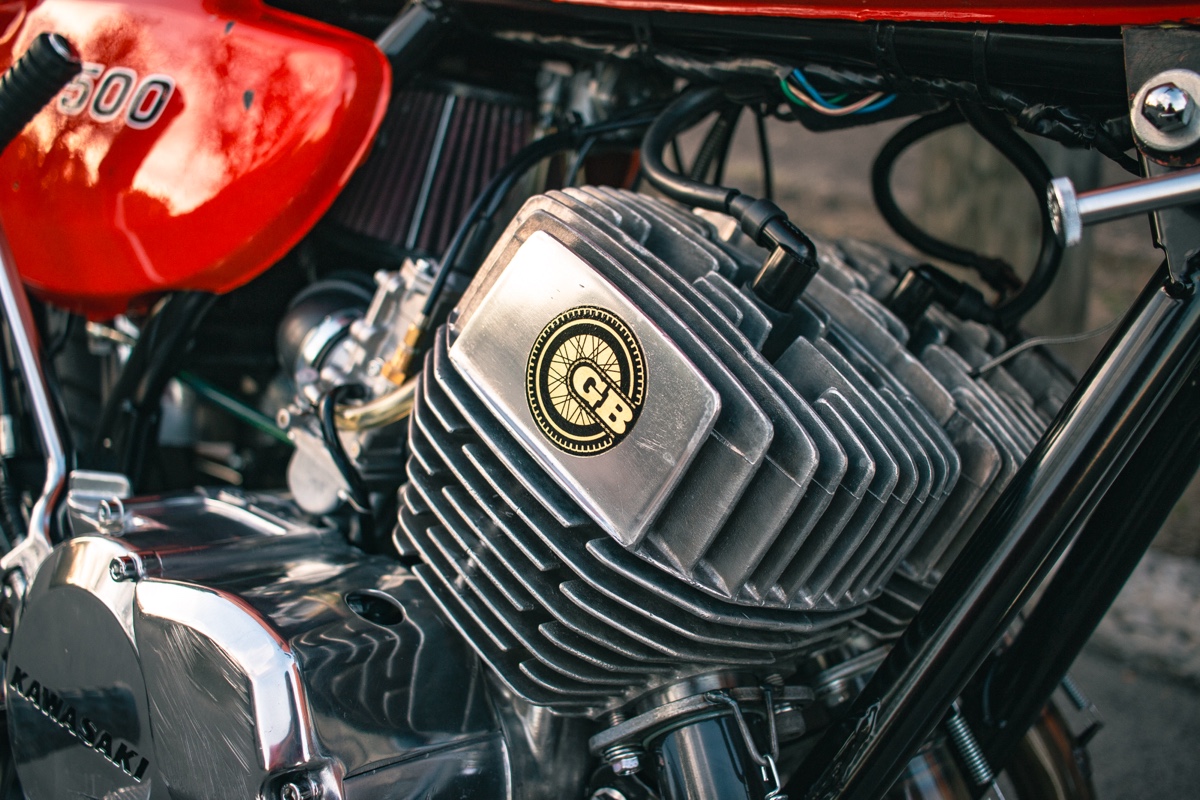
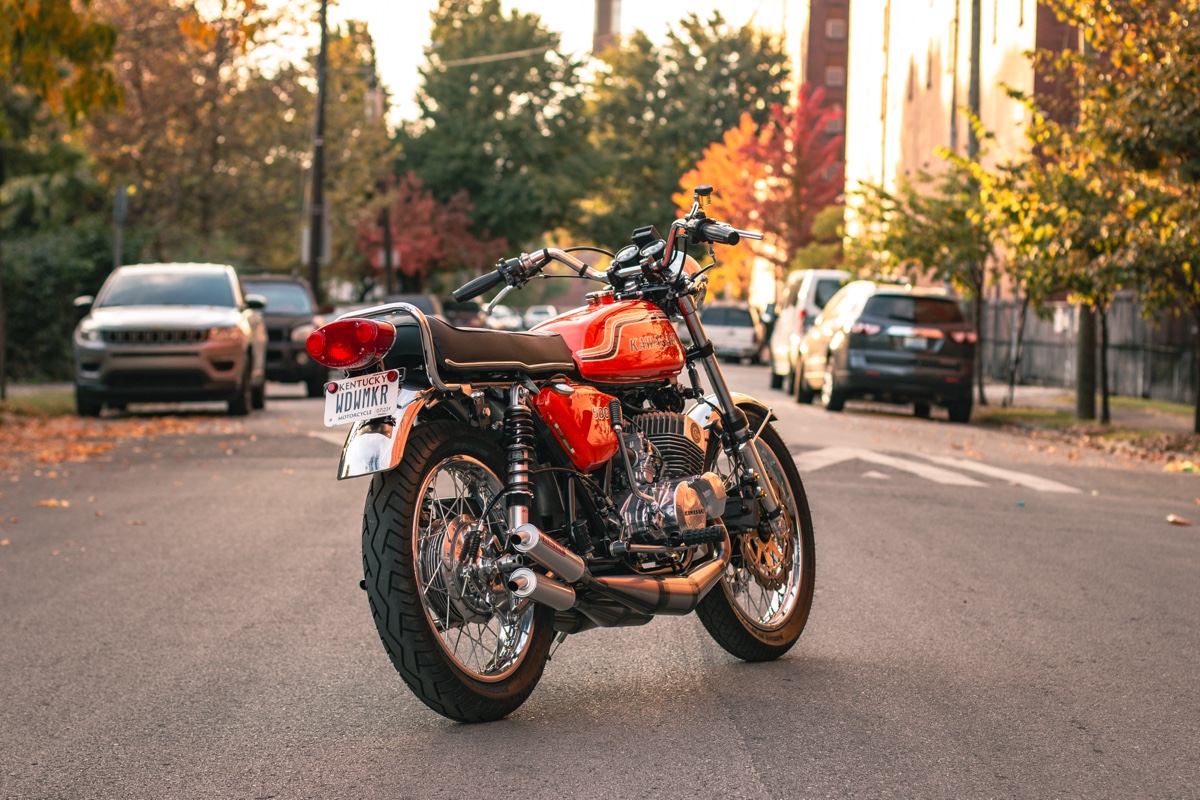
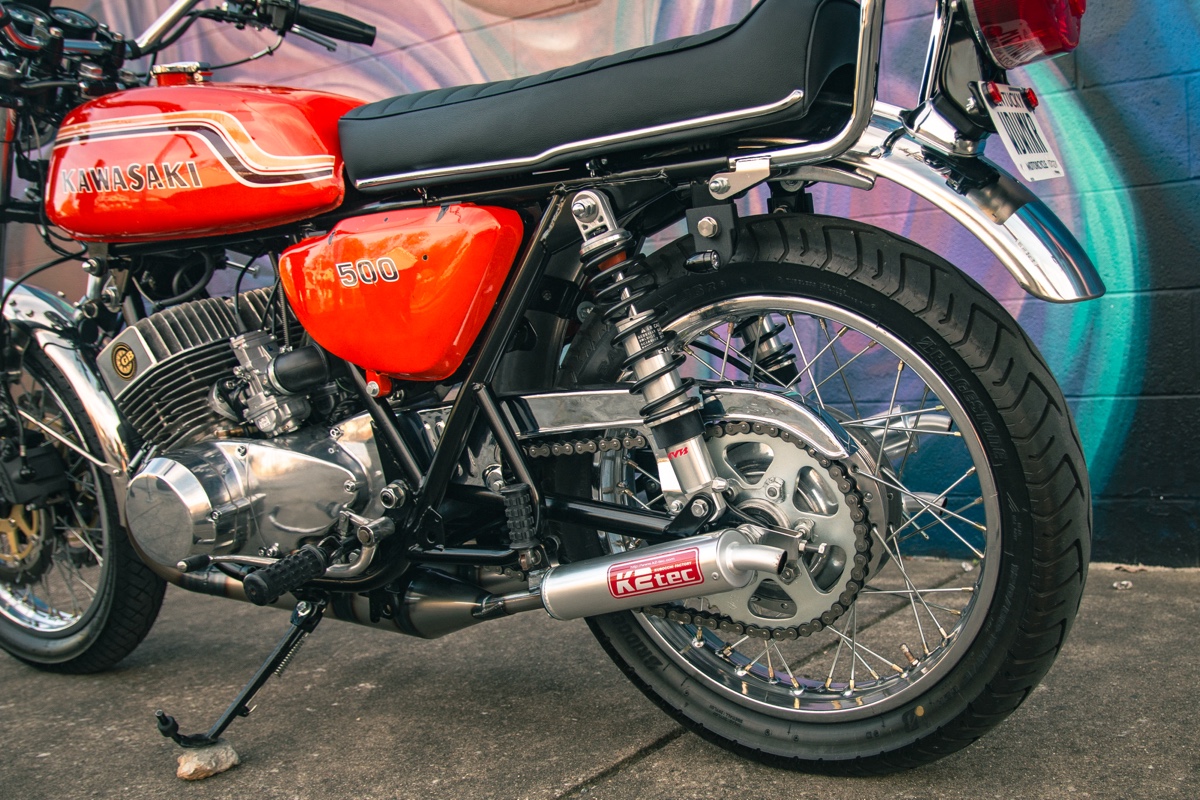
Klemm Vintage bored and blueprinted the engine, cutting a multi-angle squish band into the heads to avoid detonation on modern gas. Nate installed 28mm flat-slide Mikuni carbs and a set of handmade K2Tec expansion chambers. He even scored a “WDWMKR” license plate — perfect!
A few folks told Nate he’d be disappointed in the H1’s performance compared to modern bikes, but that wasn’t the case at all.
“I can tell you it’s exactly what I hoped for and more. When you open the throttle, you mostly hear the howl of the intake. There is nothing else like it. I get goosebumps when I kick it over, and a little trickle of adrenaline taking off.”
“Sure, a modern sportbike might be faster, but this thing feels possessed by a demon. It vibrates like mad, snarling and popping. It doesn’t like to cruise. You’re going like hell or you’re stopping.”
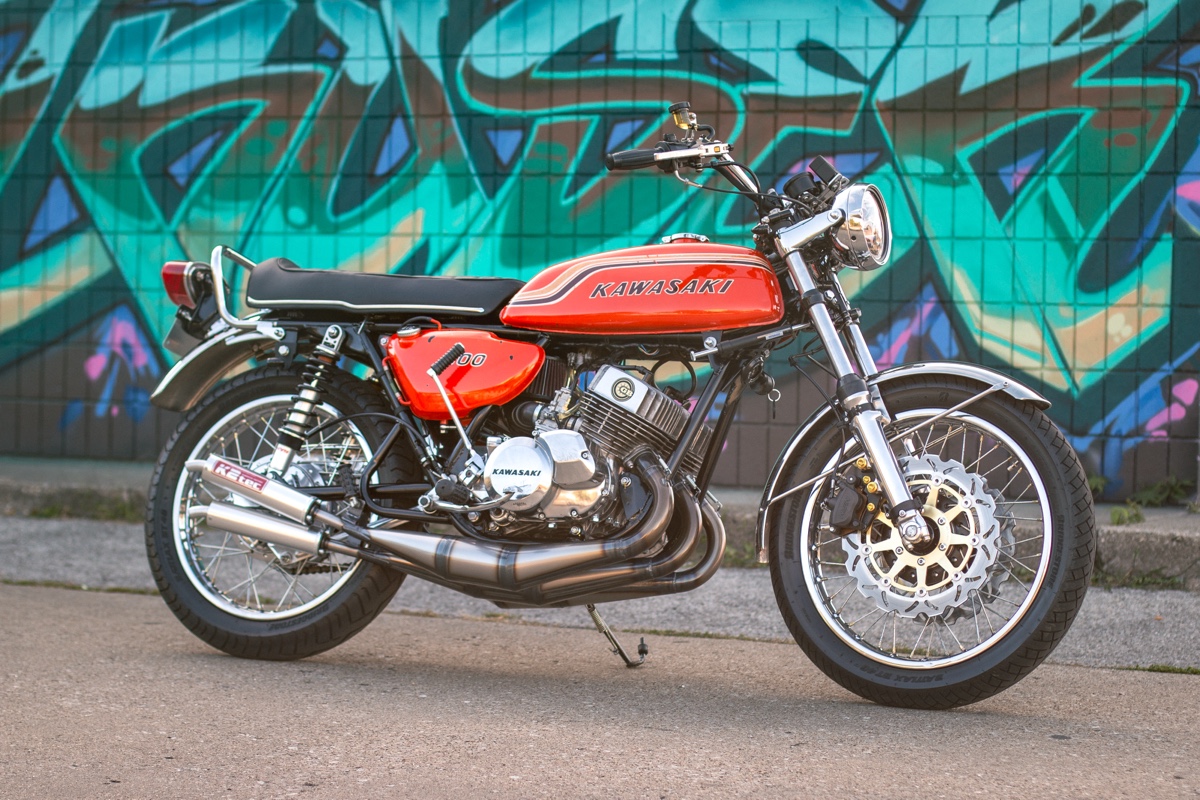
Even better, Nate learned an immense amount in the process of building this resto-modded H1 500. While his old man might have tried to warn him away from motorcycles, we know he’d be damn proud of what Nate’s learned and accomplished.
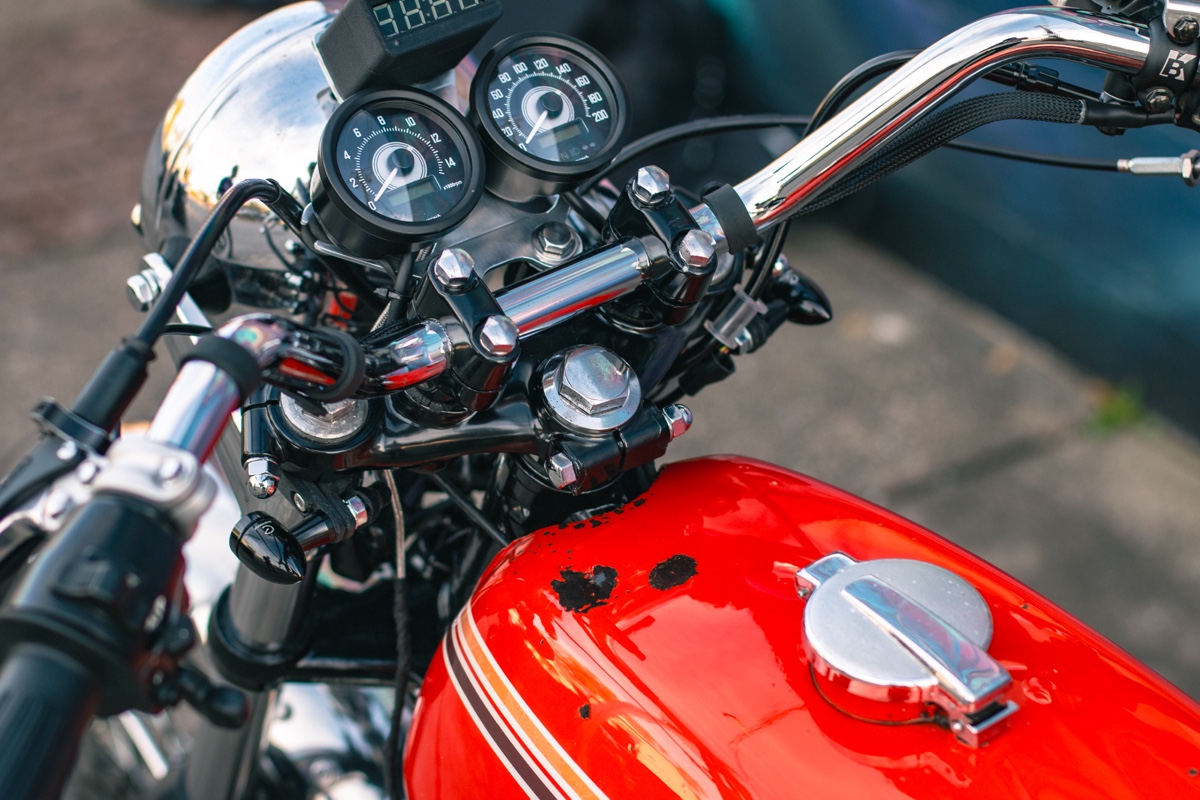
We’re thrilled to showcase this machine and the story behind it. Below you’ll find our full in-depth interview with Nate about the build, which includes many more details and shots courtesy of Julian Baker (@goggin_patrol). Nate, we look forward to featuring more of your work!
Kawasaki H1 500 Restomod: Builder Interview
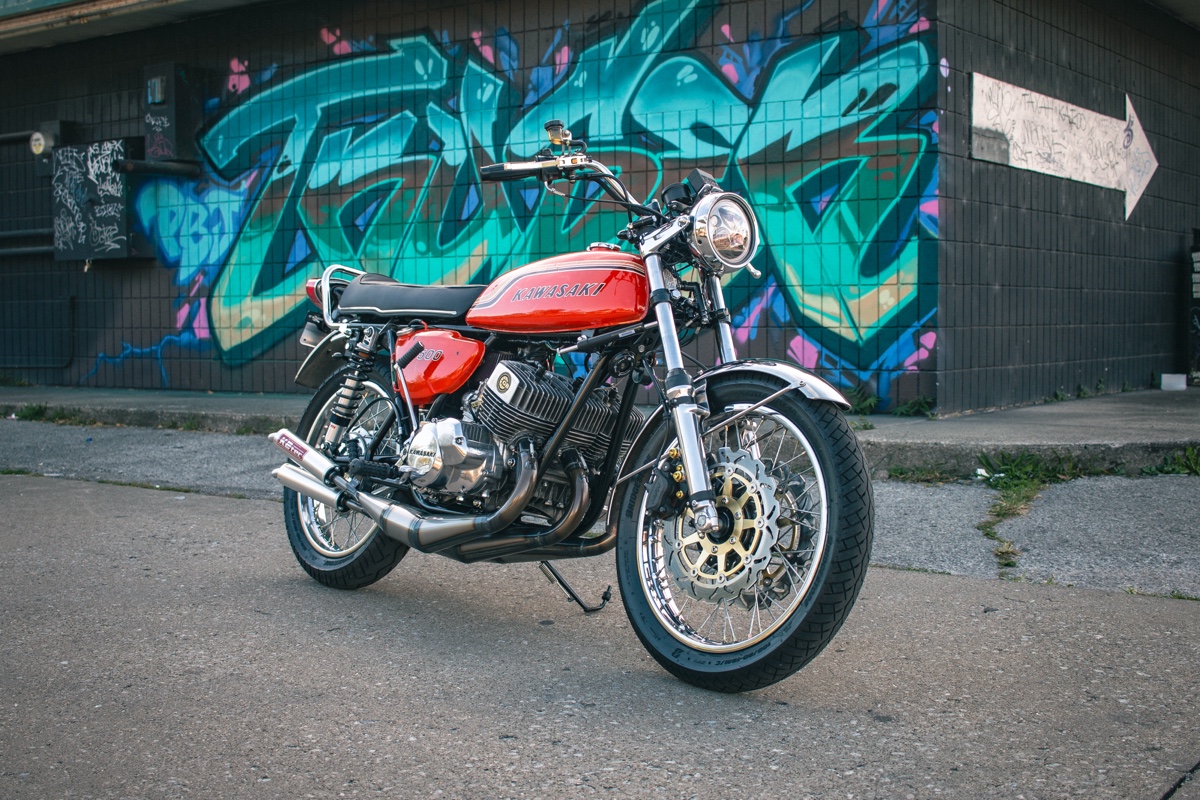
• Please tell us a bit about yourself, your history with motorcycles, and your workshop.
My name is Nate Berrier, and I go by Golden Boy Garage online (like the Shinkos). I wasn’t allowed to have a bike growing up; I was mostly satisfied with BMX bikes, so it was never an issue. Dad made it clear that we weren’t supposed to get any bright ideas about motorcycles.
I steered clear of bikes until 2019, when my partner at the time suggested I find a hobby. I didn’t think I needed more hobbies, but nevertheless I went and found a Honda Aero 50 scooter online. I warned her that the scooter might awaken something in me. When I started, my wrenching skills were limited. I checked every M6 bolt with a torque wrench… Six months later I had three Aeros, one with an engine swap and all the hot-rod mods I could pack into it.
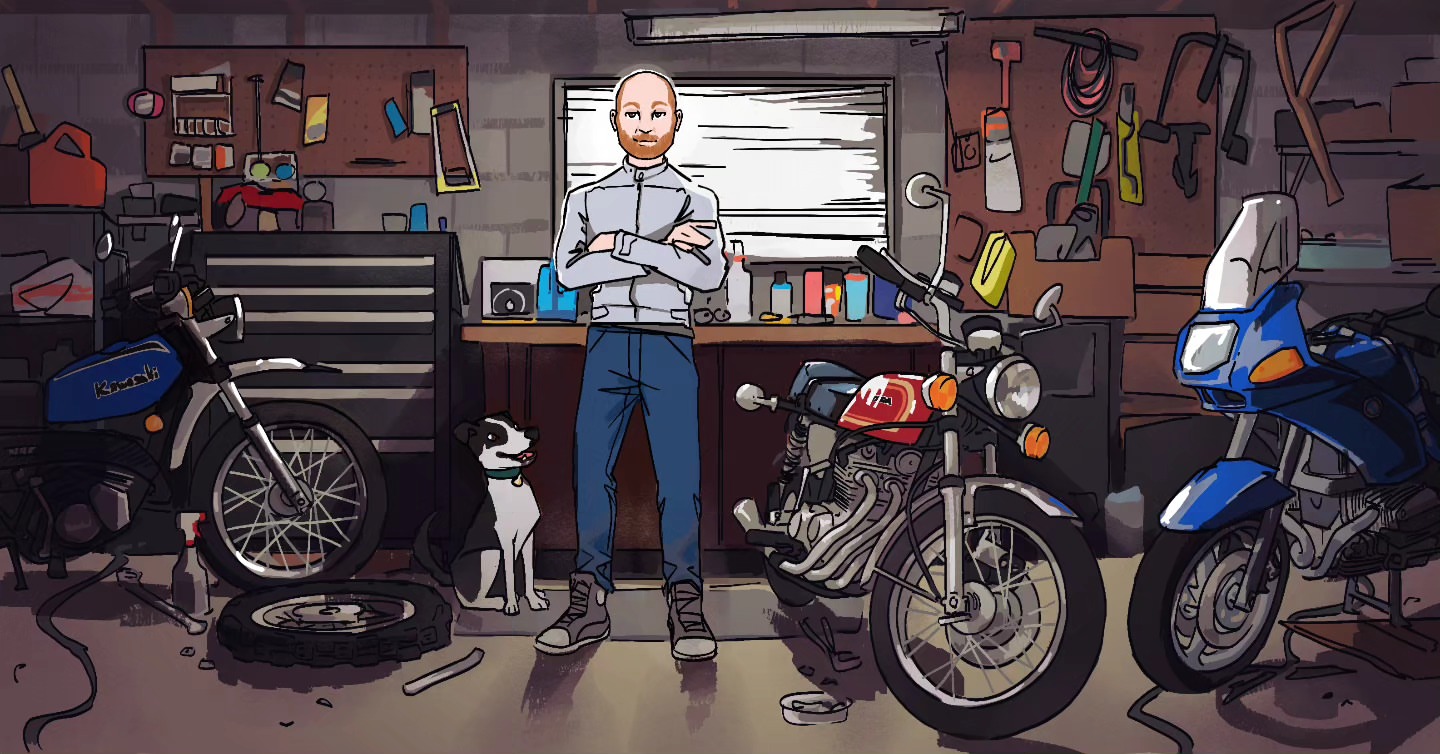
I absolutely loved it. I loved hunting down NOS parts, cross referencing fiches, problems would stump me and I’d find myself drifting off at work wondering what the solution was. Scooters had awoken something.
I also loved riding just as much. Every repair or mod would pick up a few extra MPH. I’d gain confidence in my work, and go a little further. Eventually I wanted a real motorcycle. I picked up a ’74 Honda CL360 from an old roommate. As soon as I’d fixed it up, I found myself wanting something that would keep up with my friend on his Street Triple. Since then my garage has housed between 3 and 10 bikes at any given time. Usually there’s 1 or 2 newer bikes and a ton of 70s Japanese bikes.
My workshop shares a space with the motorcycles in the garage behind the house. It is a bit of a mess, and it’s always evolving as I acquire new tools, stock up on spare parts, and prepare for adventures! Some parts of the workshop have snuck into the house as well. I have a bench inside for doing electrical work and a few 3D printers, which have become essential in the last year!
• What’s the make, model, and year of the donor bike?
The bike is a 1972 Kawasaki H1C (H1 500). The C designation makes it one of the most rare Kawasaki triples by volume, though not necessarily most desirable.
• Why was this bike built?
My dad never rode bikes in my lifetime, but he had wild stories from his younger days. I’d occasionally get snippets about the Kawi 2-cycle 3-cylinder he had in college. He’d said it had an electronic ignition and it felt like flipping a light switch when you opened the throttle. It was the fastest thing around, wasn’t worth racing anyone till a guy came by on a Z1. I presume that this bike, and his throttle discipline, were the reasons I wasn’t allowed to have a bike.
Dad is no longer with us. I decided that when I felt I could handle it, I would find a triple of my own. I figured if I had an H1 I could feel the same things he did. He would be pretty upset if he knew I had one — I might not have had the balls to do it if he was still around.
I had purchased a 1974 H1 to build, and I intended to make that bike show quality. I picked up this H1C as a basket case from a friend, with the goal of having a rough rider so that I didn’t have to worry about scuffing the paint.
With the H1C in such terrible shape and the monumental cost of assembling a solid triple, it was hard to justify leaving it too crusty. In short, I wanted one because I grew up hearing about the legend, and I wanted to thrash it without worrying too much about it. I ride all of my bikes, that’s why they were made.
• What was the design concept and what influenced the build?
As previously mentioned, the original idea was to have a beater. Usually I don’t go to the trouble of having a bike repainted and looking perfect. I’m more concerned with making sure it’s functional.
This bike had no paint to speak of! I found an original tank with some scars that was worth preserving, but not worrying about. If the original parts were salvageable, I used them. The bike had visibly been crashed at some point. Instead of erasing that history I thought it would be more fun to let the bike tell its own war stories.
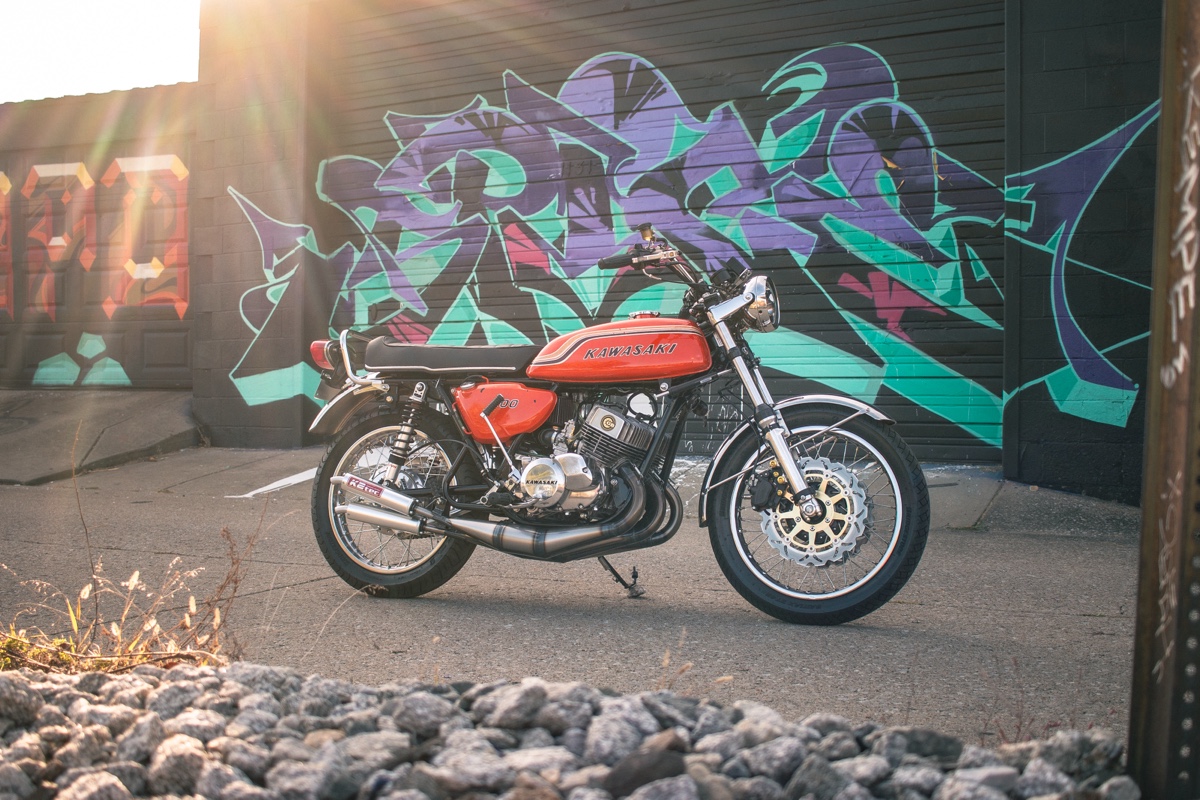
At the same time, I didn’t want to keep things like the front drum brake, lest I become another victim of the widowmaker. Modernity is woven in where it makes sense. Since I’m gonna ride at night, we need real lighting.
I get frustrated by cheap and tacky mods, and I always worry that whatever I build will turn into “Awful Taste But Great Execution”. Some friends were setting up a big bike show in Louisville called The Abyss. The theme was the builder toiling endlessly to one day bring their Frankenstein out in the light for all to see. Getting lost in the Abyss of the project.
In the spring of 2026, I decided that I would make that show my deadline. I would shoot for finishing the bike by the end of August. That’s enough time to build a whole motorcycle from the ground up, right?
I am very particular in most things that I do. Knowing that my bike would be scrutinized by peers, the project enjoyed a bit more effort than I would have otherwise employed. (Some might say it spiraled a bit.)
• What custom work was done to the bike?
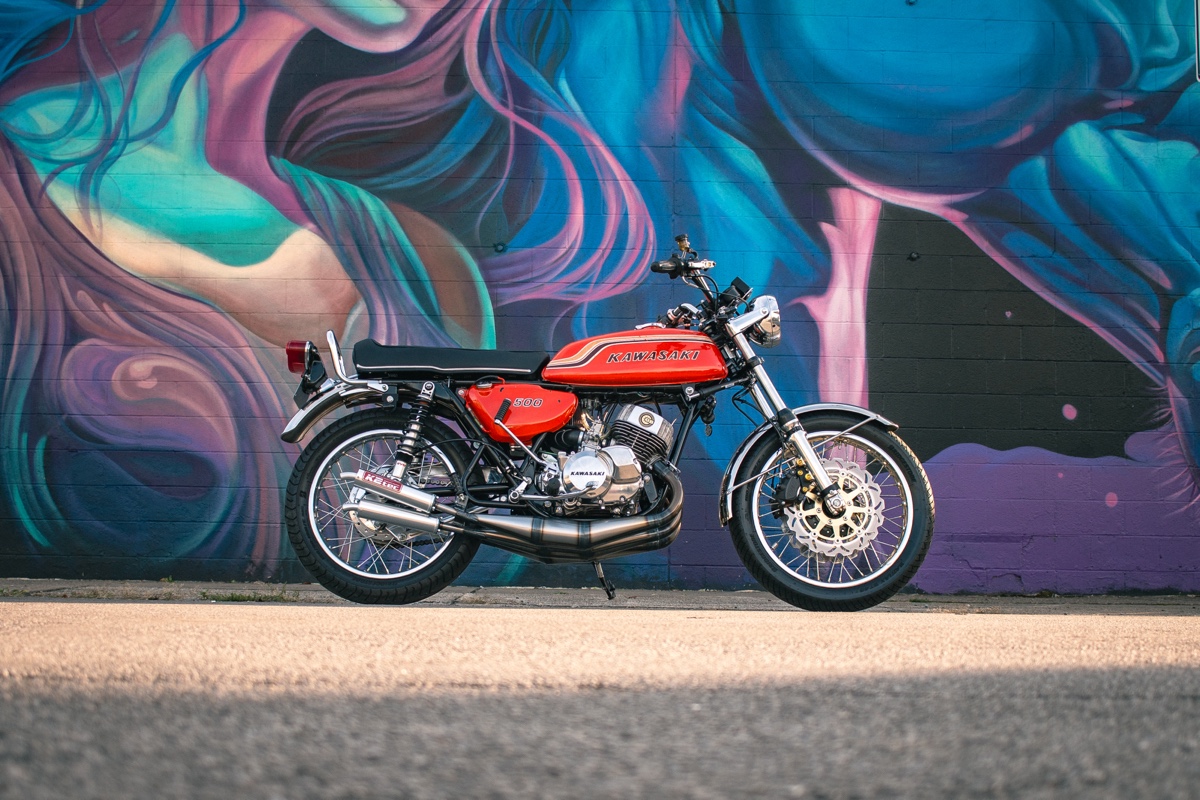
The front brake setup is the most notable customization. 1972 saw the release of the H1B and the H1C. One had a disc and the other had drums among other nuances. I was able to source an H1B triple tree and late H1 front end to make the jump away from the spindly forks and drum.
A veteran of the triples groups, Per Kviler, had managed to fit Triumph Daytona 955 rotors to the front of a disc model, but not without significant modification. He was kind enough to share drawings for the adapters. I wanted to use calipers from a 2024 Ninja 650 (dirt cheap, not requiring a rebuild) and so iterated on his designs. I used a radial mount master cylinder for a little extra spice.
The bike came with stainless fenders originally, but the stainless front fender is designed for the drum forks. I designed a custom mount and stays to keep stainless fenders front and rear. It’s a small detail, but I am proud of that, and the fenders are probably my favorite part of the bike.
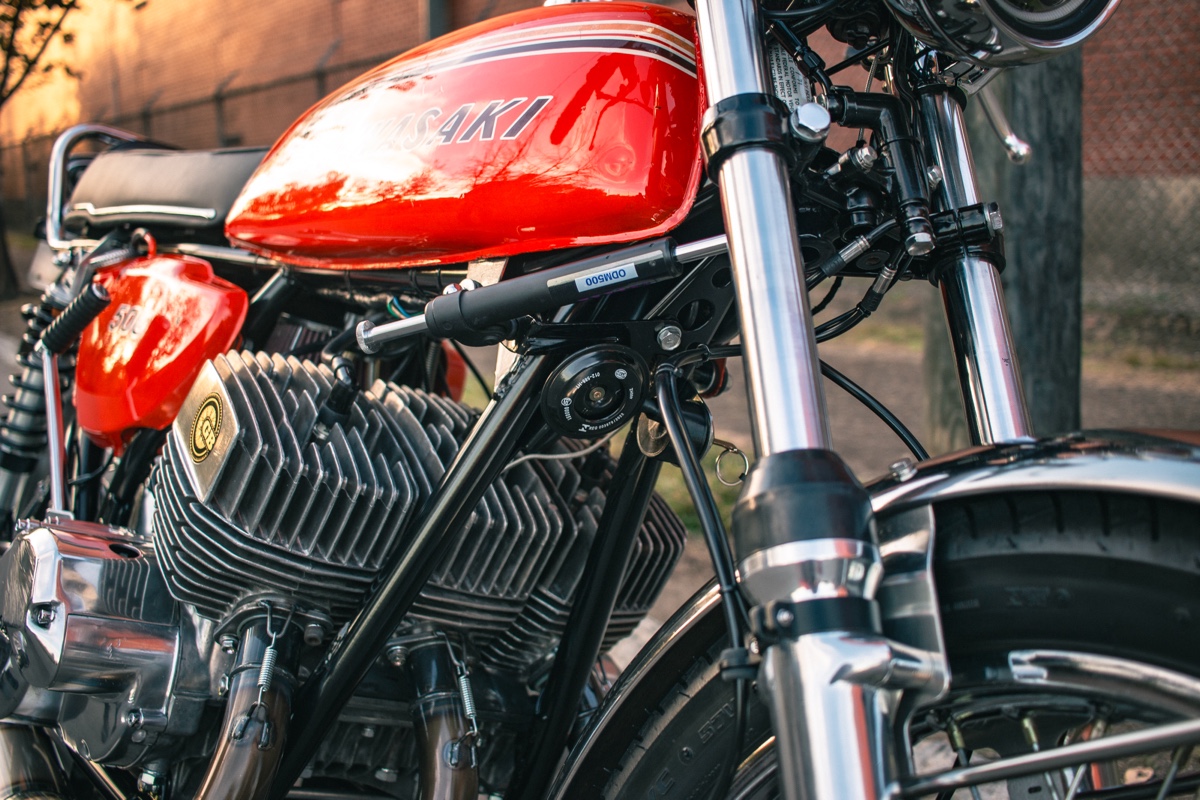
The early H1s used a distributor-based CDI setup (the first production bike to have a CDI). I was missing some key parts that command unreasonable prices even in poor condition, so I elected to use an electrical system from the ‘74 and later bikes. I grabbed a new CDI and Reg/Rec form Rick’s Motorsport Electrics to ensure reliability.
Because the bike originally had a single coil, I had to design a mount for the three coils used by the ’74 ignition. The wire harness is all factory from 1974 with the exception of the sub harnesses for the Daytona Velona clocks and my custom temperature gauge. The temp gauge uses a thermocouple on the center spark plug, and is controlled by an esp32
microcontroller. The plan was for a fancier gauge, but time was a factor.
The headlight is a Denali unit; good quality and not gaudy looking. I didn’t want the bike to look like a cheap cafe racer with an eBay headlight. The light didn’t fit the H1 housing perfectly, so I designed a mount for it in CAD and 3D printed it. Many critical stages of the build relied on CAD modeling and the 3D printer. The rotor spacers and caliper brackets were prototyped in plastic to test fitment before I sent the designs off to be CNC-ed or laser-cut. I used the same prototyping process to design the gauge mount and coil bracket.
Turn signal brackets, brake hose brackets, speedo sensor, CDI bracket, and even the throttle tube were designed in CAD and printed from PET-GF or PC-PBT. If you look closely, you’ll also see rubber grommets and other bits that couldn’t be easily sourced, designed and made with the printer from TPU. I really didn’t want the bike to look like a science project either, so I only used printed parts where it felt like the best option.
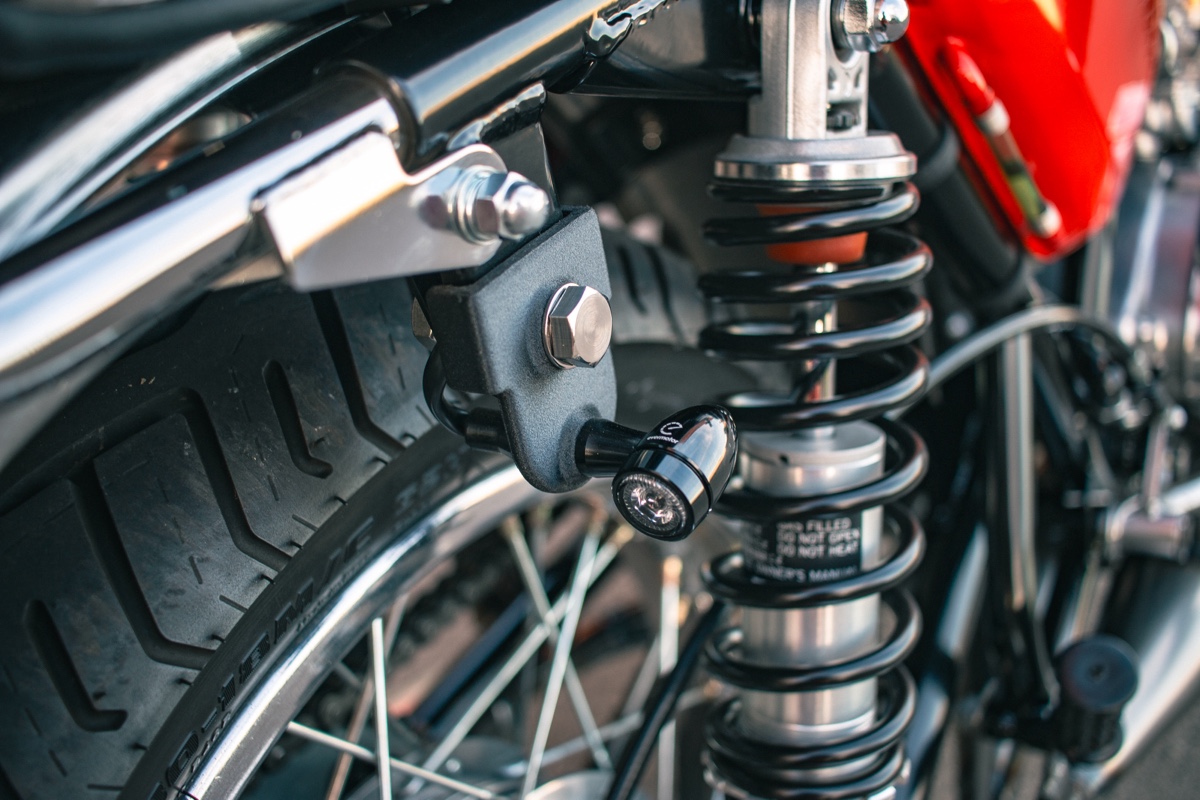
Heck, there were even some frame mounts that were broken or mangled. I designed replacements in CAD and leaned on SendCutSend to cook them up. I can’t say enough good things about their work.
The engine was bored and blueprinted by Klemm Vintage. They also cut a multi-angle squish band into the heads to help avoid detonation on modern gas. I used 28mm flat-slide Mikuni carbs as the originals were roached, and the mounting flanges are prone to air leaks. You could go much larger on the carbs, but it already gets terrible mileage and I wanna ride, not stop for gas!
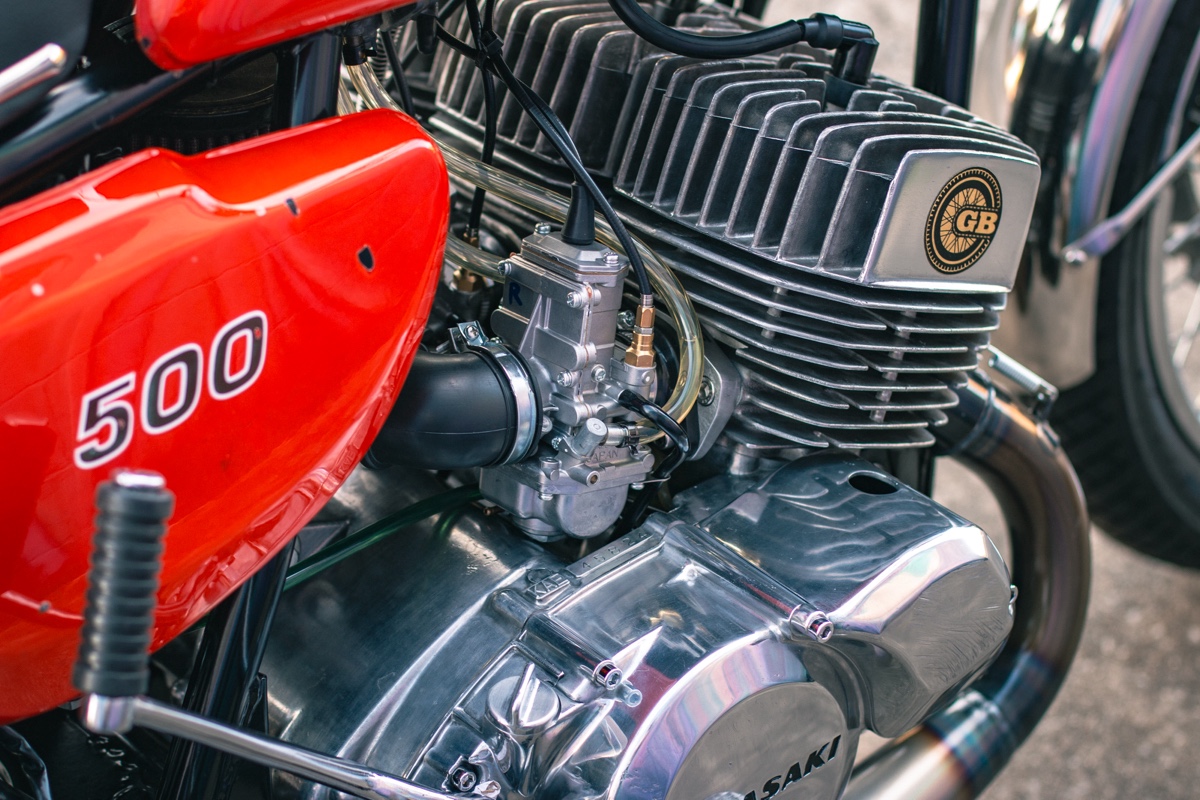
Rear shocks are KYB. The front forks are stock from a later year H1. They are fine for the way I ride, and I didn’t want to
mess up the geometry of the bike to cobble a GSXR front end onto the thing.
The expansion chambers are handmade in Japan by K2Tec. Excellent build quality and the chamber design favors rideability on the street over peaky power.
• Does the bike have a nickname?
Not really. H1s acquired the nickname Widowmaker early on. Supposedly, shortly after the bike came out in ‘69, a New Zealand paper ran a headline “Widowmaker kills 5”, sealing the nickname.
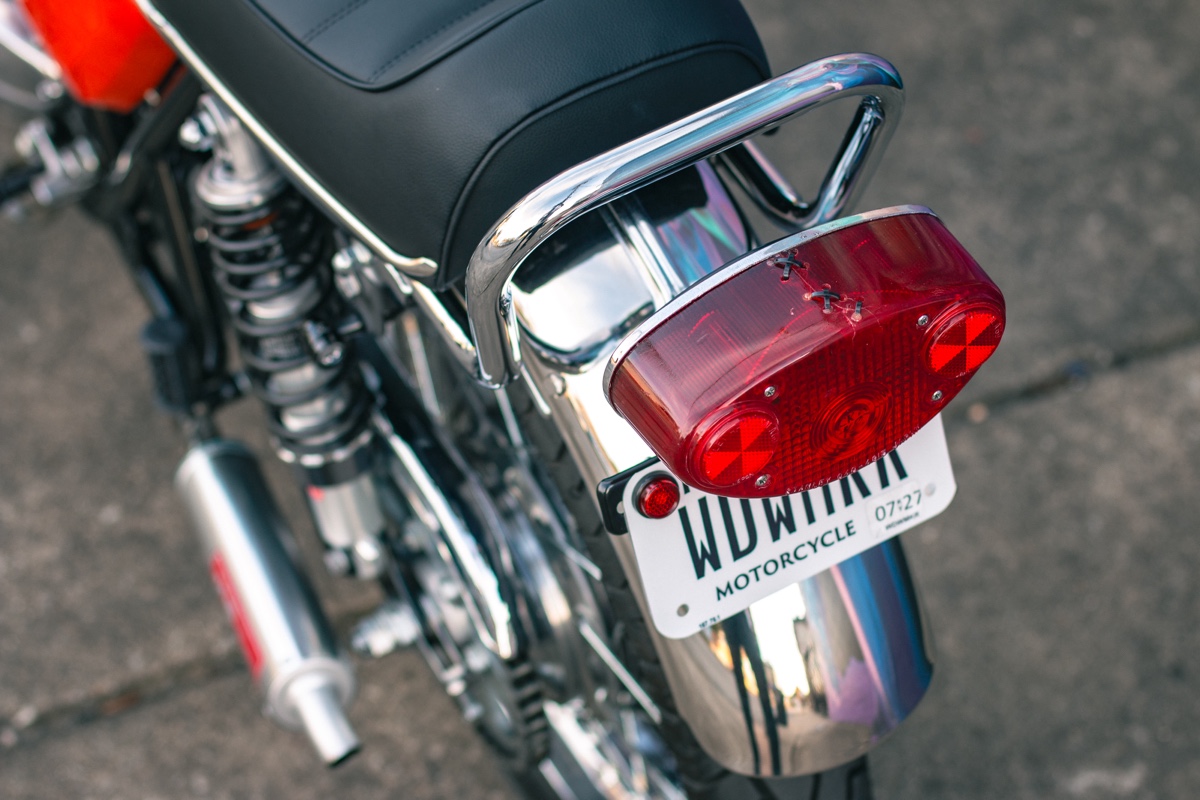
Someone definitely had a nasty wreck on this bike, so I had to have the WDWMKR plate when I saw it was available!
• Any idea of horsepower, weight, and/or performance numbers?
The bike probably makes between 70 and 80 horsepower, but I have not dyno tested it. It weighs about 375lbs. A good set of chambers add power and weigh far less than the OEM exhaust.
• Can you tell us what it’s like to ride this bike?
People told me I might be disappointed with the bike, as it isn’t as fast as some modern bikes. I can tell you it’s exactly what I hoped for and more. When you open the throttle, you mostly hear the howl of the intake. There is nothing else like it. I get goosebumps when I kick it over, and a little trickle of adrenaline taking off.
Sure, a modern sportbike might be faster, but this thing feels possessed by a demon. It vibrates like mad, snarling and popping. It doesn’t like to cruise. You’re going like hell or you’re stopping.
It demands all of your attention. It wants to be on the rear wheel, and it’ll stand up even if you think you’re going easy on the gas. As far as handling goes? It ain’t bad. I’d compare it to any other large 70s UJM.
• Was there anything done during this build that you are particularly proud of?
I had to weld the frame to get it roadworthy. Dad and I said we were going to learn together, but we didn’t get around to it. Finally getting his welder going and making something with it felt really good. Especially on this bike.
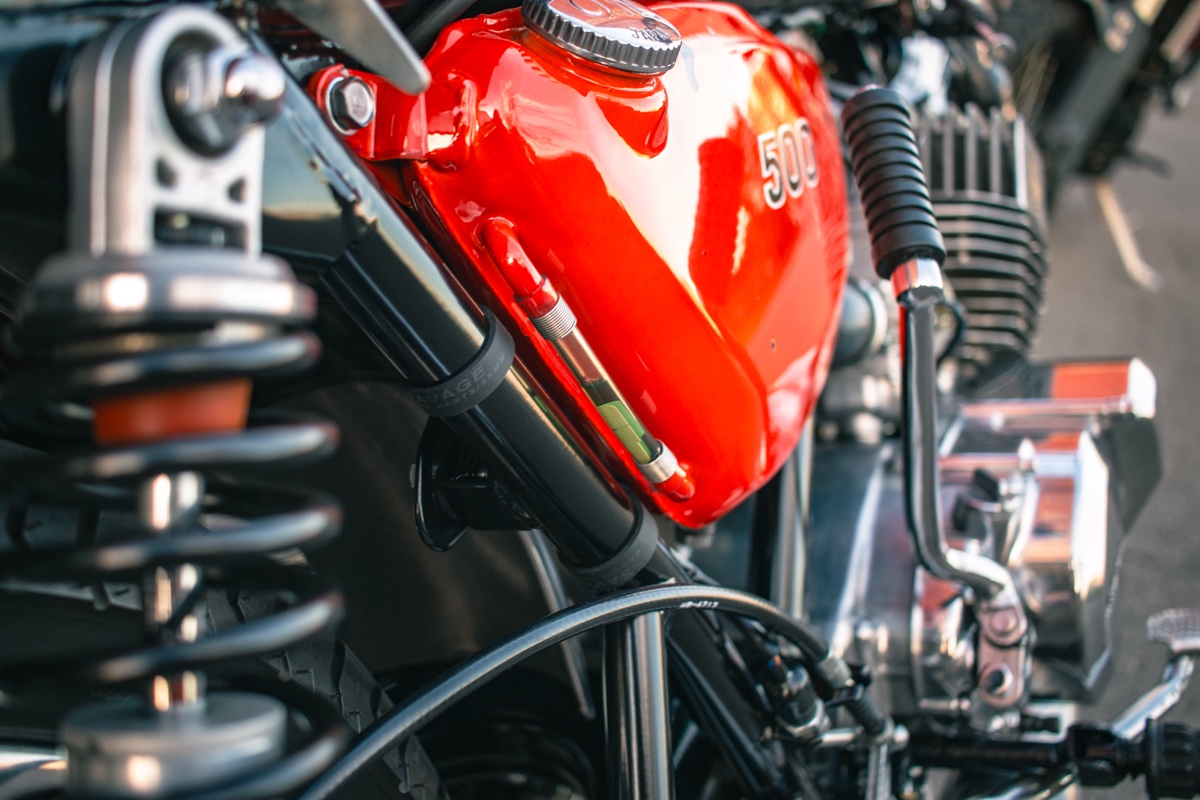
I did a lot of CAD design and printing of exotic materials, which was quite the learning curve. It was immensely satisfying to see my own design come back in metal and have it fit perfectly. Two years ago I didn’t know how to weld, design parts, or 3D print!
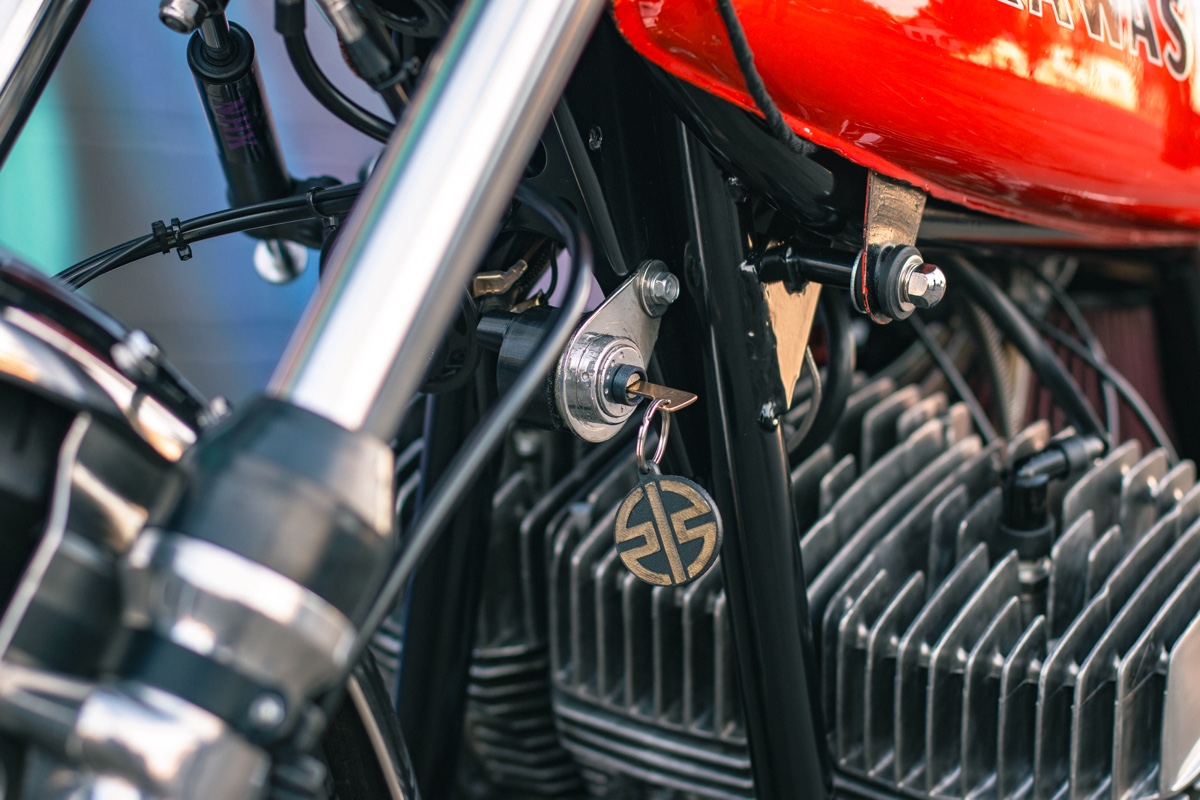
I am most proud of the small details that only triples nerds will notice. The triple tree is from an H1B. The electrics and controls are from an H1E. I did what I could to keep the build Kawasaki, and to avoid permanently modifying things anymore than necessary.
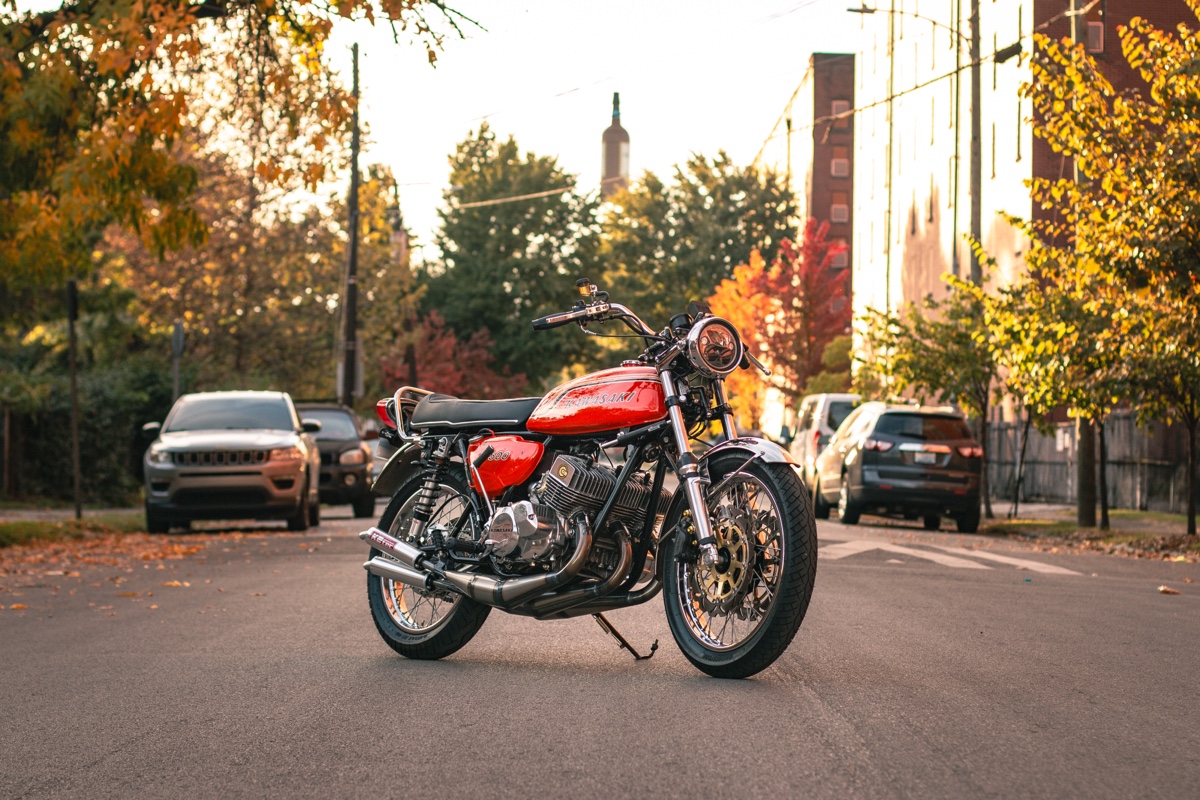
• Is there anyone you’d like to thank?
- Julian Baker (@goggin_patrol on Instagram) for taking excellent photos. Julian regularly puts together adventure trips, encourages new riders, and brings a kind, positive attitude to our community.
- Tony Thompson did the clear coat on the tank and painted the roached side cover + oil tank. He did a phenomenal job of matching the original patina of the tank, down to the flecks of overspray.
- The ragtag group known as Louisville Vintage Motorworks for encouraging me, for putting together shows like The Abyss.
- Likewise for the whole community of Triples enthusiasts around the world who connected on forums and Facebook to source parts, answer questions, and nitpick details as much as I do!
Follow the Builder
YouTube: @GoldenBoyGarage
Instagram: @golden_boy_garage
Printables: @gbgarage_582100


