
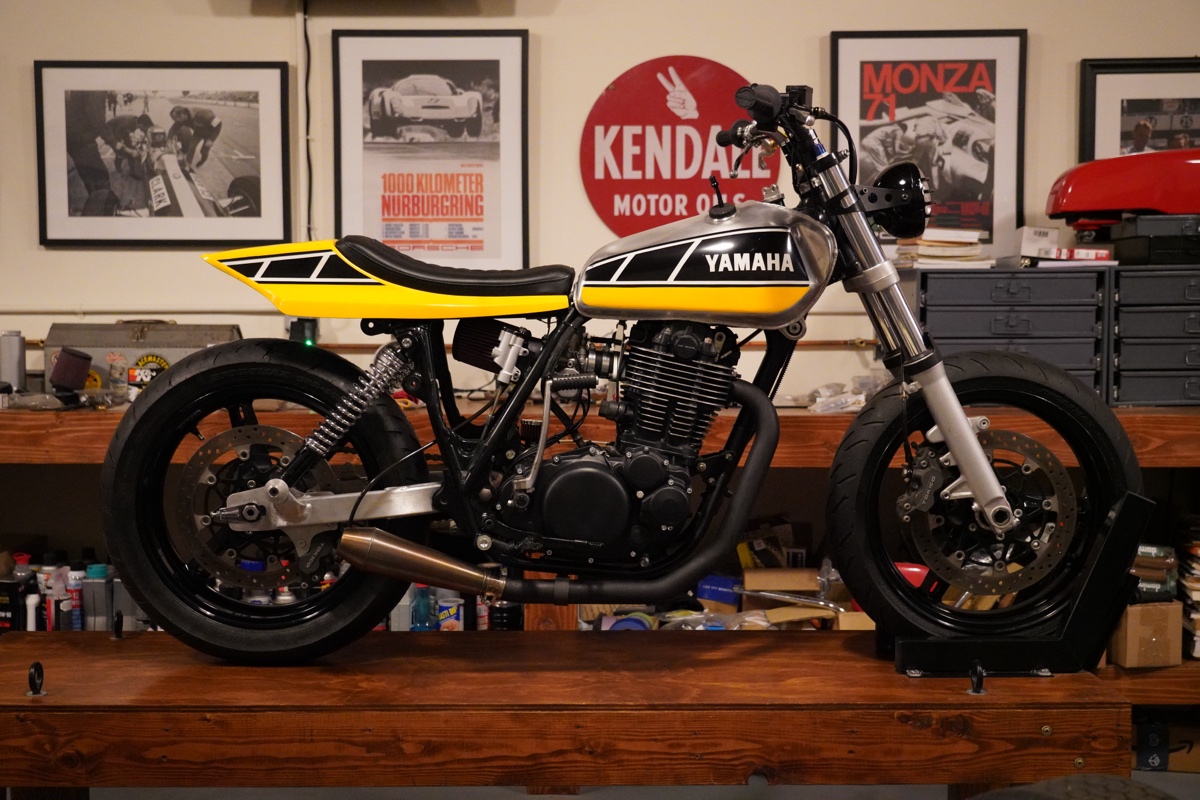
From Eric Dean Design: Yamaha XT500 Meets Suzuki TL1000R…
The street-legal Yamaha XT500 and its off-road sibling, the TT500, quickly made a name for themselves in the late 1970s. Not only did they win the Paris–Abidjan-Nice and the Paris–Dakar rallies, but they opened the door for a whole class of large capacity, adventure-oriented all-rounders built outside Britain.
“Being a really basic and understated machine, in a sea of late 70s technically advanced and ground breaking machinery, it successfully captured a new audience with its stomping ability while also catching the eye of the old Brit iron brigade. It lacked social graces like an electric start, making it a real riders machine and created a whole new generation of multi tasking two-wheelers, a genre that lives on strongly, many years on.” –Classic Motorbikes
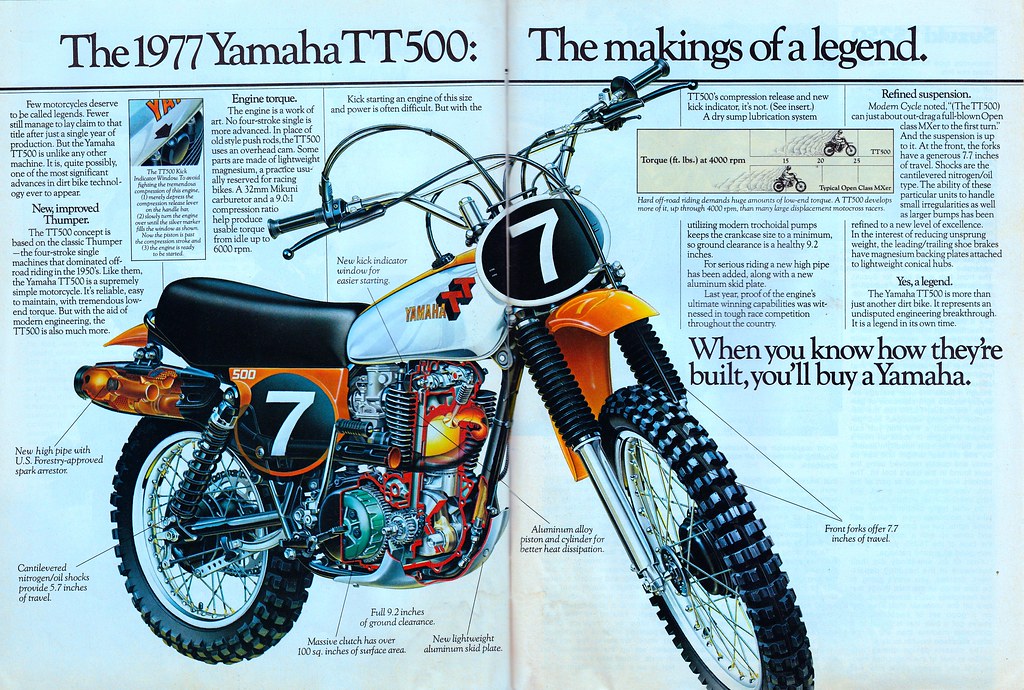
The XT500 was surprisingly surefooted on tarmac as well, lending itself to “silly” corner speeds on trail tires and spawning the street-focused SR400 and SR500 models. Though the XT and TT shared the same 499cc twin-valve SOHC engine, the TT had a slightly peakier cam, a larger carb (34mm vs 32mm), and received larger SR inlet valves a year before the XT. Today, these bikes remain some of the best loved vintage thumpers of all time, and still make solid trail bikes and runabouts.
Enter our new friend Eric Dean, who’s been building, restoring, and racing cars and motorcycles for more than a quarter century. He runs Eric Dean Design and Dean Vintage Racing out of his home in the Mojave Desert, and builds about three bikes a year. The bike you see here is a ’77 XT500 with a TT500 engine of the same year, and it began as a friend’s project:
“My friend Brian O’Connor had the initial vision for the bike and decided to mate the chassis and engine of an XT500 with the frontend and aluminum mags of a Suzuki TL1000R. I was storing the bike for him when he decided to sell it, so it made for an easy transition.”
Eric has built TT500 desert racers before, so he already had a good store of parts and expertise at the ready. What’s more, with a recent hip replacement, something low and light was just what the doctor ordered. The vision was clear:
“An ultra lightweight 500 for the street reduced to its simplest form.”
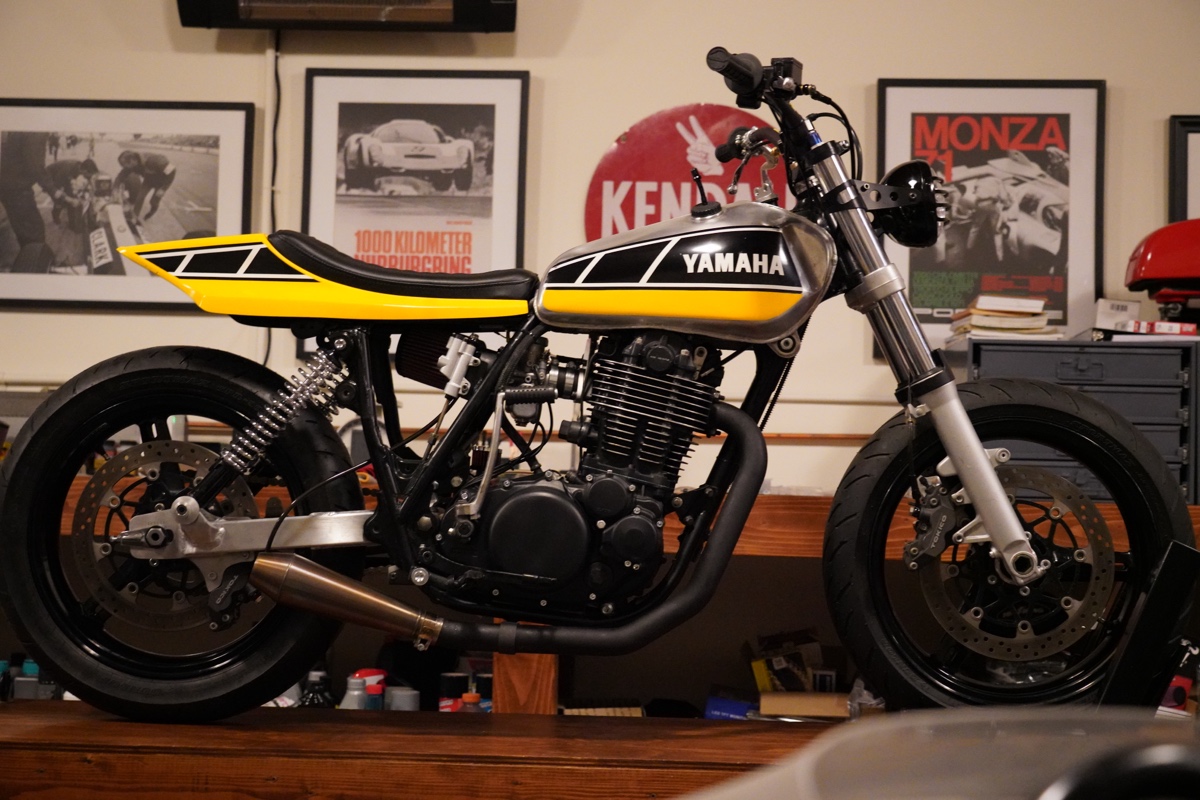
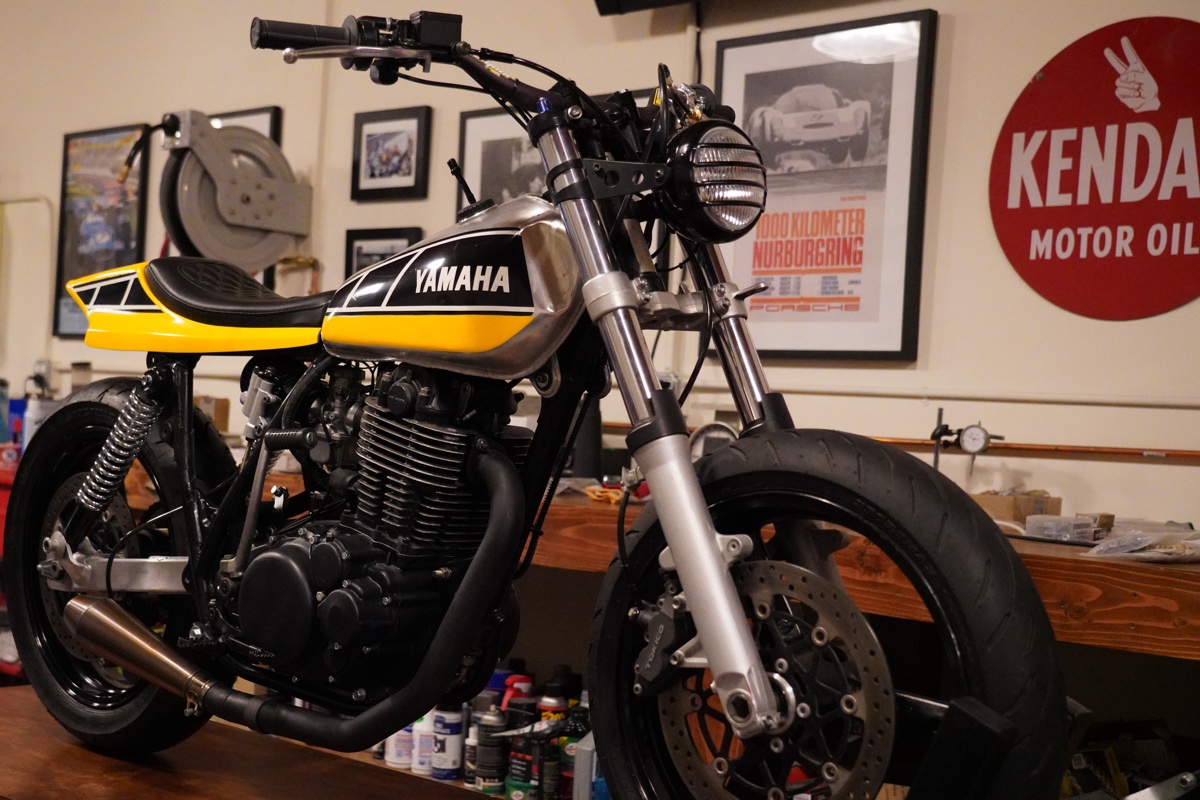
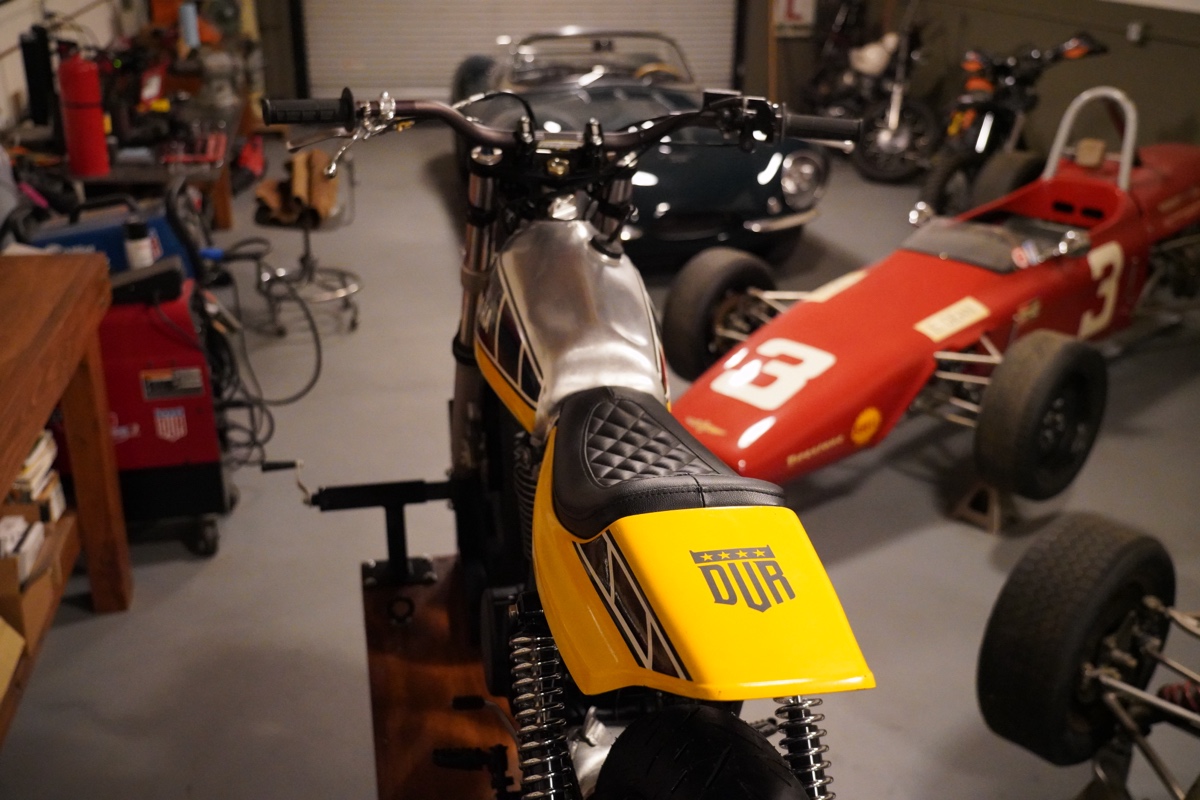
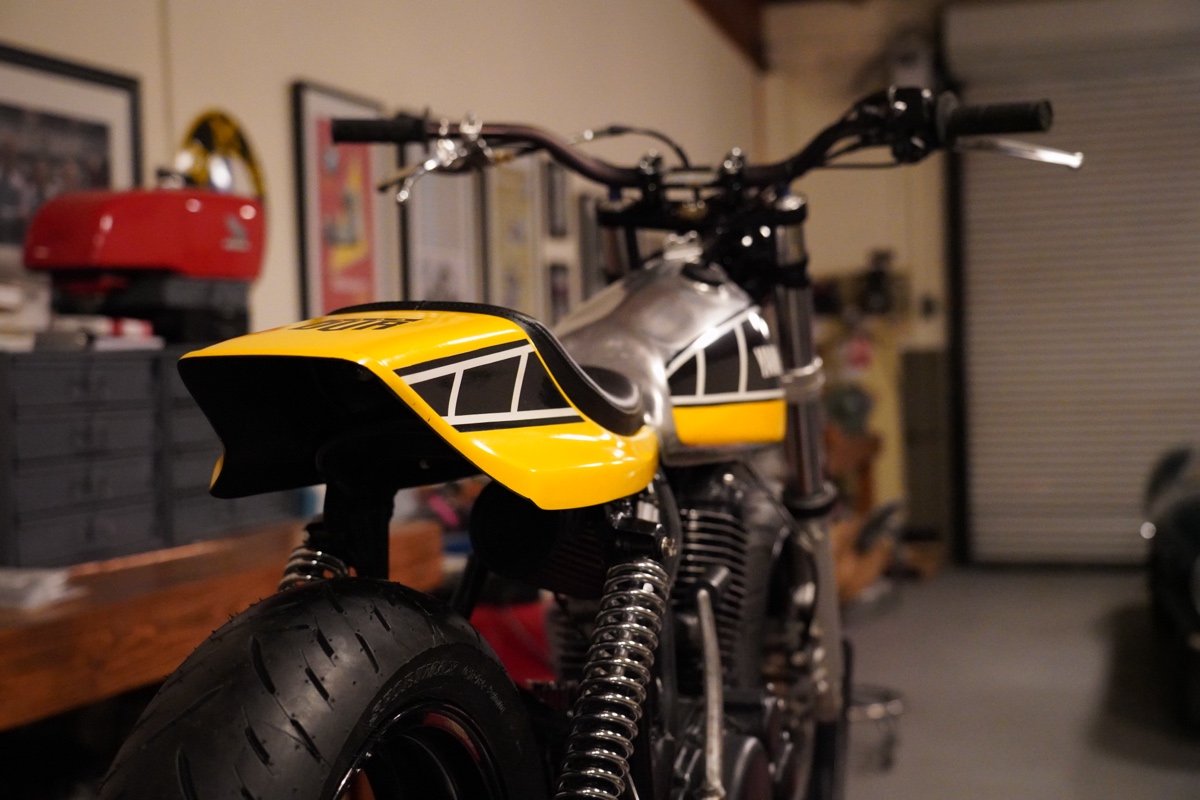
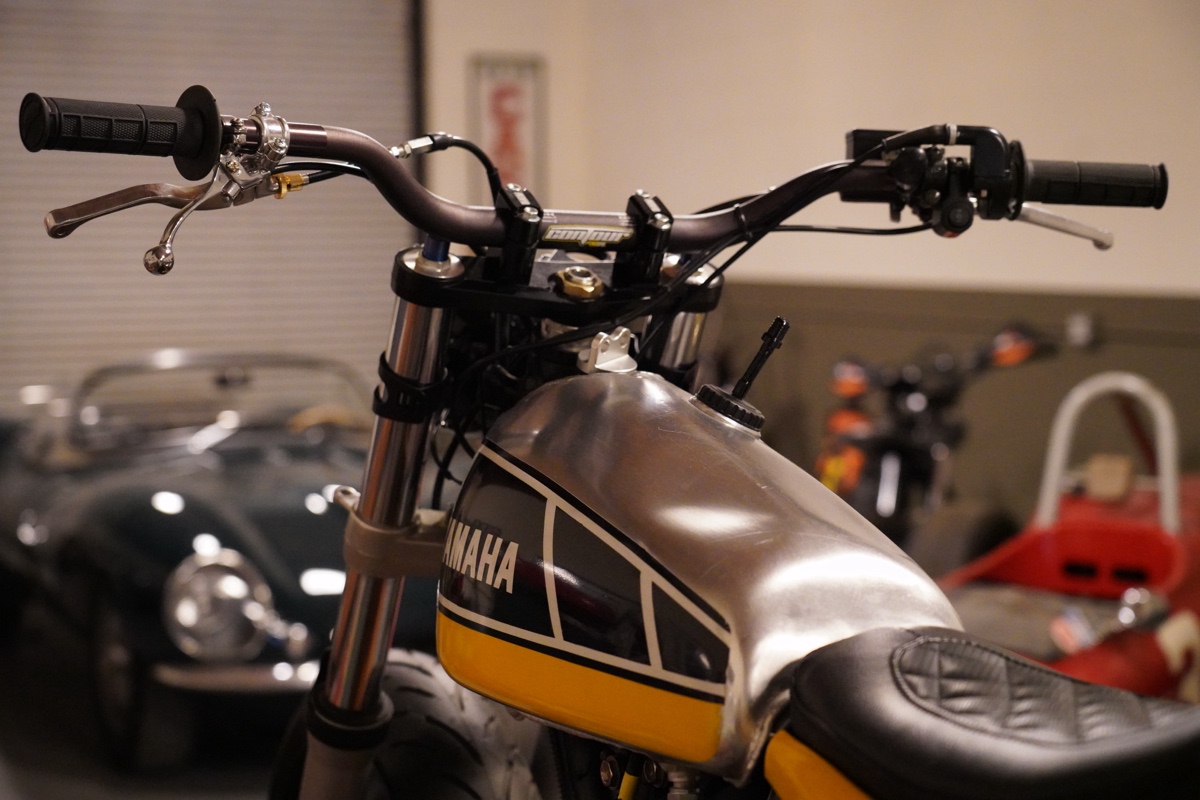
The bike is now running those TL1000R forks, 17-inch mag wheels, and factory brakes. There’s an aluminum swingarm and the frame was modified slightly to be more compact. Bodywork consists of a vintage flat track tail section and a TT500 tank indented to work with the new front end — making for an incredibly tight turning radius.
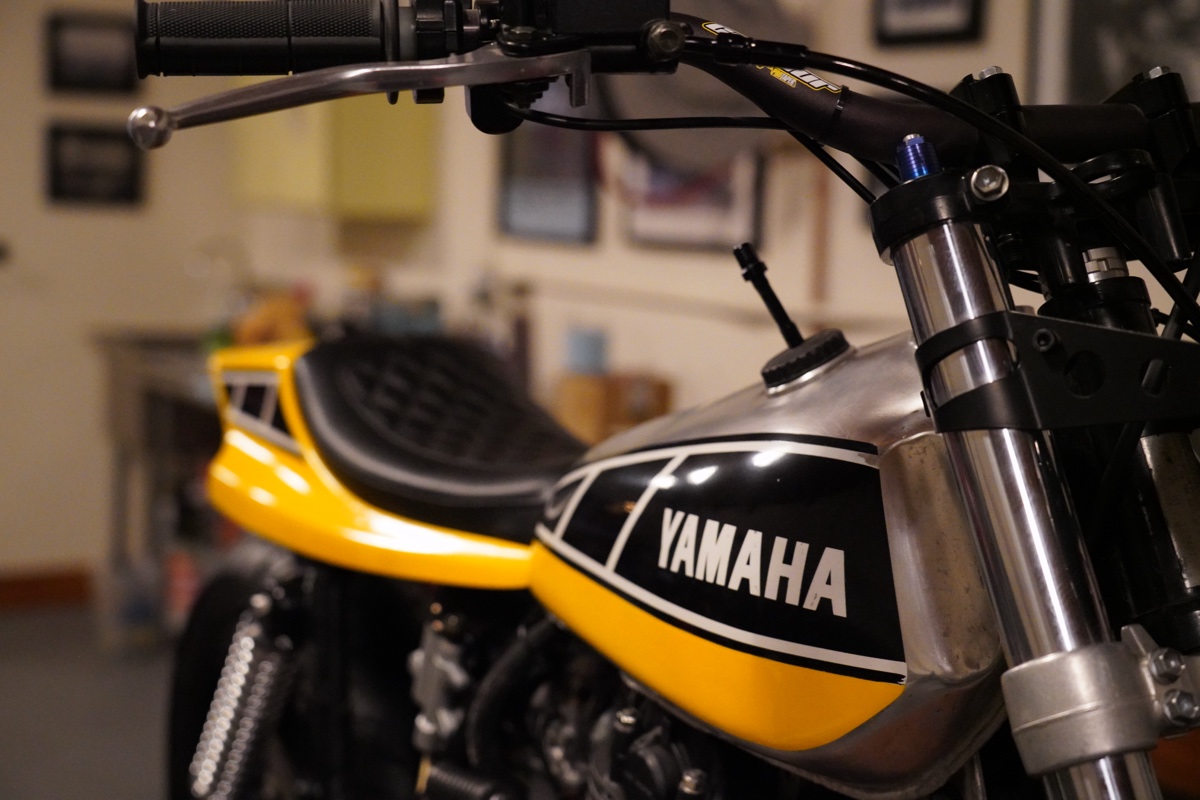
The electronics were upgraded with a 12-volt conversion, TT500 Paris Dakar headlight (with LED built), and Eric painted the bike himself in an homage to King Kenny himself — no decals! Much of the bike was built with parts he already had lying around the shop.
“That was really the spirit of the bike. Trying to have fun, work with what I had, not overthink it, spend as little as possible (which is a new thing I’m trying out).”
Some of Eric’s proudest points of the build are the most subtle. For instance, Eric designed a rear brake caliper hanger that moves along an existing boss on the swingarm and also a stepped and indexed sprocket spacer to adapt the TL1000R rear wheel. So how does this Yamaha 500 ride? Incredibly well:
“The bike is quick, nimble, and planted in corners… It really feels like a road race bike. It’s tight and the suspension has a neutral feel. It’s snappy for an old bike…”
All in all, the bike has the style of a street tracker with the sure-footed agility of a supermoto on those 17-inch wheels. We absolutely love it. Below is our full interview with Eric about the build, where he gives us more details and thanks the friends and family who helped make the build a reality. Eric doesn’t have a nickname for the build yet — drop your suggestions in the comments section!
Yamaha XT/TT500 Street Bike: Builder Interview
• Please tell us a bit about yourself, your history with motorcycles, and your workshop.
My name is Eric Dean. I’ve been building, restoring, and racing cars (primarily Formula Ford) and motorcycles for 25+ years. My business is Eric Dean Design and the motorsports focused work is under Dean Vintage Racing. I’m based out of Southern California’s Mojave Desert. I generally finish restoring or building about three motorcycles a year working by myself.

• What’s the make, model, and year of the donor bike?
1977 Yamaha XT500 with a ’77 TT500 engine.

• Why was this bike built?
A good friend of started this project and decided not to finish so I offered to buy the bike. I have built TT500s previously for vintage desert racing, so I had a lot of parts and some knowledge on hand. I recently had my hip replaced (too much fun on two wheels) and I wanted to build something low and light.

• What was the design concept and what influenced the build?
An ultra lightweight 500 for the street reduced to its simplest form. My friend Brian O’Connor had the initial vision for the bike and decided to mate the chassis and engine of an XT500 with the frontend and aluminum mags of a Suzuki TL1000R. I was storing the bike for him when he decided to sell it, so it made for an easy transition.
I wanted to honor Brian’s original vision for the bike, but I’m a designer and can’t leave anything well enough alone. I took it all apart, inspected and addressed any issues, made some performance and aesthetic choices. Then generally refinished everything. My other goal was to try to finish the bikes with parts I had on hand from previous projects and my parts inventory.
• What custom work was done to the bike?
The frame has been modified to make it a little more compact. Suzuki TL1000R frontend, 17″ mags, and factory-equipped disc brakes. A $12 rear master cylinder from Amazon. Hand-machined spacers and an adapter for the rear wheel. An old banged up TT500 tank that has been reshaped to accommodate the frontend.

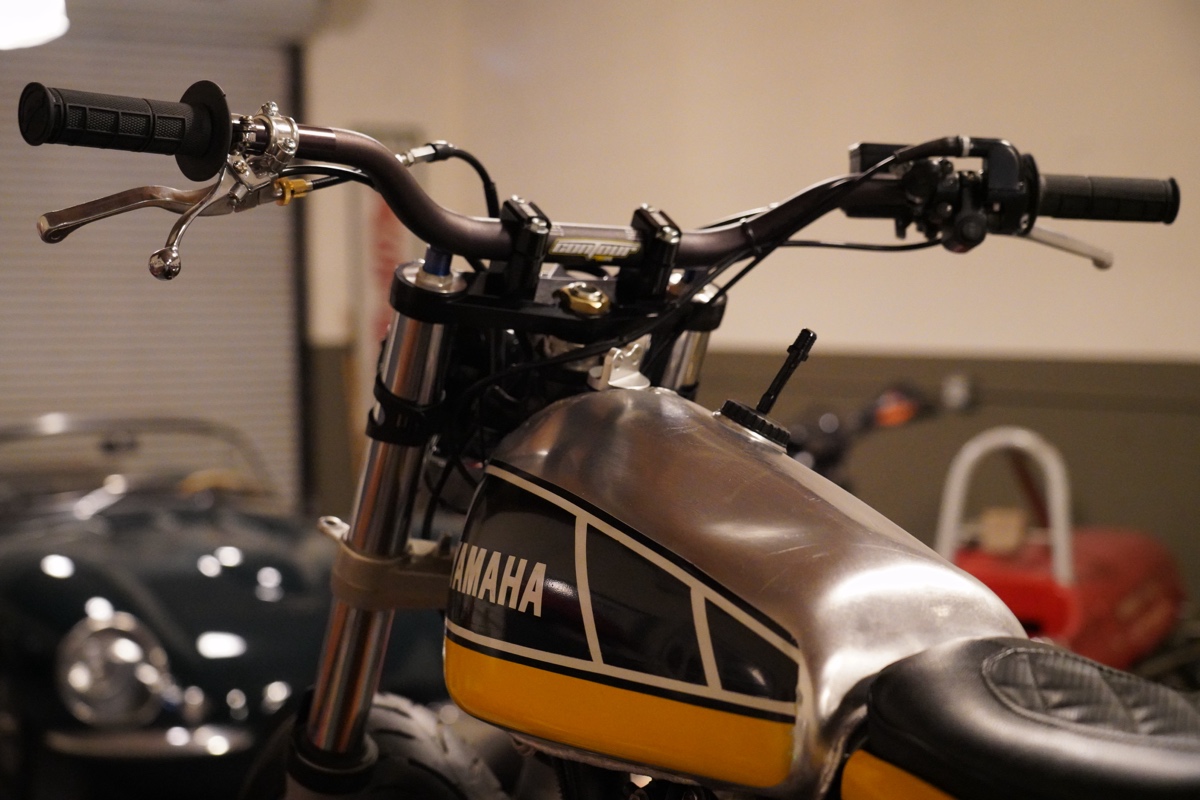
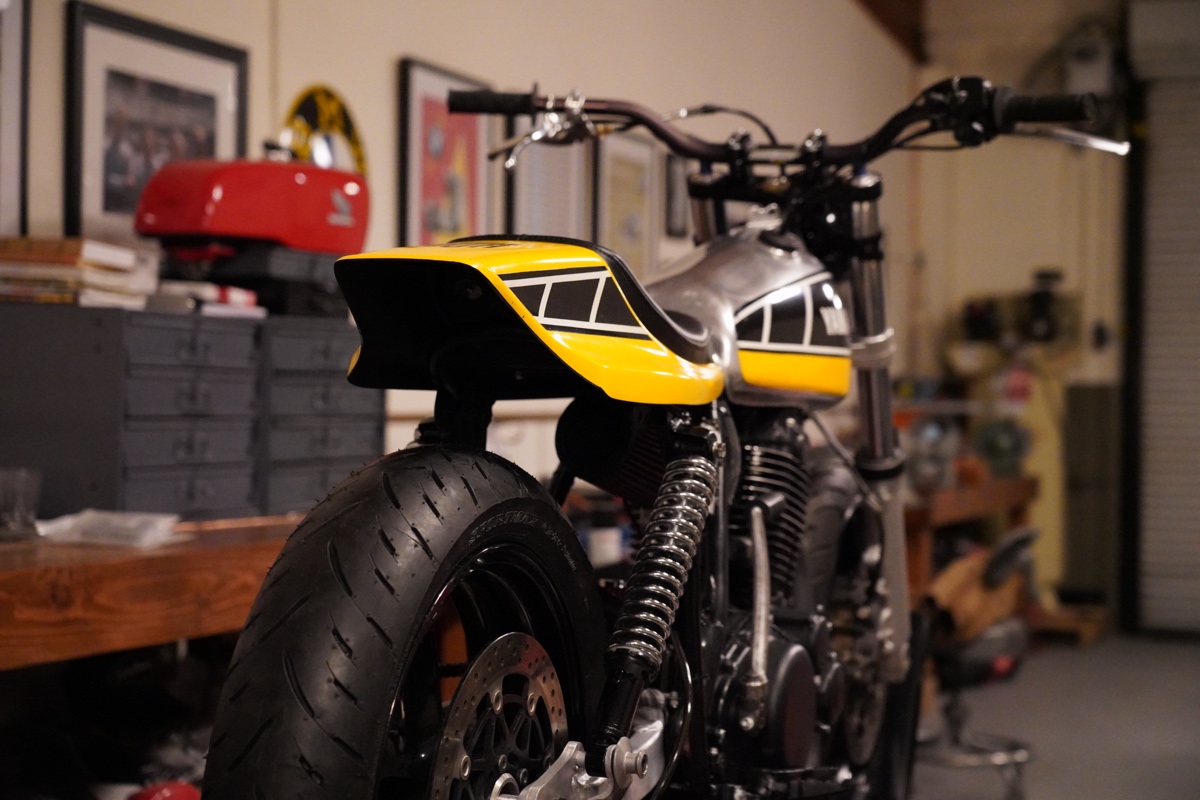
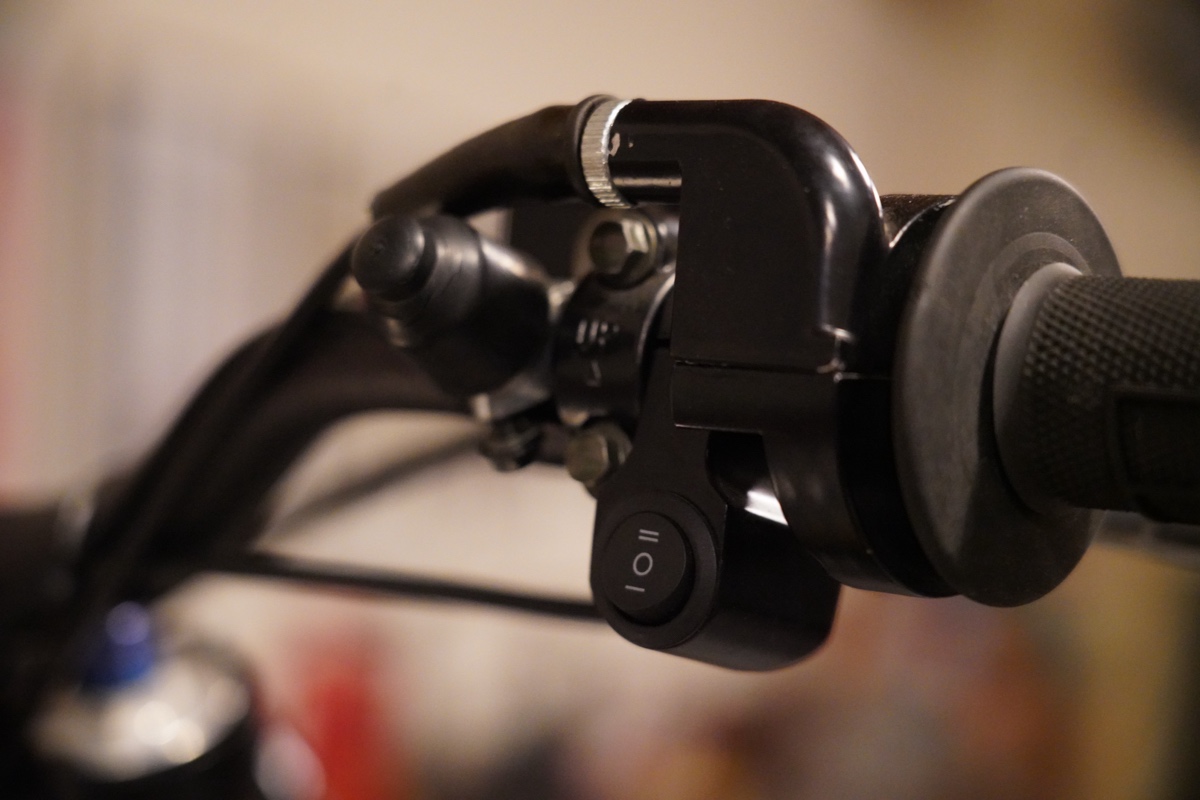
A vintage flat track tail section and a new handmade leather saddle. ProTaper Aluminum ATV bars, 12 volt AC conversion, TT500 Paris Dakar headlight with a LED bulb. LED strip tail/ brake light.

I painted the bike myself as an homage to the King Kenny Roberts. The graphics are paint, not decals so it should age well with use. The exhaust is just a TT header and reverse megaphone I had laying around the shop. That was really the spirit of the bike. Trying to have fun, work with what I had, not overthink it, spend as little as possible (which is a new thing I’m trying out).

• Any idea of horsepower, weight, and/or performance numbers?
The engine is strong but stock and recently gone through. The bike is incredibly light, but I haven’t had the opportunity to get it on a scale yet. I’m very curious.

• Can you tell us what it’s like to ride this bike?
The bike is quick, nimble, and planted in corners. I think those overkill brakes could snap the frontend right off the bike. Kidding…sort of. It really feels like a road race bike. It’s tight and the suspension has a neutral feel. It’s snappy for an old bike. It feels more like a modern new bike then I’d imagined it would.


• Was there anything done during this build that you are particularly proud of?
Little things no one else will notice. I designed a simple rear brake caliper hanger that moves along an existing boss on the aluminum swingarm and is clamped to the rear axle spacer. It slides the full travel of the rear wheel adjustment while also keeping the caliper locked in place relative to the rotor. I made a couple prototypes out of MDF, then scanned it and refined it digitally and sent to my neighbor Mitchell Taylor that has a CNC cutter at his shop. He cut the part out of 5/16 aluminum. I also made the sprocket spacer (stepped and indexed) that adapts to the Suzuki wheel. Both those parts worked without further refinement which is always a big win.

• Is there anyone you’d like to thank?
Brian O’Connor for the initial inspiration and donor bike, Mitchell Taylor CNC work, Todd Blubaugh (@bluetodd) and Steve Berg for being good friends and neighbors that are always good guys to bounce ideas off, Brian at Cyclops Adventure Sports for testing a headlight system I wanted to try out, and most of all my supportive partner Gwen for always understanding that my projects fully consume me.
Follow the Builder
www.ericdeandesign.com
IG: @ericdean


Looks good!
Great bike !
Pretty sure tl1000r had an upside down fork.
Lovely build though!