
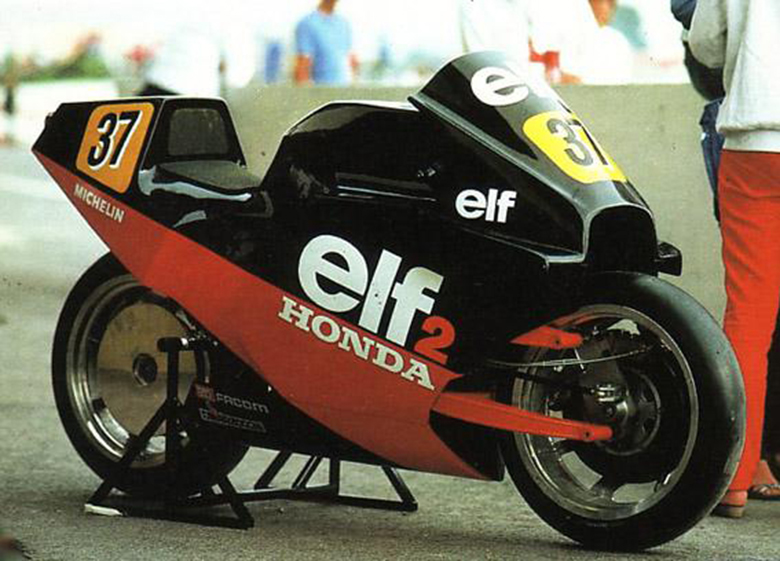
 Honda’s 500cc Two-Stroke V3 Forkless Grand Prix Racer…
In the early 1980s, the ELF motorcycle project was one of the most ambitious engineering experiments ever attempted in racing. Backed by the French petroleum company ELF and powered by Honda engines, the program set out to challenge one of motorcycling’s most sacred design conventions: the telescopic fork. Where most race teams chased horsepower or lighter frames, ELF engineers were asking a more fundamental question: What if a motorcycle didn’t use forks at all?
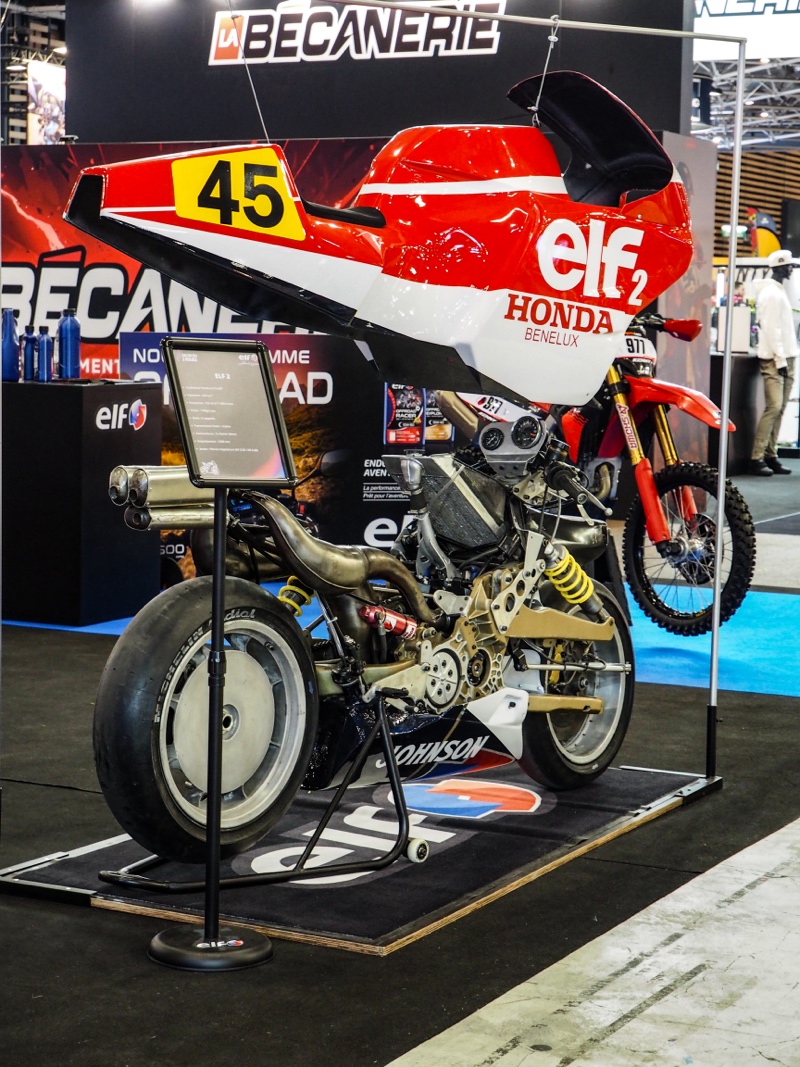
The result was a series of radical machines that explored hub-center steering, single-sided suspension, and entirely new approaches to chassis design. Among the most fascinating of these was the Honda ELF-2, a futuristic Grand Prix prototype that pushed the concept beyond endurance racing and into the premier 500cc class.
If the earlier ELF endurance machines proved the idea could work, the ELF-2 was the machine that refined it for the highest level of competition.
The ELF Program Evolves
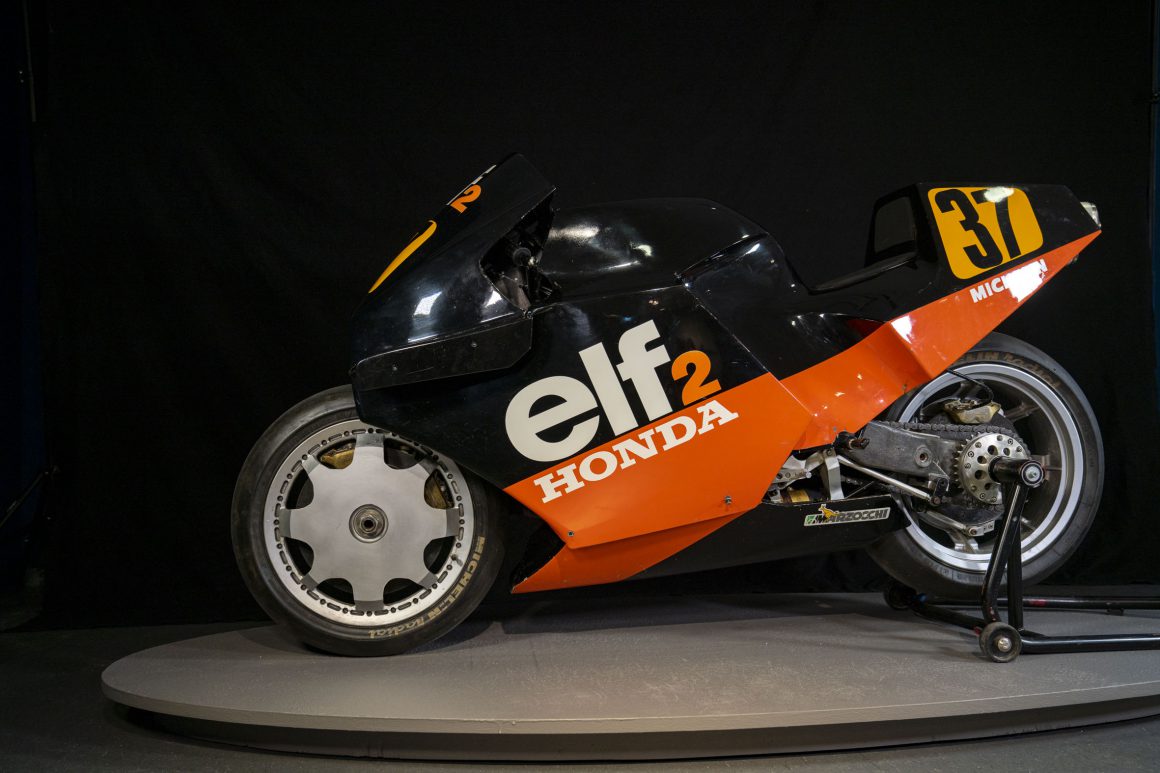
The ELF project began in 1978, when the French energy company partnered with Honda and engineer André de Cortanze to rethink motorcycle chassis design from first principles. De Cortanze came from Formula One engineering, where suspension design separates forces such as braking, steering, and suspension movement into independent systems. Traditional motorcycles, by contrast, ask telescopic forks to manage all of these forces simultaneously.
Under heavy braking, forks compress and alter the bike’s steering geometry — a phenomenon known as fork dive. De Cortanze believed a different architecture could eliminate these compromises.
The first prototype, the ELF-X, served as a proof of concept. From there came the ELF-E endurance racer, which introduced the radical layout to real competition. But the ultimate goal was always Grand Prix racing. That transition arrived in the form of the ELF-2.
Hub-Center Steering, Refined
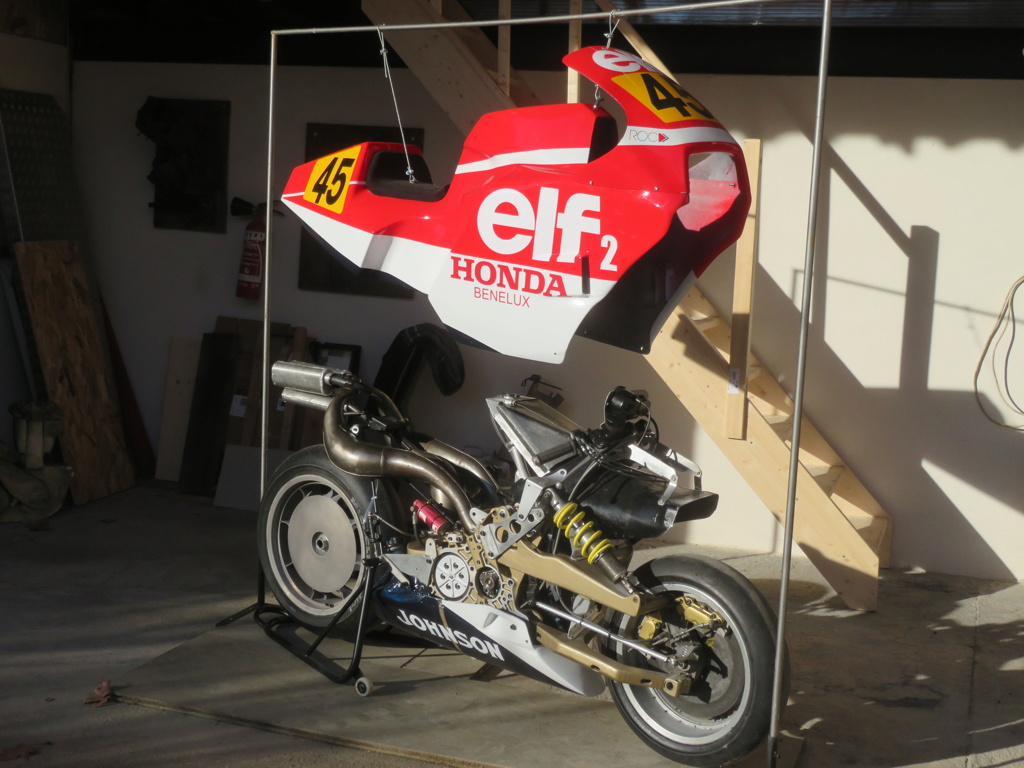
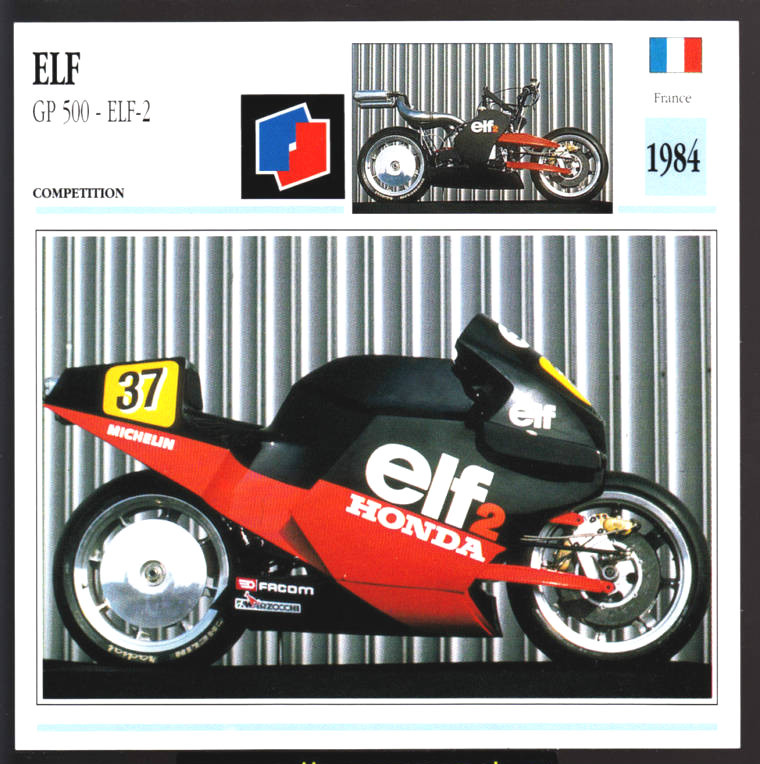
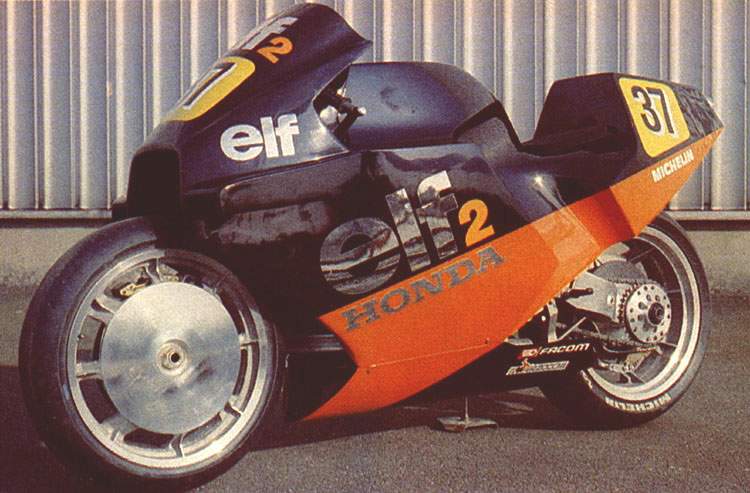
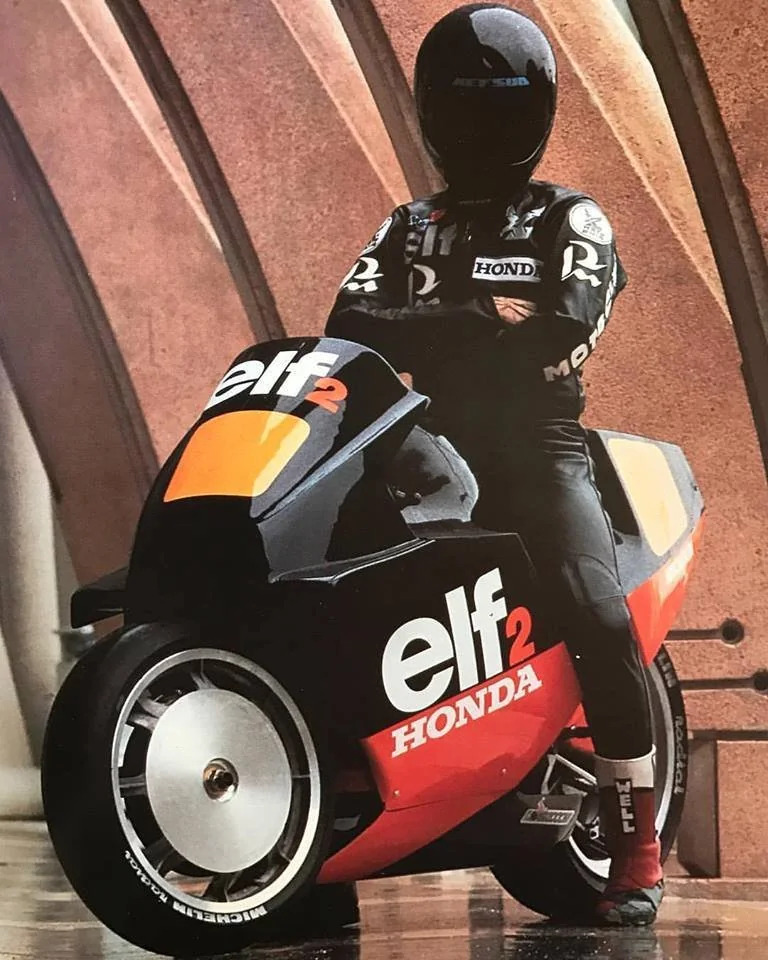
Like its predecessors, the ELF-2 eliminated telescopic forks entirely. Instead, the front wheel was mounted on a single-sided swingarm, while steering was handled through a system of linkages connected to the handlebars. This configuration — hub-center steering — allowed engineers to separate braking forces from suspension movement. The theoretical advantages included:
- Reduced brake dive
- Consistent steering geometry
- Improved rigidity
- Better weight distribution
The ELF-2 refined the geometry and linkage design used on earlier prototypes, improving steering feel and stability — two areas where early hub-center machines often struggled.
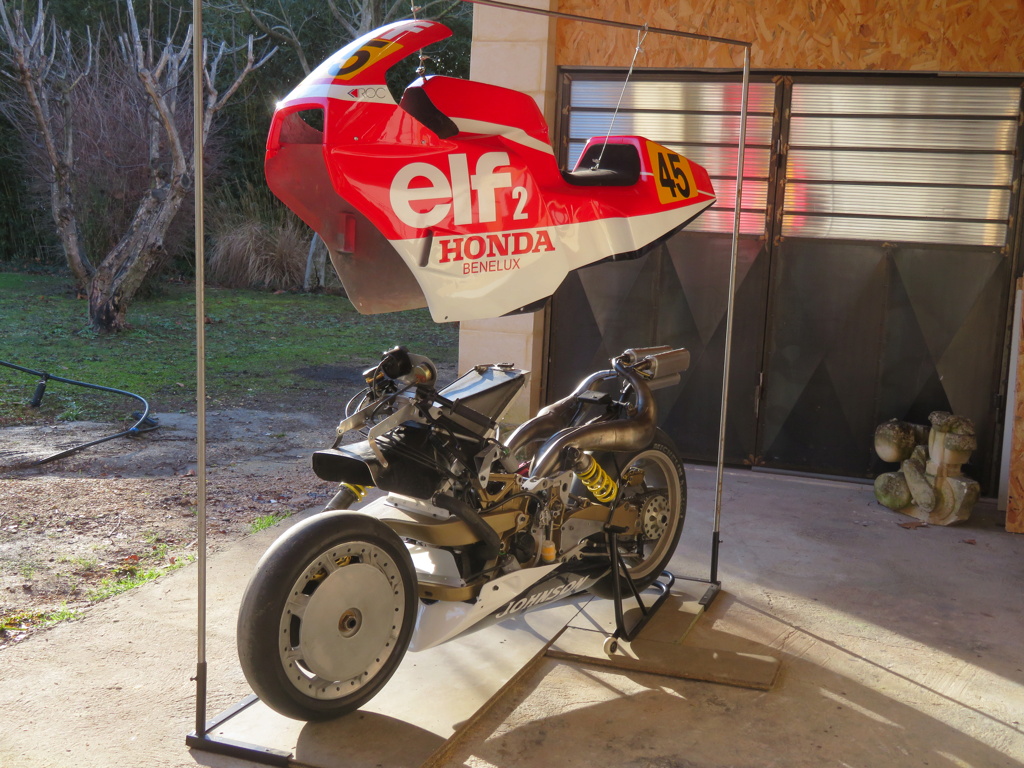
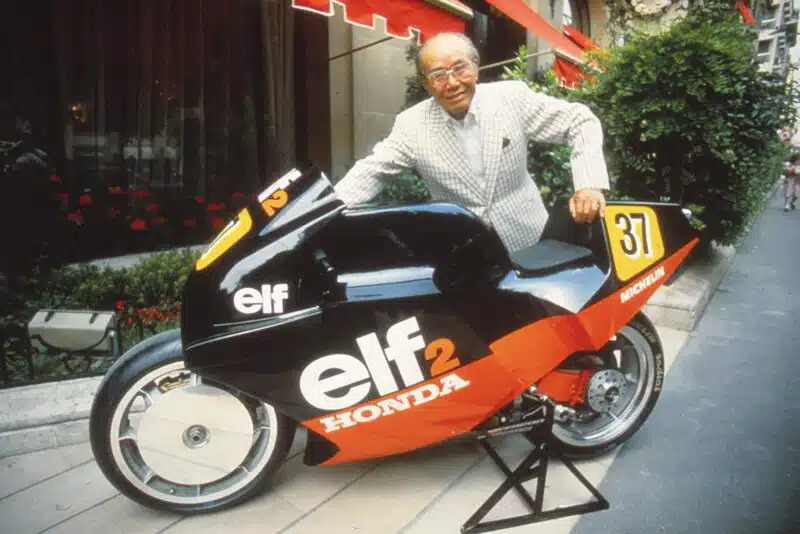
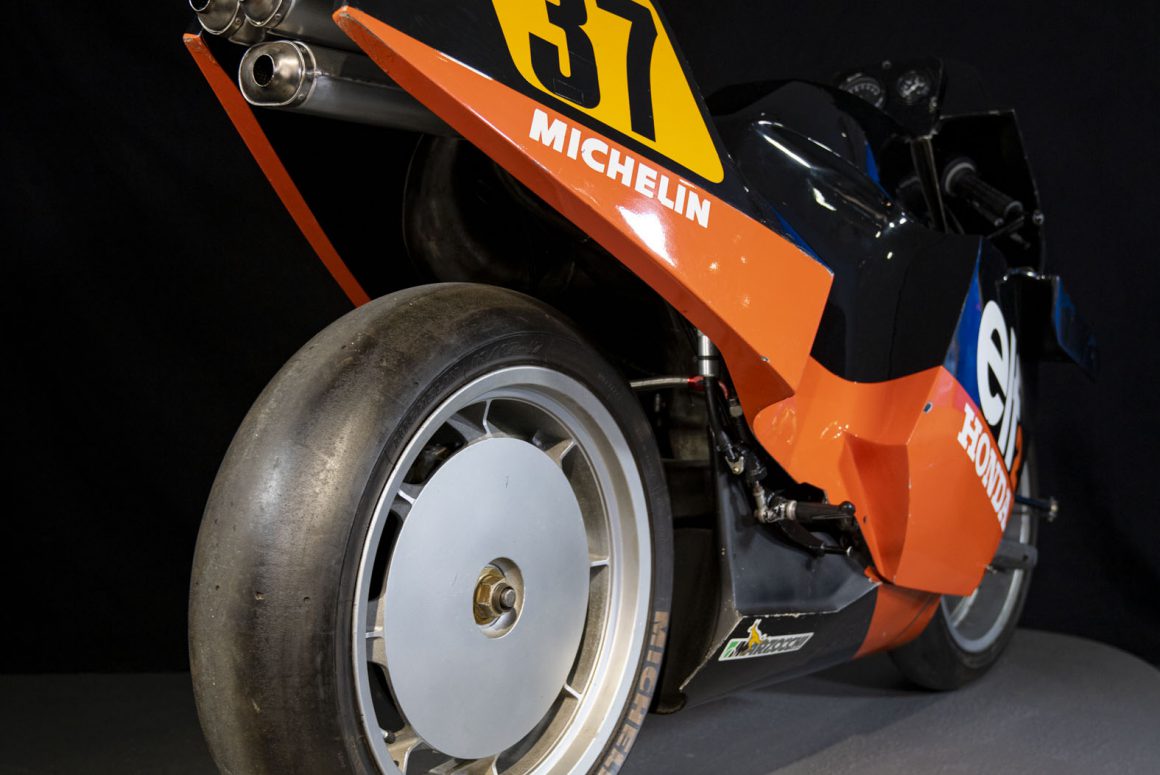
Visually, the result was stunning. Without forks, the front of the motorcycle appeared almost skeletal, with mechanical linkages exposed and the wheel supported by a futuristic swingarm structure. Even decades later, the design still looks like something from a concept bike of the future.
Honda Power: The NS500/RS500-Family V3 Two-Stroke
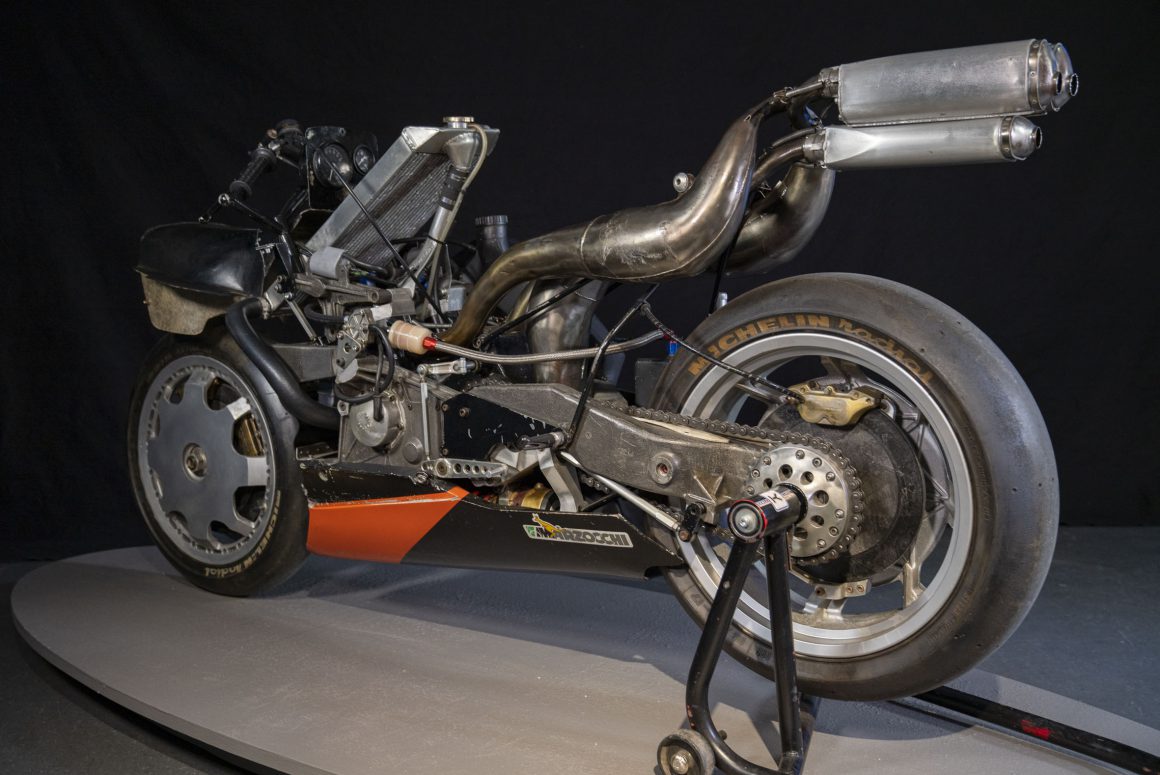
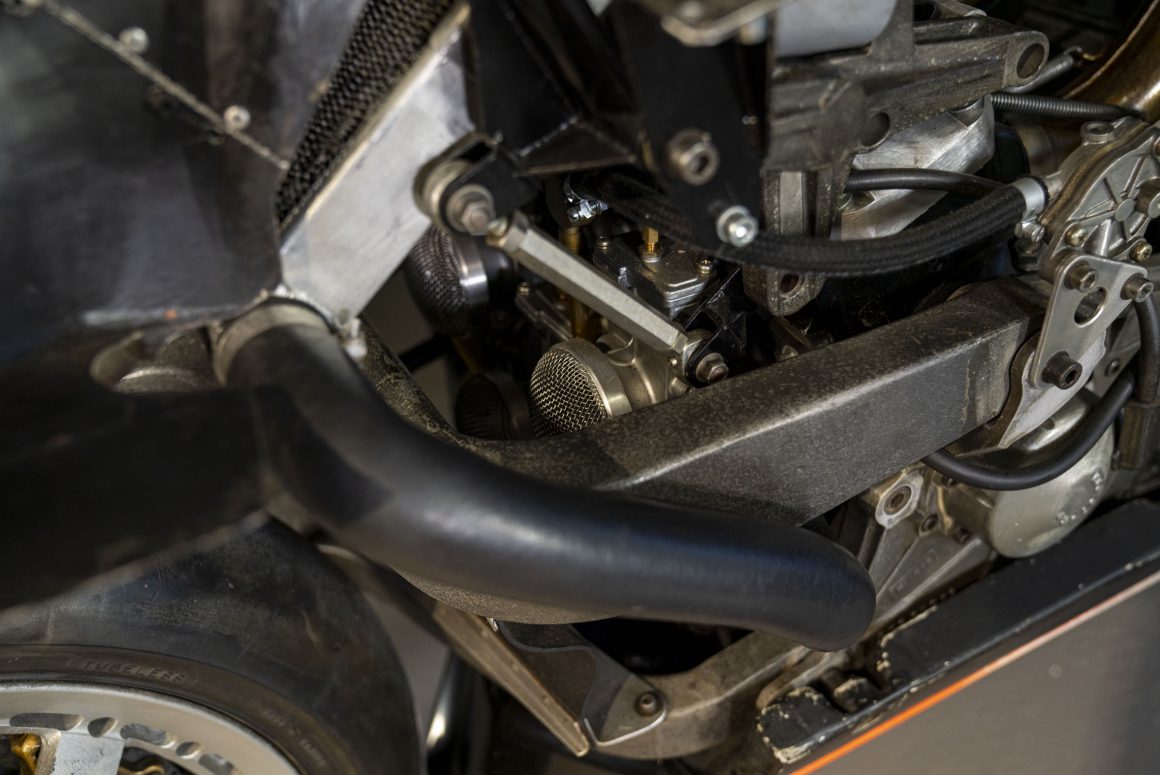
While the chassis broke new ground, the engine represented Honda’s cutting-edge Grand Prix technology of the era. The ELF-2 used a 500cc liquid-cooled two-stroke V3 engine from Honda’s NS500/RS500 Grand Prix family — the same architecture that carried Freddie Spencer to the 1983 500cc World Championship. Typical specifications included:
- Engine: 499cc V3 two-stroke
- Cooling: Liquid-cooled
- Induction: Reed valve
- Power: approximately 120+ horsepower in GP trim
- Transmission: Close-ratio GP racing gearbox
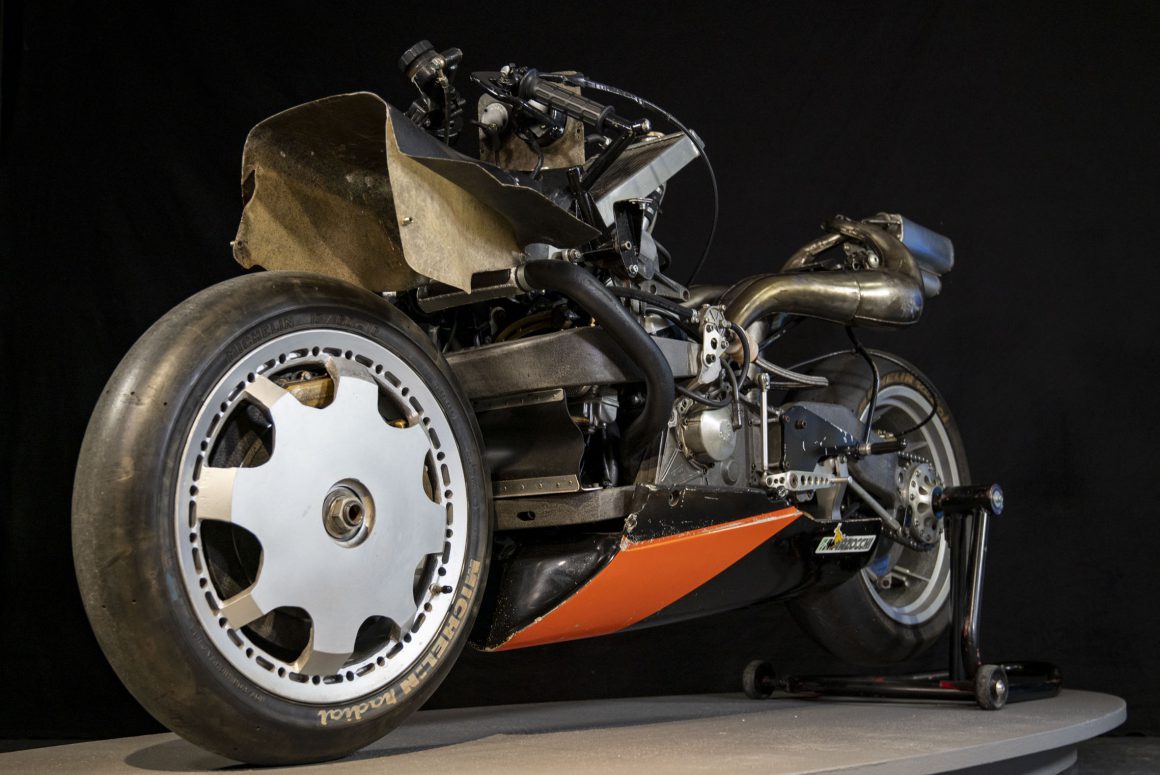
This lightweight, high-revving engine was a stark departure from the four-stroke endurance units used in earlier ELF machines. It also placed the ELF-2 squarely in the premier class of motorcycle racing: the 500cc Grand Prix World Championship.
Double Single-Sided Suspension
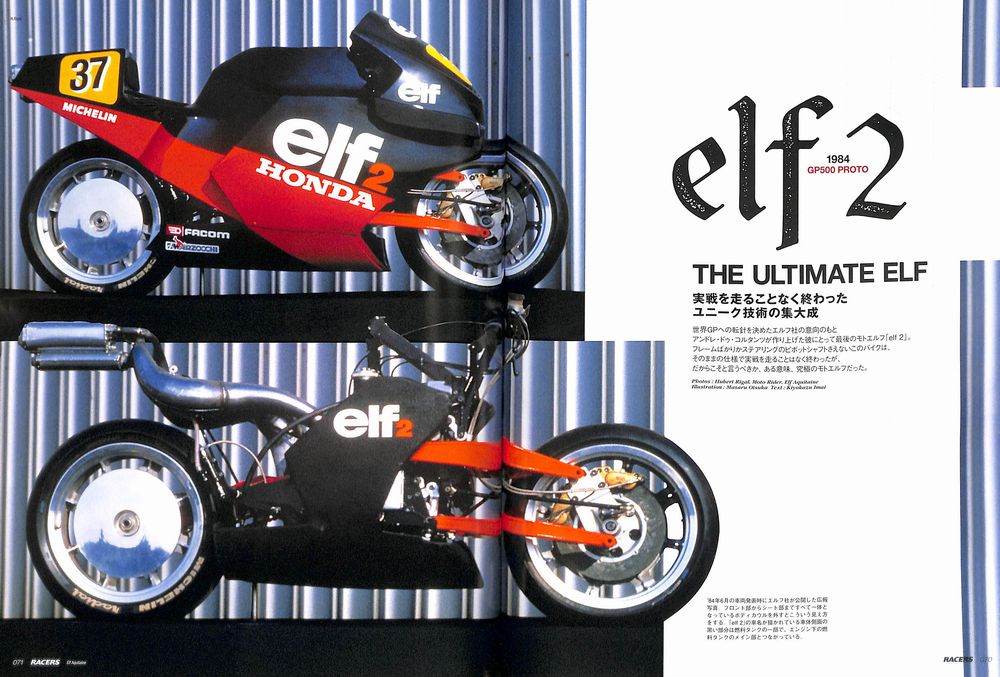
One of the most striking visual features of the ELF-2 was its double single-sided suspension layout. Both the front and rear wheels were mounted on single-sided swingarms. While the design originated partly for rapid wheel changes in endurance racing, it also offered structural and aerodynamic advantages in GP competition.
The concept would eventually influence mainstream motorcycle design, appearing on machines such as the Honda VFR series and the legendary RC30 superbike. Today, the single-sided swingarm is one of the few ideas from the ELF program that achieved widespread adoption.
Racing the Radical Machine
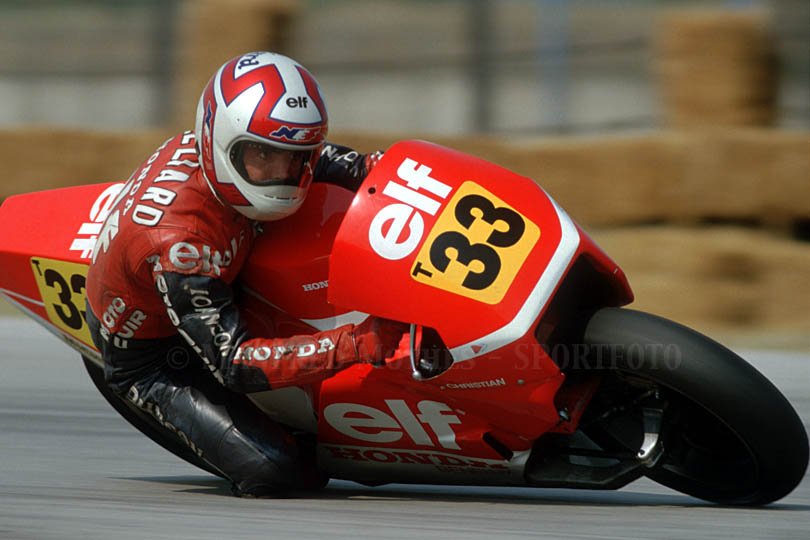
The ELF-2 was developed for the 500cc Grand Prix championship, where it would be campaigned by riders including Frenchman Christian Le Liard — closely associated with the ELF-2’s development — and later by British rider Ron Haslam, who would become the public face of the project’s subsequent GP machines.
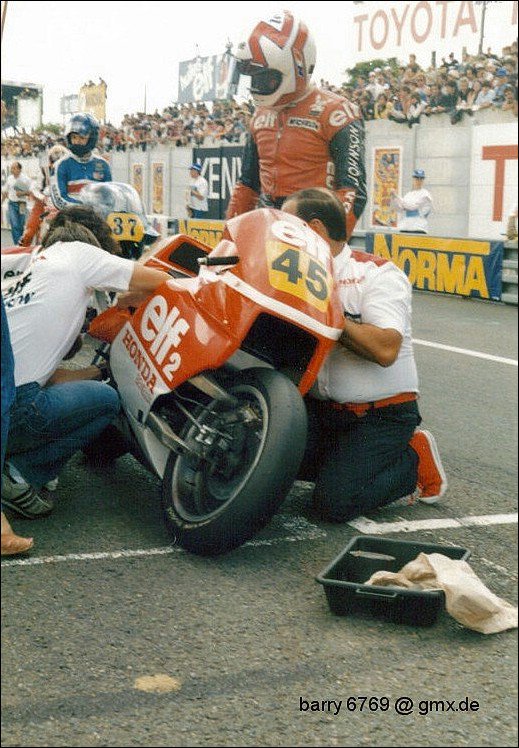
Grand Prix racing was a far harsher proving ground than endurance competition, demanding:
- Ultimate cornering precision
- Maximum acceleration
- Extreme braking performance
- Immediate rider feedback
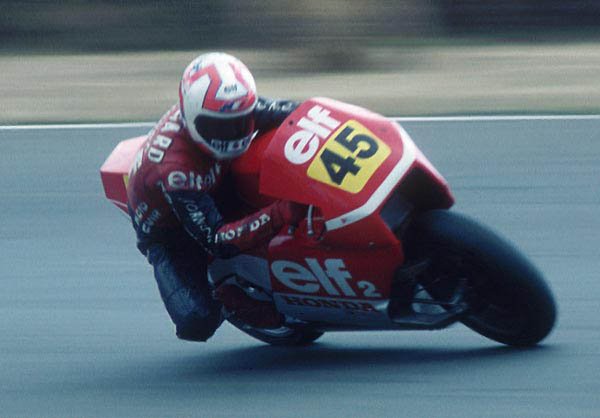
The ELF machines attracted enormous attention in the paddock. Even among factory prototypes, the forkless Honda stood out as something entirely different.
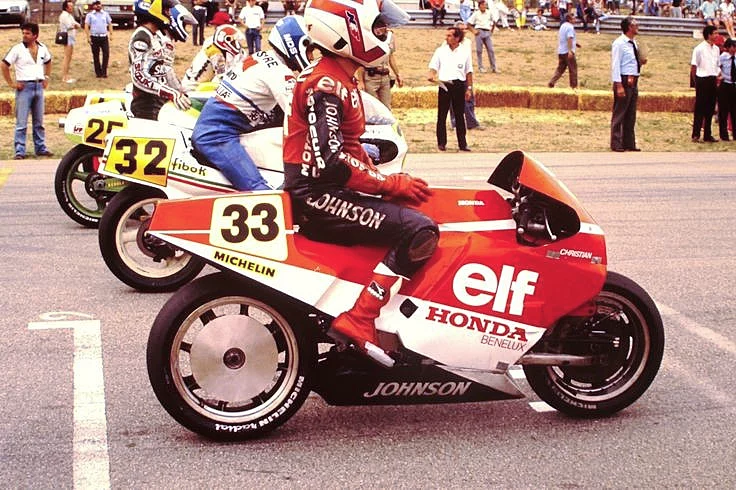
While the ELF-2 never dethroned conventional GP machines, it proved that radical chassis concepts could compete at the highest level of the sport — and it forced engineers throughout the industry to reconsider long-standing assumptions about motorcycle design.
The Evolution Continues
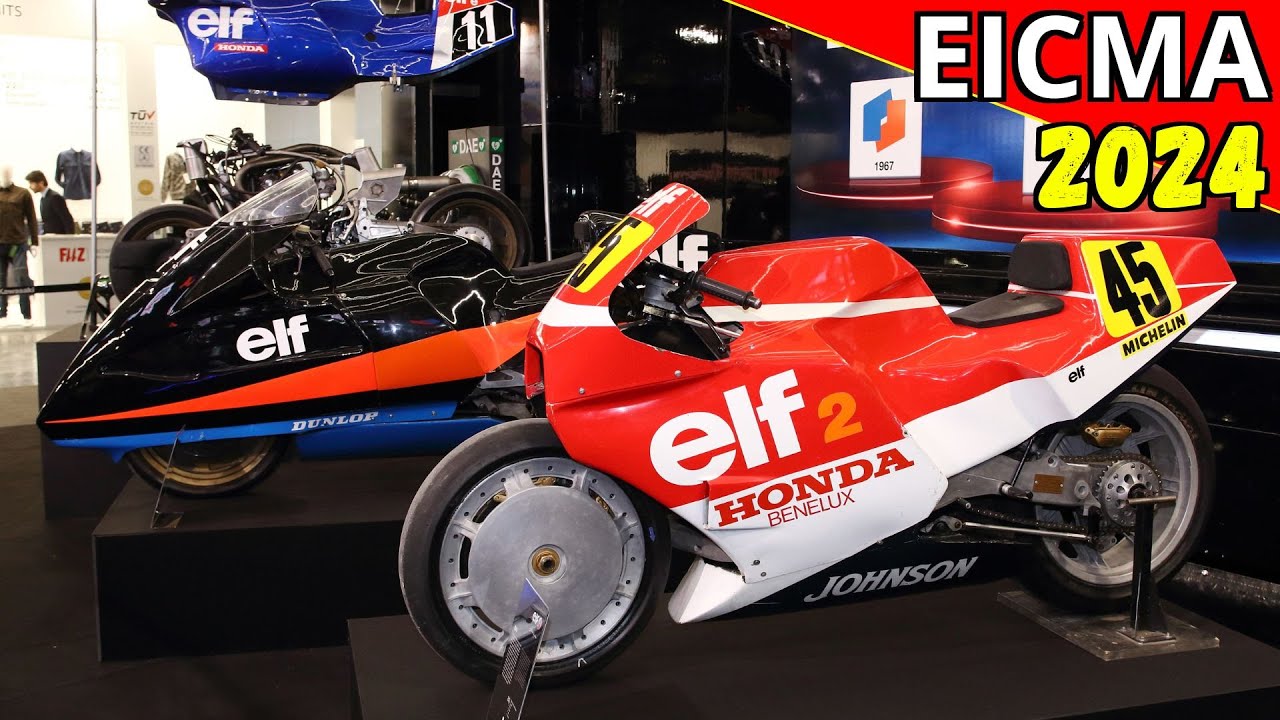
The ELF-2 was only one step in the broader development of the project. Throughout the 1980s, the machines continued to evolve:
- ELF-X — experimental prototype that validated the concept
- ELF-E — early endurance racing machine
- ELF-2 — first Grand Prix hub-center racer using Honda V3 technology
- ELF-3 and ELF-4 — further GP development machines
- ELF-5 — ultimate evolution powered by an NSR500 engine
Ron Haslam rode several of these later machines, becoming one of the most recognizable figures associated with the program.
Though hub-center steering never replaced conventional forks in Grand Prix racing, the ELF program remains one of the most fascinating chapters in motorcycle engineering.
Why Didn’t the Concept Take Over?
On paper, hub-center steering offered clear advantages. In practice, it proved difficult to perfect. The challenges included:
- Complexity: Intricate linkages required precise setup and maintenance
- Weight: Early designs often weighed more than conventional forks
- Rider Feel: Many racers preferred the familiar feedback of telescopic forks
Meanwhile, conventional suspension technology was improving rapidly. Inverted forks, advanced damping systems, and lightweight aluminum frames helped traditional designs close the gap. Still, the concept never disappeared. Motorcycles such as the Bimota Tesi and the exotic machines built by Vyrus continue to explore hub-center steering today.
Honda ELF-2: Specs
Manufacturer: ELF / Honda
Purpose: 500cc Grand Prix prototype
Engine: Honda NS500/RS500-family V3 two-stroke
Displacement: 499cc
Cooling: Liquid-cooled
Power: ~120+ hp (GP trim)
Transmission: Close-ratio racing gearbox
Front Suspension: Hub-center steering with single-sided swingarm
Rear Suspension: Single-sided swingarm
Frame: Experimental aluminum chassis
Primary Rider: Christian Le Liard (with Didier de Radiguès also associated)
Era: Mid-1980s Grand Prix racing
Glimpse of an Alternate Future
Looking back today, the Honda ELF-2 represents one of the boldest attempts ever made to rethink the motorcycle itself. Rather than refining the familiar formula, the engineers behind the ELF project asked a far more radical question: What if motorcycles evolved in a completely different direction?
For a brief moment in the mid-1980s, it seemed possible that the future of Grand Prix racing might belong to forkless, futuristic machines like the ELF-2. That future never quite arrived. But the spirit of experimentation behind the ELF program still stands as one of the most daring chapters in racing history — and the ELF-2 remains one of its most unforgettable machines.


