


“The British Single that Wasn’t…”
Few motorcycles embody the spirit of classic motorcycling better than the Yamaha SR500. Introduced in 1978 as the bigger-displacement sibling to the SR400, the SR500 became an instant icon: a lightweight, air-cooled, kickstart-only single that offered simple engineering, timeless looks, and a uniquely thumping riding experience.
Long before “retro motorcycles” became a market segment, the SR500 was already delivering that vintage feel straight from the factory. Today, it remains a cult favorite among purists, custom builders, and riders who want a machine with analog charm and old-school thumper character.
Model History / Overview
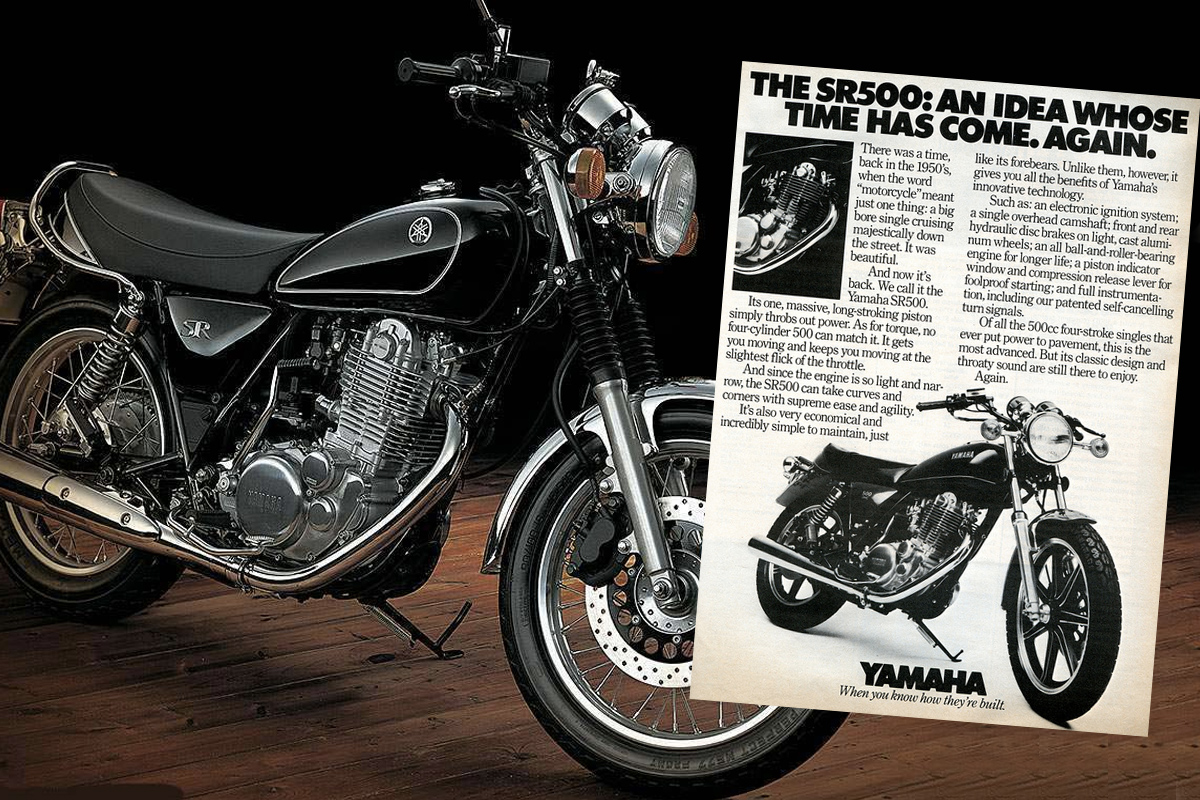
The SR500 was born from the XT500 dual-sport platform, using the same legendary engine architecture but adapted for street use. It gave riders of the late 70s and 80s something rare: a torquey single-cylinder standard that was light, nimble, and genuinely fun.
It recalled the British singles of yesteryear, but was oil-tight and much more reliable. For this reason, it’s earned a reputation as the “best British single never made” or “the British single that wasn’t.”
Highlights of the SR500’s appeal:
- Classic 1970s standard styling
- A big, thumping single with loads of personality
- Featherweight handling
- Exceptional simplicity and durability
- A platform that became a favorite for café racers, trackers, and retro builds
The SR500 offered an unapologetically mechanical experience — no frills, no electronics, no gadgets. Just a kickstarter, a thumper engine, and the open road.
Engine & Performance
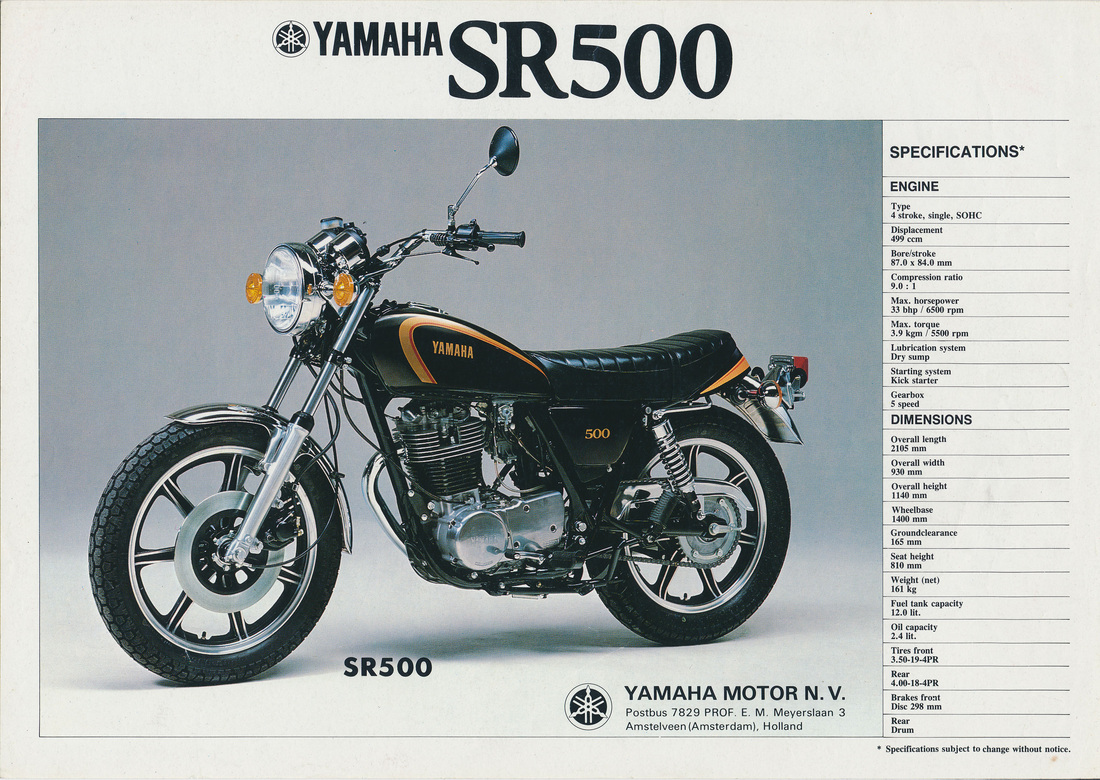
The SR500’s heart is a 499cc air-cooled SOHC single-cylinder engine — the quintessential “big thumper.” It has the same ruggedness as the XT500, but tuned for smoother, more predictable road manners.
Typical performance figures:
- 31–33 horsepower
- Approximately 26 lb-ft of torque
Power delivery is classic thumper: a strong, usable low-end, a satisfying midrange, and a slightly relaxed top-end. It’s never a fast bike by modern standards, but it delivers a visceral riding experience that many riders find more enjoyable than outright speed.
The engine is renowned for:
- Durability
- Ease of maintenance
- Minimal parts complexity
- A deep, hearty exhaust note
Kickstarting takes a bit of technique, but once learned, the process becomes part of the SR500’s charm.
Handling & Chassis
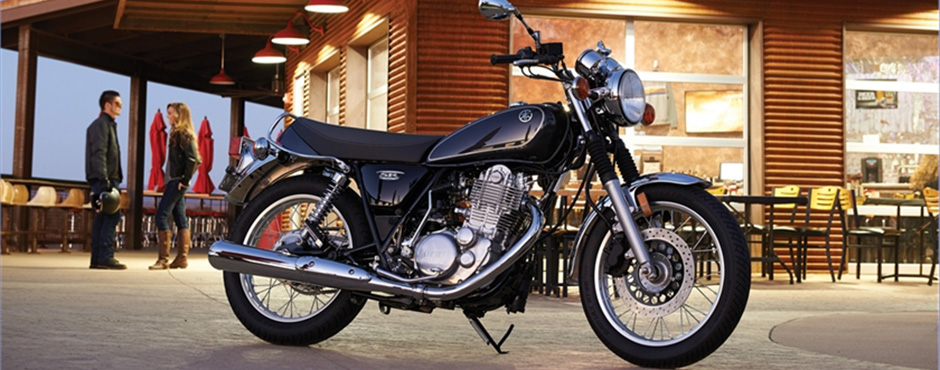
At just over 380 pounds wet, the SR500 feels incredibly light and flickable. The narrow chassis, low center of gravity, and simple suspension make it perfect for city riding, backroads, or even spirited canyon runs.
Characteristics of its handling:
- Neutral steering — easy to maneuver at all speeds
- Lightweight feel — ideal for beginners or smaller riders
- Comfortable, upright ergonomics
- Predictable suspension for relaxed street use
The SR500 is not a high-speed highway machine and isn’t meant to be. It’s happiest between 45 and 65 mph, where its thumper engine and lightweight chassis shine.
Design & Build
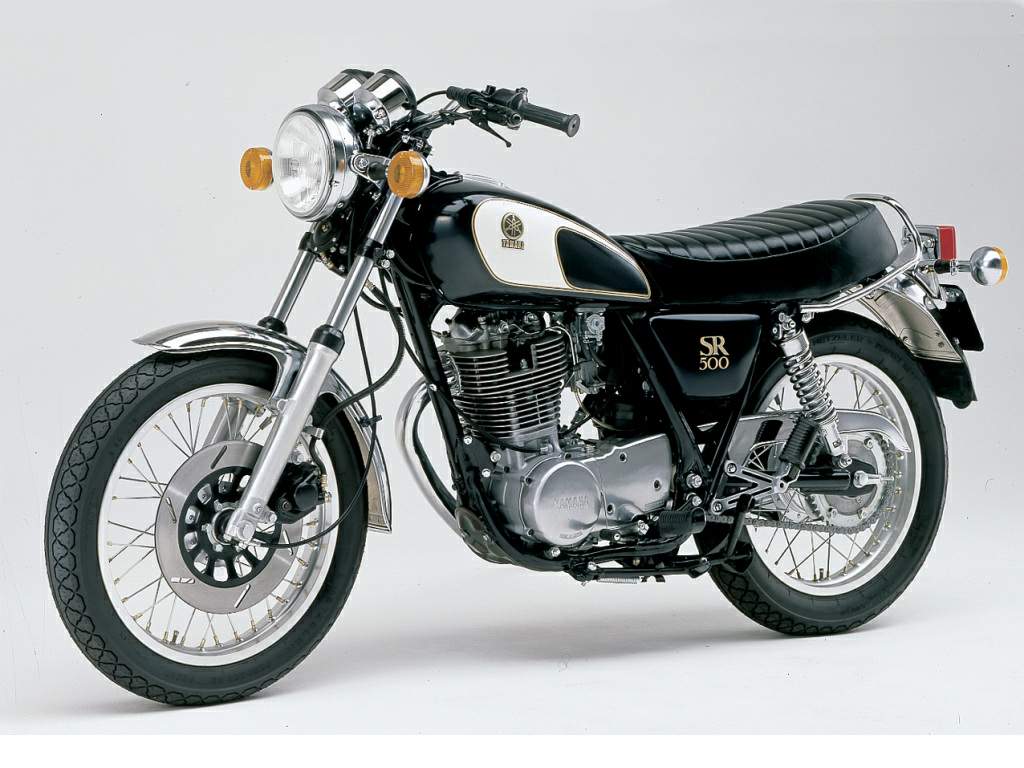
The SR500’s design is beautifully minimalist:
- Round headlight
- Analog gauges
- Spoked wheels
- Slim tank
- Upright stance
- Straight, classic lines
It is the epitome of the “uncluttered standard motorcycle.” Build quality is excellent for its era — these bikes were known to survive decades of riding with minimal fuss.
The simplicity of the platform also led to its adoption by custom builders. The SR500 became a foundational bike in café racer and brat-style movements, influencing custom culture around the world.
Why Riders Love the SR500
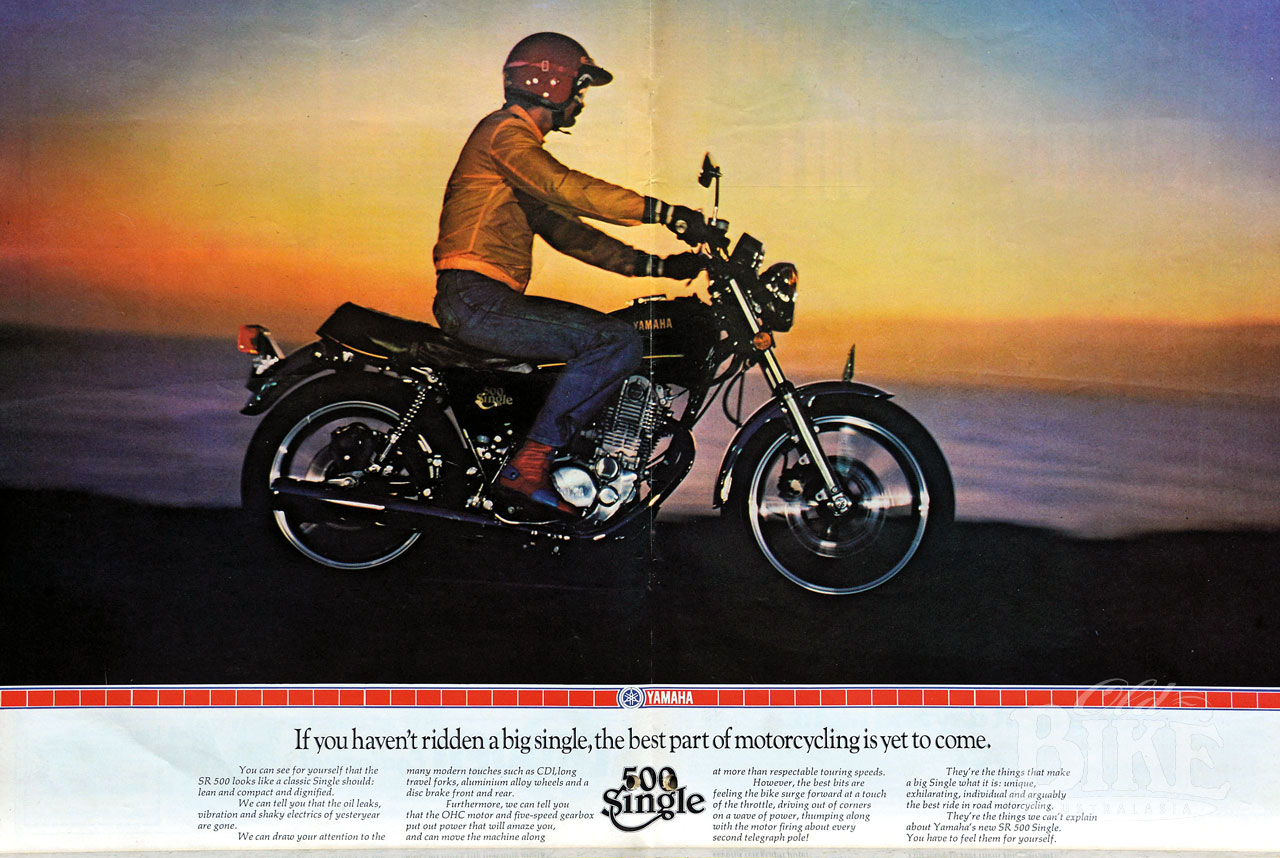
The SR500 inspires devotion because it offers something few motorcycles do today:
- A true vintage riding experience
- Kickstart-only charm
- Light weight and approachable feel
- Character and soul in every mechanical sound
- Exceptional reliability and easy maintenance
- A blank canvas for café, tracker, scrambler, or brat builds
For many riders, the SR500 is the perfect everyday classic — modern enough to be reliable, vintage enough to feel special.
Yamaha SR500 Specifications
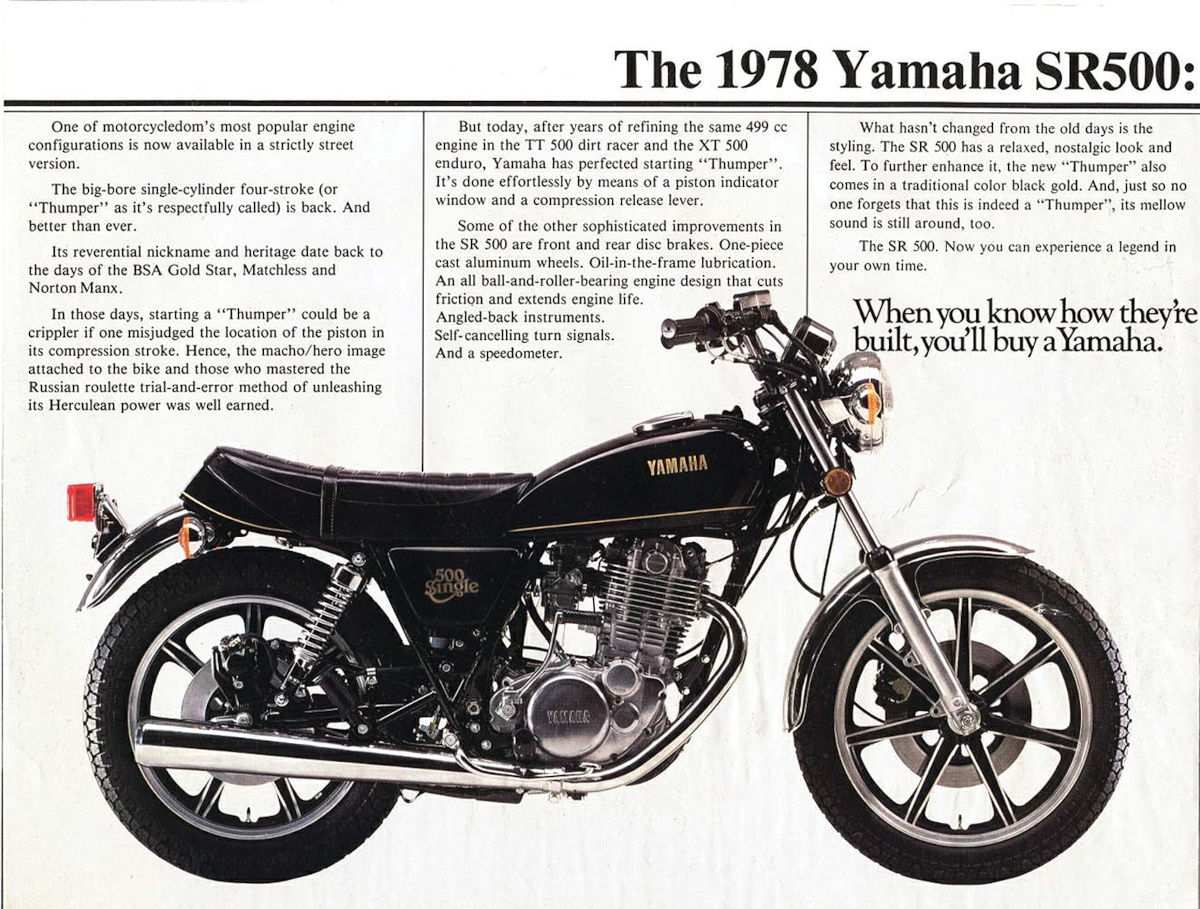
Engine: 499cc air-cooled SOHC single
Power: ~31–33 hp
Torque: ~26 lb-ft
Transmission: 5-speed
Carburetor: Mikuni
Front Suspension: Telescopic fork
Rear Suspension: Dual shocks
Front Brake: Single disc
Rear Brake: Drum
Curb Weight: ~385 lbs
Seat Height: ~31 in
Fuel Capacity: ~3.2 gal
SR400 vs. SR500: What’s the Difference?

Though visually nearly identical, the SR400 and SR500 have distinct personalities shaped by displacement, tuning, and character.
Engine & Power
SR400:
- ~24 hp
- ~20 lb-ft of torque
- Softer, easier to ride
- Smoother and more beginner-friendly
SR500:
- ~31–33 hp
- ~26 lb-ft of torque
- Stronger low-end punch
- More vibration, more thump, more personality
Verdict:
The SR400 is mellow and gentle; the SR500 feels like a proper big single.
Kickstarting & Feel
Both bikes require technique, but:
- The SR400 is slightly easier to kick over due to its smaller displacement.
- The SR500 has a heavier, more satisfying kick and a deeper thump.
Riding Experience
SR400:
- Ideal for new riders and relaxed commuting
- Smooth, light, unintimidating
SR500:
- More engaging for experienced riders
- Noticeably quicker, punchier, and more charismatic
Customization Potential
Both are iconic in the café/brat community. Builders tend to favor:
- SR400 for lightweight city builds
- SR500 for performance-oriented customs or classic café racers
Which Should You Choose?
Choose the SR400 if:
- You want a forgiving, approachable retro bike
- You prefer smoothness over power
- You’re new to kickstarting or new to motorcycling
Choose the SR500 if:
- You want a classic thumper with real punch
- You enjoy analog character and mechanical feel
- You want the “full experience” of a big single
Both bikes are wonderful — the SR400 is the gentler intro, the SR500 is the full-bodied, old-school experience.
SR500 vs. XT500

Though they share the same engine lineage, the Yamaha SR500 and XT500 deliver very different riding experiences — one built for the street, the other for the trail.
Engine & Power
Both bikes use variations of Yamaha’s classic 499cc air-cooled single, but their personalities differ:
- SR500: ~31–33 hp, ~26 lb-ft — quicker revving, cleaner throttle response, tuned for smoother street performance.
- XT500: ~27–29 hp, ~25 lb-ft — softer top-end but stronger low-end grunt, ideal for dirt and technical terrain.
The SR feels more responsive on pavement; the XT feels more tractable in the rough.
Chassis & Handling
This is where the split becomes obvious.
- SR500: Lower stance, street geometry, shorter suspension, nimble road manners, and excellent balance in city or backroad riding.
- XT500: Taller with long-travel suspension, wide bars, and enduro ergonomics built for rocks, sand, and uneven terrain.
The SR500 is a natural street bike; the XT500 is a true off-road thumper.
Design & Riding Character
- SR500: Classic roadster lines, upright position, light and friendly on pavement, with a smooth thump and predictable handling.
- XT500: Rugged dual-sport styling, more vibration, dirt-bike feel, and a “tractor-like” low-end that excels off-road.
Which One Is Right for You?
- Choose the SR500 if you ride mostly pavement and want a classic, simple street thumper with a bit more punch than the SR400.
- Choose the XT500 if you ride trails, fire roads, or mixed terrain and want Yamaha’s legendary off-road single with Dakar heritage.
Both bikes are icons — the SR500 defines the street thumper, while the XT500 remains one of the most enduring dual-sports ever built.
SR500 in Pop & Custom Culture
The SR500, along with the SR400, became a foundational model in Japan’s custom scene. Builders like BratStyle, Zero Engineering, and countless independent shops turned SRs into:
- Café racers
- Brat-style customs
- Flat trackers
- Scramblers
- Minimalist “city thumpers”
In Japan, the SR500 and SR400 were cultural staples for decades — youthful, cheap, stylish, and endlessly customizable. This influence later spread to Europe and North America, helping kickstart the global café racer revival of the early 2000s.
Summary
The Yamaha SR500 remains one of the best pure retro motorcycles ever built. Lightweight, simple, reliable, and full of character, it offers a riding experience that modern machines rarely match. Its thumping engine, minimalist design, and limitless customization potential have solidified its place as an icon of vintage-style motorcycling.
If you want an analog, soul-filled motorcycle with vintage charm and surprising everyday usability, the Yamaha SR500 is a timeless choice. It’s engaging, reliable, and beautifully simple — a genuine piece of motorcycling history that still feels relevant today.
Yamaha SR500 Customs
Here are some of the SR500 builds we’ve recently featured…
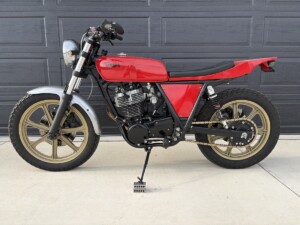 Pulls Like a Tractor: 1978 Yamaha SR500 Street Tracker - For Sale: Marty Coblentz’s BSA-Inspired “Thumpstar”… When Yamaha introduced their air-cooled 500 singles in the late 1970s — the XT500, TT500, and SR500 — many enthusiasts saw them as a Japanese version of the British […]
 Fast and Left: Yamaha SR500 Flat Tracker - A First Flat Tracker from Workshop43… Yamaha’s 500cc singles are some of the most versatile motorcycles ever built. The XT500 became a darling of the off-road world, taking home trophies in the big African […]
 TÜV Approved: Yamaha SR500 Roadster / Scrambler - Workshop43 rescues a neglected classic… The Yamaha SR400 and SR500 were street-centric versions of the company’s 500cc TT/XT enduro bikes, which gained fame in the great African rallies of the late 70s. But their […]
 Yamaha SR500 Tracker from “Kid McQueen” - A 70s-inspired SR500 tracker from 20-year-old Moritz Bree… Back in 2016, a 12-year-old custom phenom from Austria, Moritz Bree, came onto the scene. He was involved in designing custom bikes for Free Spirits and Zaeta, […]
 Omega Racer: Yamaha “SR534” Café Racer - Few bikes have provoked such a long-term love affair among riders as the Yamaha SR series. Born in the late 1970s from the XT500 enduro, the street-oriented SR400 and SR500 roadsters were Japanese versions of […]
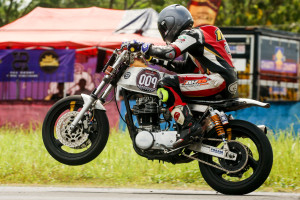 Muscle Thumper: Yamaha SR400 Race Bike - Prama Motorworks builds a race-winning custom…in just four weeks! Introduced back in 1978, the Yamaha SR400 would remain in production all the way until 2021, earning a cult following for its simplicity, ruggedness, and quick-revving […]
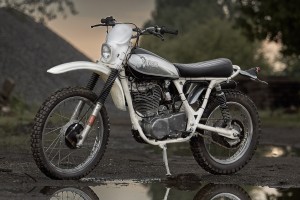 Yamaha “SRXT500” Vinduro by 86 Gear - From Street to Scrambler… By 1971, BSA and Matchless had both gone out of business, and with them the British 500 singles whose torque and character had proved perfect for such a wide variety of […]
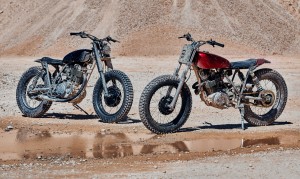 Vulture Moto’s Vintage 500 Series - A pair of 500 thumpers from Germany’s Vulture Moto! The 500cc “big single” remains one of the best, most versatile all-around engine configurations in motorcycling history, from the British 500 singles of yesteryear to the […]
 Super Single: Yamaha SR500 Cafe Racer by Spero Floro - Truck mechanic Spero Floro builds one hot thumper… The Yamaha SR500 remains one of the world’s most beloved singles, a street version of the iconic XT500 enduro. When a street bike begins life as a […]
 Stay Gold: Yamaha SR500 Street Tracker - The Yamaha SR500 is a street version of the beloved XT500 dual-sport, featuring a slightly modified version of the 499cc twin-valve engine, electronic ignition, and dual 18-inch wheels. Built to bear a strong family resemblance […]


