For Sale: Marty Coblentz’s BSA-Inspired “Thumpstar”…
When Yamaha introduced their air-cooled 500 singles in the late 1970s — the XT500, TT500, and SR500 — many enthusiasts saw them as a Japanese version of the British big singles of yesteryear. At the time, the stars of the motorcycle industry were complex multi-cylinder superbikes, but Yamaha saw an opportunity for a simple, SOHC, kick-only thumper that would remind riders of a simpler era.
“In some ways, the SR was a throwback to legendary motorcycles from BSA, Matchless, Velocette, Norton, and Triumph. It was arguably the last call for the golden-era British single formula, even though it was designed and built by a Japanese manufacturer…” -Andy Greaser, Revzilla
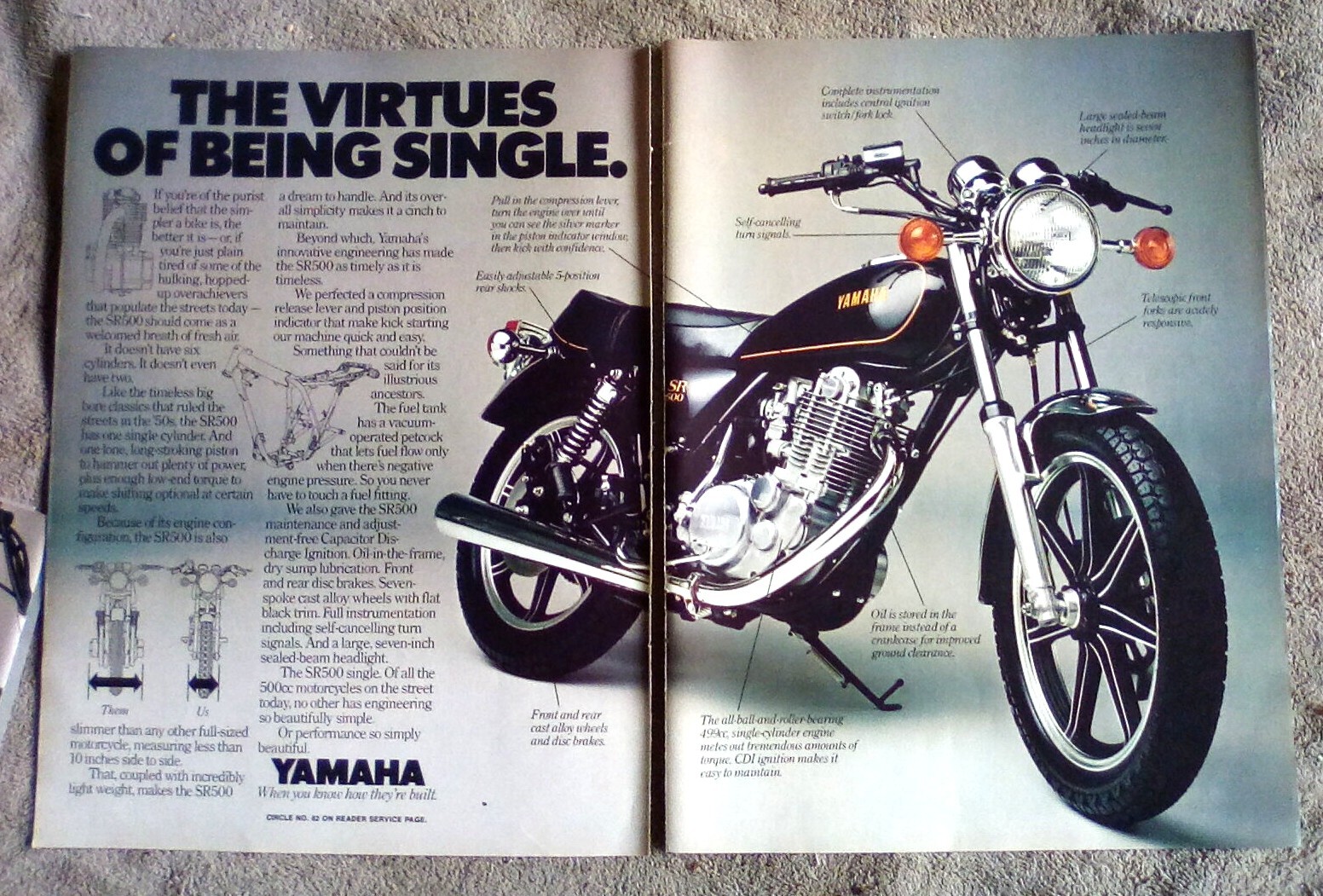
The SR500 was the street-oriented version of the XT500 enduro, which had won the two editions of the Paris-Dakar Rally…and the hearts of enthusiasts around the globe. Though its shorter-stroke sibling, the SR400, would remain in production until 2021, the SR500 was only available in the US for a few short years (1978-1981).
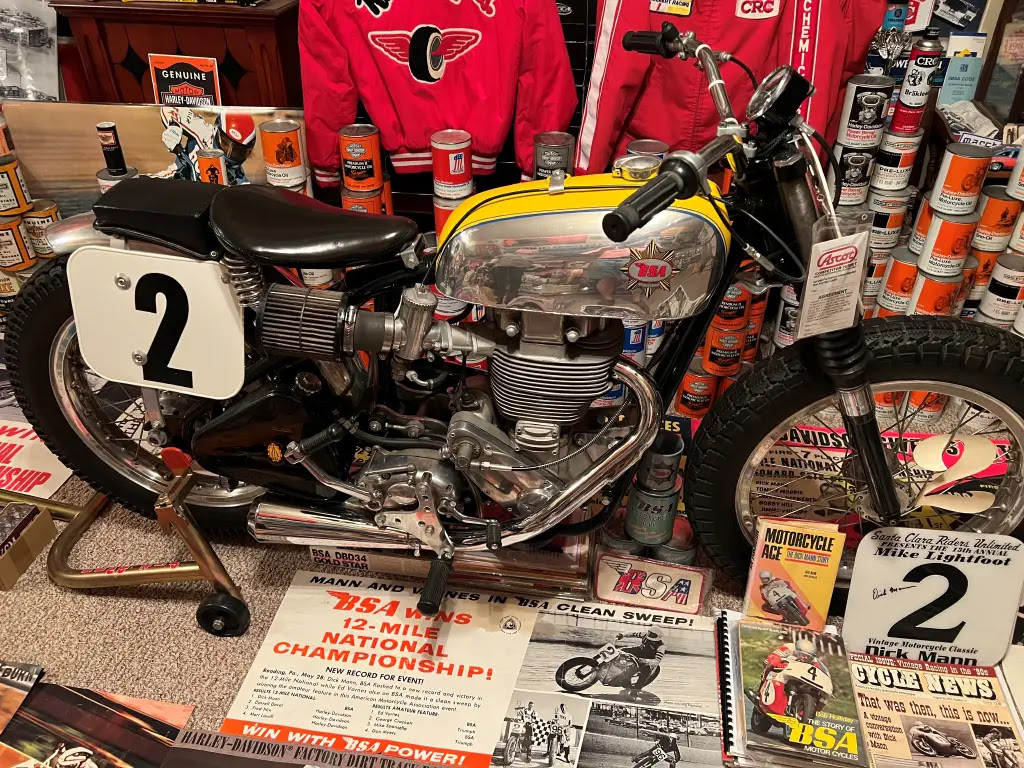
Enter our friend Marty Coblentz of Nevada, who raced motocross in his younger days and pursued welding and fabrication as both a hobby and profession. Marty owned a number of British bikes from the 1950-60s, including one of the most legendary singles ever produced, a BSA Goldstar.
“I owned a ’56 BSA DB34 Goldstar when I was a kid and fell in love with the thumper torque. It was set up like a flat tracker and was a blast to ride on the local fire roads. Later on in life I owned a Yamaha XT500 and enjoyed that torquey, reliable dual sport for many years.”
You may recall Marty’s other build, “Xcess” — a Yamaha XS650 café racer we showcased last month.
As with the XS, when it came time to choose a platform for a custom build he could actually ride, Marty chose one of Yamaha’s British-influenced machines. In this case, a 1978 SR500.
“I wanted to re-live the old BSA days and thought the SR would give me an affordable, reliable platform that would allow me to keep going once the pavement ended.”
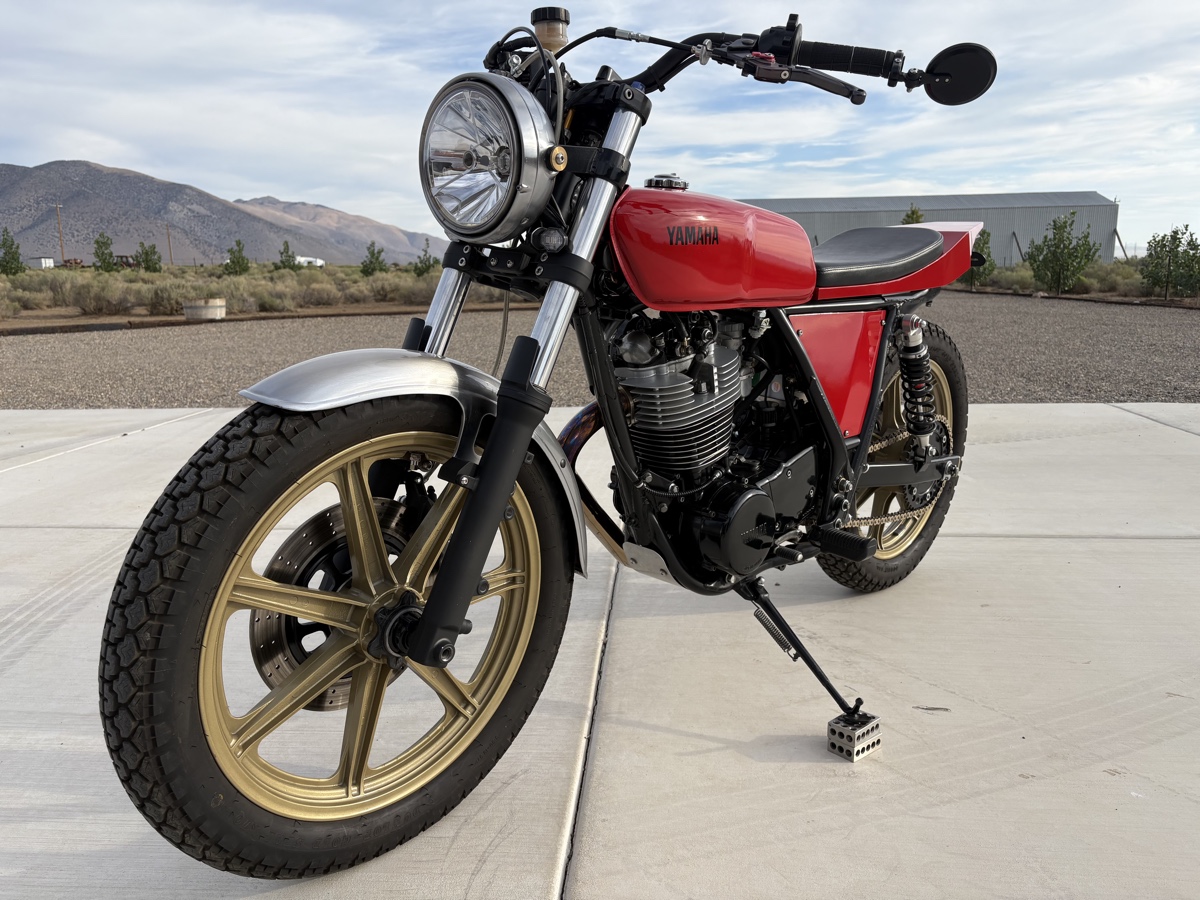
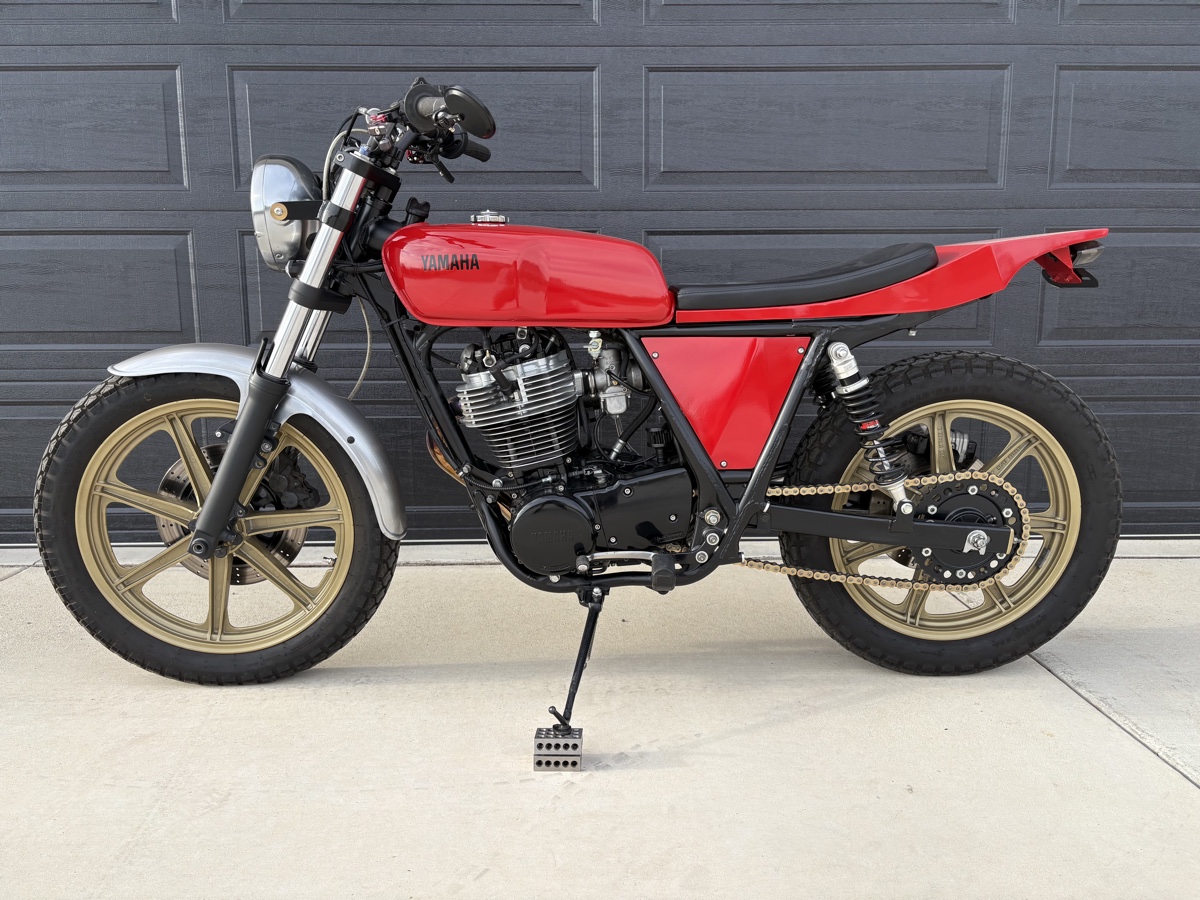
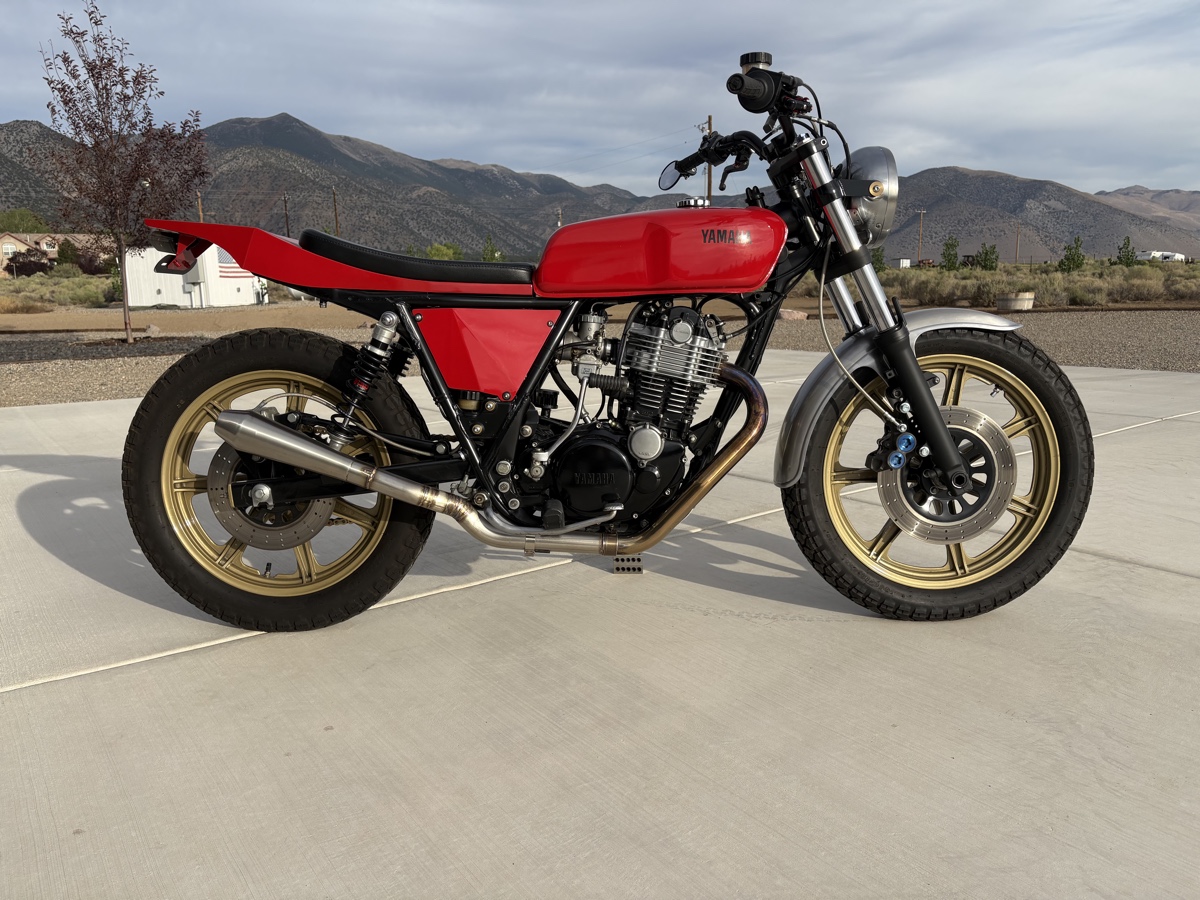
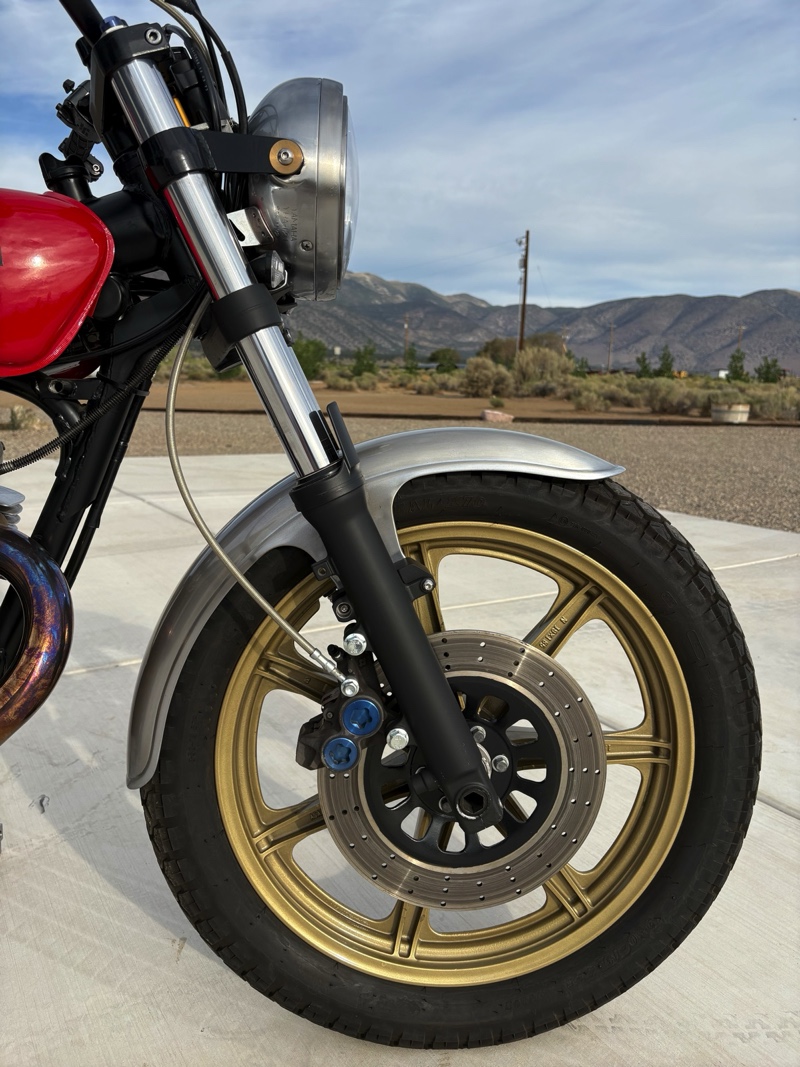
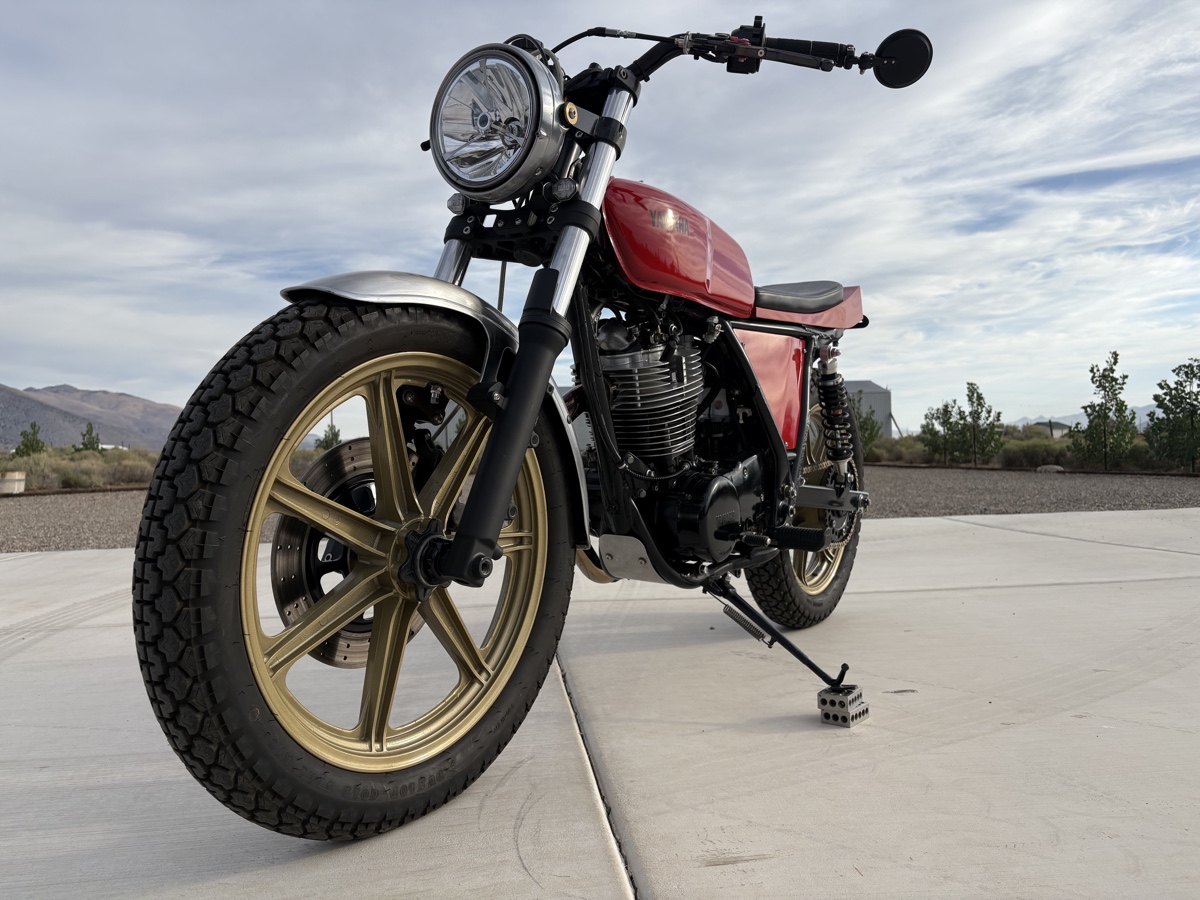
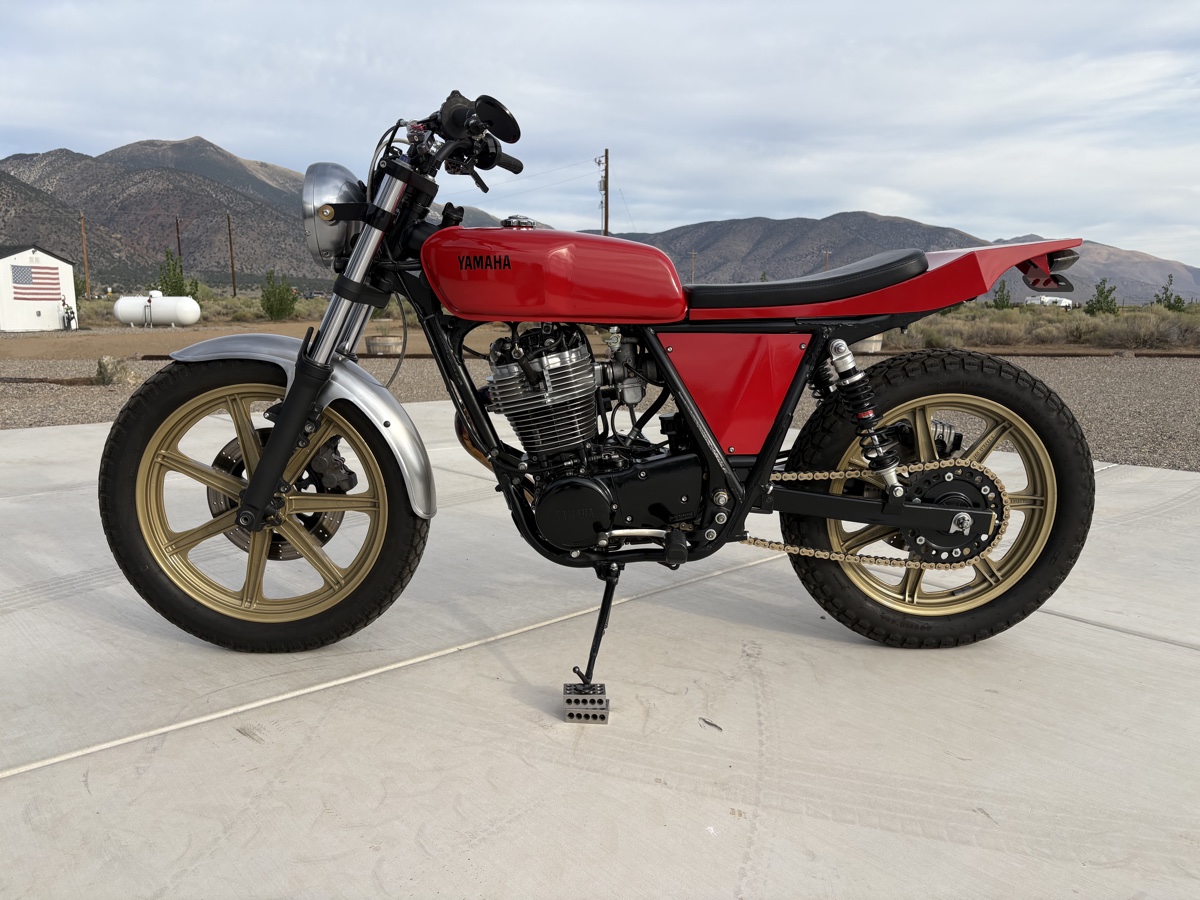
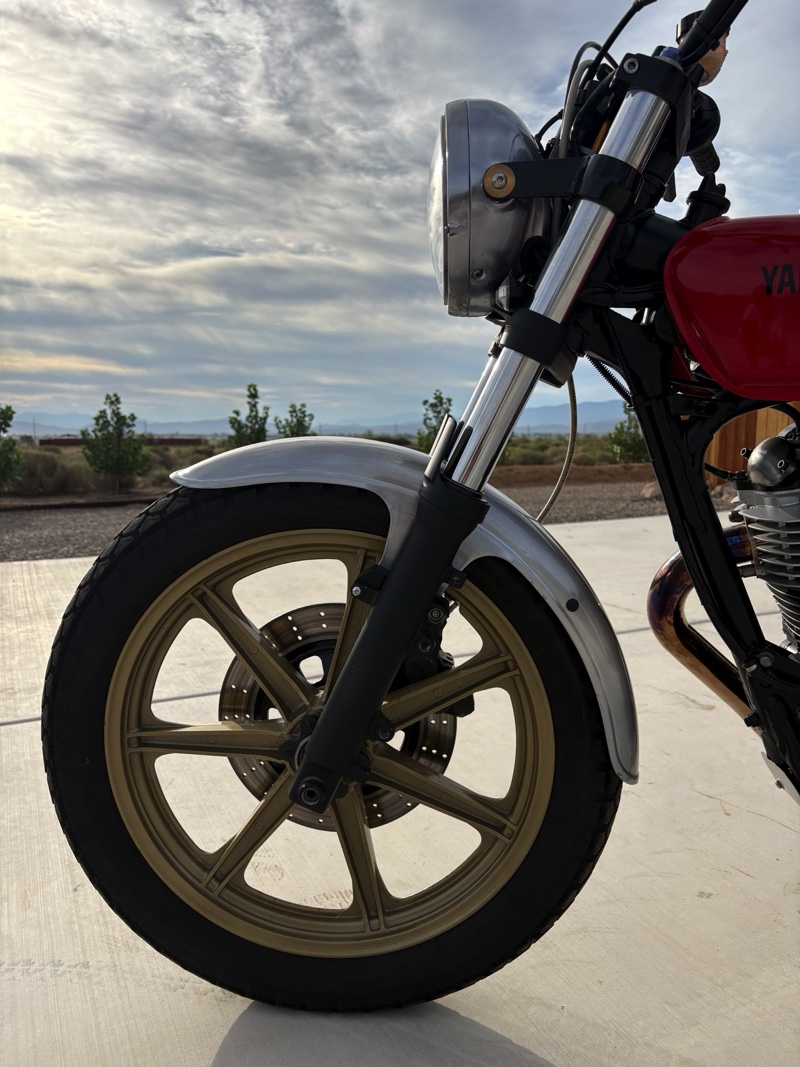
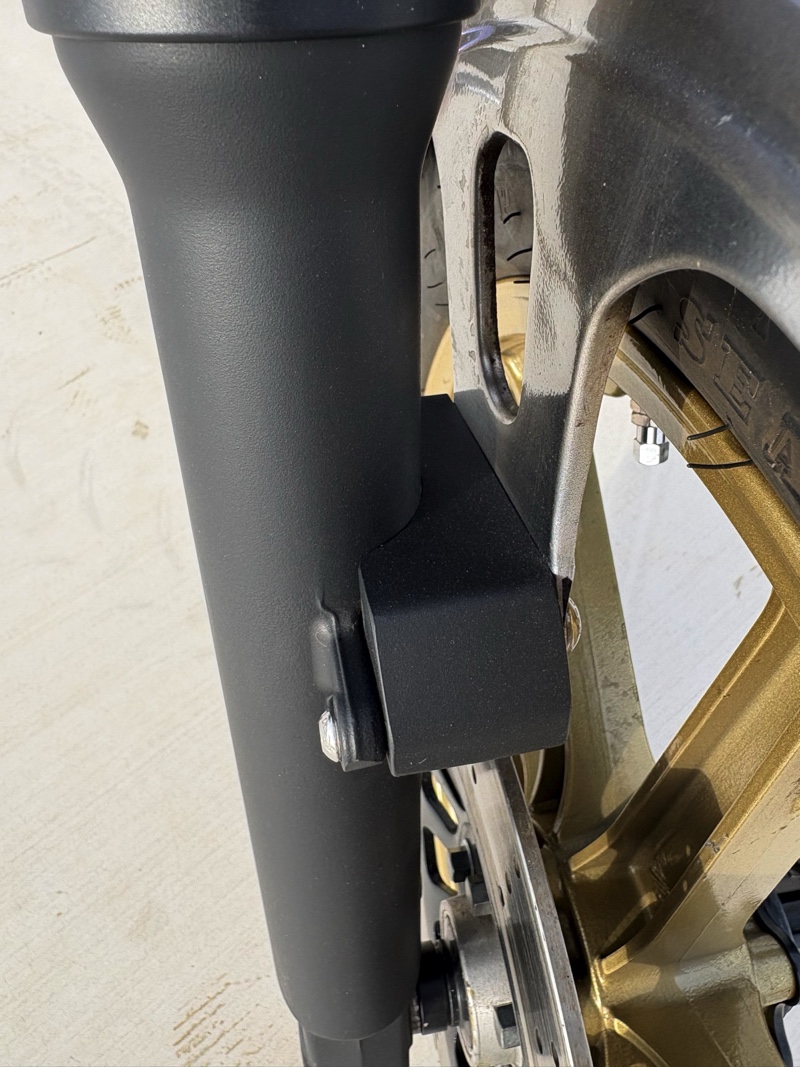
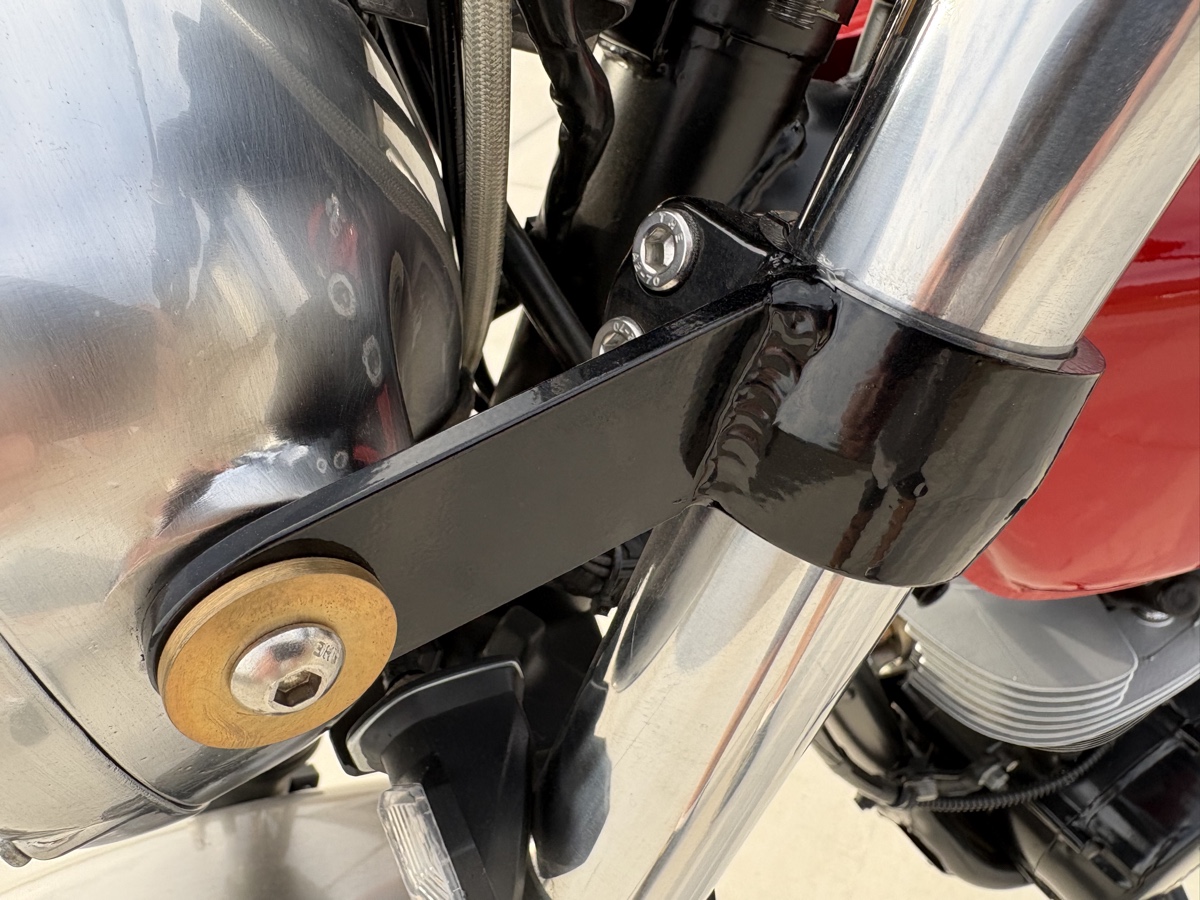
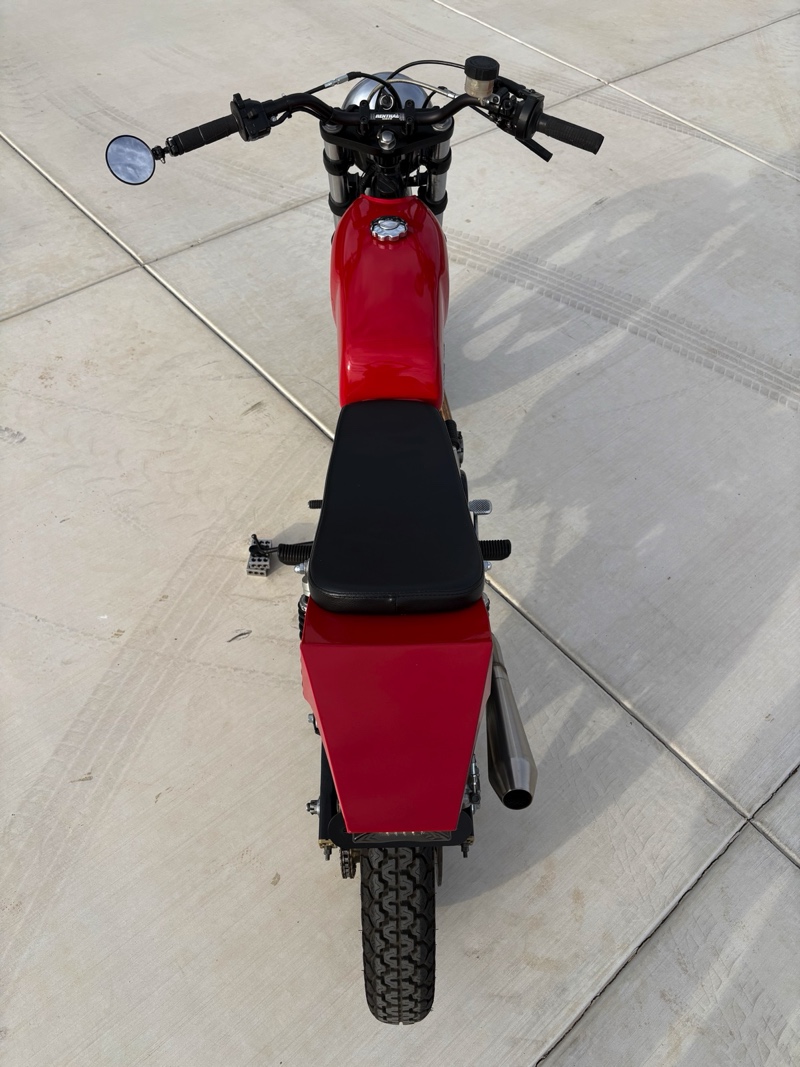
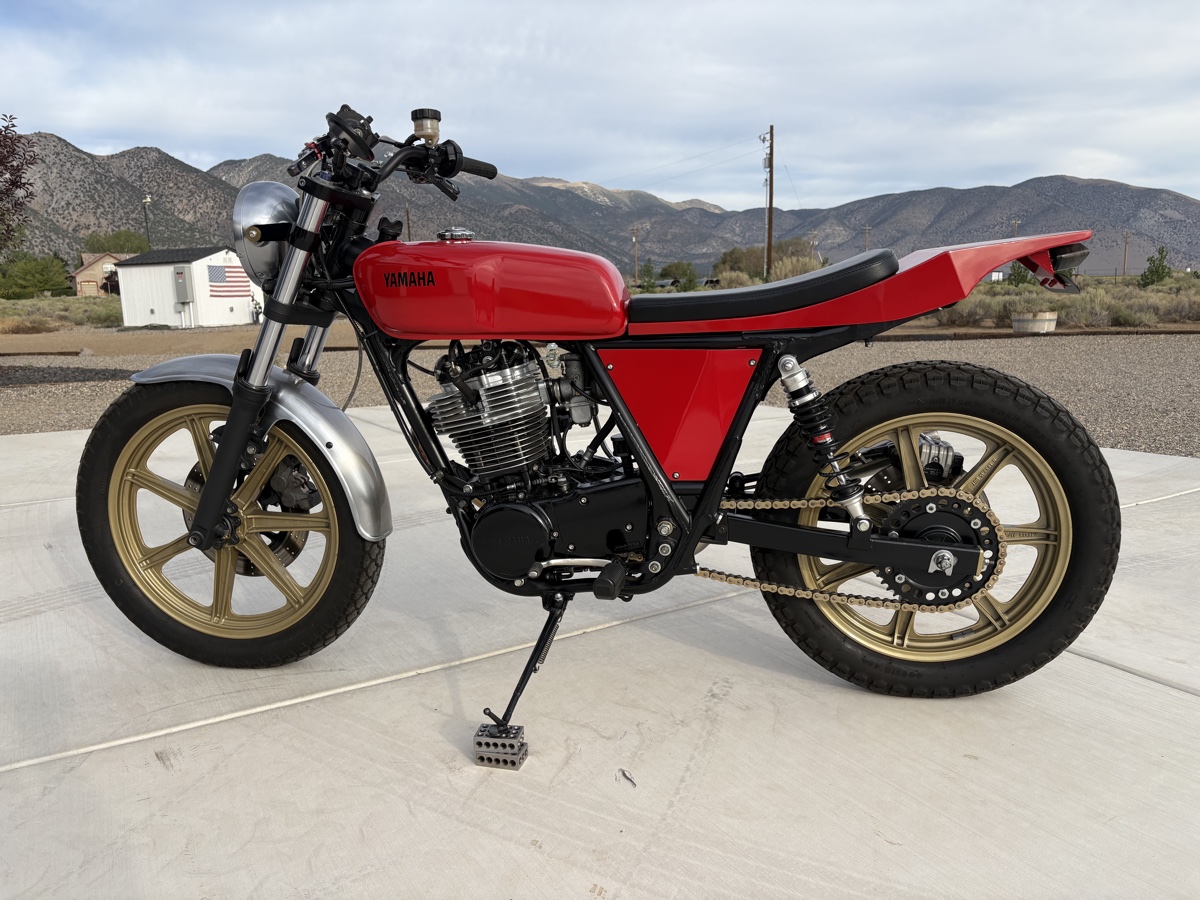
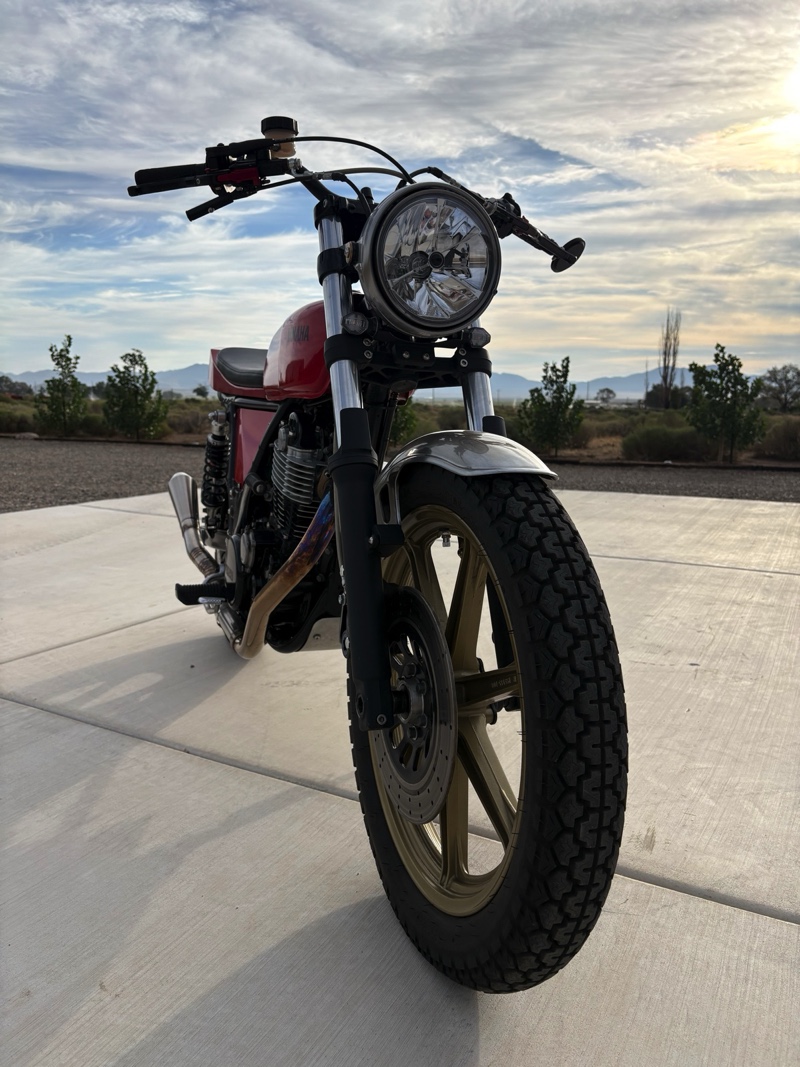
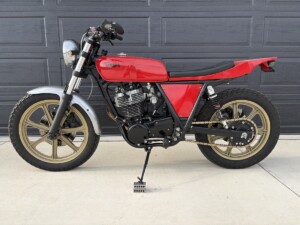
With the exception of the paint, Marty did all of the work himself. Up front you’ll find a set of Yamaha R6 conventional (non-USD) forks and a single disc brake, which increase handling and stopping performance while preserving a more classic look. You’ll also notice a third triple clamp, which serves as the base for the custom-fabricated headlight mounts.
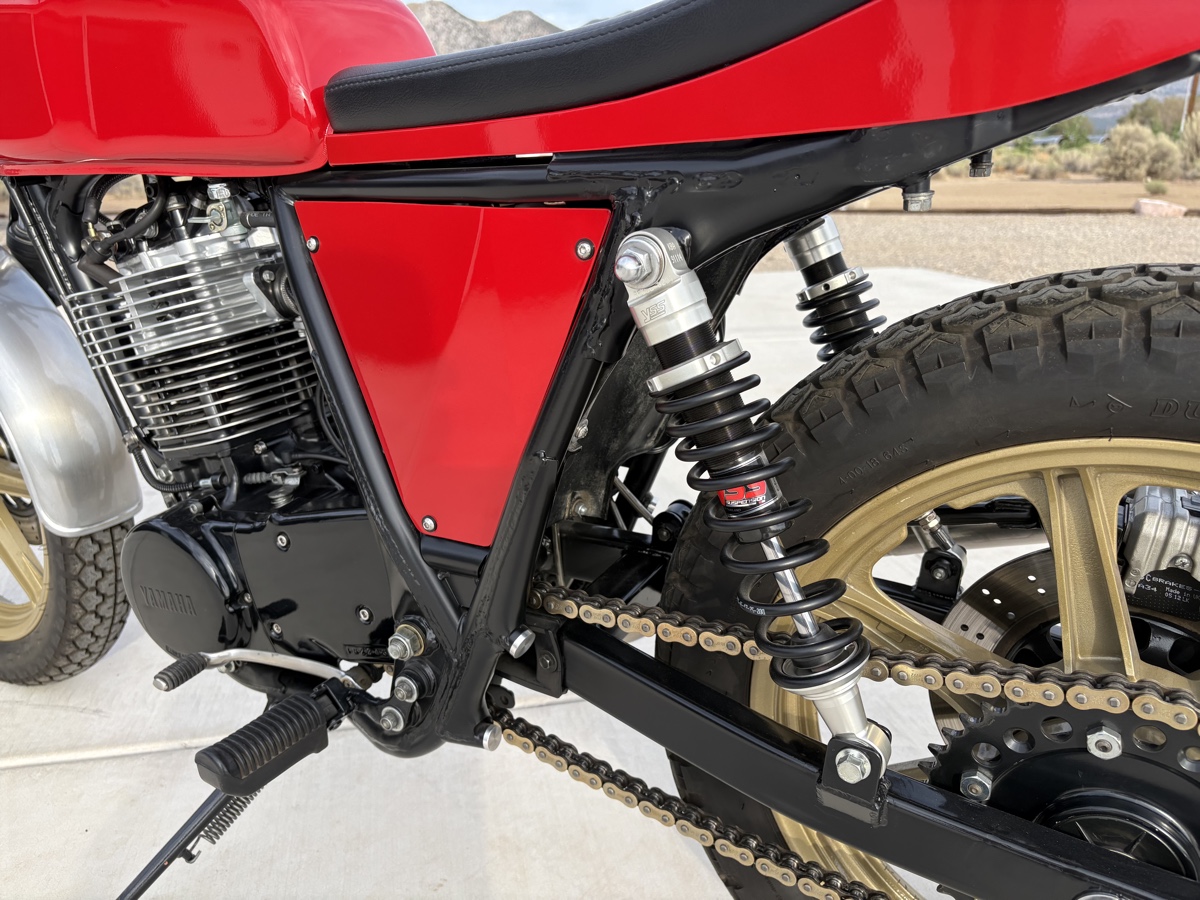
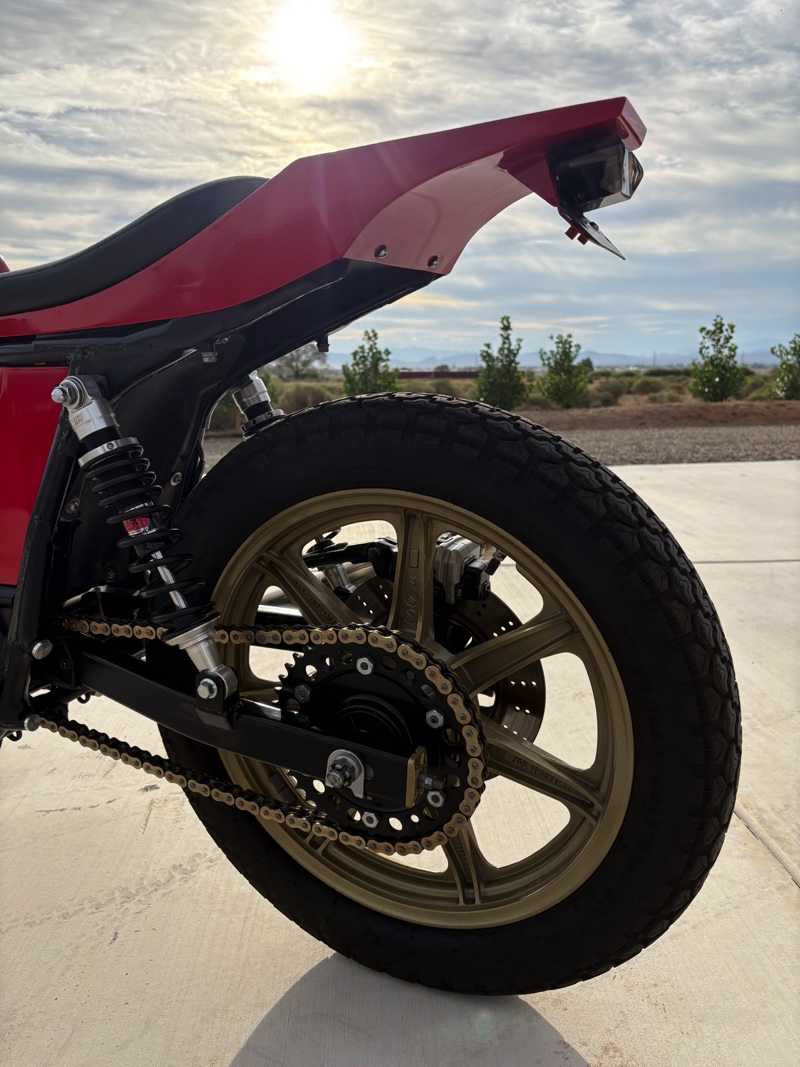
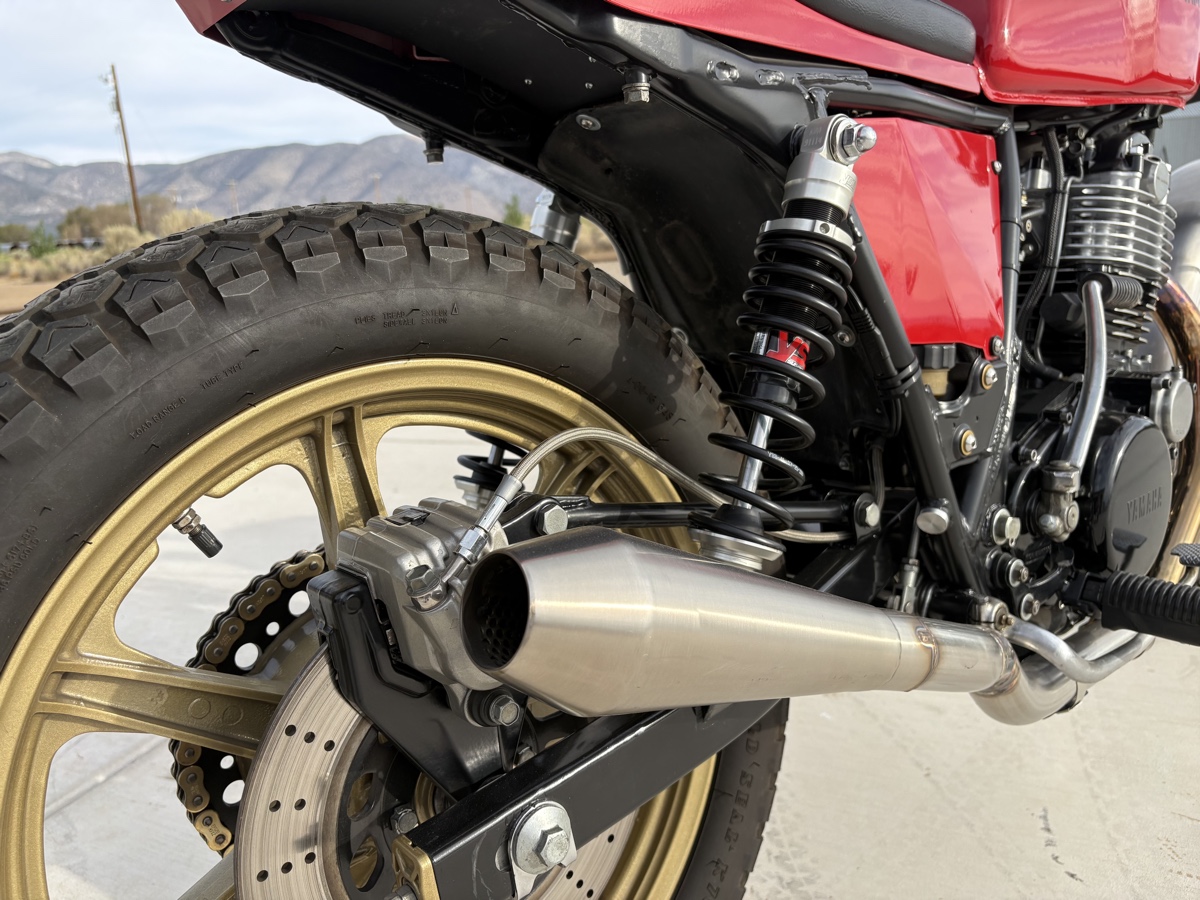
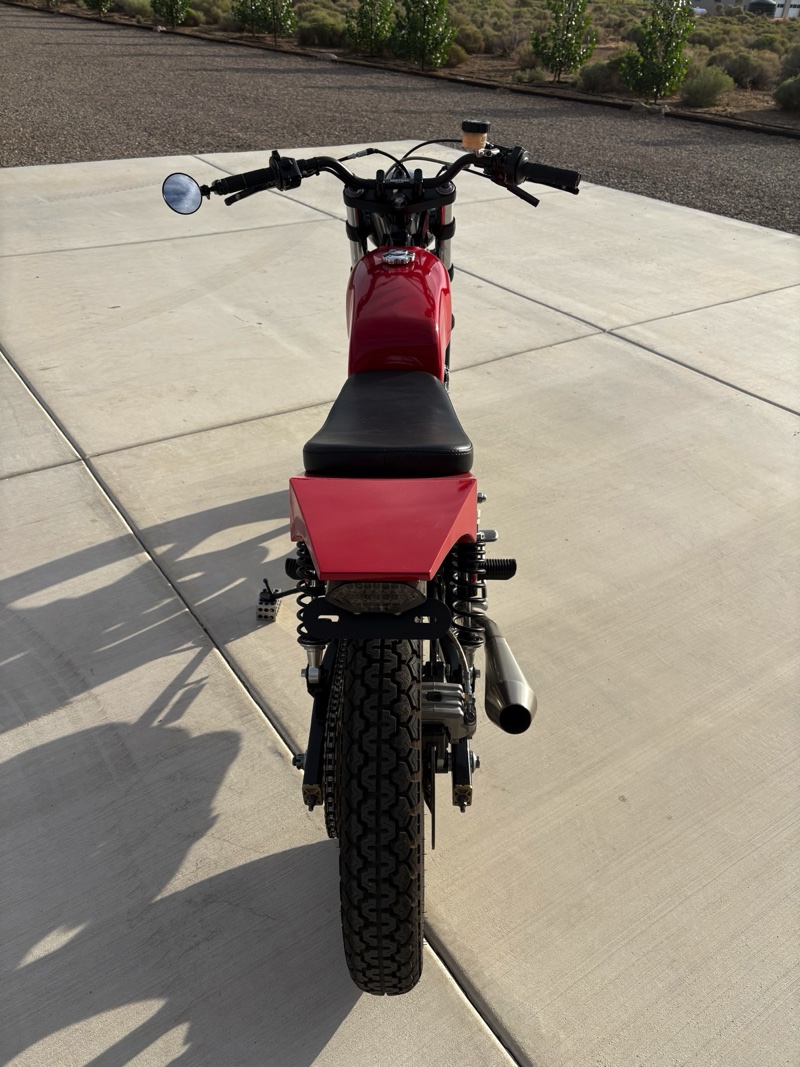
Out back, there’s a Yamaha Radian swingarm with needle bearings and twin YSS shocks with modified lower mounts (relocated slightly forward).
The bodywork consists of an RD60 fuel tank and aluminum side cars, seat base, and tail section that Marty fabricated himself. He used the stock seat and tank mounting brackets so the bike could be returned to stock if desired.
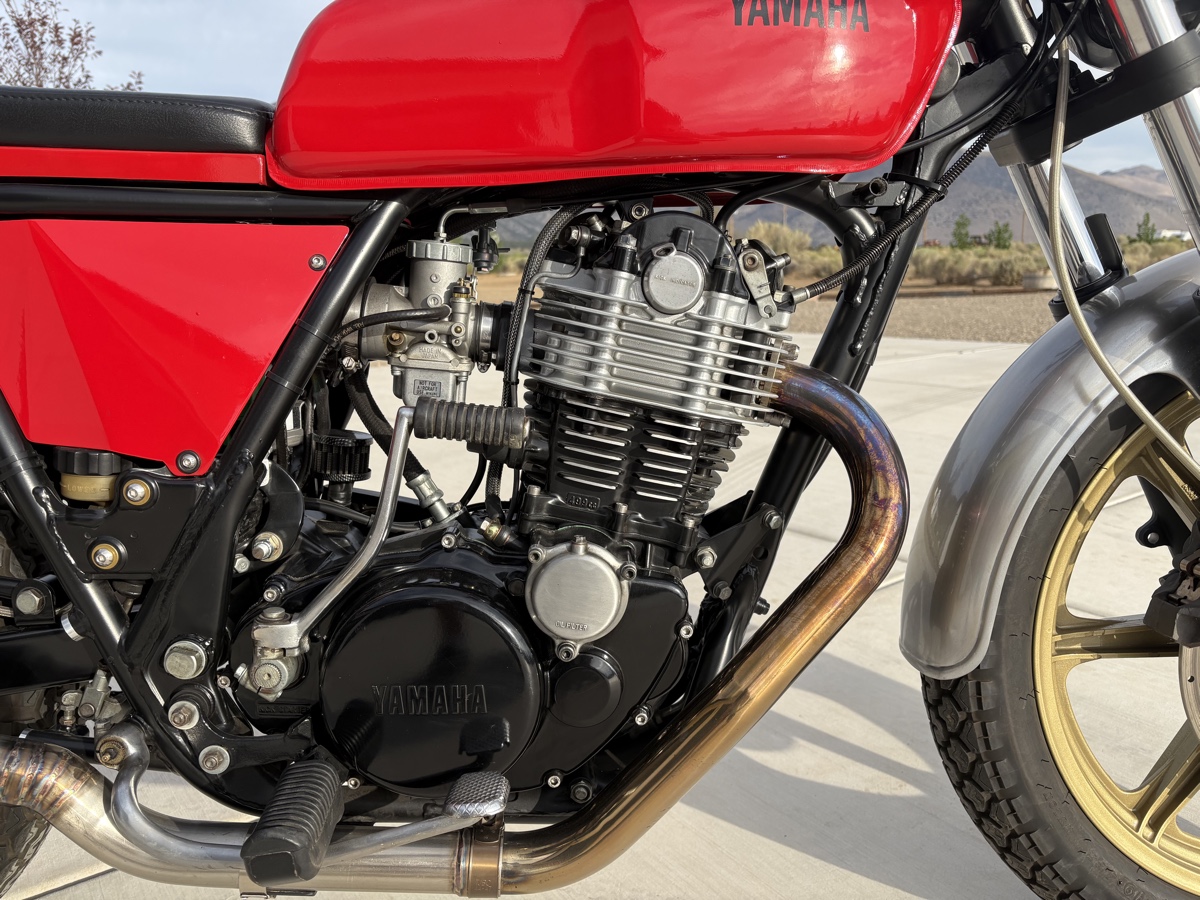
Marty also rebuilt engine with mild port work, a Megacycle cam, upgraded cam oiling, electronic advance, Mikuni VM34 carb with custom-fabbed wedge-type carb spacer, and more. He says every seal and bearing in the whole bike was replaced.
Though Marty has no nickname for the bike, we can’t help but think of this BSA Goldstar-inspired thumper as a “Thumpstar.” He built this bike to ride, and it’s a hoot in its element.
“I probably enjoy riding this bike more than any of my others as it pulls like a tractor, is nimble in the twisties, and you can back it in on the fire roads just like the old BSA.”
Marty is also thinking of selling this bike along with his XS650 to finance a new Norton. If you’re interested in either bike, give him a shout via email. Below you’ll find our full interview with Marty about the build.
Yamaha SR500 Street Tracker: Builder Interview
• Please tell us a bit about yourself, your history with motorcycles, and your workshop.
I’ve been into two wheel projects since age 13 when I “borrowed” the engine from my Dad’s lawnmower to complete a mini bike project. The installation was successful but the engine was returned to the mower once he discovered it missing. I raced motocross in the 250cc and open class as a teen until a knee injury ended that dream. I’ve owned numerous British parallel twins and singles (’67 Triumph TR6C, ’67 Norton Dunstall 750, BSA Goldstar) while growing up.
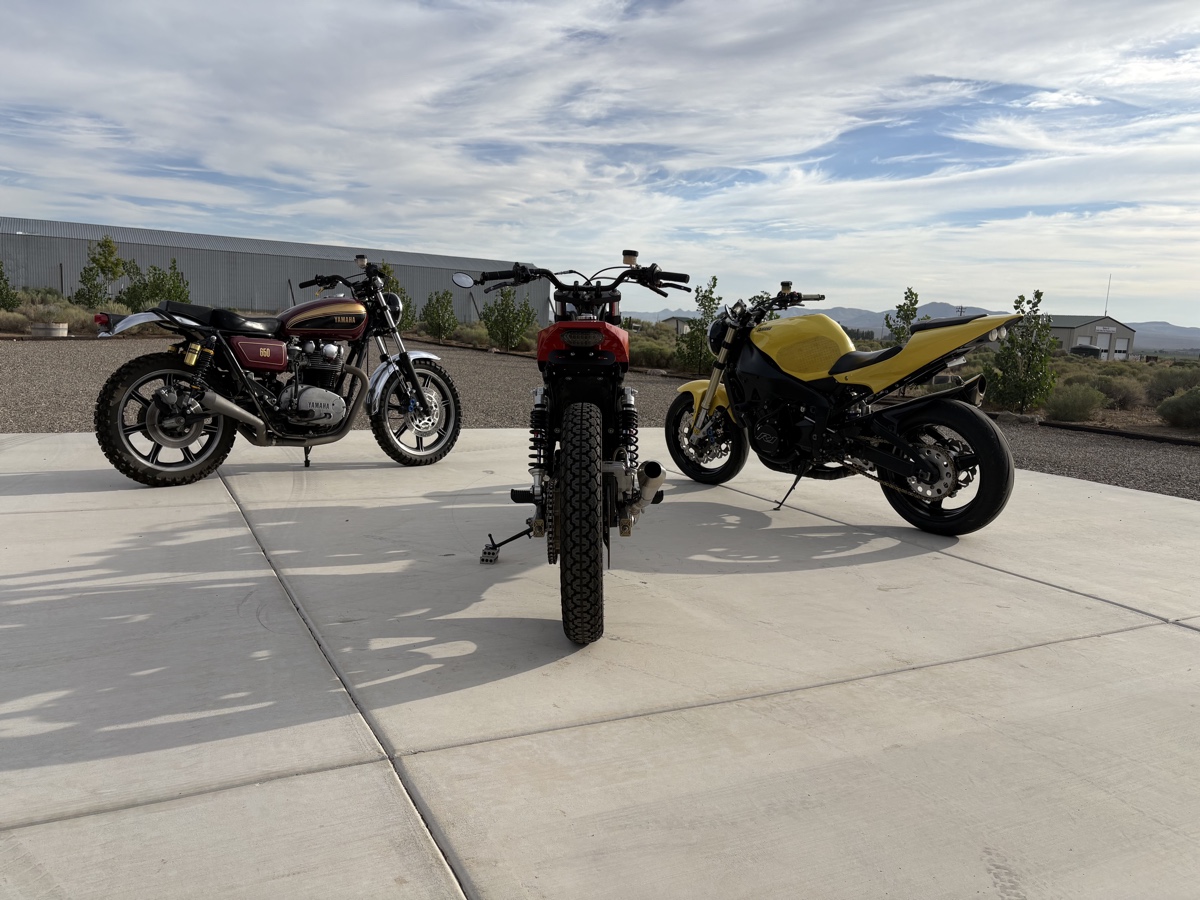
I’ve been into welding and fabrication since high school as both a profession and hobby. I have a modest shop with the necessary equipment to allow me to machine or fabricate one off parts for my projects.
• What’s the make, model, and year of the donor bike?
1978 Yamaha SR500.
• Why was this bike built?
I owned a ’56 BSA DB34 Goldstar when I was a kid and fell in love with the thumper torque. It was set up like a flat tracker and was a blast to ride on the local fire roads. Later on in life I owned a Yamaha XT500 and enjoyed that torquey, reliable dual sport for many years.
• What was the design concept and what influenced the build?
I wanted to re-live the old BSA days and thought the SR would give me an affordable, reliable platform that would allow me to keep going once the pavement ended.
• What custom work was done to the bike?
Here are some build details:
Engine:
Complete top and bottom end overhaul
Megacycle cam
VM34 Mikuni
Rex’s Speed Shop electronic advance
Upgraded cam oiling
Powder coated head, barrel and cases
Frame:
Yamaha R6 fork and brake
Powder coated frame and wheels
Yamaha Radian swingarm
YSS shocks
Body:
Yamaha RD60 fuel tank
Aluminum seat base and tail
Aluminum side covers
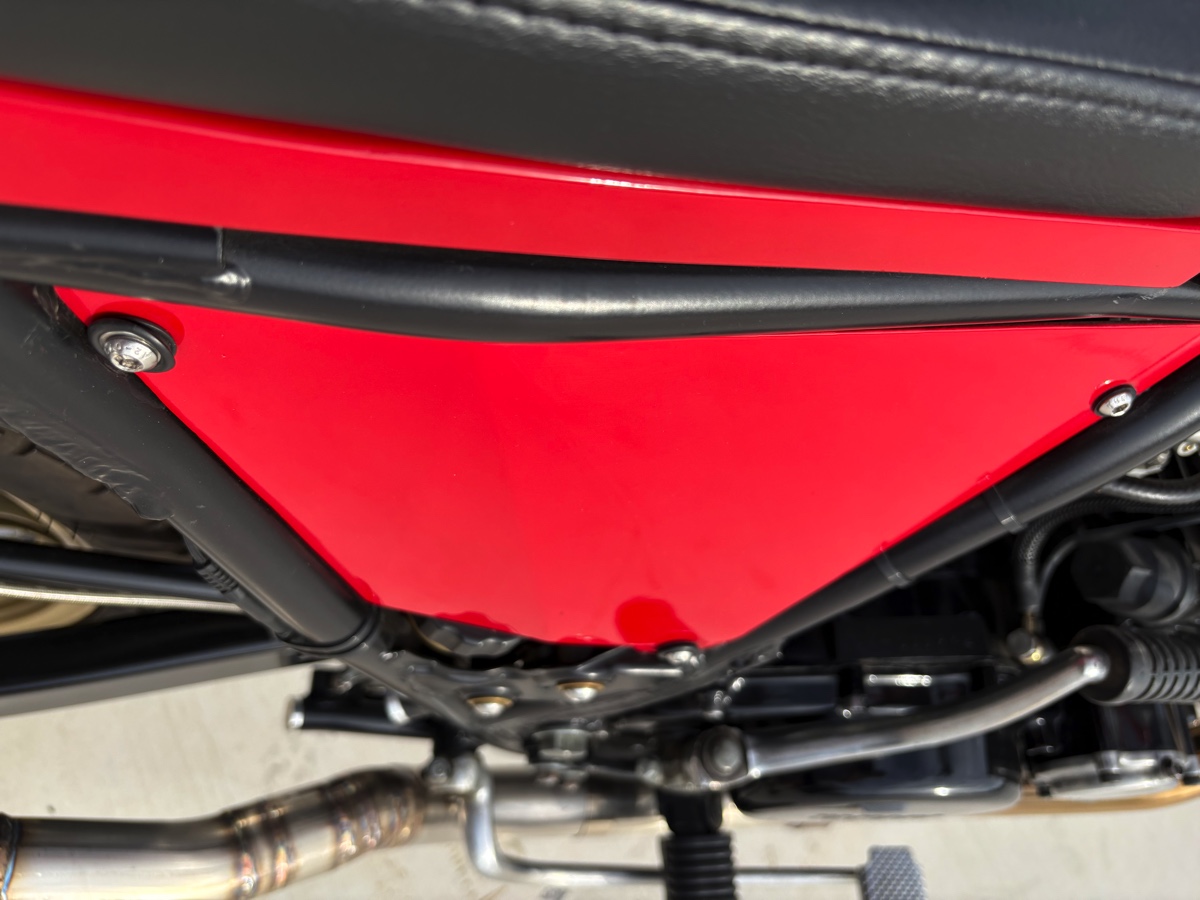
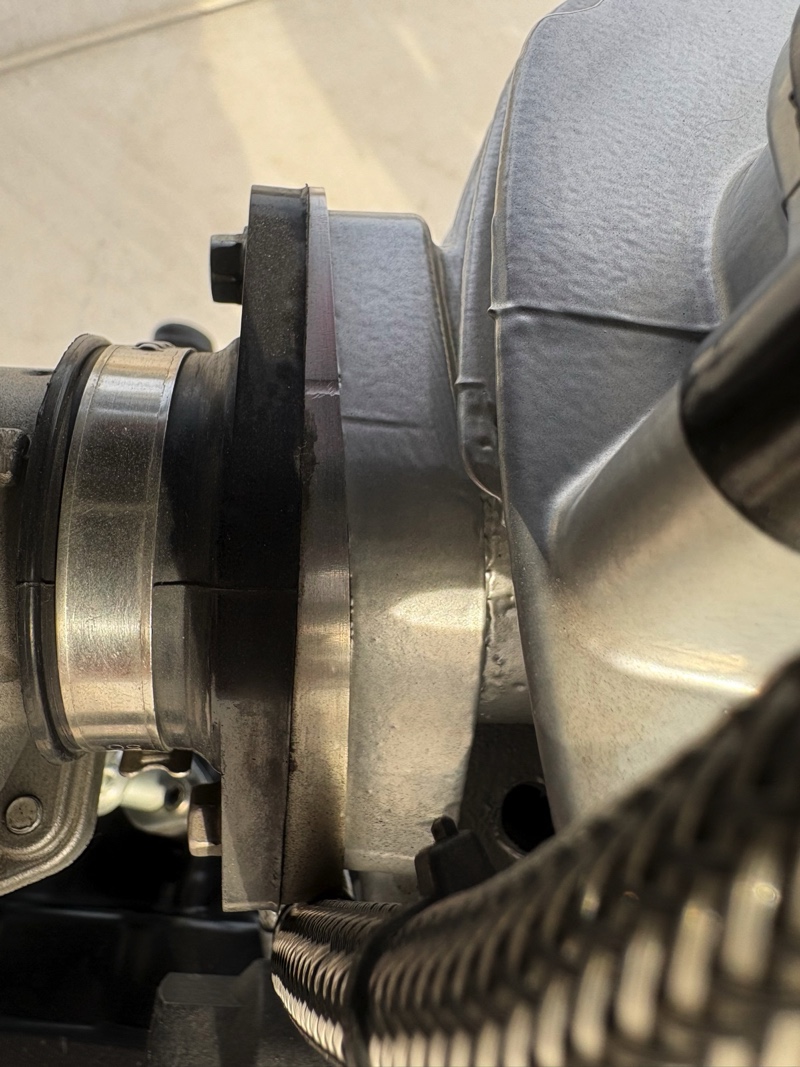
All the work was performed by me with the exception of the paint. I machined a wedge type spacer to angle the carb over to allow fitment of a large K&N air filter as the stock airbox was removed.
Swingarm bushings replaced with needle bearings and the lower shock mounts relocated forward. Every bearing and seal on the bike have been replaced. I retained and utilized all of the stock mounting points for the seat and tank so that the bike could be returned to stock if so desired.
Headlight mount brackets were fabricated from a set of R6 lower triple clamps as I felt they needed to be on a horizontal plane as opposed to 90 degrees to the fork tubes.
This in addition to the other custom work mentioned above.
• Does the bike have a nickname?
No nickname for this one……”Fun” would be appropriate though….
• Any idea of horsepower, weight, and/or performance numbers?
With the Megacycle cam and the mild port work, I’m estimating 35HP (feels like more tho). Stock the bike weighed 381 pounds so I’m estimating the current weight at 370.
• Can you tell us what it’s like to ride this bike?
I probably enjoy riding this bike more than any of my others as it pulls like a tractor, is nimble in the twisties, and you can back it in on the fire roads just like the old BSA.
• Was there anything done during this build that you are particularly proud of?
The carb spacer was challenging for an amateur machinist. Having the patience not to say “that’s good enough”.
• Is there anyone you’d like to thank?
My wife, for her patience and understanding that the love of bikes doesn’t diminish with age. Her banana bread is killer too….
More from Marty…
 Pulls Like a Tractor: 1978 Yamaha SR500 Street Tracker - For Sale: Marty Coblentz’s BSA-Inspired “Thumpstar”… When Yamaha introduced their air-cooled 500 singles in the late 1970s — the XT500, TT500, and SR500 — many enthusiasts saw them as a Japanese version of the British […]
 Xcess: 1977 Yamaha XS650 Café Racer - For Sale: 700cc, 277-Rephased “Xcess” from Marty Coblentz… In the 1950s, Britain built one out of every four motorcycles globally. However, as the Japanese rapidly advanced into the big bike market, employing modern tooling and […]


Nicely done! I should have bought an SR500 rather than an XT250 back in 1980.