
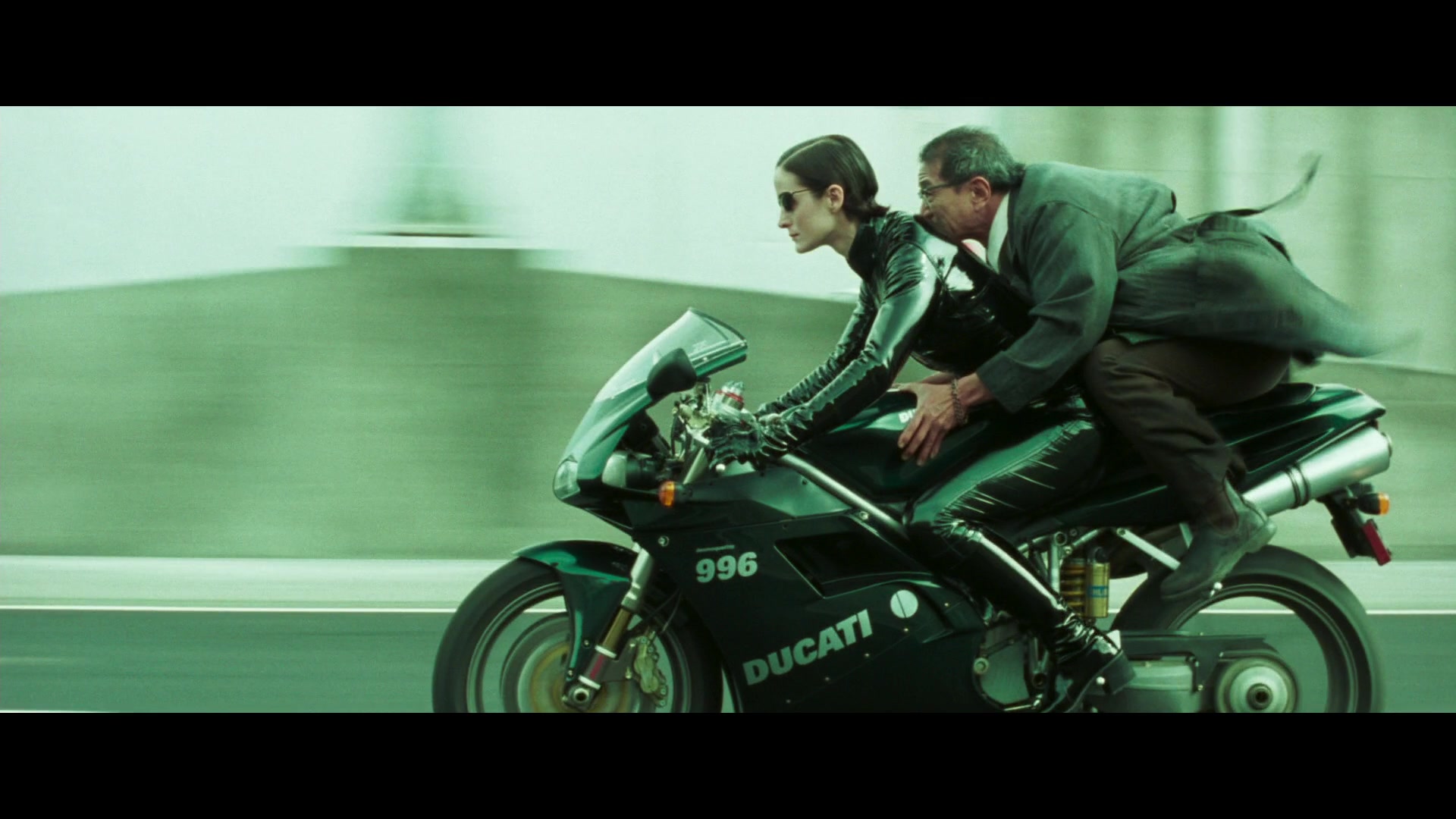
Trinity’s Ducati superbike became the star of one of cinema’s greatest motorcycle chases…
There are motorcycle chases, and then there’s the freeway sequence from The Matrix Reloaded. Trinity blasts a dark-green superbike off a transporter, drops onto the freeway with the Keymaker riding pillion, cuts across multiple lanes of traffic, and then does something that ought to be a spectacularly bad idea even by Matrix standards: she turns around and rides against traffic, threading between oncoming cars at speed.
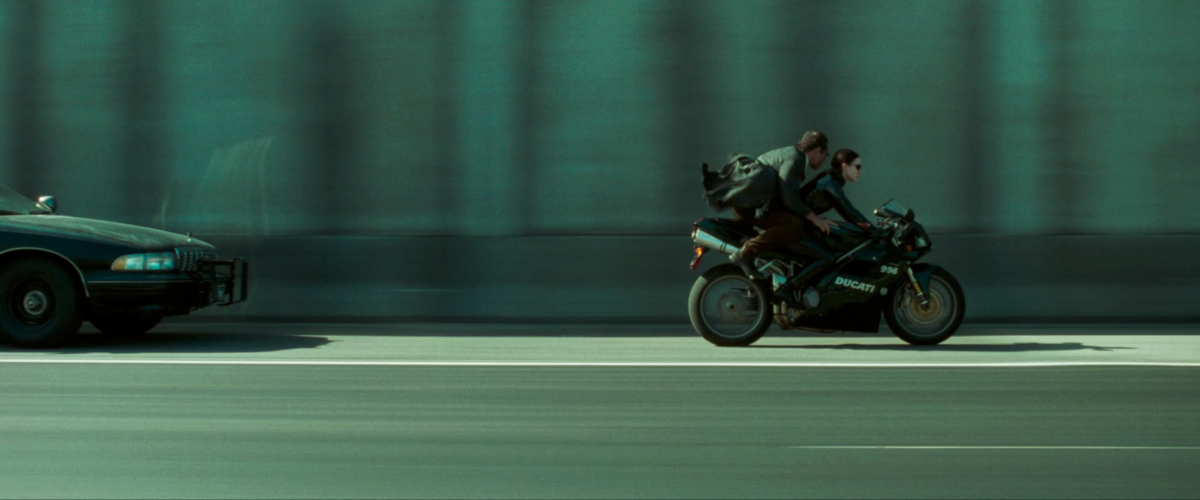
Released in 2003, the first Matrix sequel divided audiences in ways the original film hadn’t. But even viewers who weren’t enamored with the Architect, Zion raves, or increasingly complicated philosophy tended to agree on one thing: the freeway chase was spectacular. At the center of much of it was one of the most beautiful superbikes of the era.
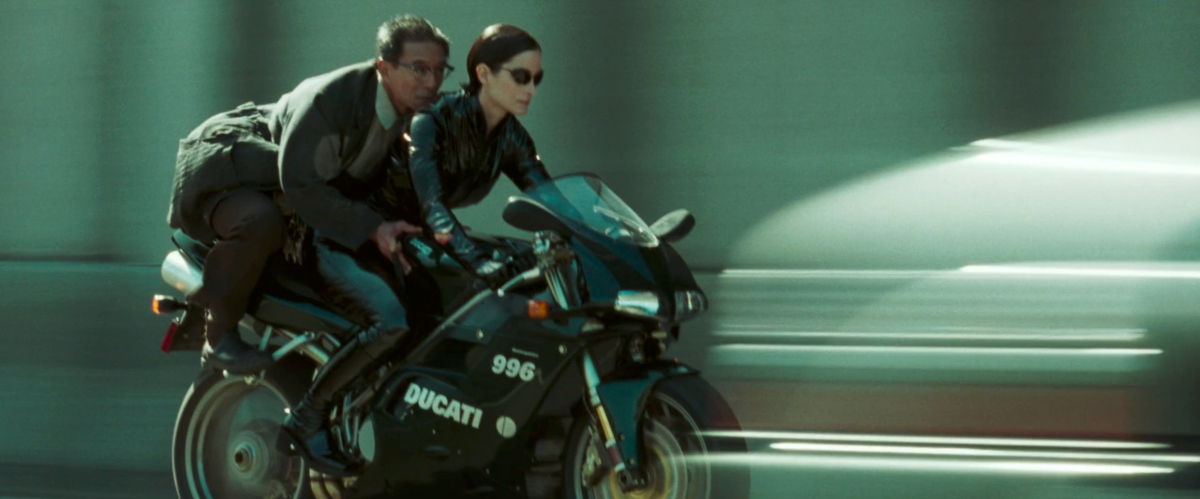
So what motorcycle does Trinity ride in The Matrix Reloaded? The famous freeway bike is a Ducati 996, finished in an appropriately Matrix-like shade of extremely dark green. But that’s not actually the only motorcycle Trinity rides in the film. The superbike she launches from a rooftop in another sequence is an MV Agusta F4 750 S.
Also, despite frequent claims to the contrary, the freeway Ducati is not a 998. Here’s the full story.
Trinity’s Freeway Bike: Ducati 996
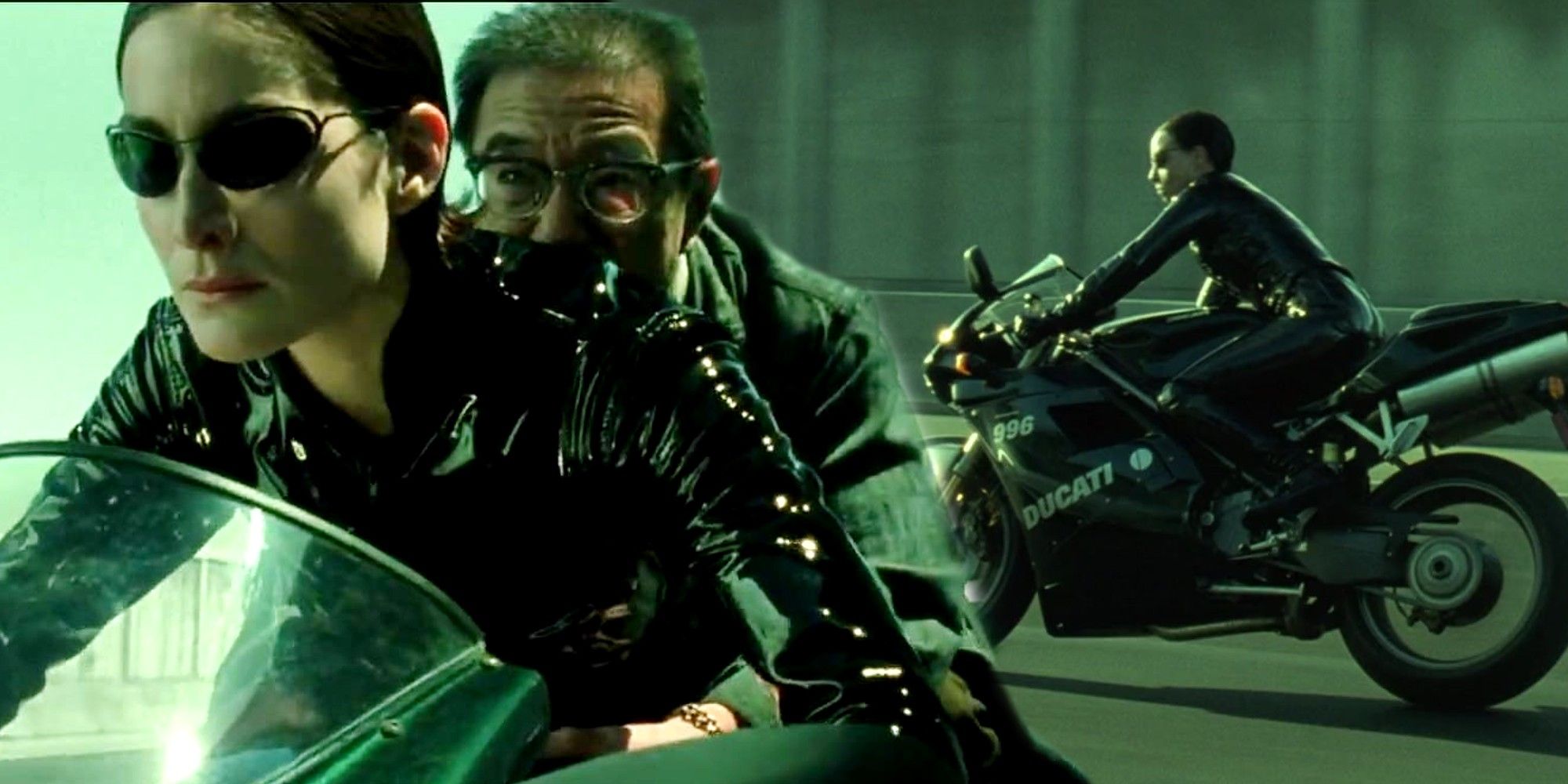
The motorcycle Trinity steals from the transporter during the freeway chase is a Ducati 996, part of the legendary superbike family that began with Massimo Tamburini’s Ducati 916. The identification isn’t particularly ambiguous. The motorcycle carries 996 graphics on its fairing, and Dennis “Kiwi” Marchant, one of the mechanics responsible for the film’s motorcycles, said during production that the crew had six Ducati 996s, all duplicates of what they called the “Trinity bike.”
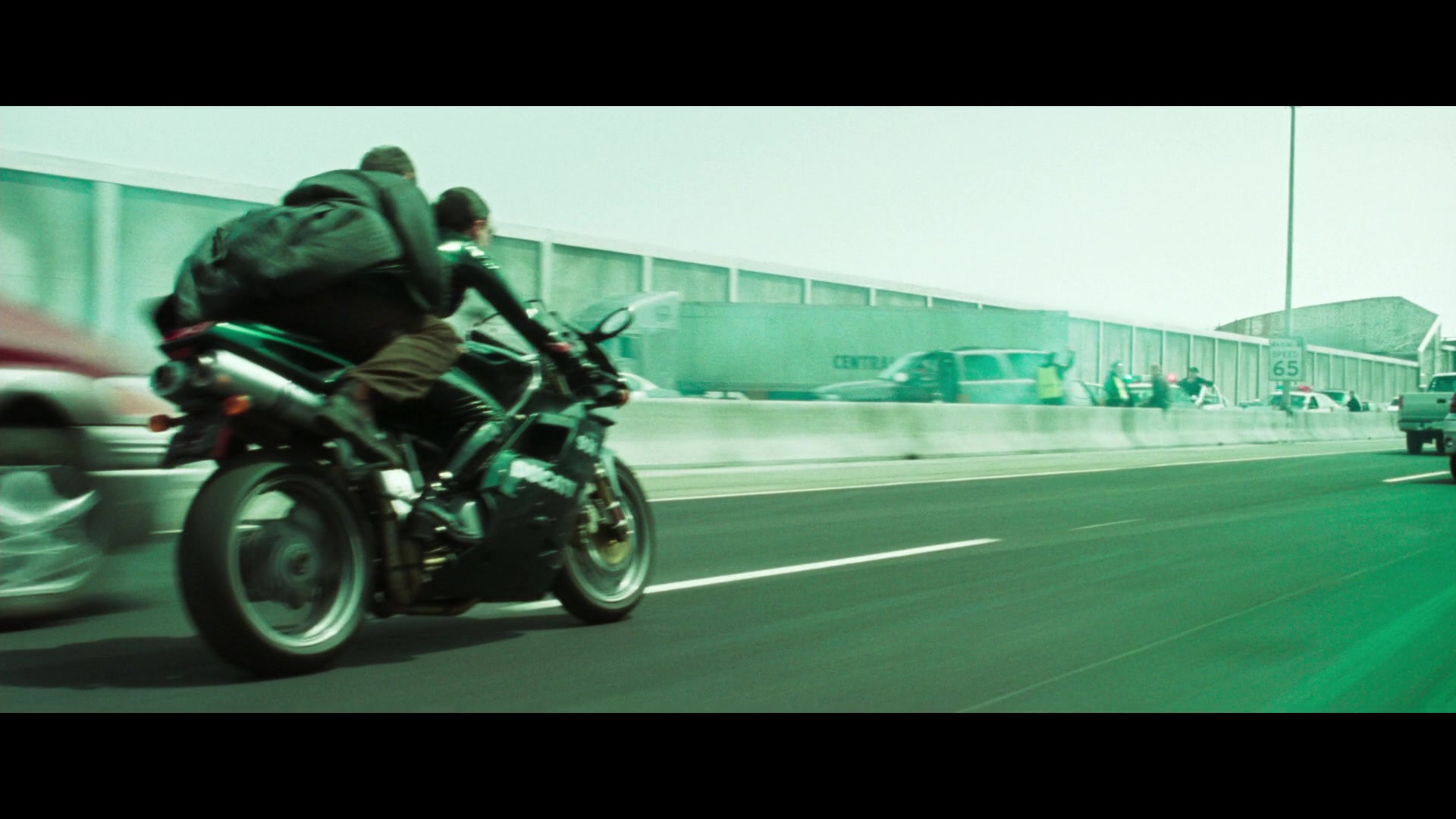
That distinction is worth making because the Matrix Ducati has frequently been identified as a 998, including by some motorcycle publications. There’s a very good reason for the confusion, which we’ll get to shortly. But Trinity’s movie bike is a 996. Frankly, it would have been difficult to choose a more appropriate motorcycle.
Ducati’s Tamburini Masterpiece
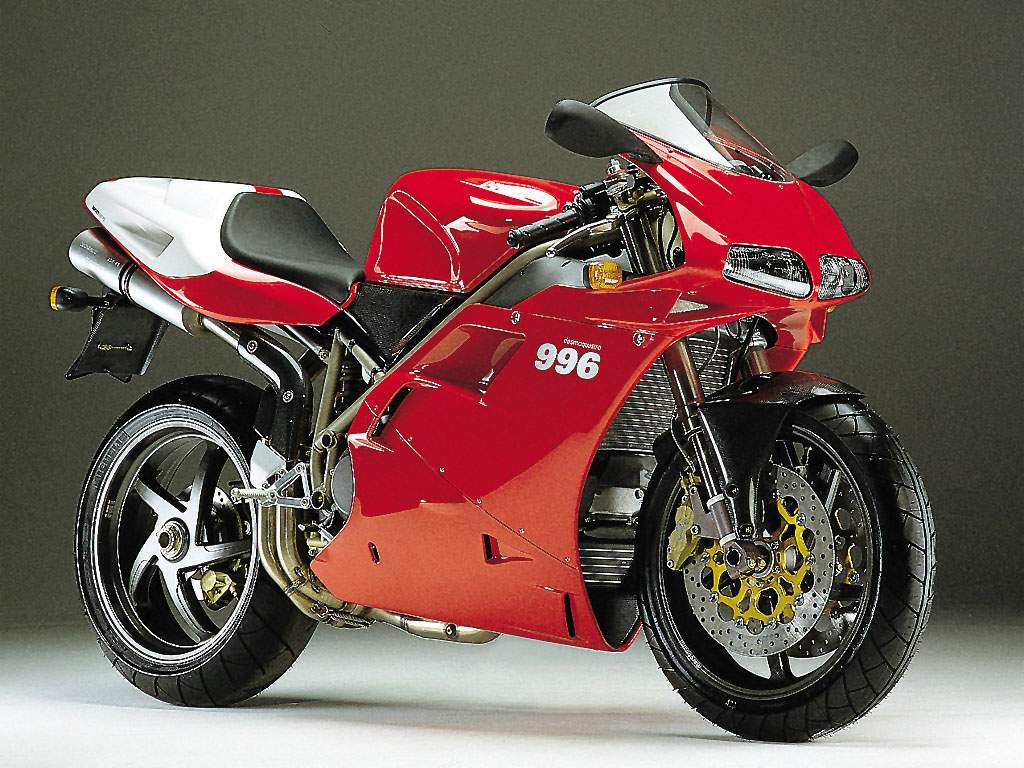
The 996 was the evolutionary successor to the Ducati 916, the motorcycle that transformed Ducati’s fortunes in the 1990s and became one of the most recognizable superbikes ever designed. Massimo Tamburini’s original 916 introduced a combination that would define Ducati’s superbikes for years: a narrow twin-headlight fairing, single-sided swingarm, underseat exhausts, tubular steel trellis chassis, and an impossibly slender tail. The design was functional as well as beautiful. Tamburini and his team had created an exceptionally compact motorcycle with serious World Superbike ambitions.
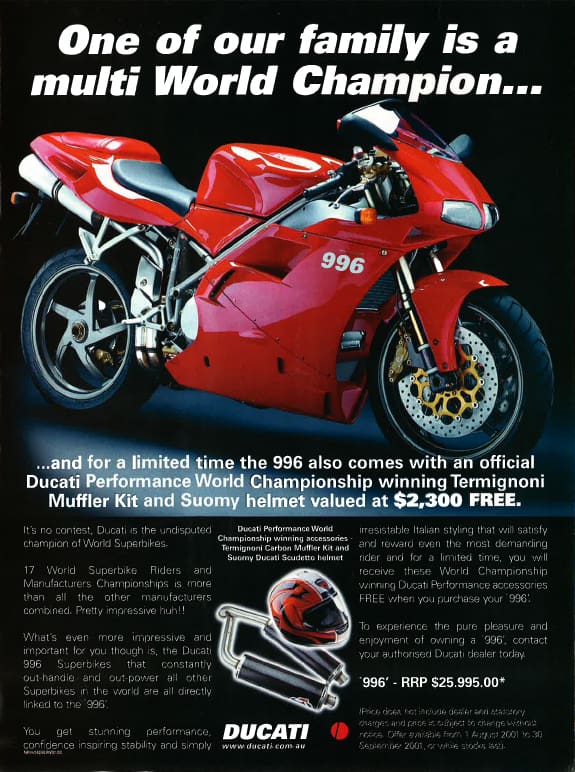
Win it did. The 916 family became one of the dominant machines of the Superbike era, with Carl Fogarty winning multiple World Championships for Ducati. The enlarged 996 continued the dynasty, and Ducati notes that Fogarty won the 1999 World Superbike Championship aboard a 996-derived race machine. Troy Bayliss would later win the 2001 title aboard the next evolution of the platform. In other words, the motorcycle Trinity hijacks isn’t merely an attractive Italian sportbike, but a member of one of the most successful and iconic superbike families ever built.
996cc Desmo V-Twin
At the heart of the regular Ducati 996 was a 996cc liquid-cooled, fuel-injected, 90-degree V-twin — or “L-twin” in Ducati parlance — with four desmodromically operated valves per cylinder. The standard 996 Biposto produced approximately 112 horsepower at 8500 rpm and around 69 lb-ft / 93 Nm of torque. That might not sound outrageous in an era of 200-horsepower liter bikes, but this was serious superbike performance at the turn of the millennium. The 996 was capable of roughly 160 mph / 260 km/h, accompanied by the unmistakable pulse and roar of a large Ducati twin.
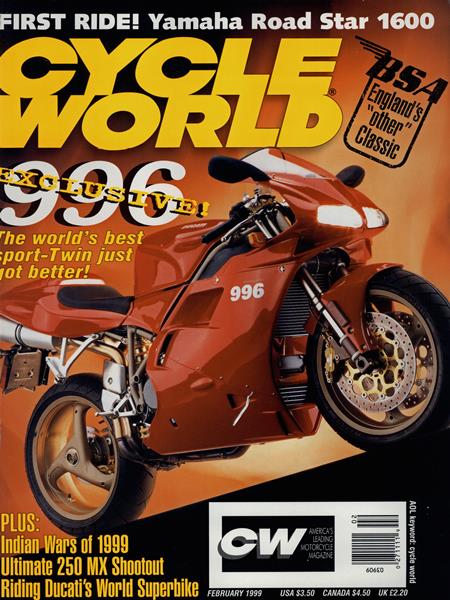
More exotic variants went considerably further. The 996 SPS and 996 S offered additional performance, while the 996R introduced Ducati’s new Testastretta cylinder-head architecture and actually displaced 998cc. But the movie’s road bike is generally identified as a standard 996 rather than one of those homologation specials. Its mission in The Matrix Reloaded was somewhat different from winning World Superbike races anyway. It needed to survive Hollywood.
A Ducati Transporter in the Matrix
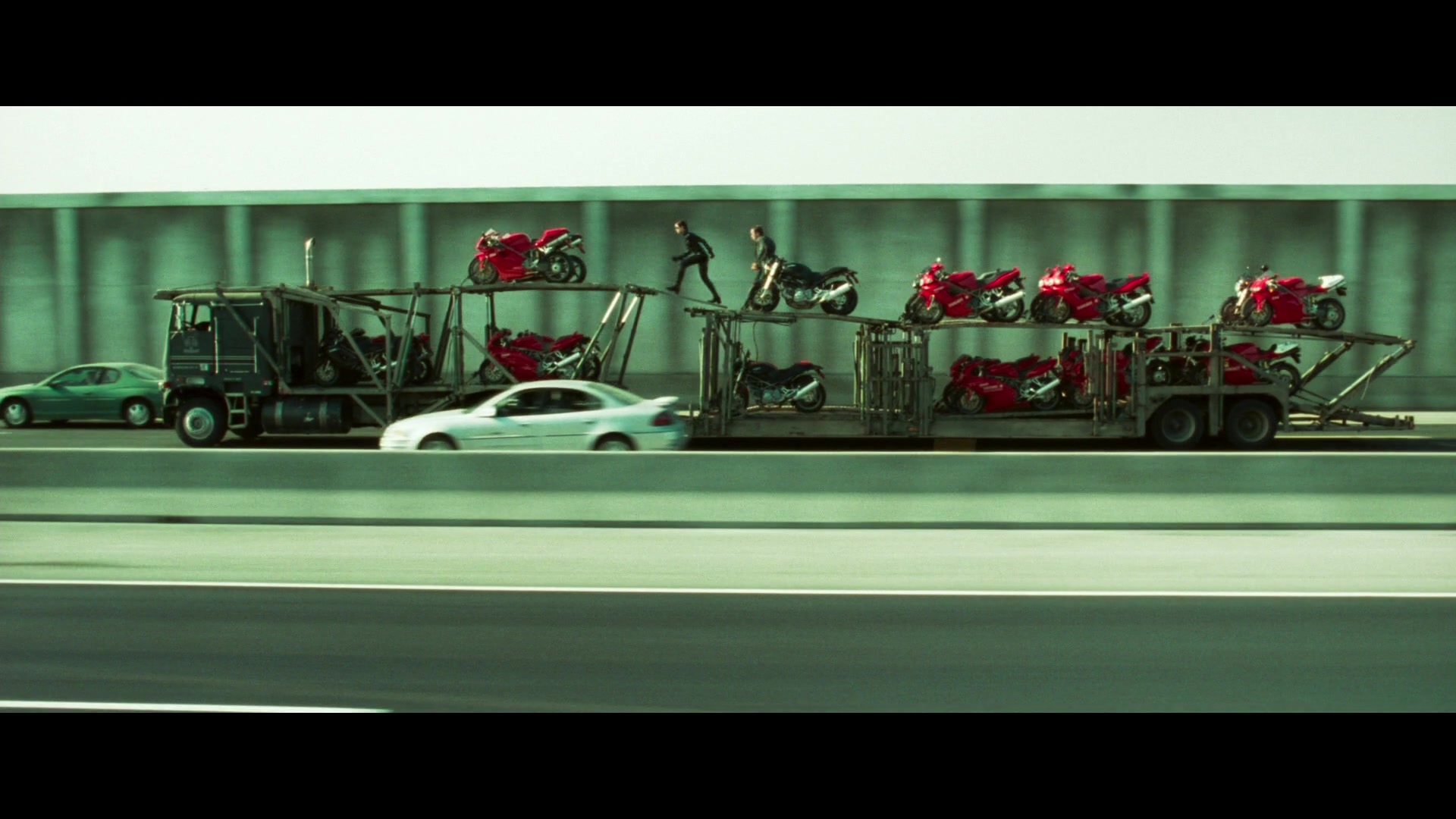
The 996 first becomes important during the film’s sprawling freeway chase. Morpheus, Trinity, and the Keymaker are trying to escape the Twins and the Agents when Trinity and the Keymaker find themselves aboard a transporter loaded with motorcycles. The truck is essentially a rolling Italian superbike showroom.
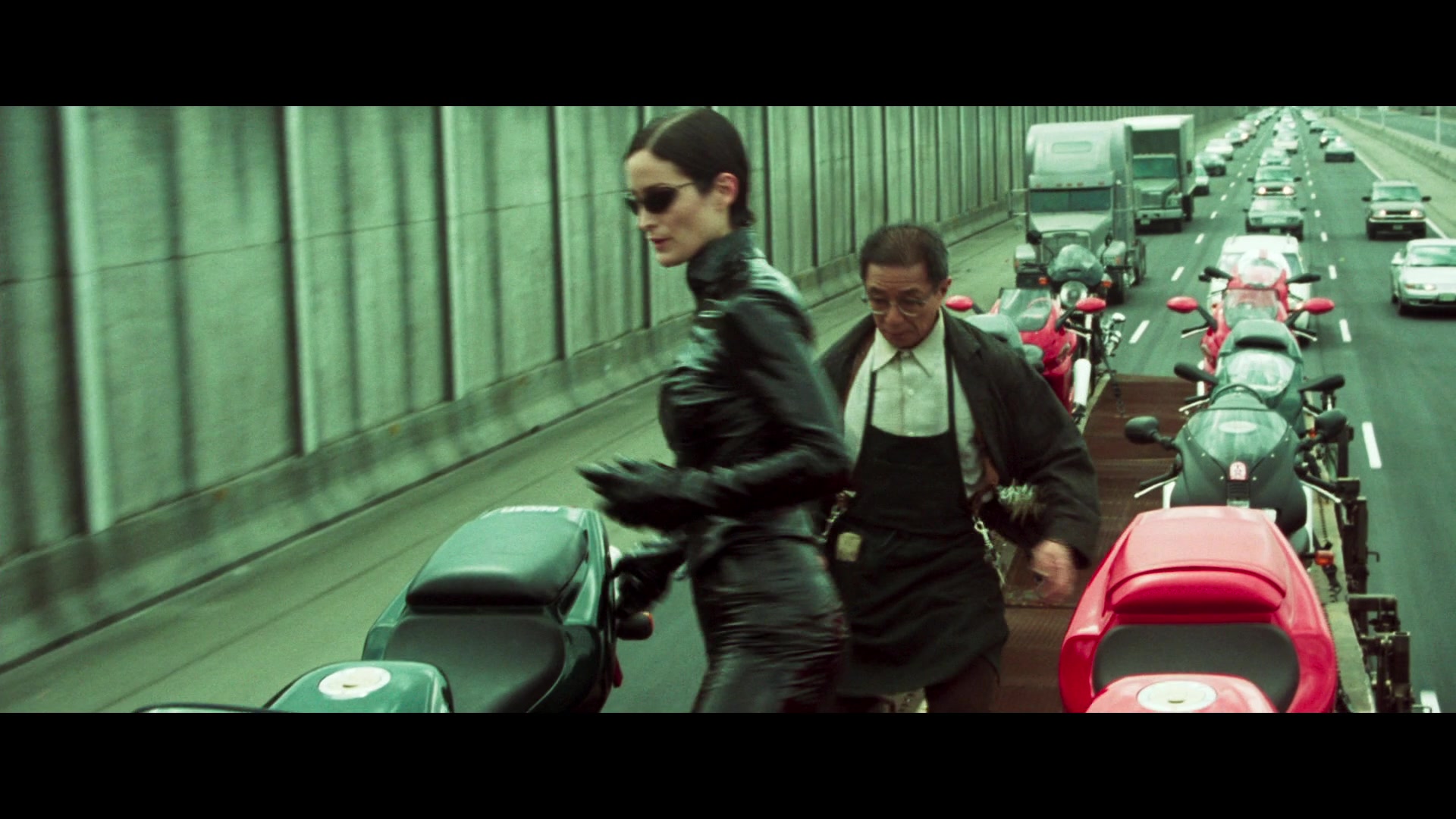
According to mechanic Dennis Marchant, Ducati supplied the production generously. In addition to the six duplicate 996s prepared as Trinity bikes, the crew had about 35 other Ducatis for the motorcycle transporter. Marchant also mentioned several MV Agustas being prepared for other sequences.
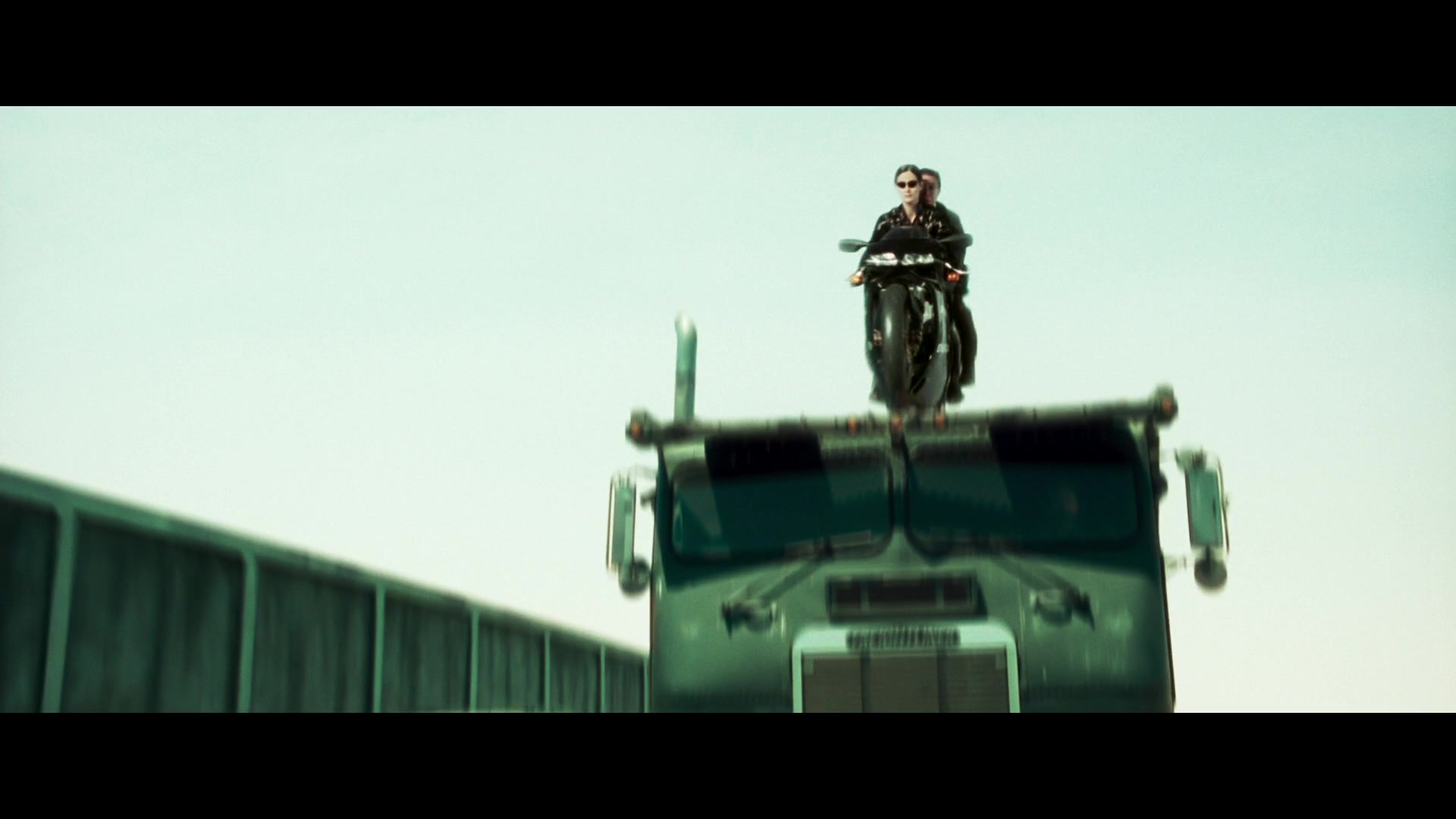
Onscreen, Trinity makes the obvious choice. Among rows of predominantly red Italian sportbikes sits the dark-green 996. She hot-wires it, rides it down the transporter, and launches onto the freeway. Except black, a Matrix motorcycle could hardly have been any other color.
One of Cinema’s Great Motorcycle Chases
From there, the Ducati becomes one of the real stars of the movie. With the Keymaker hanging on behind her, Trinity accelerates through traffic as Agents commandeer other vehicles in an attempt to stop them. She threads through impossibly tight spaces between cars, dives onto the shoulder, and narrowly avoids being crushed between a truck and the freeway wall.
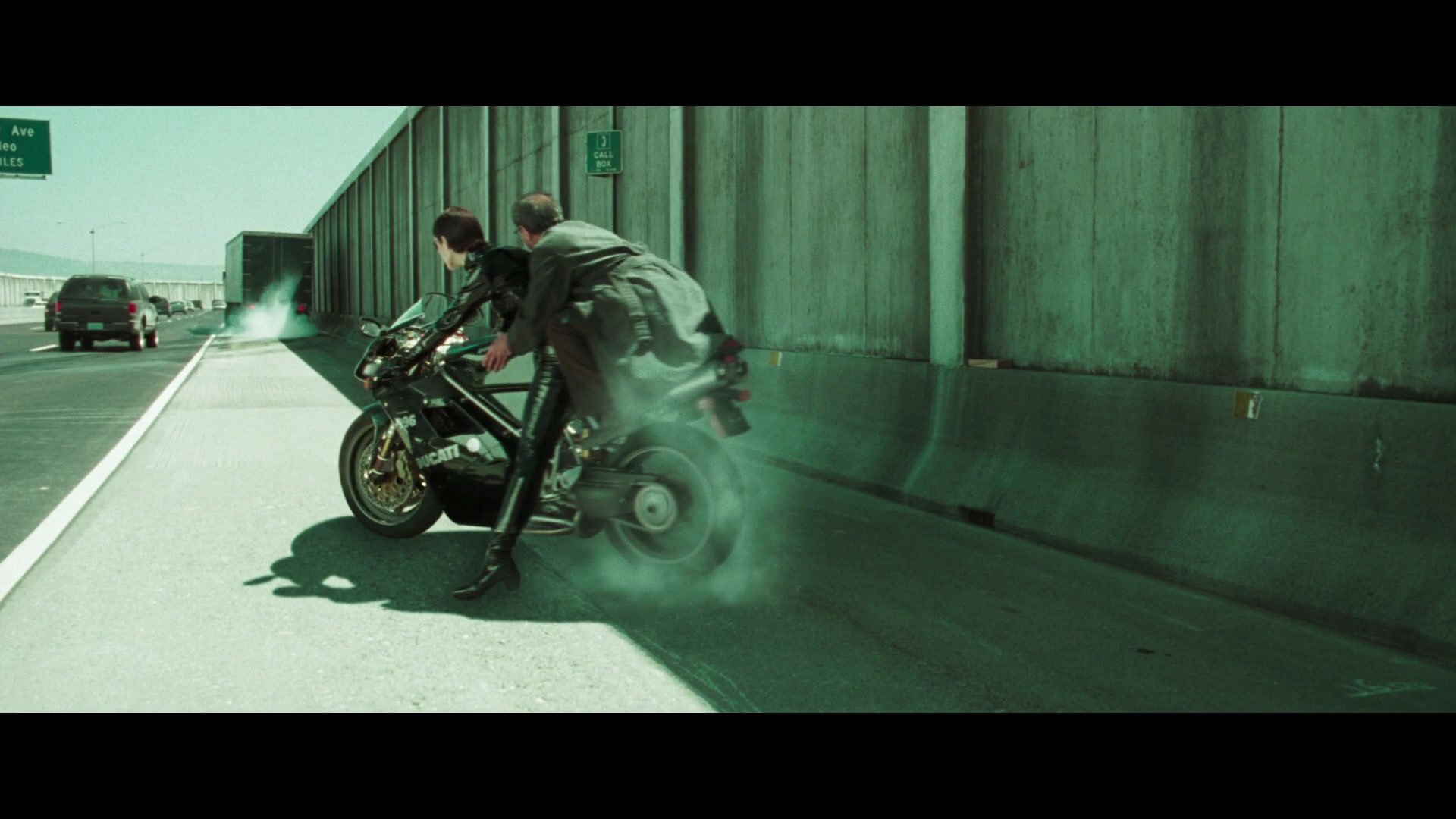
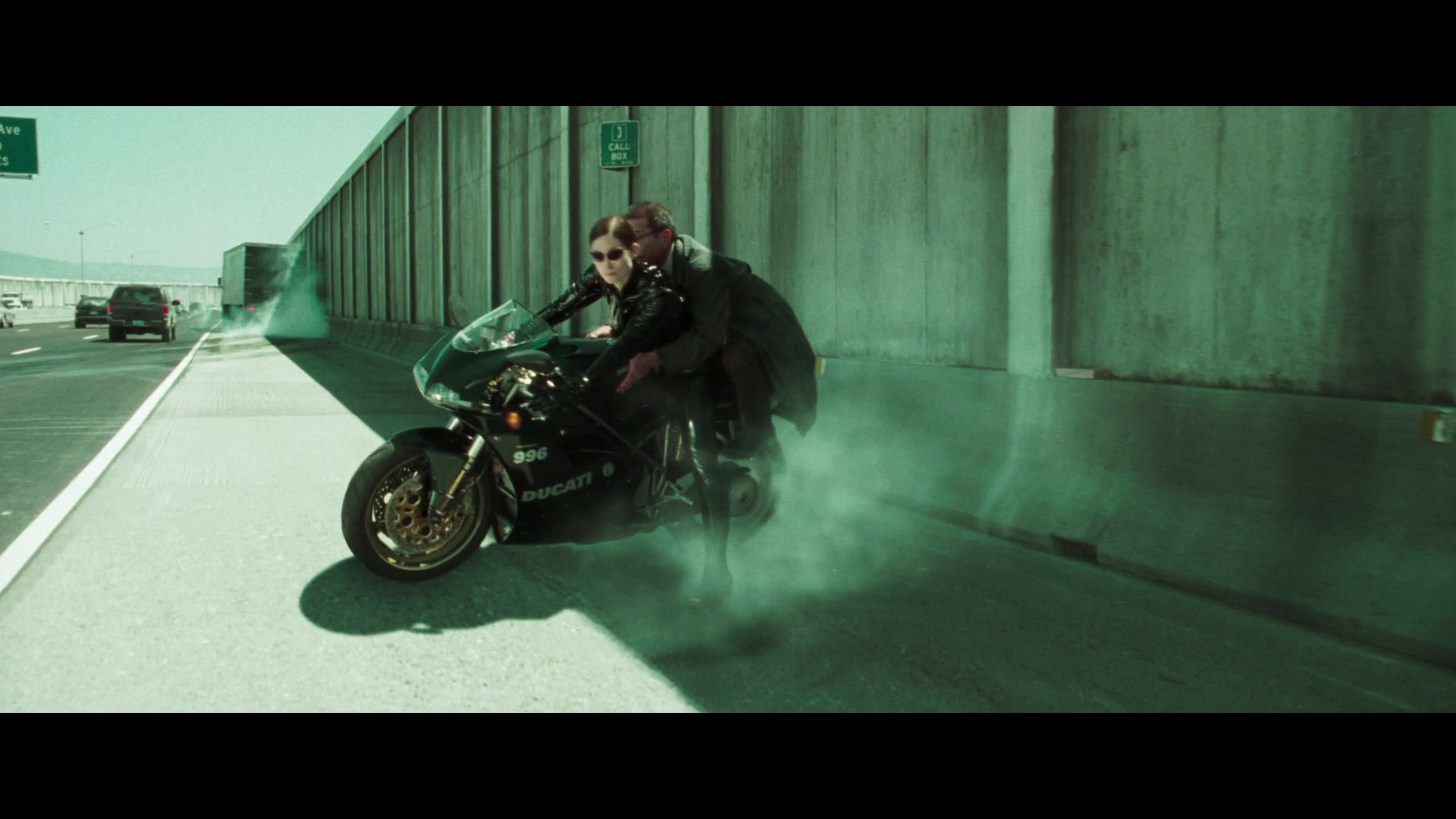
Faced with traffic blocking her escape, Trinity brakes, spins the Ducati around, and heads directly into the stream of oncoming vehicles. Cars whip past on both sides. She splits gaps that barely appear wider than the motorcycle. The Keymaker somehow remains attached.
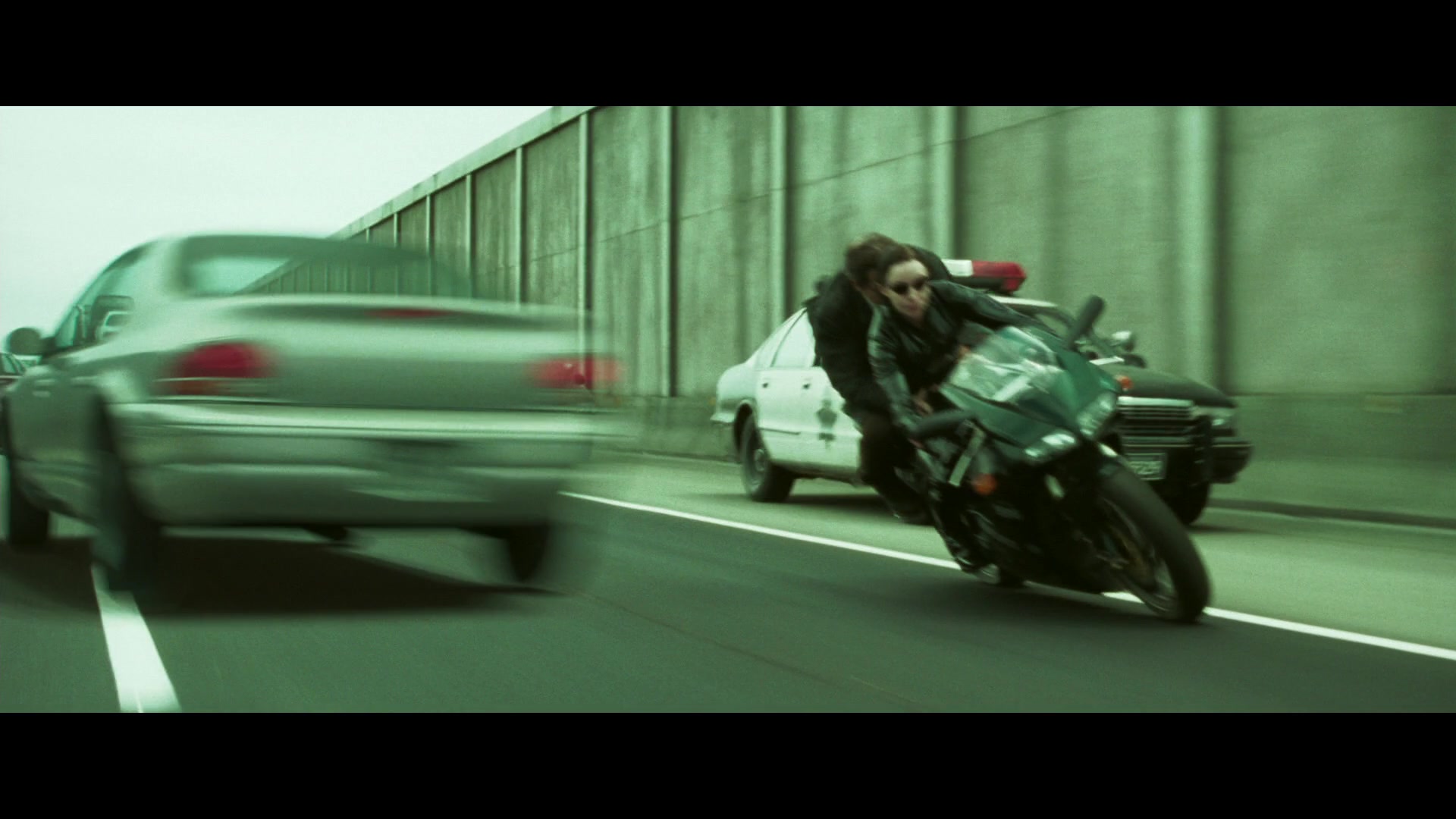
Unlike many spectacular action sequences from the period, a surprising amount of what we’re seeing involved real motorcycles, real cars, and real stunt performers. The Matrix may be a computer simulation, but the Ducati was not!
Debbie Evans: The Real Rider Behind Trinity
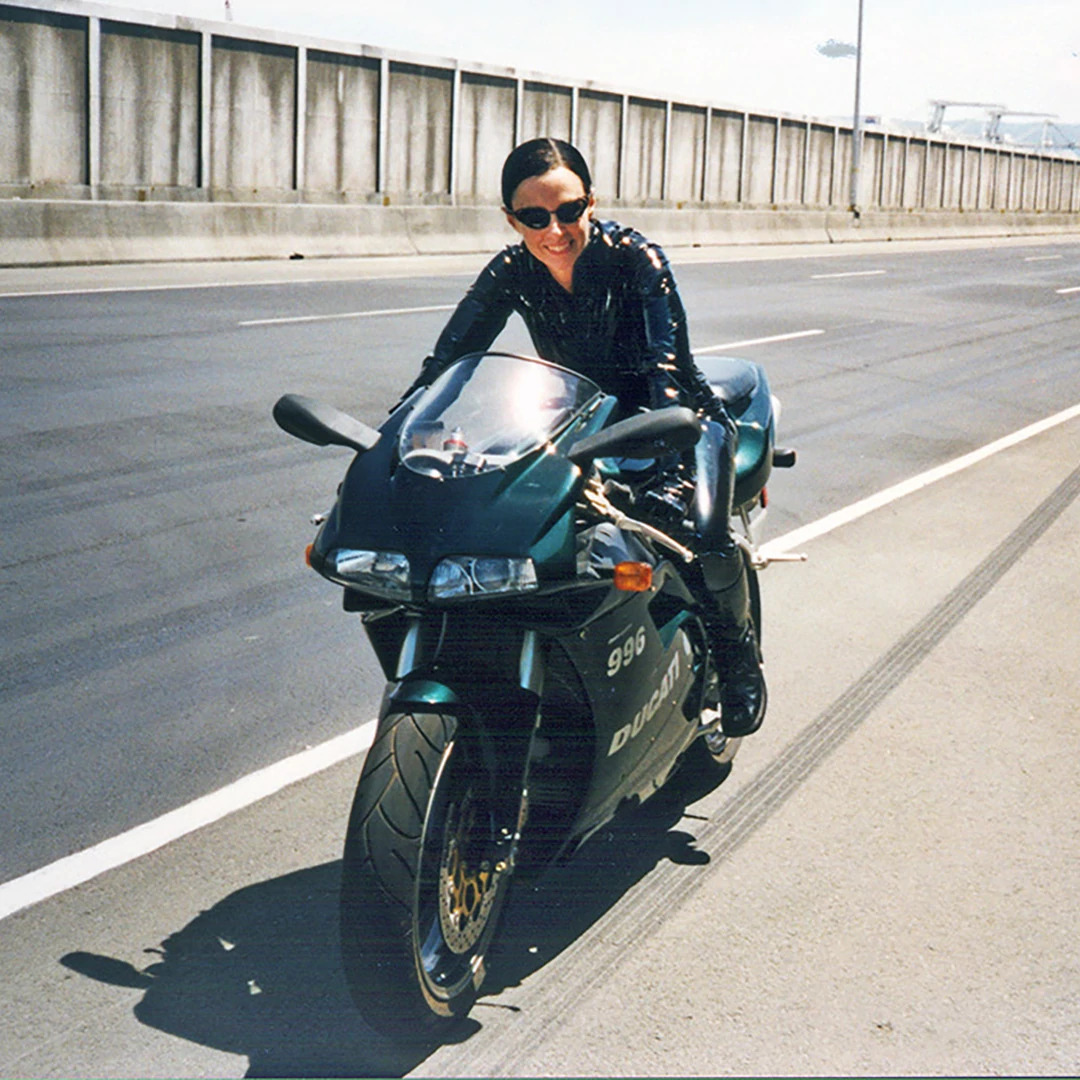
Carrie-Anne Moss genuinely learned to ride a motorcycle for the Matrix sequels and performed portions of the riding herself. Marchant said Moss picked it up quickly enough that filmmakers could show Trinity actually operating the motorcycle during shots where her face needed to be visible. The genuinely dangerous riding, however, was entrusted to Debbie Evans.
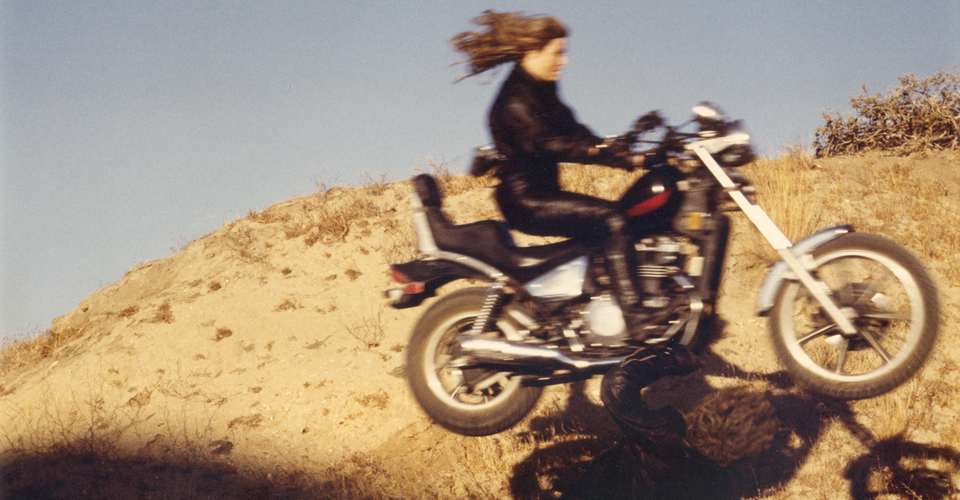
Evans was already an enormously accomplished motorcycle rider and stunt performer. She had grown up competing on motorcycles and became famous for her trials-riding abilities before building a long Hollywood stunt career.
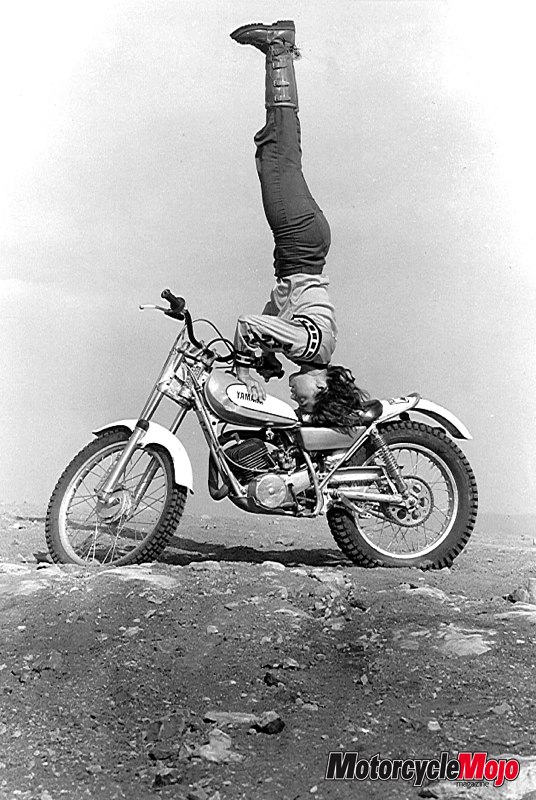
For The Matrix Reloaded, she doubled Carrie-Anne Moss not only on the Ducati but behind the wheel of the Cadillac CTS used earlier in the chase. Evans later remembered the Ducati work as both great fun and extremely dangerous.
How the Matrix Ducati Was Modified
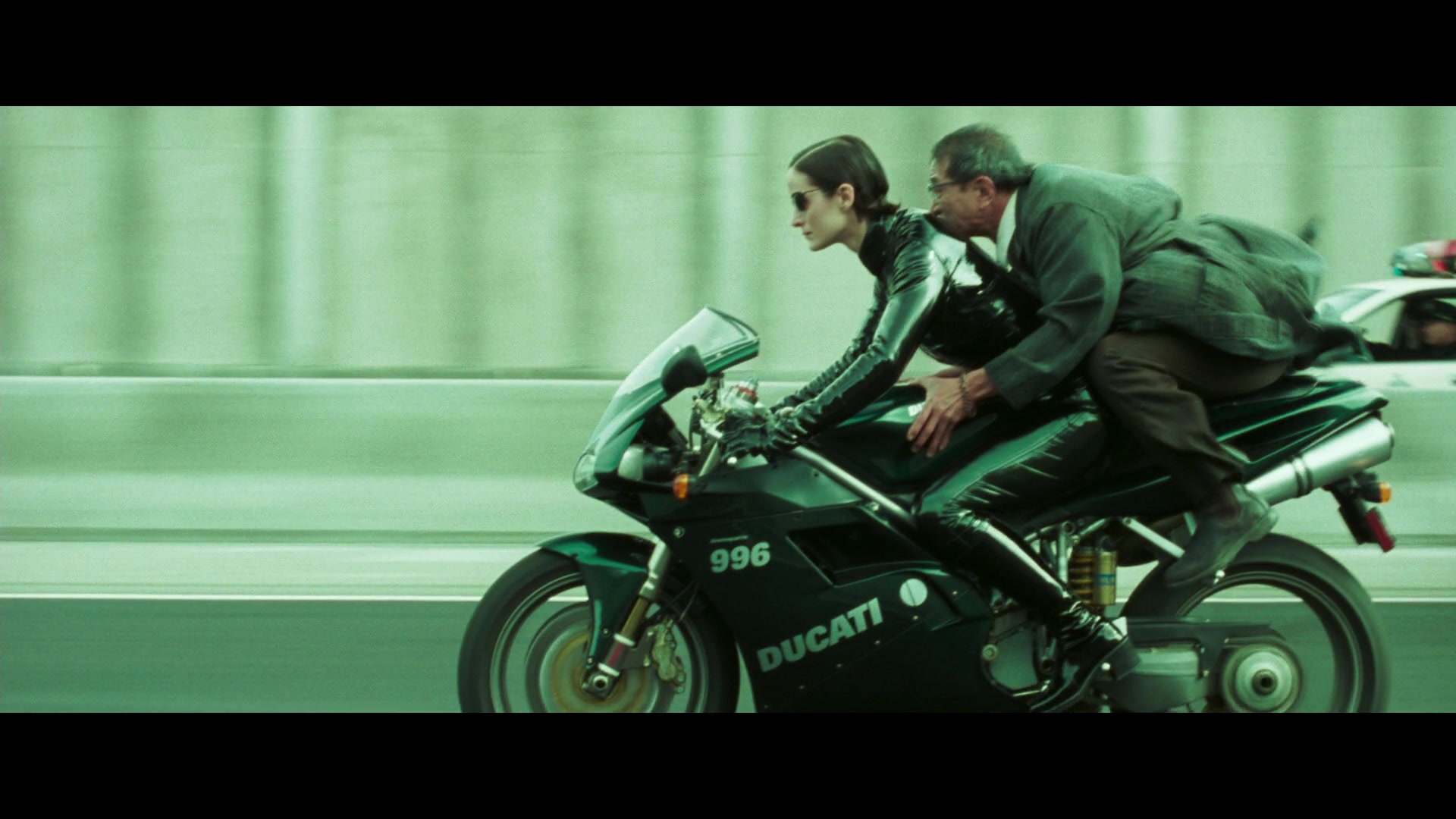
The Trinity bikes weren’t simply stock 996s painted green. Marchant said the crew strengthened various components, altered footpegs, and adjusted the suspension according to the requirements of individual stunts. They could also configure the motorcycles to produce particular effects for the cameras, including generating smoke during hard braking and burnouts.
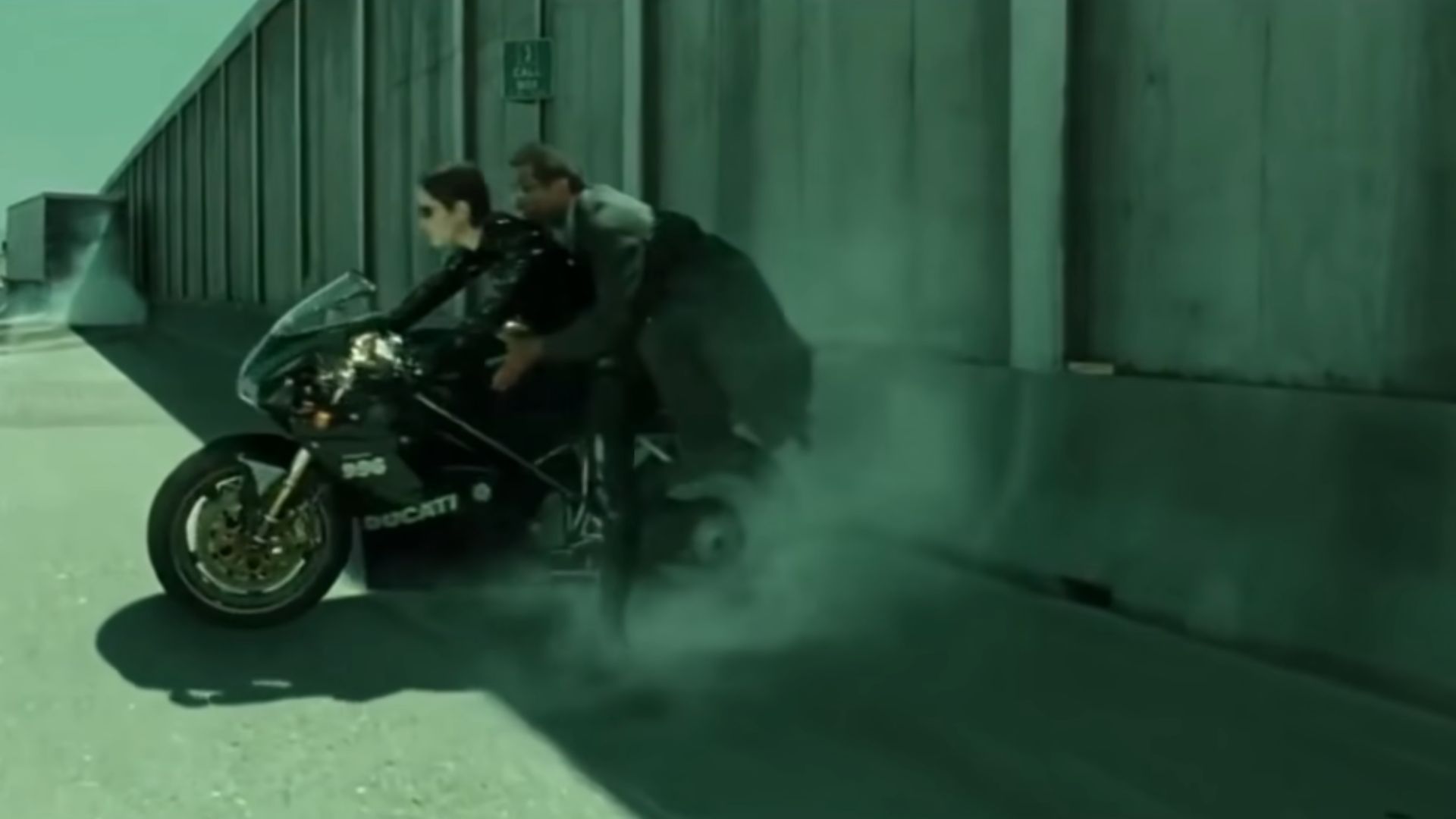
Evans performed jumps on the Ducati as well. Marchant described one jump using a roughly 30-foot ramp only about 36 inches high — a considerable feat on a large street-going superbike, particularly with a passenger.
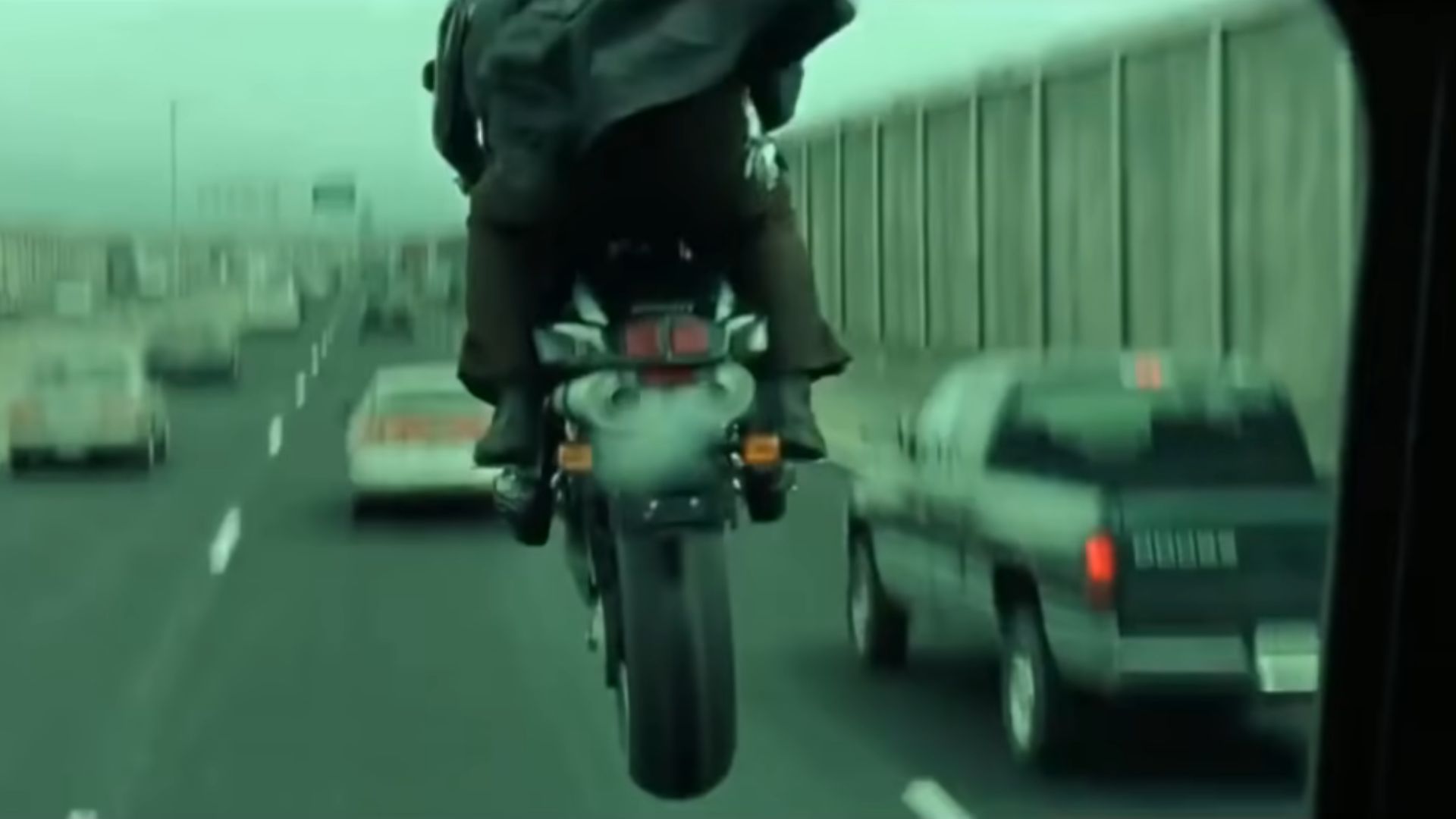
The bikes were subjected to enough punishment that the crew regularly inspected them for stress cracking. Another account from Evans says the production used numerous Ducatis for the stunt work, with the machines repeatedly jumped and landed hard.
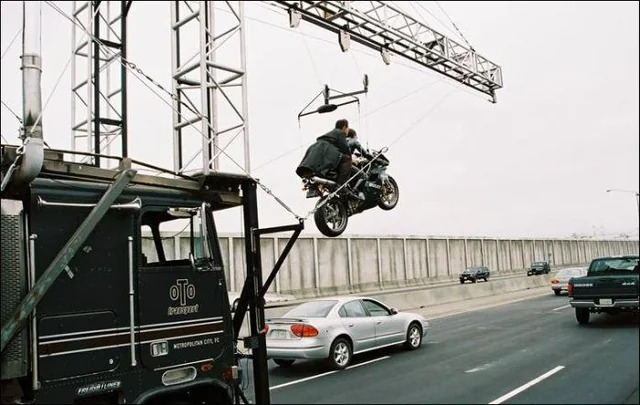
Not everything that appears onscreen was achieved simply by pointing Evans and a Ducati at an obstacle, of course. Special camera motorcycles and rigs were constructed for the chase, and certain seemingly impossible shots — including parts of the transporter sequence — used purpose-built rigs that allowed the bike and actors to appear to be doing things too dangerous to attempt conventionally. Still, an impressive amount of the riding was real.
They Built an Entire Freeway
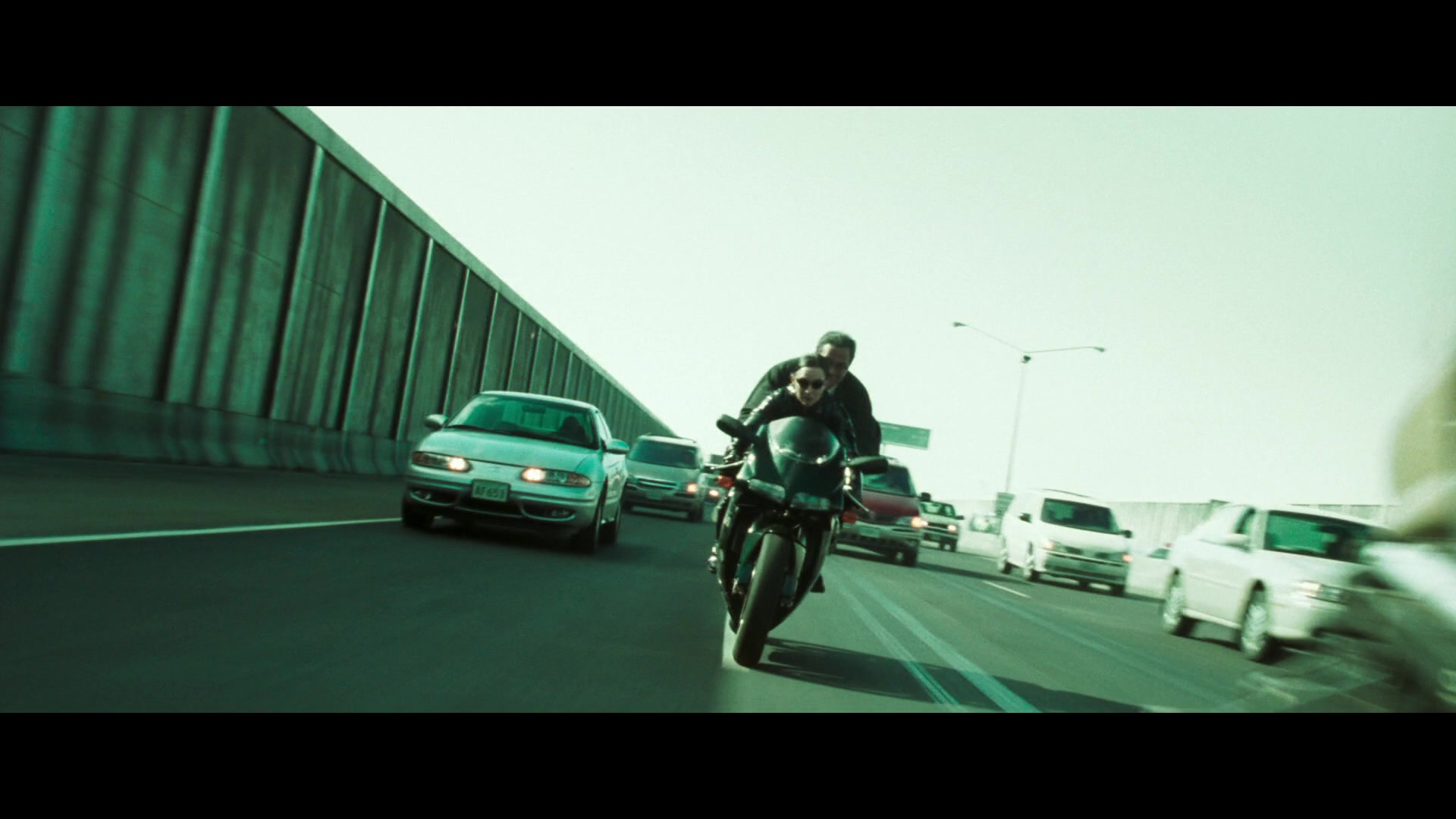
The filmmakers faced a fairly obvious problem when planning the sequence. You can’t realistically commandeer miles of major freeway for months while stunt performers drive against traffic, flip cars, leap motorcycles, and crash semitrucks. So Warner Bros simply built one.
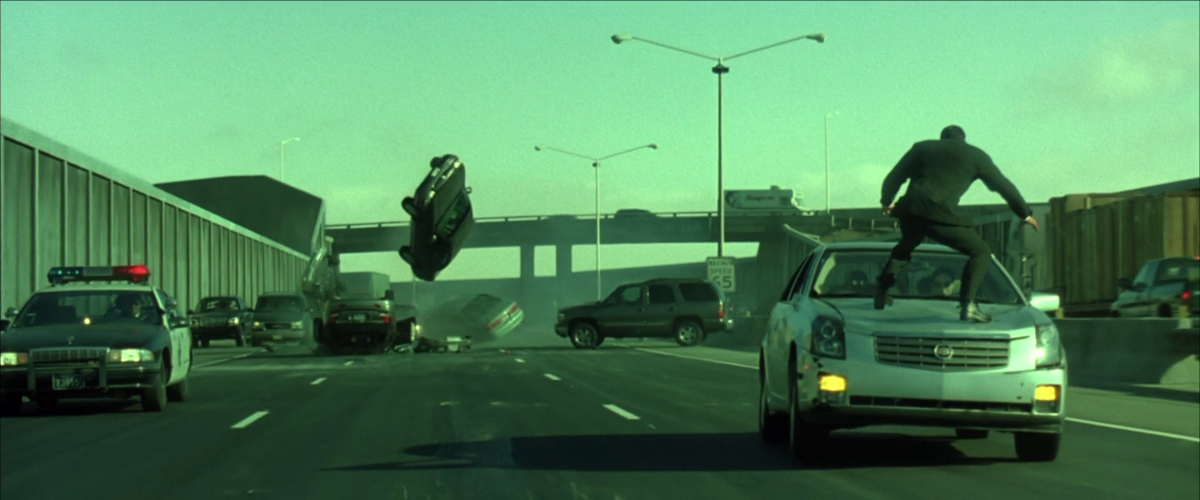
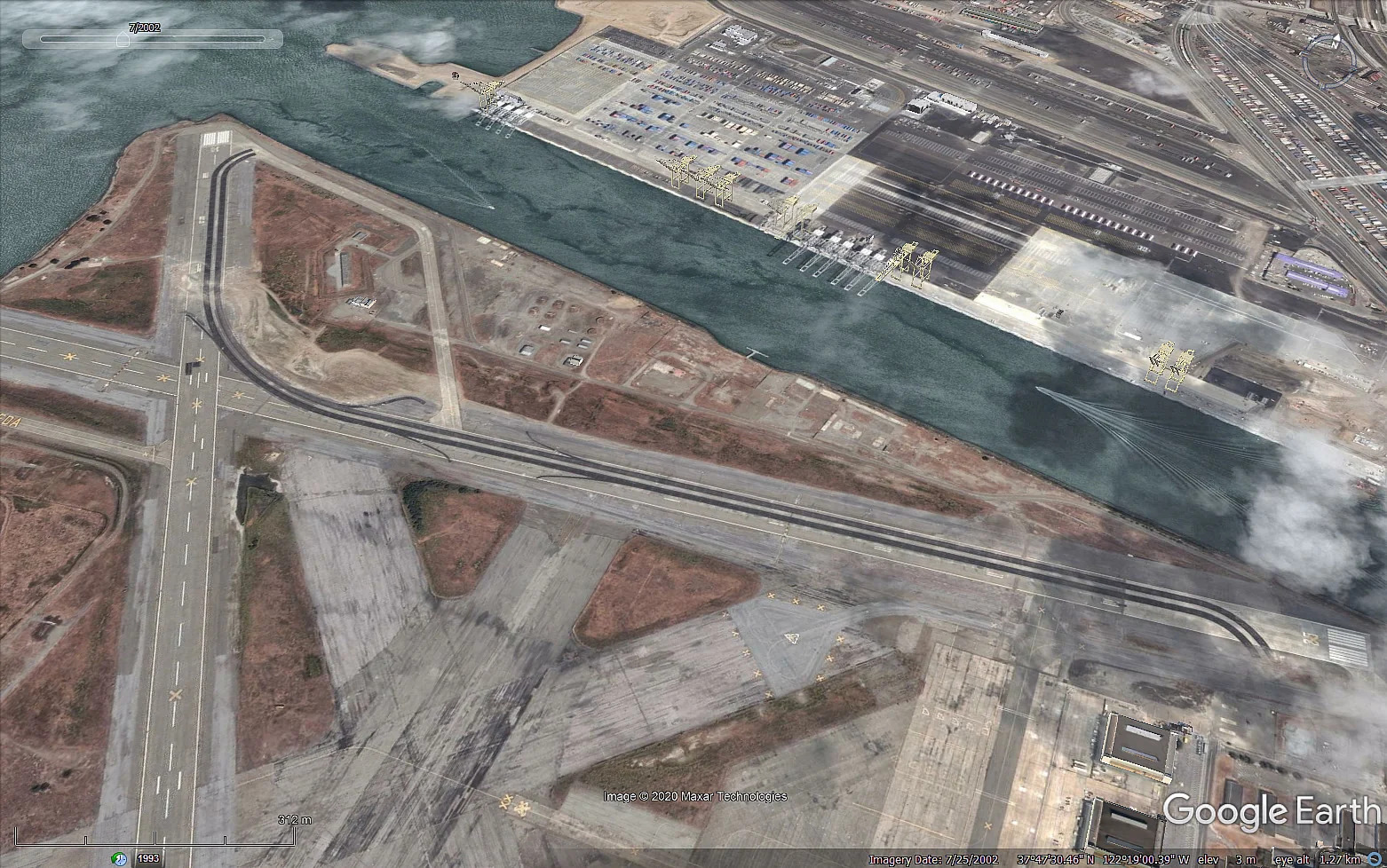
The production constructed roughly 1.4 miles of three-lane freeway on the runways of the decommissioned Naval Air Station Alameda in California. It included on-ramps, off-ramps, overpasses, barriers, and enough roadway to choreograph the enormous sequence. That allowed the stunt team to control every vehicle on the road.
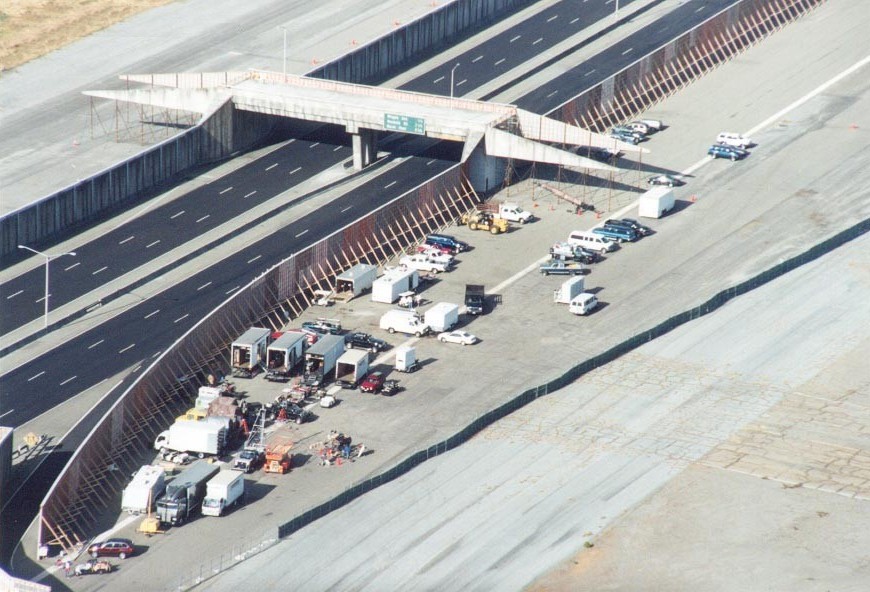
Even under those conditions, the margins were extraordinarily small. Grip Phillip Ho recalled vehicles passing one another with clearances sometimes measured in inches, while motorcycle-mounted camera rigs were used to put cameras close to the action at speed. For the scenes where Trinity squeezes between cars and trucks, that makes a huge visual difference. The Ducati moves beneath the rider — the suspension compresses. The vehicles don’t have the frictionless movement that often gives entirely computer-generated chase scenes away.
Considering the film is literally about a simulated reality, it’s amusing that one of its most famous sequences relied so heavily on physical machinery.
The Other Matrix Reloaded Motorcycle: MV Agusta F4 750 S
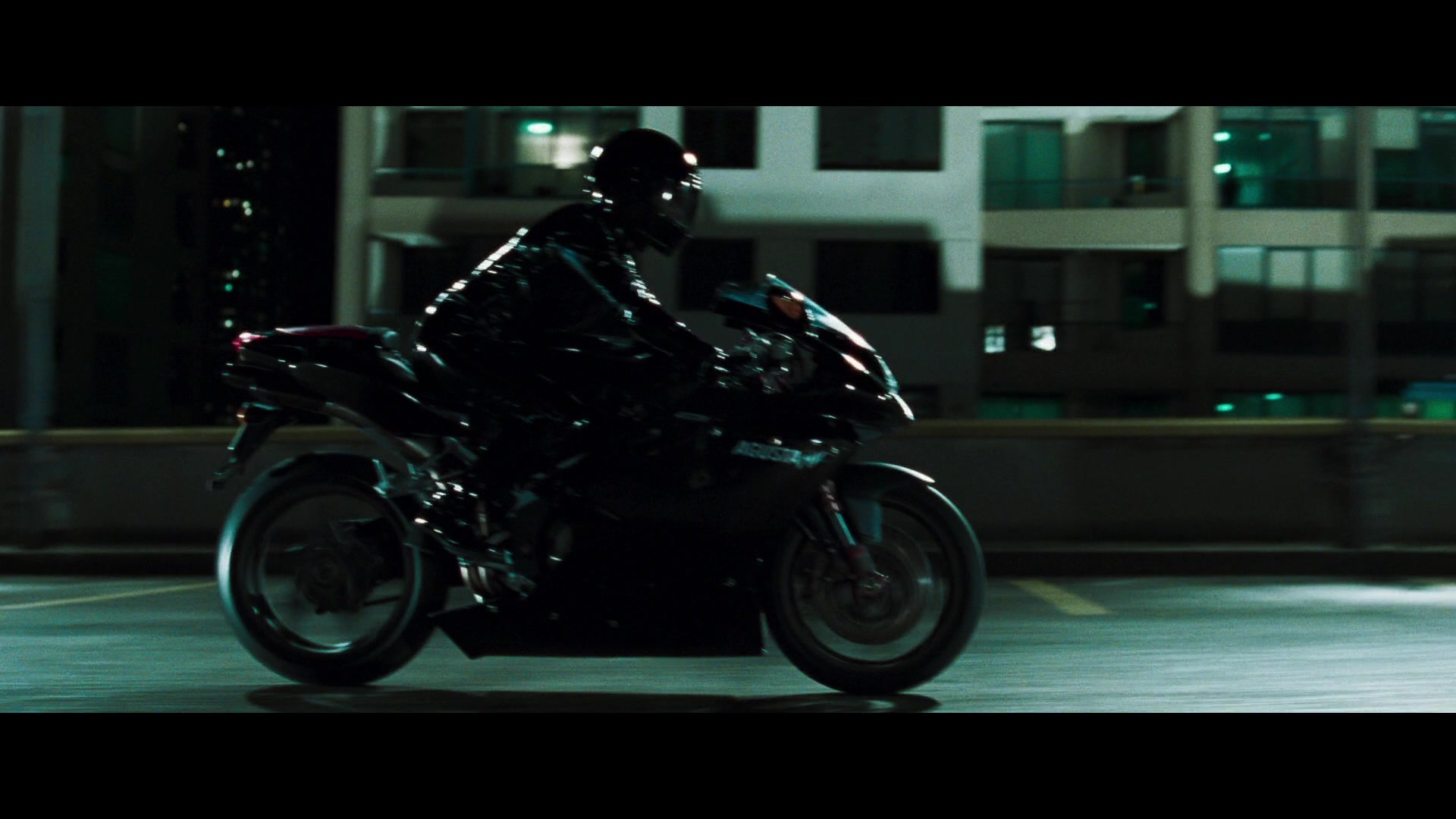
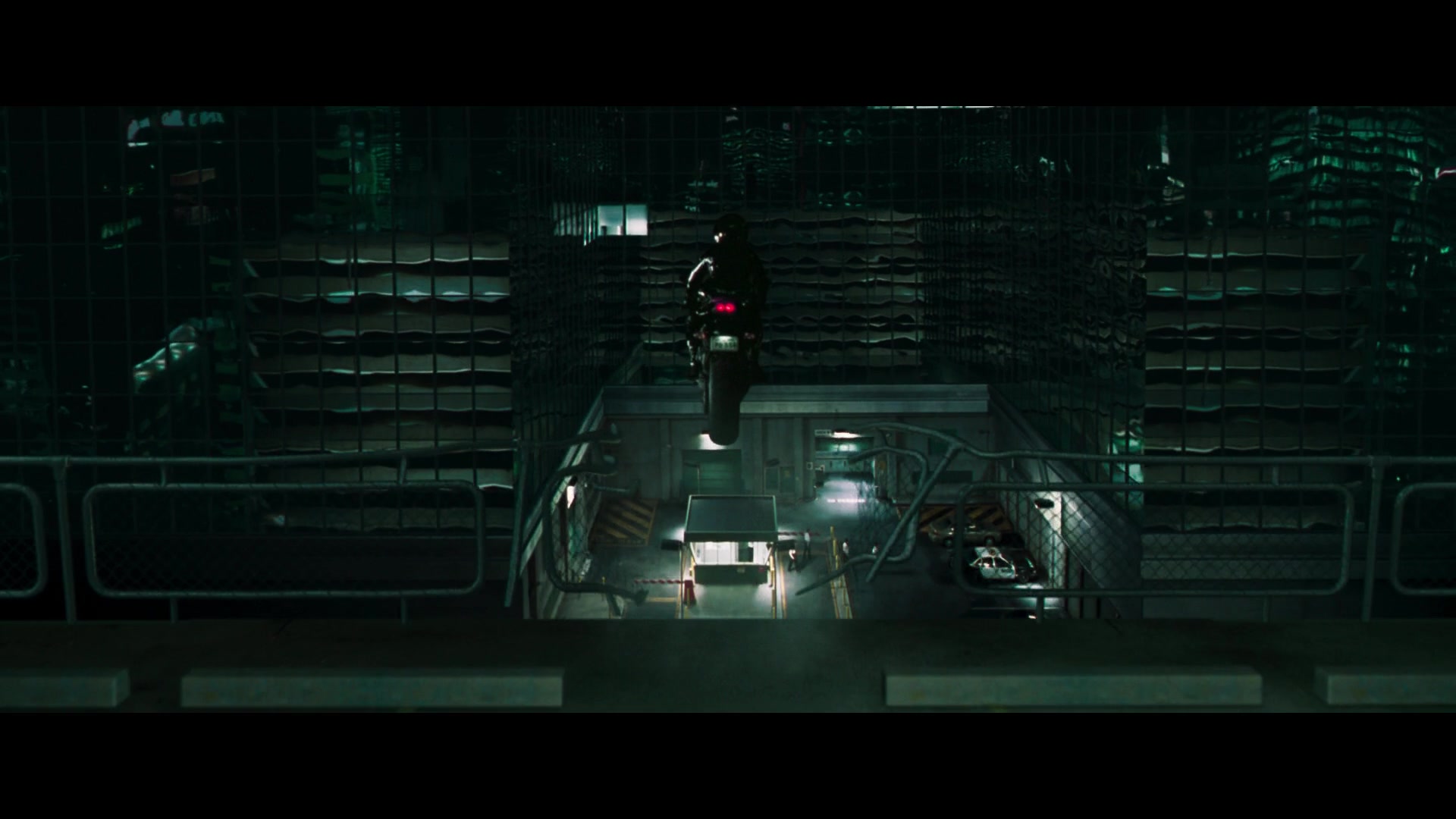
The Ducati understandably gets most of the attention, but The Matrix Reloaded actually opens with another spectacular Italian motorcycle. In Neo’s vision at the beginning of the movie, Trinity rides a black MV Agusta F4 across a rooftop before launching herself and the motorcycle through the window of a neighboring building. Later in the film, the sequence begins unfolding for real as Trinity attempts to disable a backup power system.
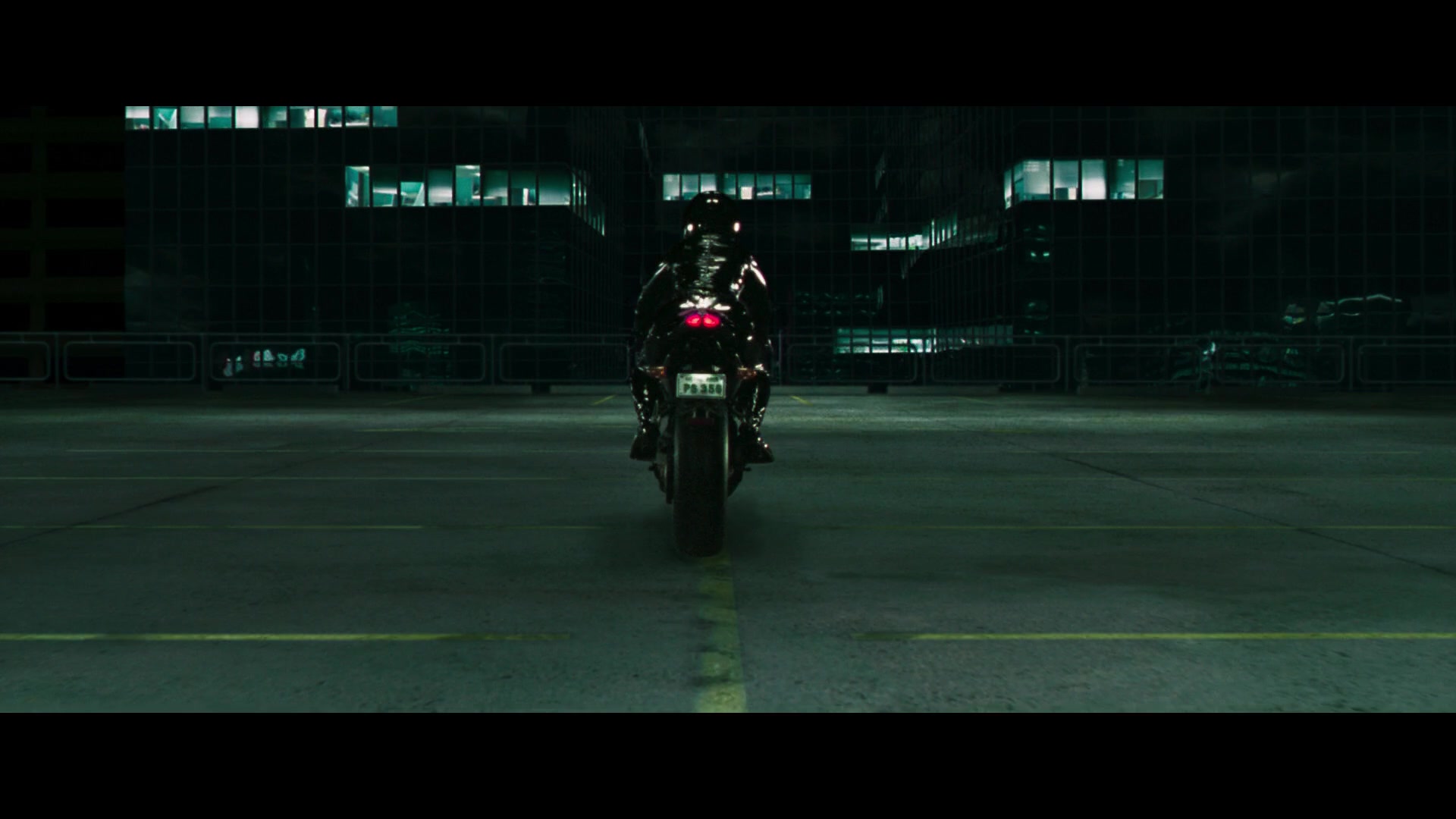
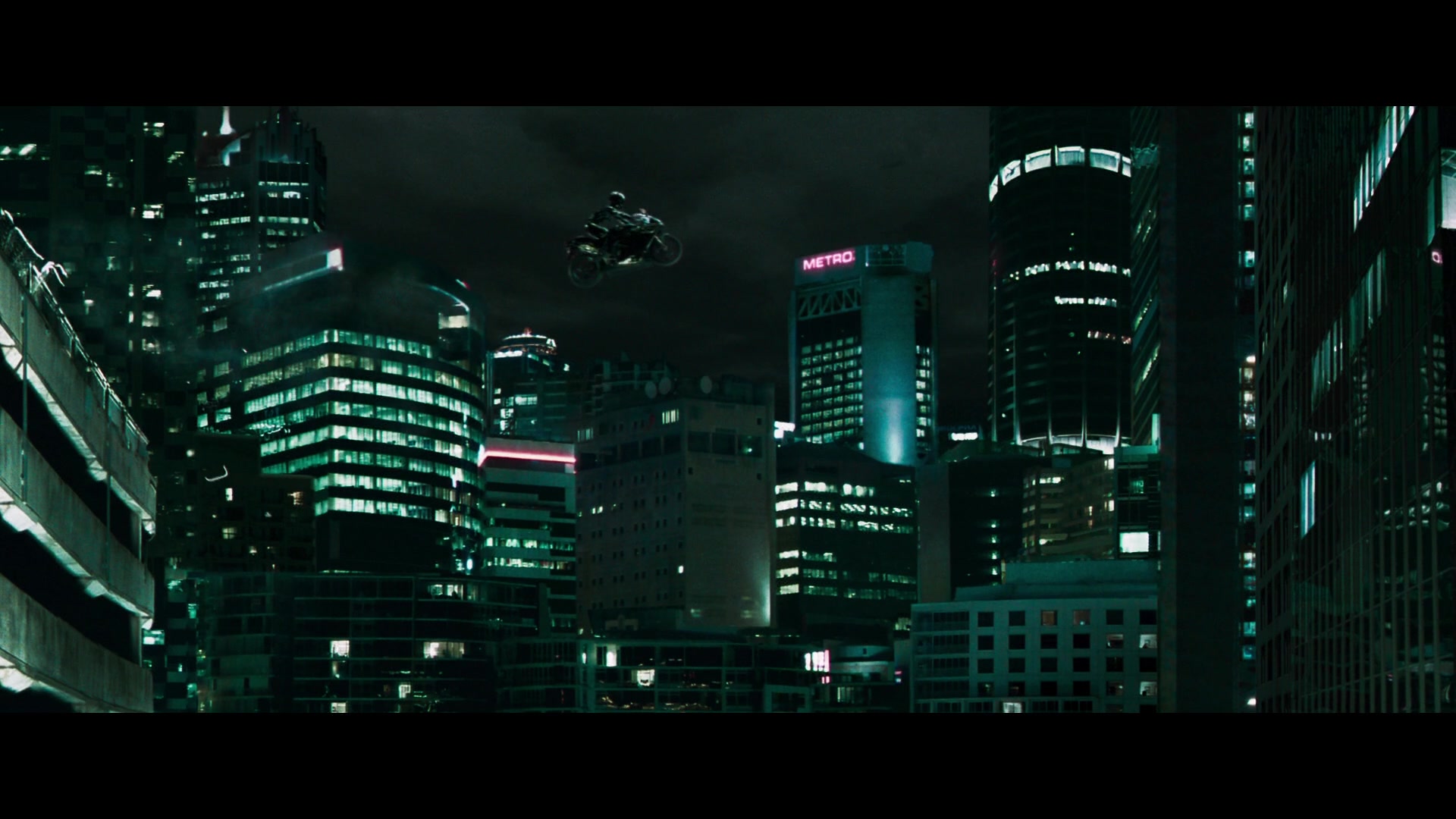
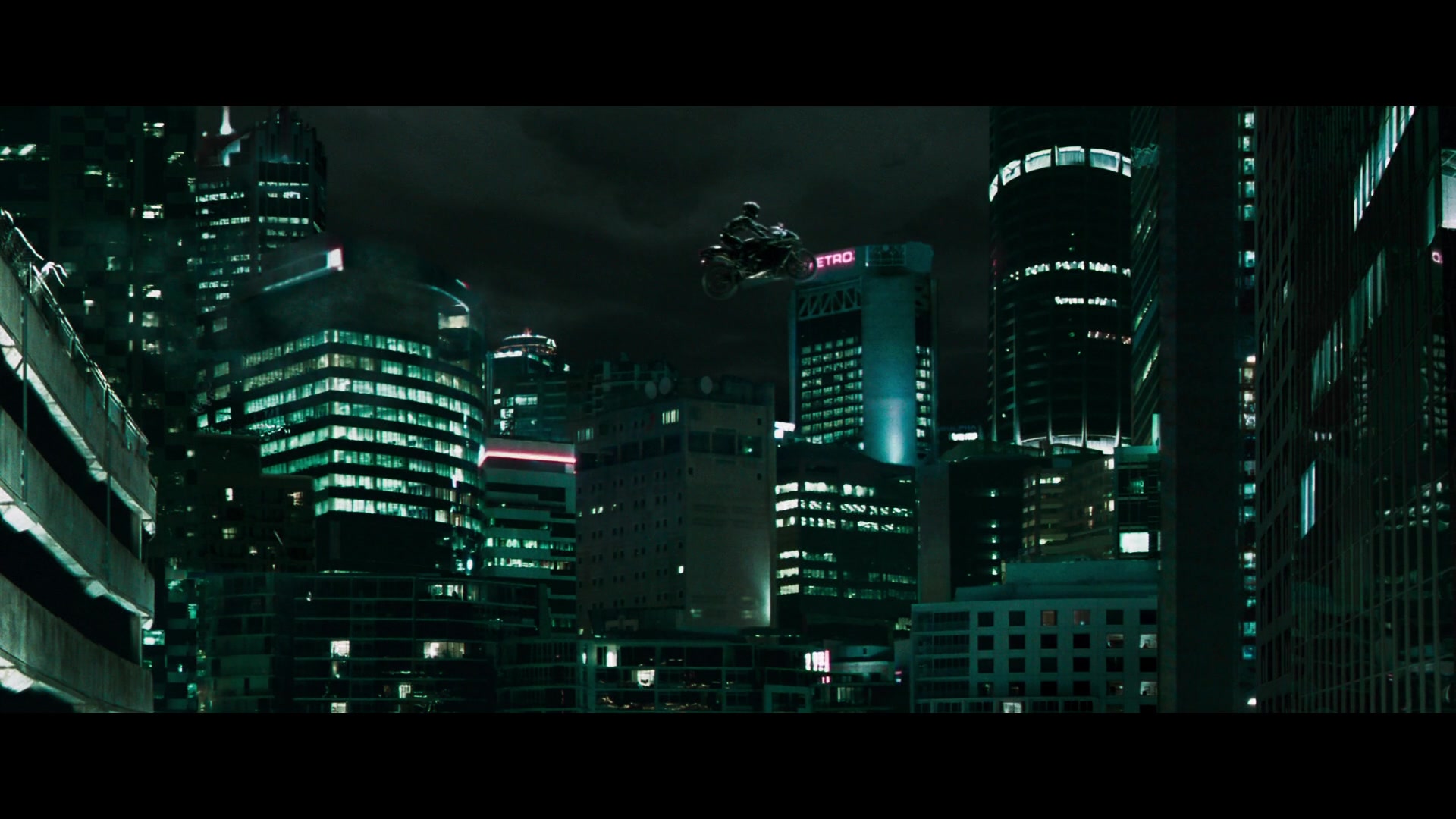
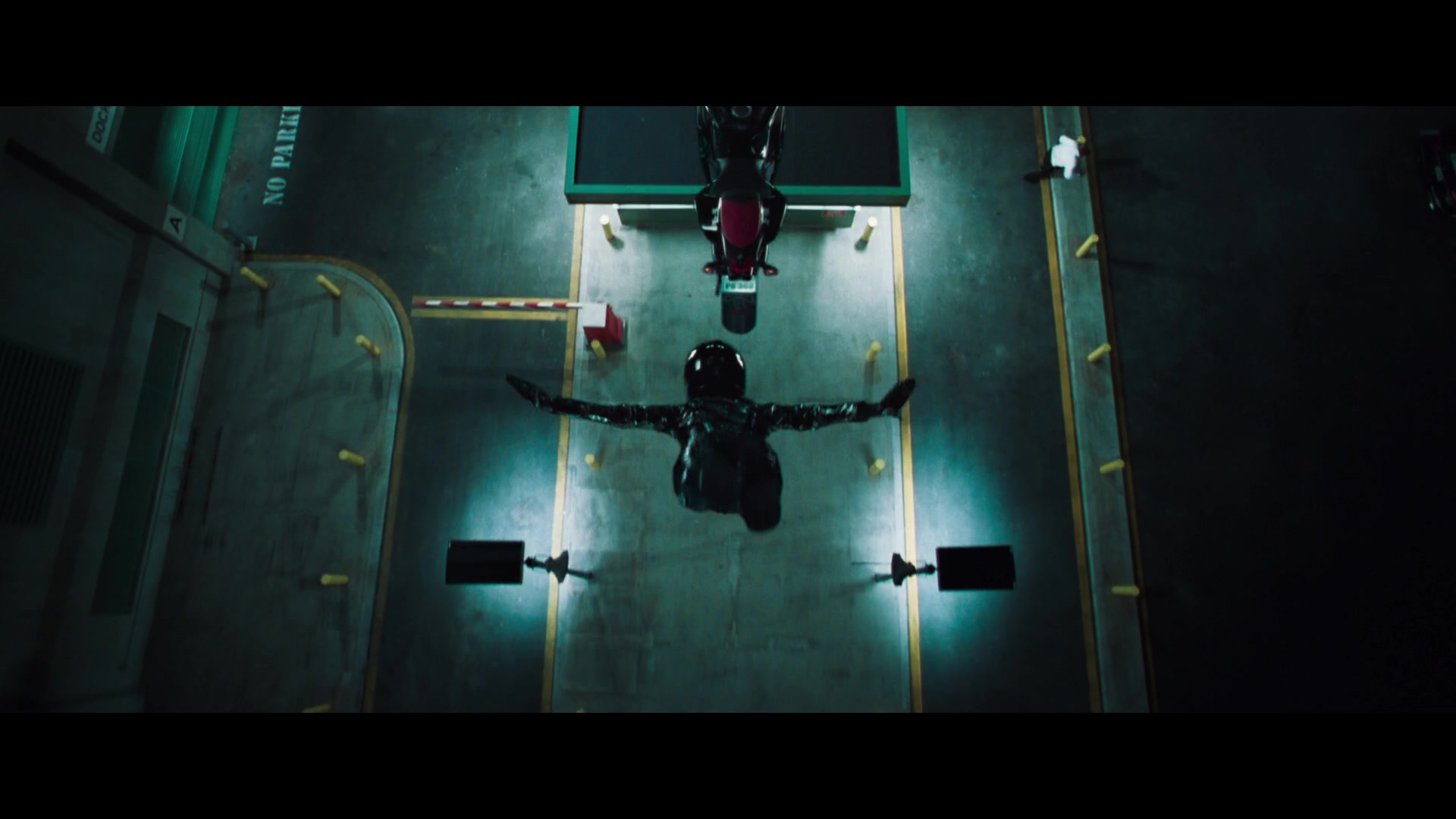
The specific bike is generally identified as an MV Agusta F4 750 S, appropriate for the film’s production period — the liter-class F4 1000 wouldn’t arrive until later. If the Ducati 996 was one of the world’s prettiest motorcycles in 2003, the F4 might have been its most serious rival. There was a reason for that: the two bikes shared a designer.
Tamburini, Again
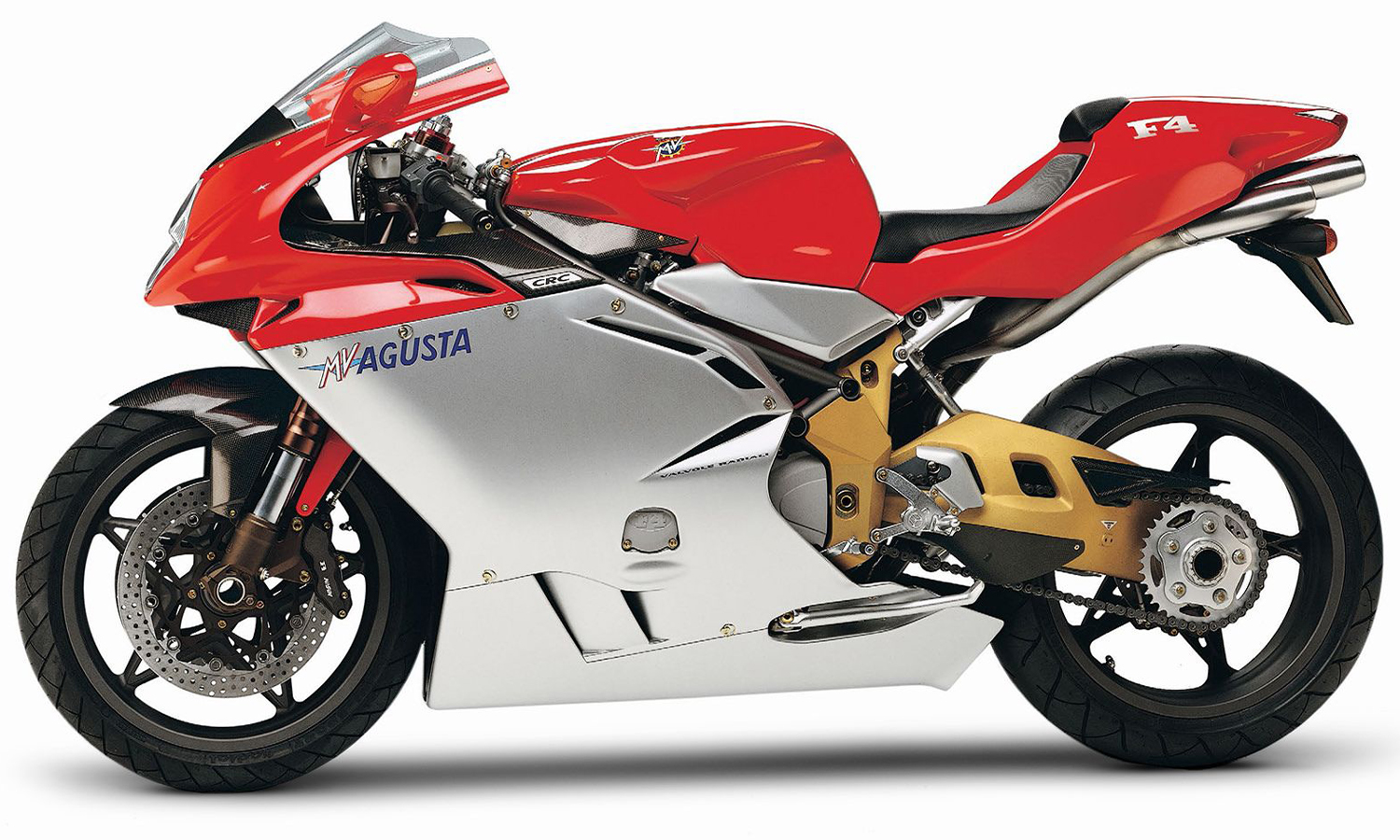
The MV Agusta F4 was another creation of Massimo Tamburini, developed after his work on the Ducati 916 family. When Claudio Castiglioni revived the storied MV Agusta name during the 1990s, Tamburini was tasked with creating the machine that would relaunch the marque. The resulting F4 arrived in production form around the turn of the millennium.
Like the Ducati, it featured a single-sided swingarm, a tightly wrapped fairing, and exhausts tucked beneath the tail. But the F4 had its own unmistakable identity, particularly its quartet of organ-pipe exhaust outlets beneath the seat. Power came from a 749cc inline-four producing approximately 126 horsepower at 12,500 rpm in F4 750 S form. The engine drove through a six-speed transmission, while a steel-tube chassis, large inverted fork, and single-sided swingarm completed an appropriately exotic package. For The Matrix Reloaded, however, the production gave the F4 an unusual makeover.
The Black F4
Picture vehicle coordinator Anthony McNeil explained that the F4 used for Trinity’s Australian-filmed motorcycle sequence was specially finished in gloss black. He also identified stunt rider Bernadette Van Gyen as the rider handling that sequence.
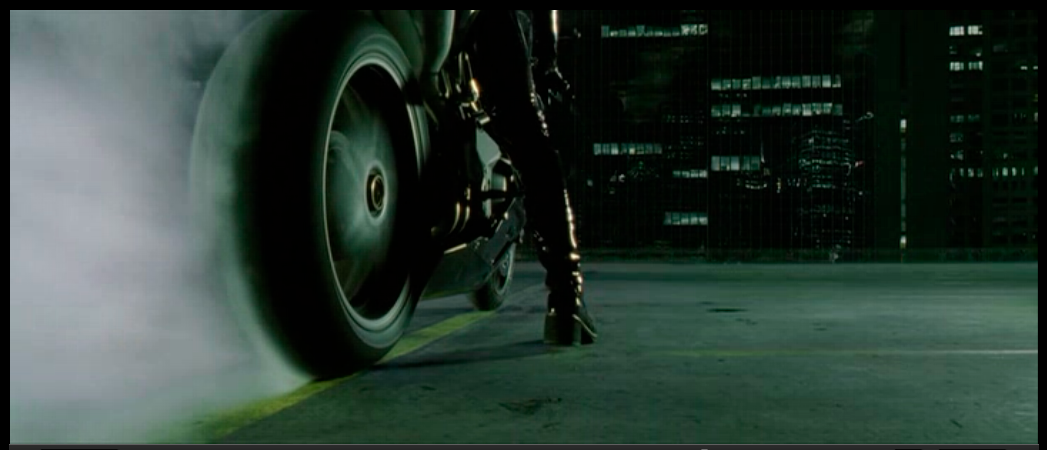
Visually, it works beautifully. The F4’s sculpted bodywork nearly disappears into Trinity’s familiar black wardrobe, making rider and motorcycle look like a single piece of machinery as she races toward the edge of the building. Then she jumps it through a window.
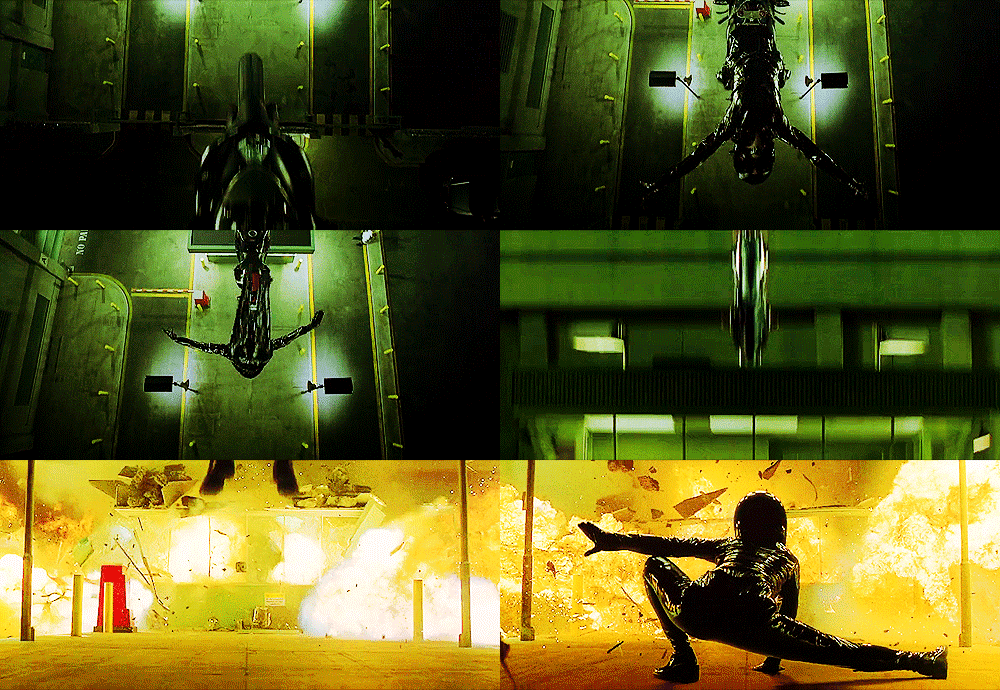
Like the Ducati, the motorcycle serves the character unusually well. Trinity’s vehicles aren’t retro, friendly, or utilitarian. They are sleek, aggressive, technologically sophisticated machines that seem completely at home in the artificial reality of the Matrix. Choosing two of Italy’s most exotic superbikes made perfect sense.
So Why Does Everyone Call the Matrix Ducati a 998?
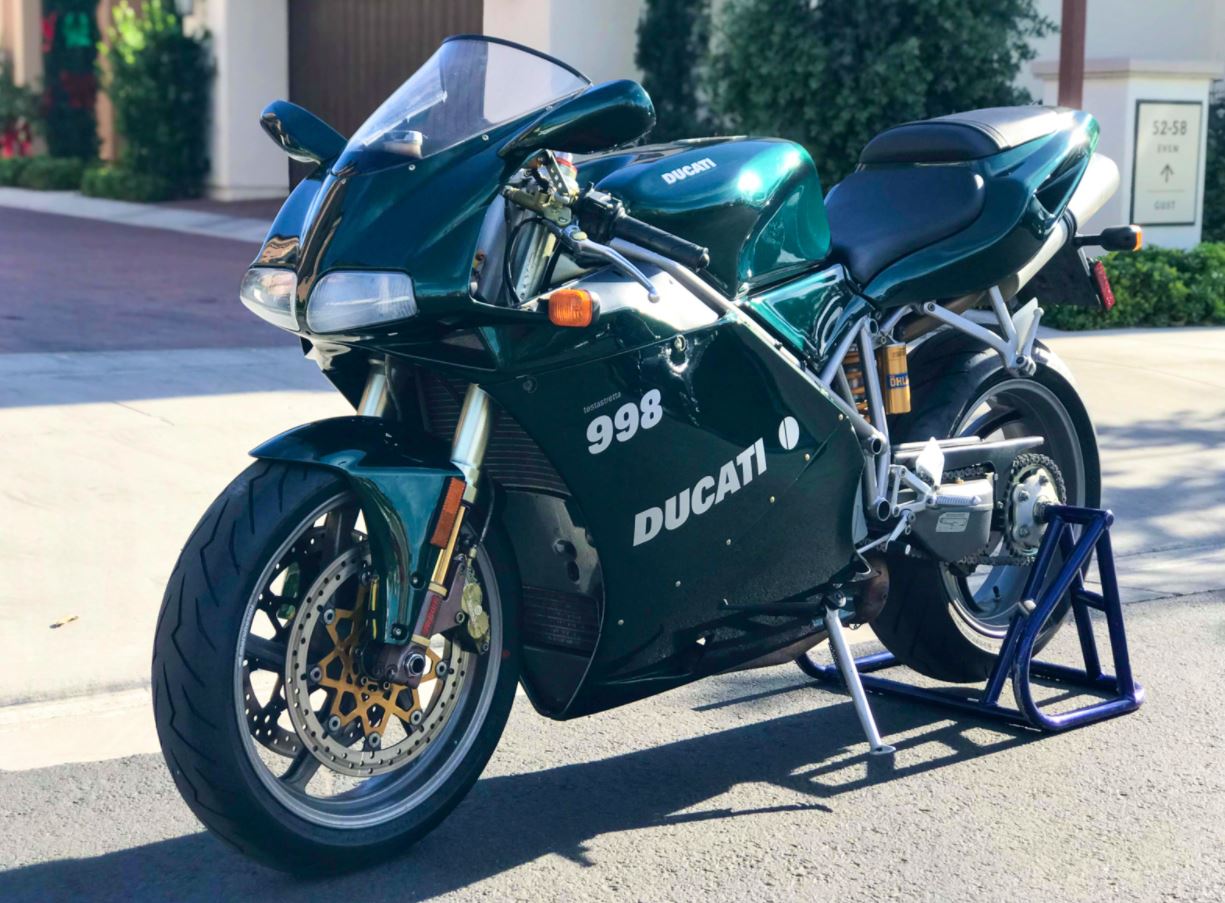
Here’s where things become confusing. When The Matrix Reloaded reached theaters in 2003, the Ducati 996 was already yesterday’s superbike, as Ducati had replaced it with the 998. The two motorcycles looked extremely similar because the 998 represented the final development of the same Tamburini-designed superbike platform. The major change was inside the bodywork, where the 998 adopted Ducati’s newer Testastretta engine.
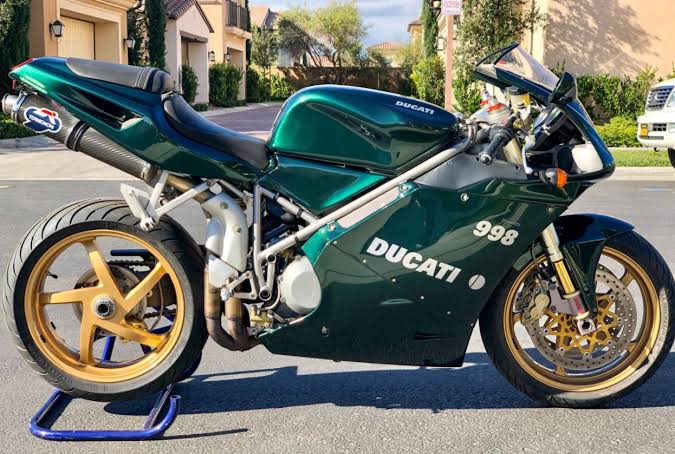
Ducati understandably wanted to capitalize on one of the most spectacular product placements imaginable, but selling a special edition of a discontinued motorcycle didn’t make much sense. So Ducati created the 998 Matrix Reloaded Edition instead.
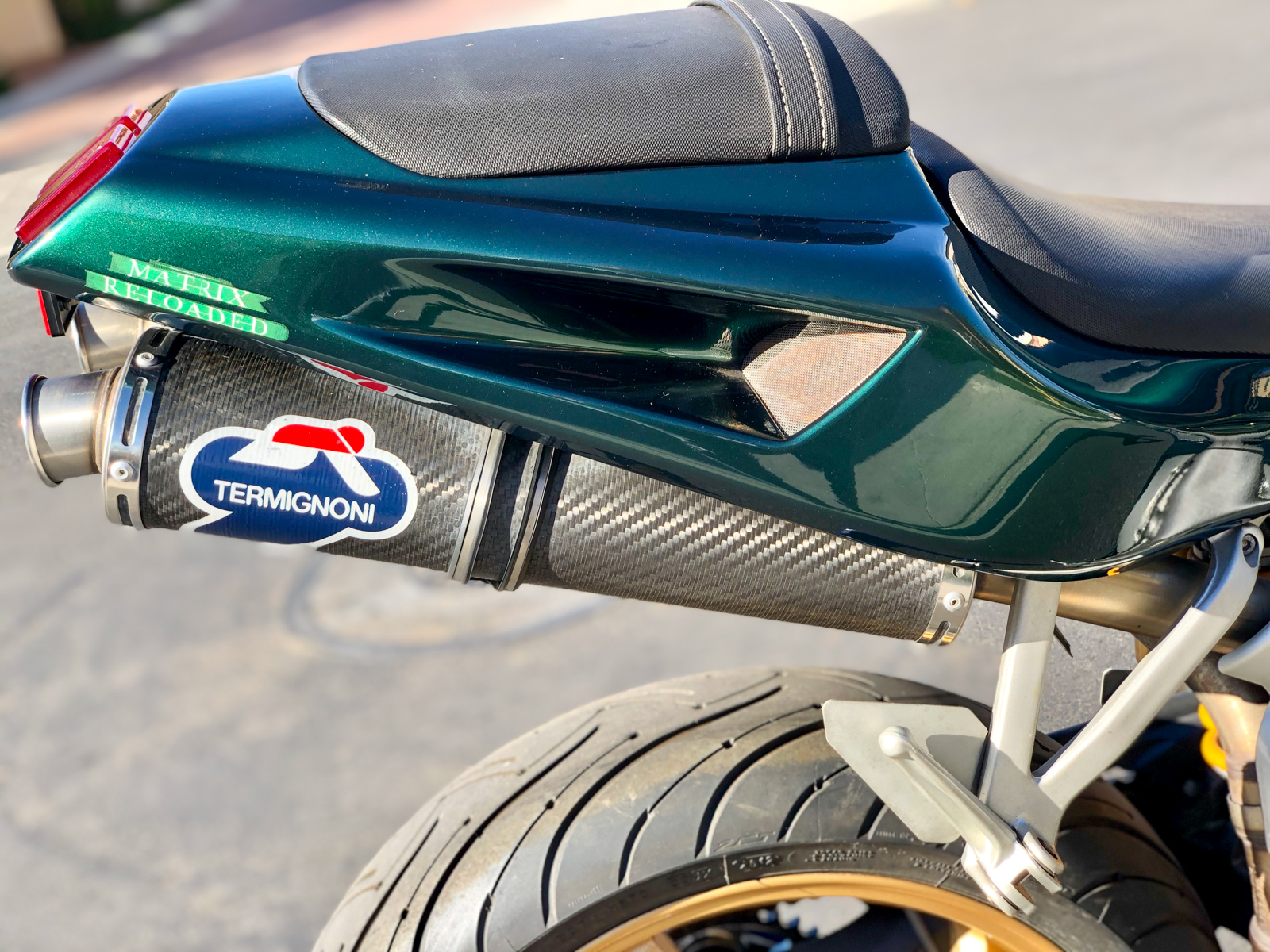
That bike received dark-green paint inspired by Trinity’s 996 along with Matrix Reloaded graphics. Sources disagree over exactly how many were built, so we’d be wary of repeating the frequently cited production figures as definitive. What’s clear is that the official tie-in motorcycle was a 998 even though the machine seen in the freeway sequence was a 996. That’s the source of most of the confusion.
- Movie bike: Ducati 996.
- Matrix special edition sold afterward: Ducati 998.
What Happened to the Movie Bikes?
At least one person left The Matrix Reloaded production with a Ducati 996 of her own. Debbie Evans has recalled asking the filmmakers where she might be able to get a good deal on a 996 after spending months riding them for the film. Instead, on the final night of filming, someone rode up on a red Ducati wearing a large bow. It was hers.
Evans still described that 996 years later as one of her favorite motorcycles, complete with the license plate MATRX2. Given the abuse the stunt machines endured, a fresh red one may have been the better souvenir.
Motorcycles of The Matrix Reloaded
Ducati 996 Specifications
| Engine | 996cc liquid-cooled 90° L-twin |
| Valvetrain | DOHC, four desmodromic valves per cylinder |
| Fueling | Electronic fuel injection |
| Power | Approx. 112 hp @ 8500 rpm |
| Torque | Approx. 69 lb-ft / 93 Nm |
| Transmission | Six-speed |
| Frame | Tubular steel trellis |
| Front brakes | Twin 320mm discs |
| Wheelbase | Approx. 55.5 in / 1410mm |
| Dry weight | Approx. 436 lb / 198 kg |
| Top speed | Approx. 160 mph / 259 km/h |
| Production | 1999–2002 |
MV Agusta F4 750 S Specifications
| Engine | 749cc liquid-cooled inline-four |
| Power | Approx. 126 hp @ 12,500 rpm |
| Torque | Approx. 55 lb-ft / 74 Nm |
| Transmission | Six-speed |
| Frame | Steel tubular trellis with aluminum plates |
| Front suspension | 49mm inverted fork |
| Rear suspension | Sachs monoshock, single-sided swingarm |
| Dry weight | Approx. 421 lb / 191 kg |
| Top speed | Approx. 162 mph / 260 km/h |
| Production introduced | 1999 |
The Non-CGI Star of the Freeway
More than two decades later, CGI can produce action scenes on a scale the Wachowskis could only have imagined in 2003. But it’s difficult to imagine a computer-generated motorcycle chase looking much better than Debbie Evans threading a dark-green Ducati 996 through oncoming traffic on a freeway built specifically so Hollywood could destroy it. The Matrix may not be real, but that Ducati was!


