
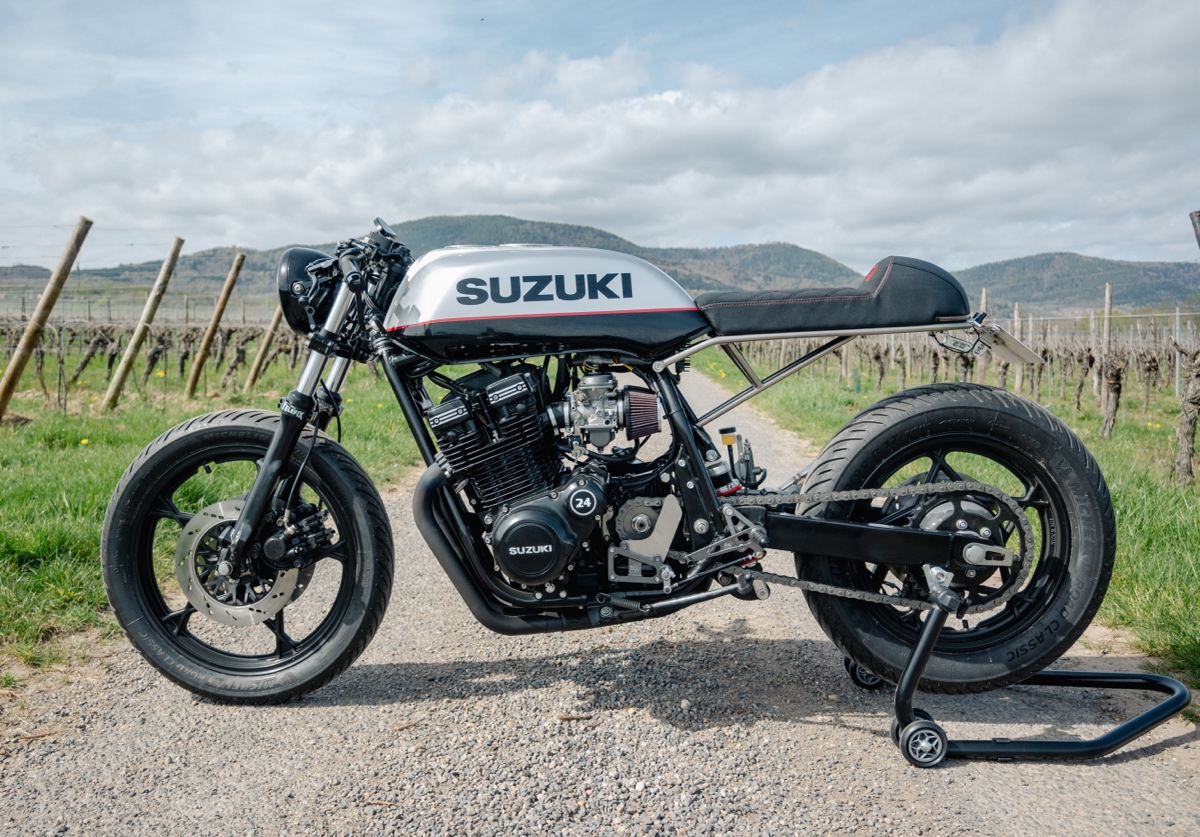
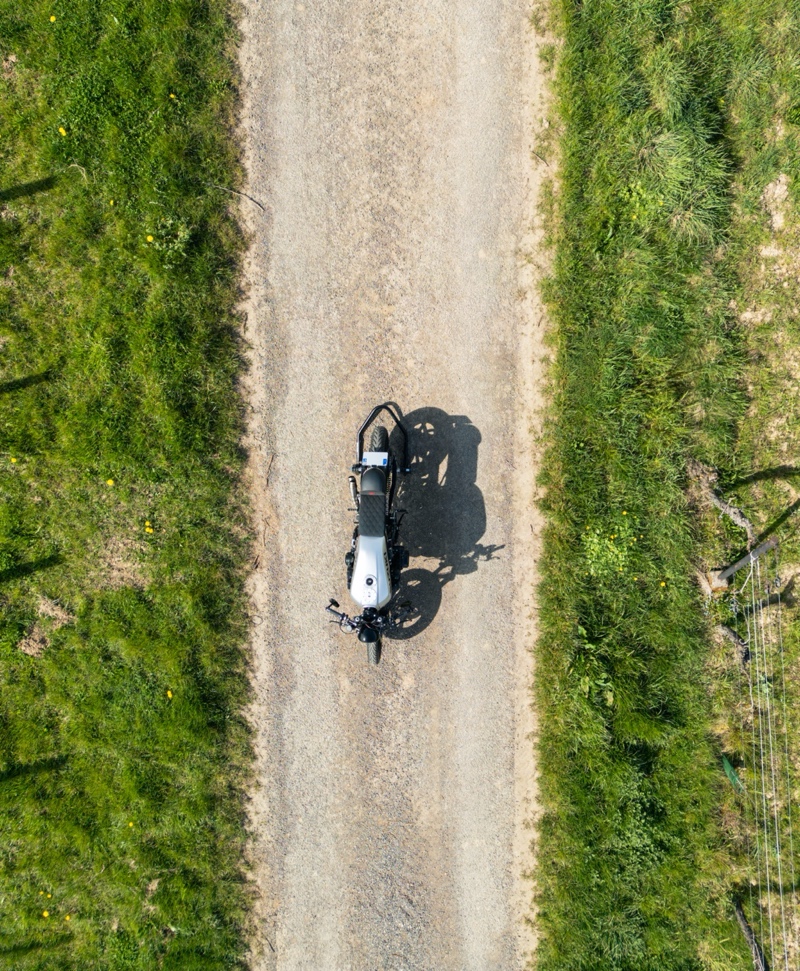
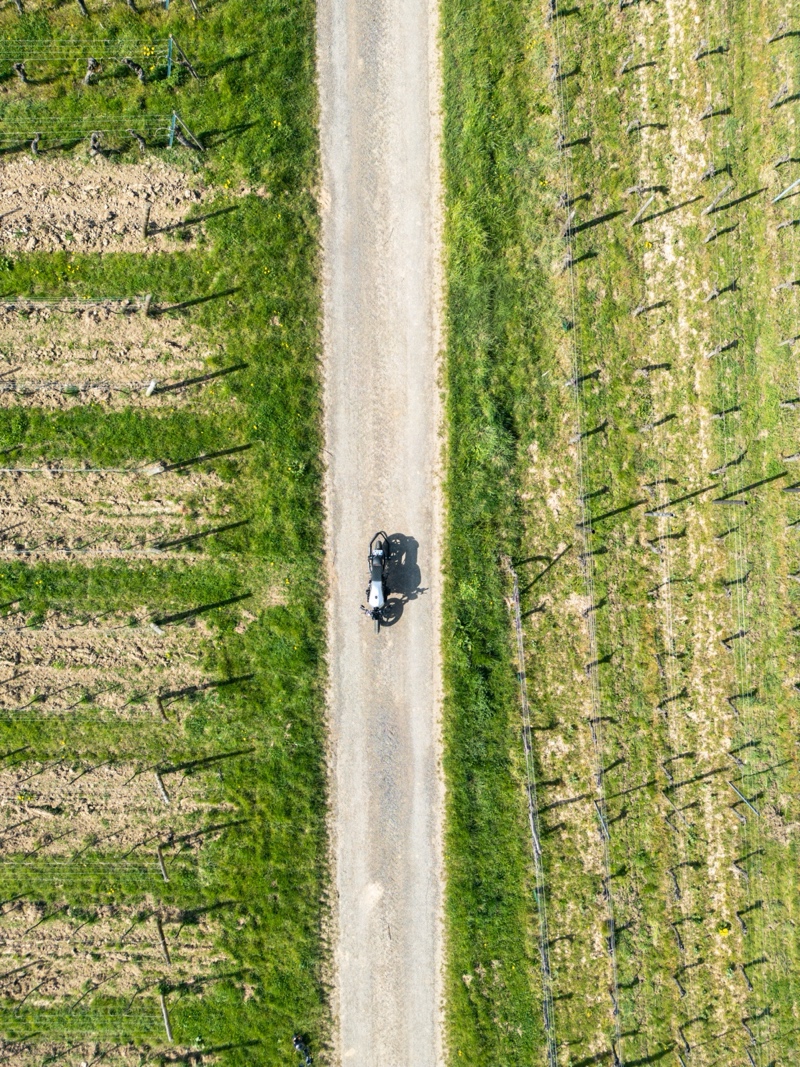
 Big-Bore Café Racer from Xavier Uhl…
When the Suzuki GSX1100 (aka GS1100E) hit the market in 1979, it was the world’s quickest production motorcycle with a quarter-mile time of 11.1 seconds at 120 mph — just outpacing Kawasaki’s GPz1100. That straight-line thrust came courtesy of the bike’s highly-tuned 16-valve DOHC inline-four, which featured Suzuki’s TWCC (Twin Swirl Combustion Chamber) technology and produced a stout 108-111 hp at the crank. Moreover, the engine was built for bear with a roller bearing crank and forged clutch basket.
 But the big Suzuki powerhouse could do more than drag race. It was built to boogie through the twisties with adjustable suspension, anti-dive forks, and a braced box section aluminum swingarm. Overall, the big four-lunger was just our kind of fun:
“It came off the showroom floor with 100 bhp plus, road racer handling, and enough top speed to blow the main fuse in a radar gun.” –Cycle World, 1982
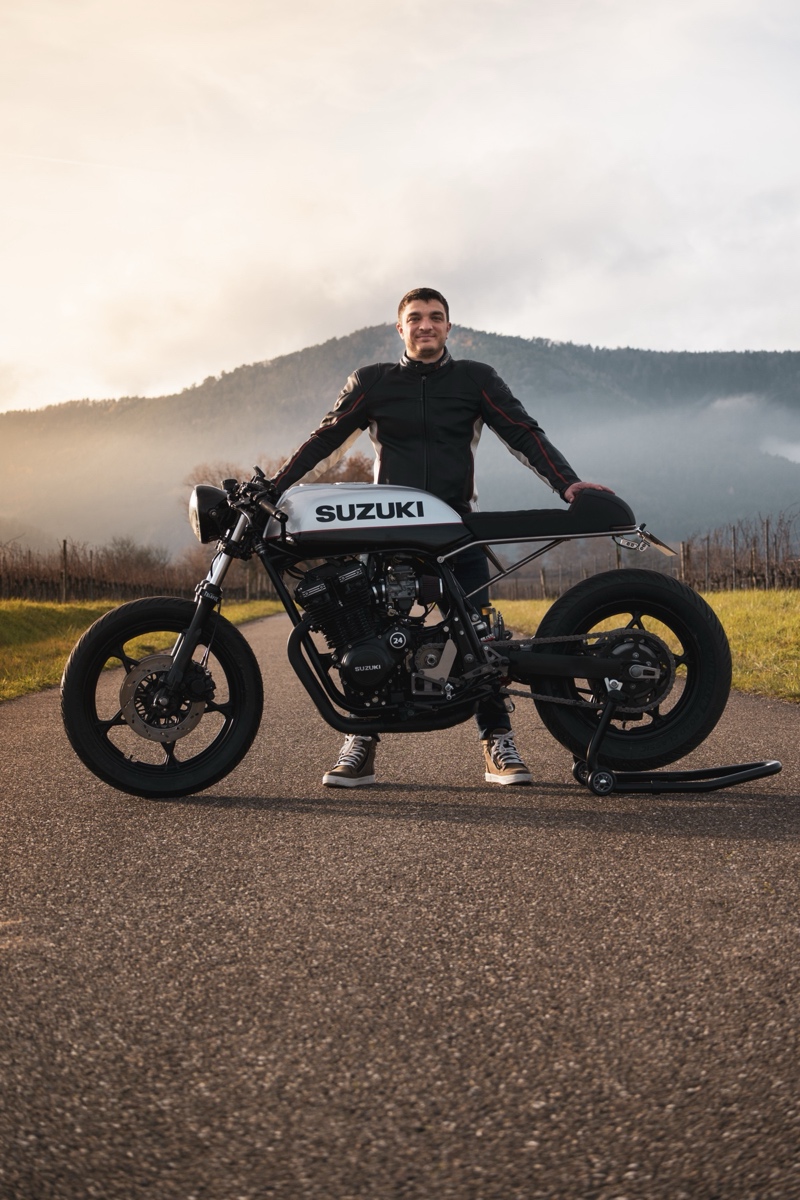
Enter our new friend Xavier Uhl (@regarddemotard), a 29-year-old Frenchman from the nation’s proud Alsace region. Five years ago, Xavier landed his first job overseas, but it proved a rough time. Instead of pitying himself, however, Xavier decided to press forward with the dream of building his own motorcycle.
“Things weren’t exactly smooth sailing. I decided to take on a personal project: to build a one-of-a-kind motorcycle, a café racer, different from the roadsters I’d owned before.”
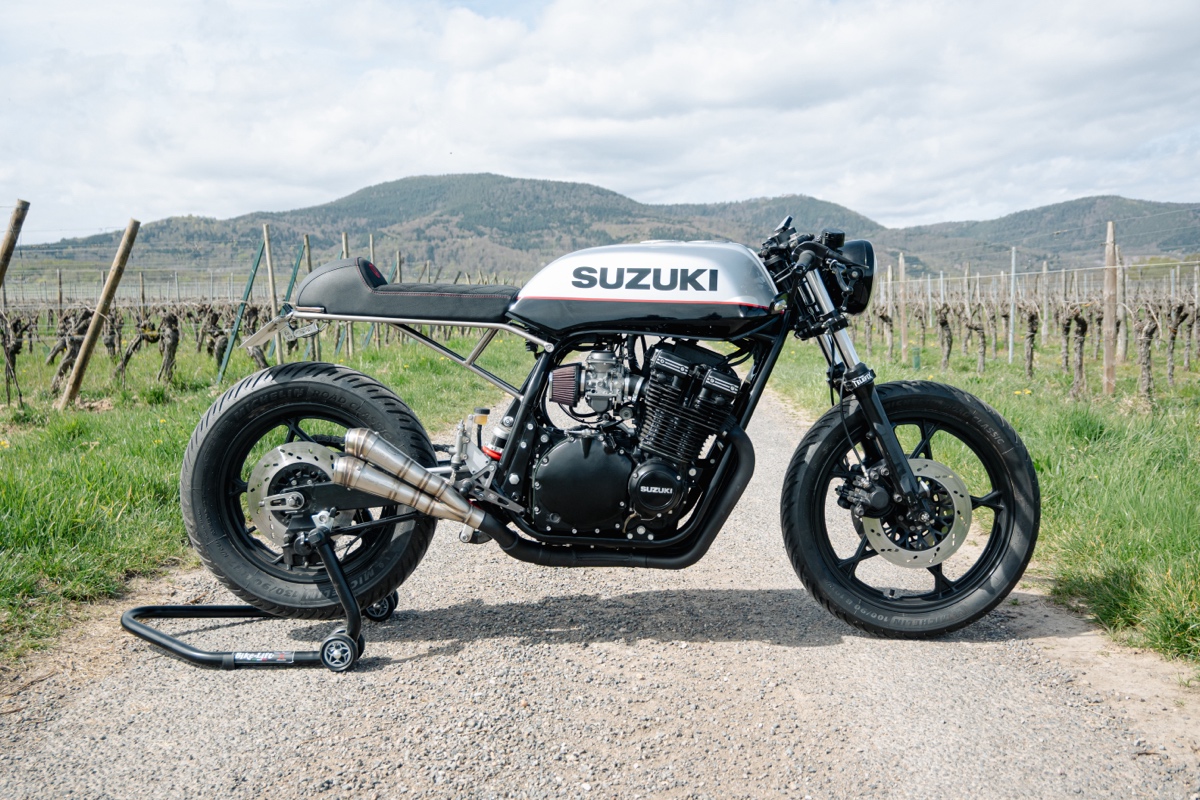
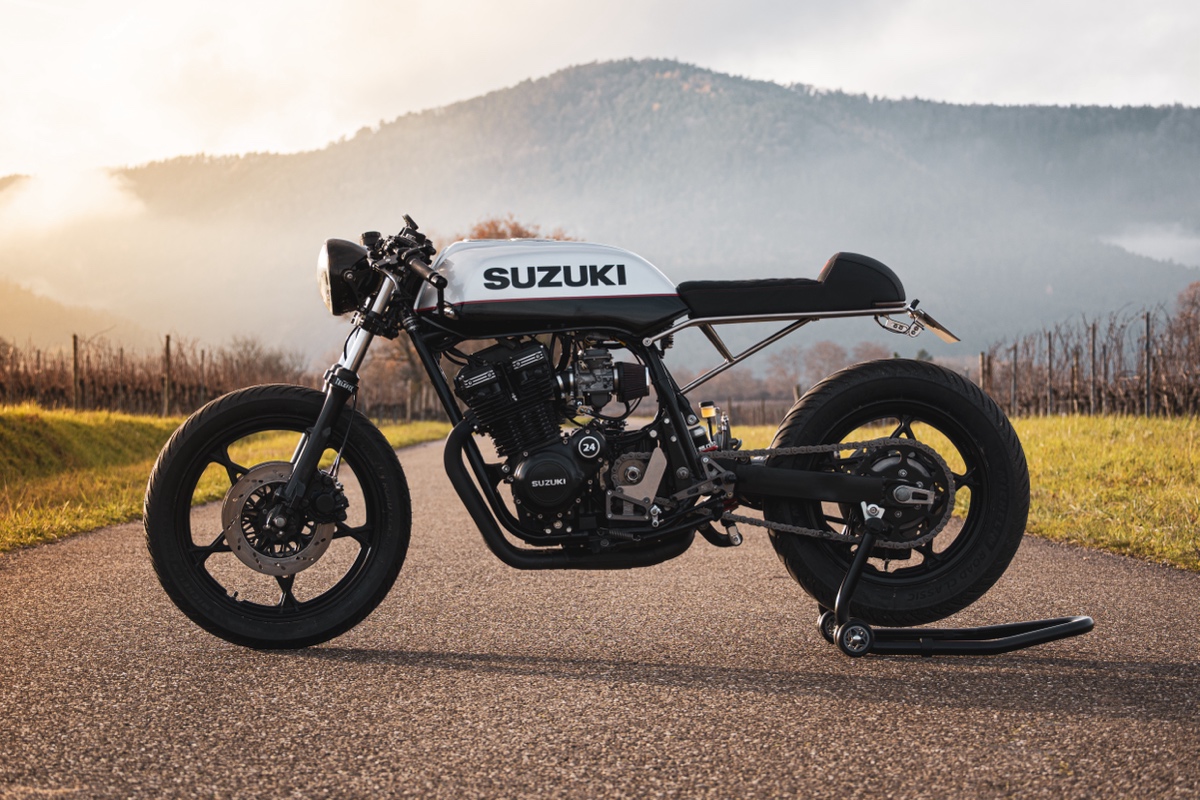
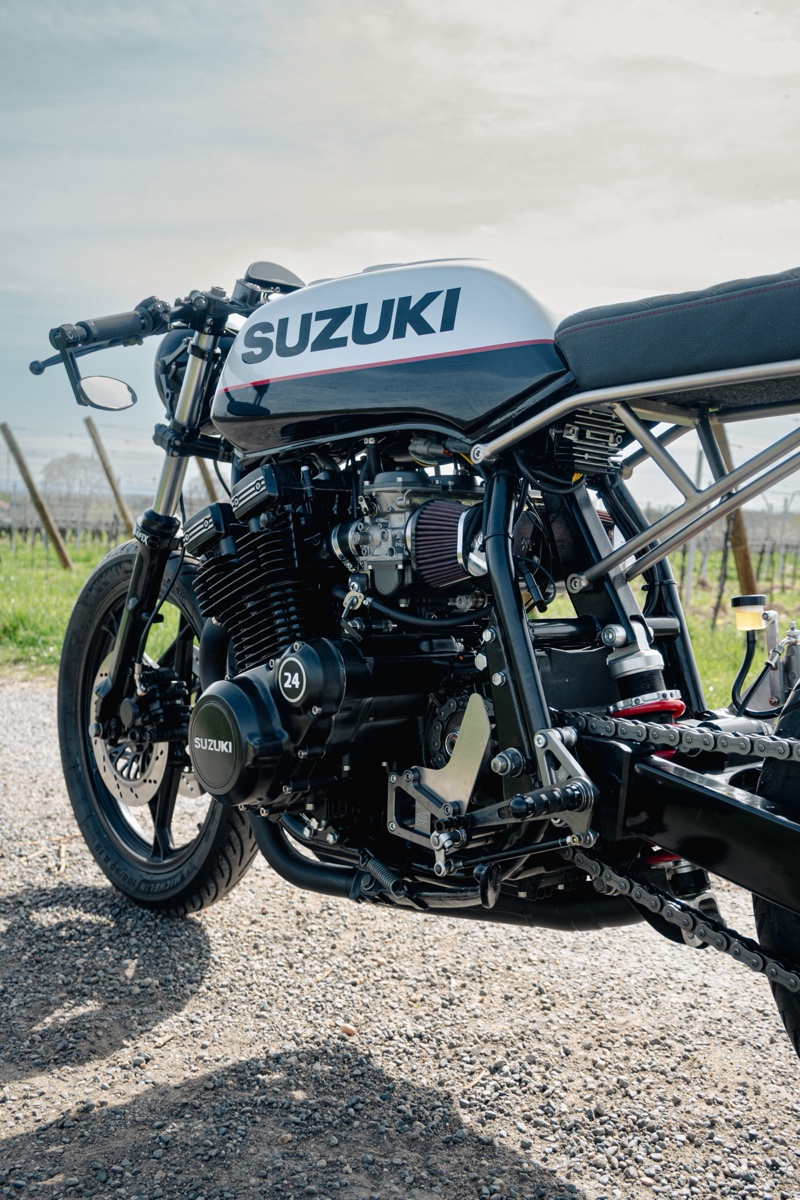
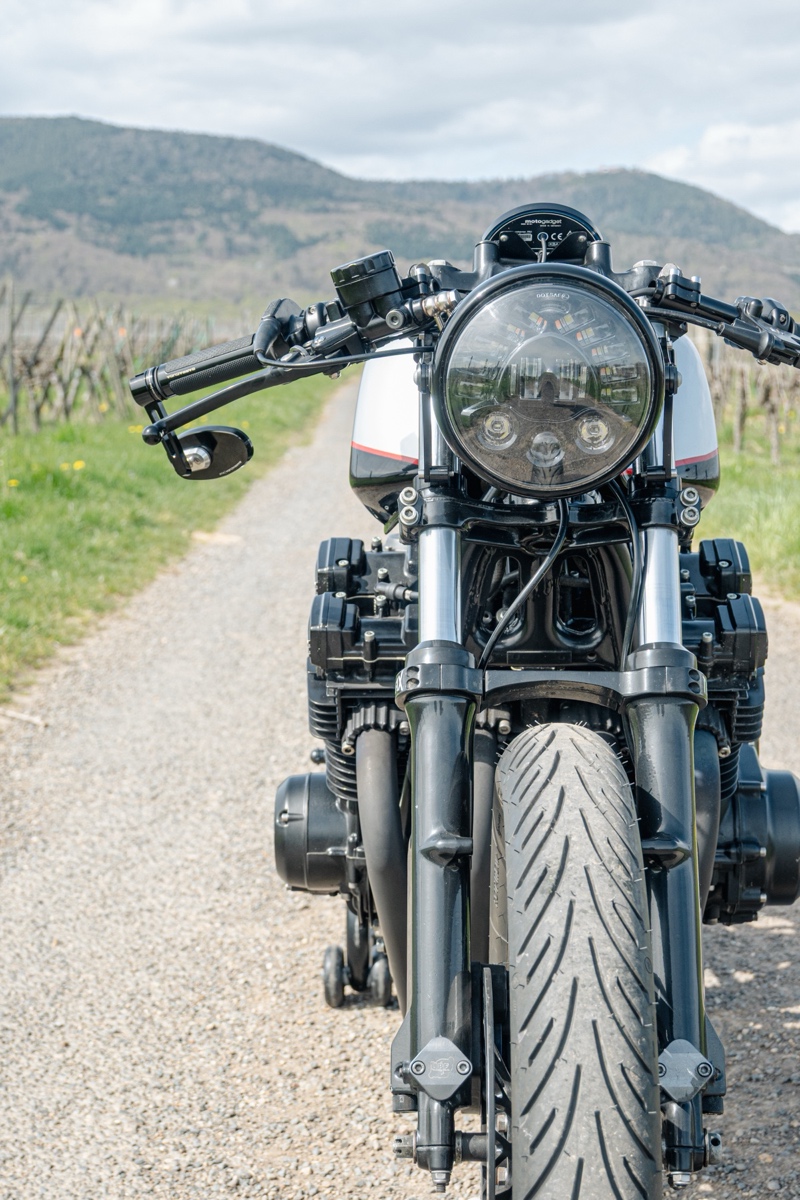
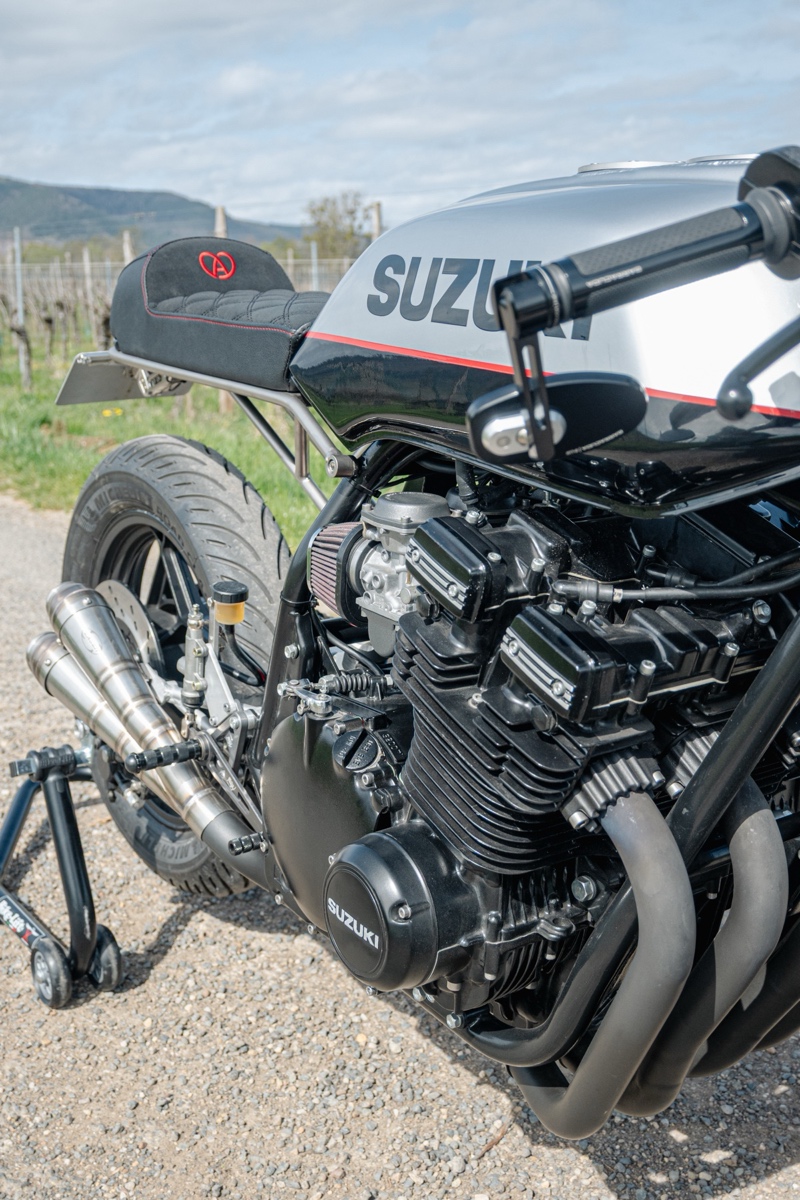
Of course, the project itself was no walk in the park, requiring Xavier to develop both his technical and soft skills. He did most of the modifications on this ’82 GSX1100 himself, turning to mechanics and specialists for work beyond his skillset and tools. The bike was converted to a monoshock setup with a GSX-R swingarm and custom mounts for the single rear shock, and the engine was rebuilt to stock spec.
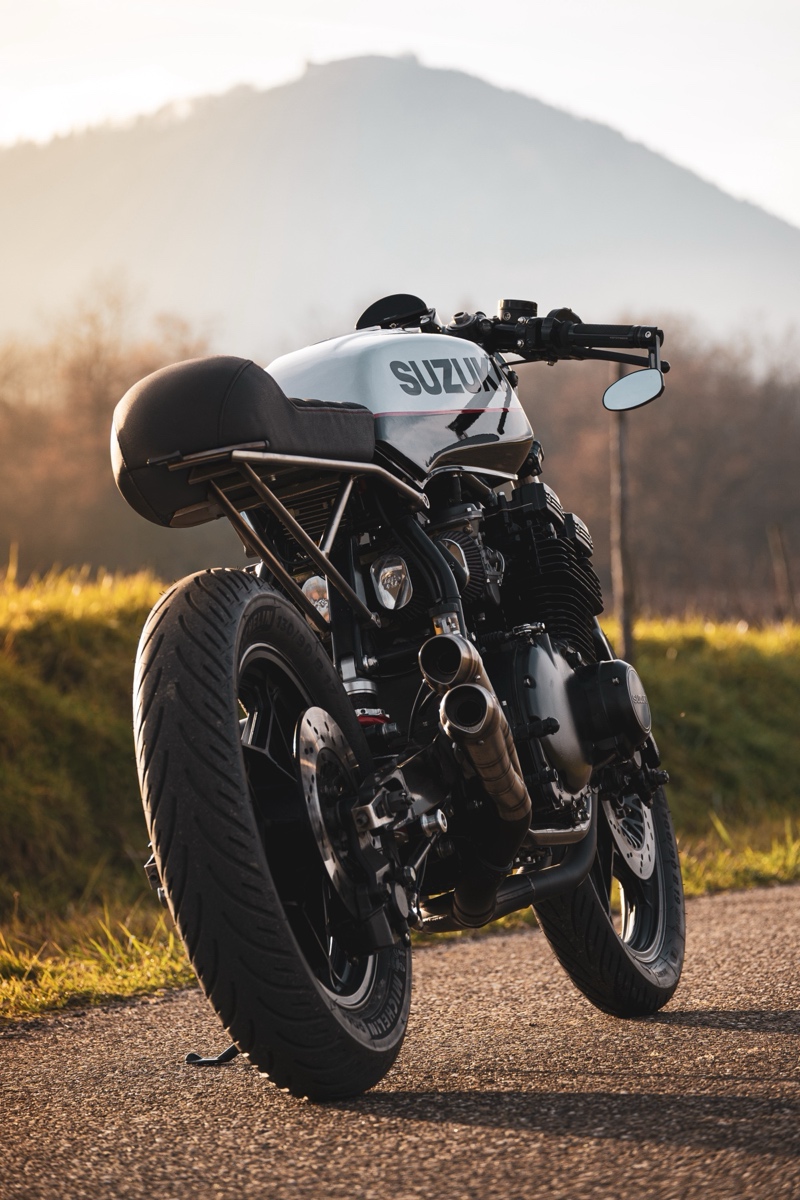
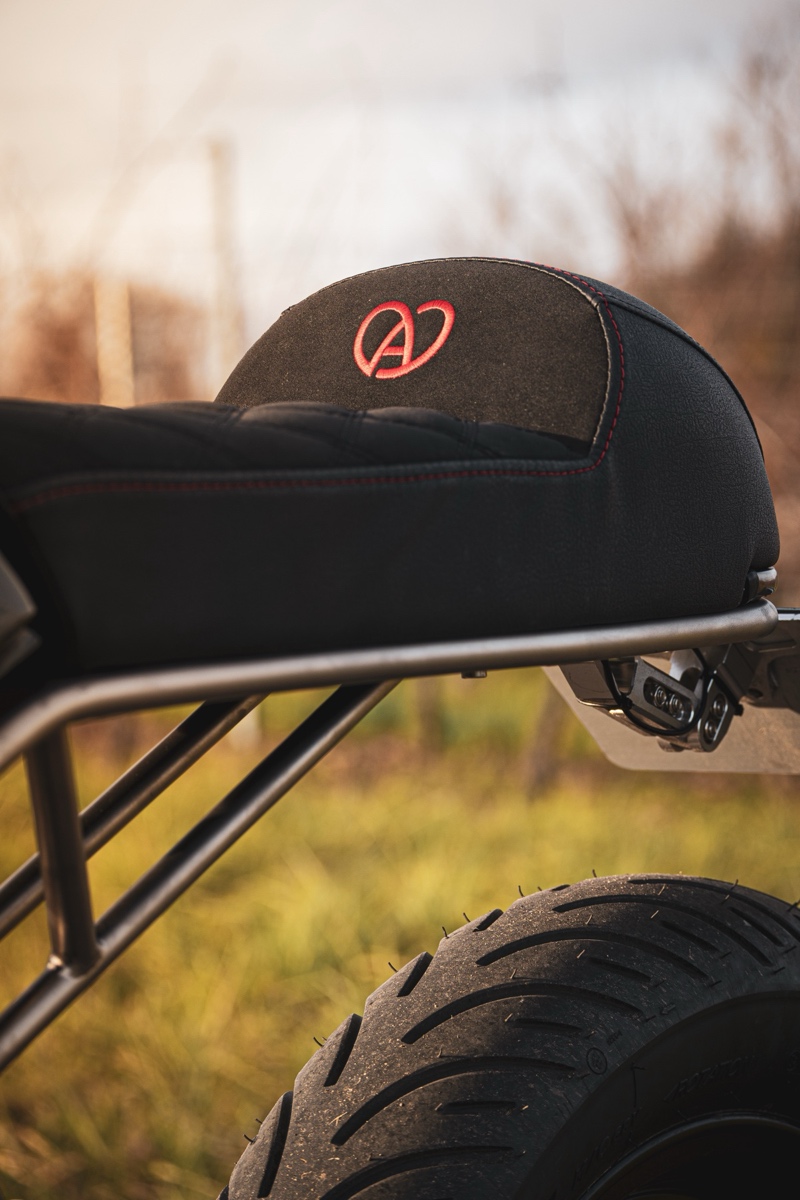
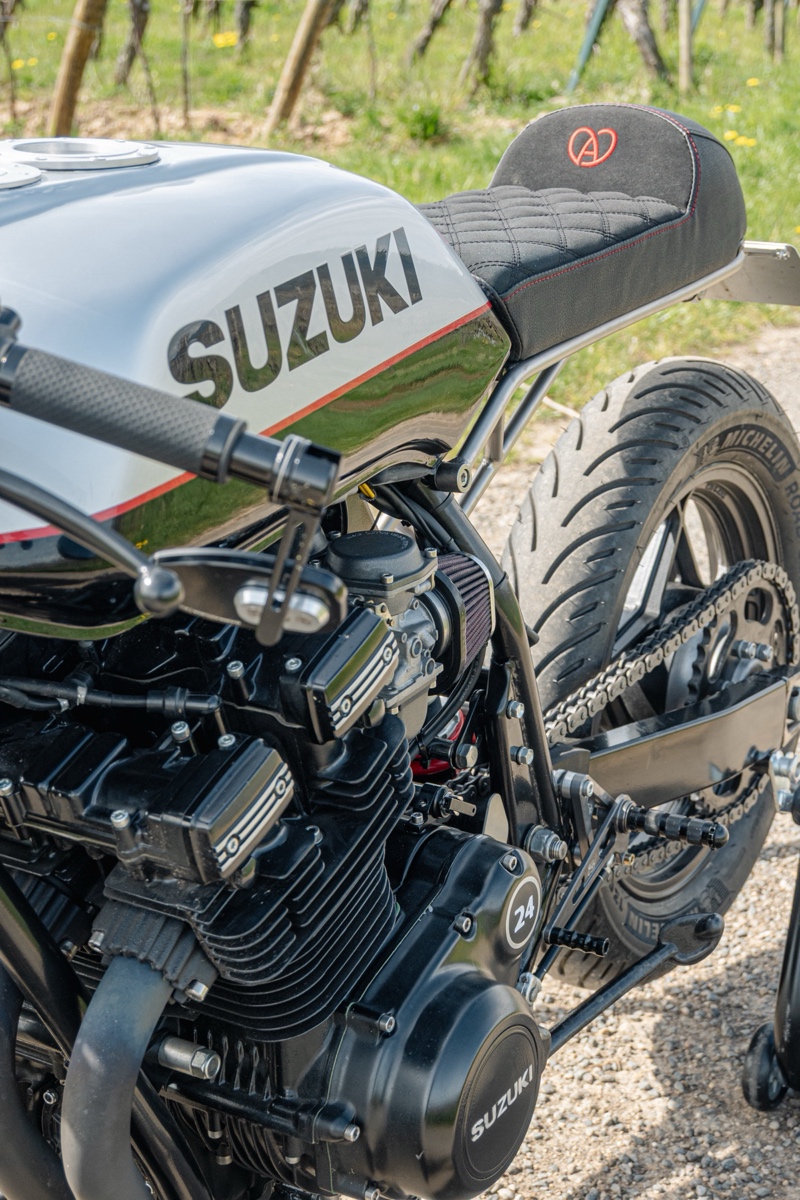
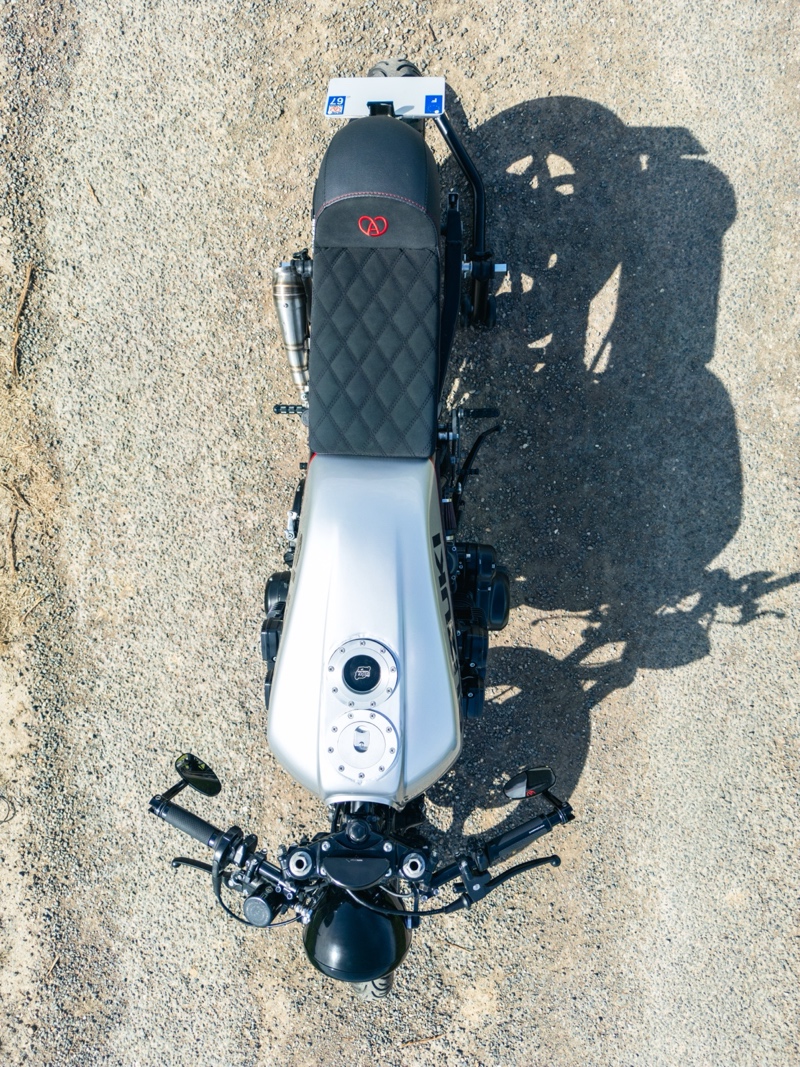
Out back, there’s a custom subframe and rear loop, which support a handmade seat that bears the “Alsace” logo (Xavier’s region).
“I was living abroad, and it was important to me to include this nod to home. After 10 years abroad, I returned to my hometown.”
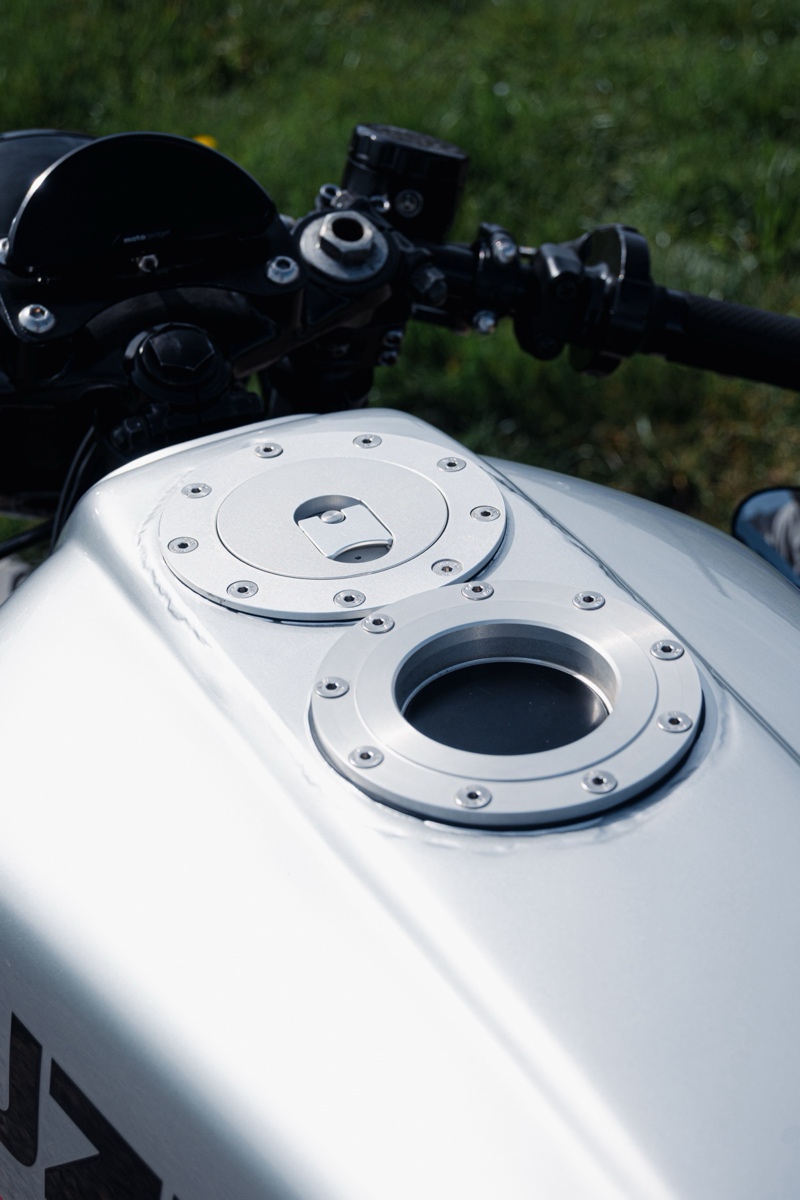
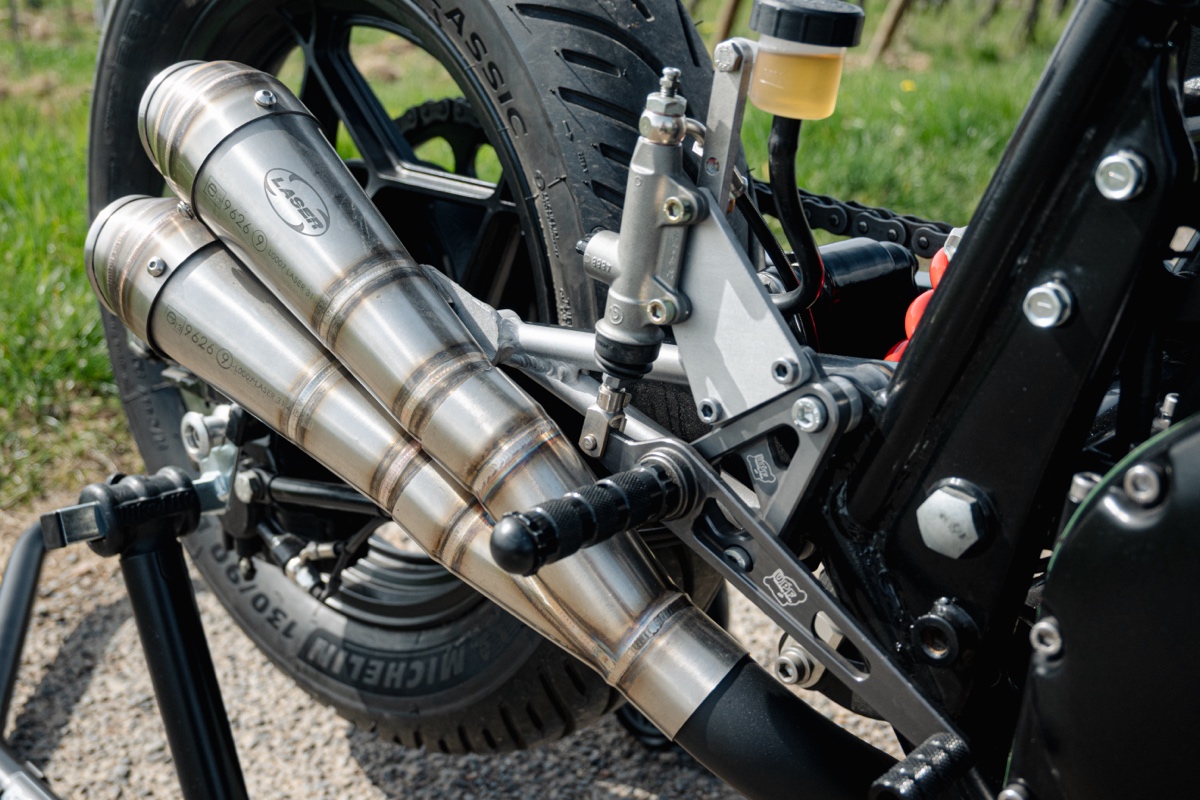
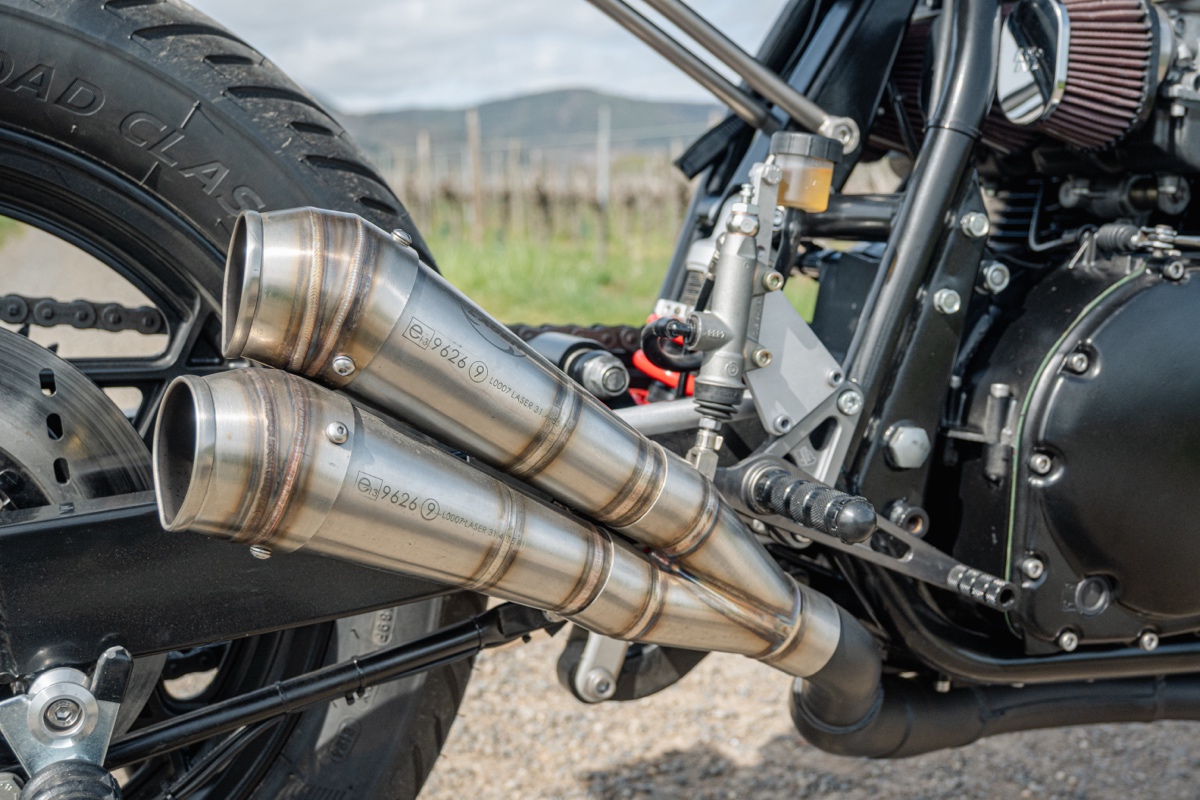
The rearsets are custom-made, and the tank is a Honda Bol d’Or unit modified to run an endurance intake.
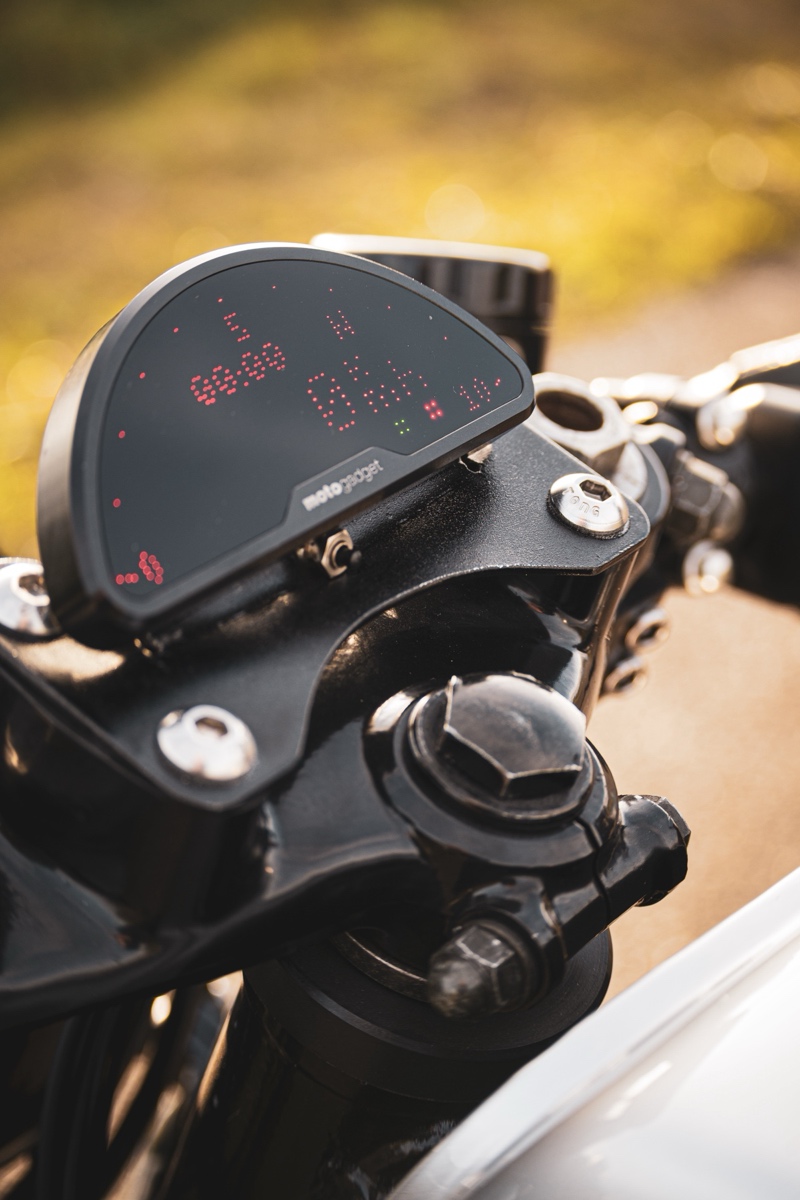
Motogadget goodies streamline the wiring and instrumentation, and we’re happy that Xavier kept the conventional forks instead of swapping in a set of USD models — it gives the bike more of an old-school look.
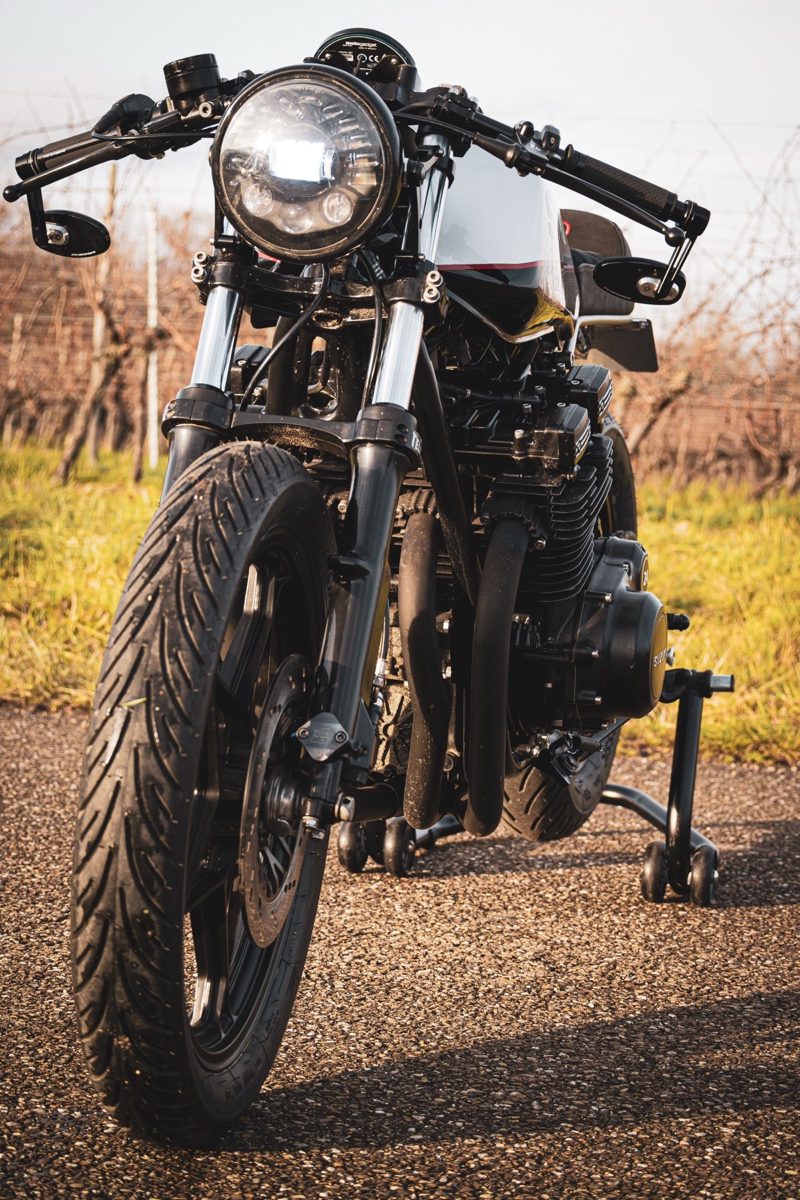
While the bike itself is one hell of a tangible achievement, the personal growth it required is just as important to Xavier:
“Between laughter, frustration, and resilience, this adventure taught me far more than I could have imagined. This success would never have been possible without the lessons learned and the challenges overcome… The project is more than just a bike, it reflects personal growth. I’ve evolved, ready to face new challenges with tools enhanced by this experience.”
With that attitude, Xavier, we know you’ll be successful in whatever you do! Below you’ll find the full story straight from the man himself, along with more photos courtesy of @linstempspresent_photographie.
In the Builder’s Words…
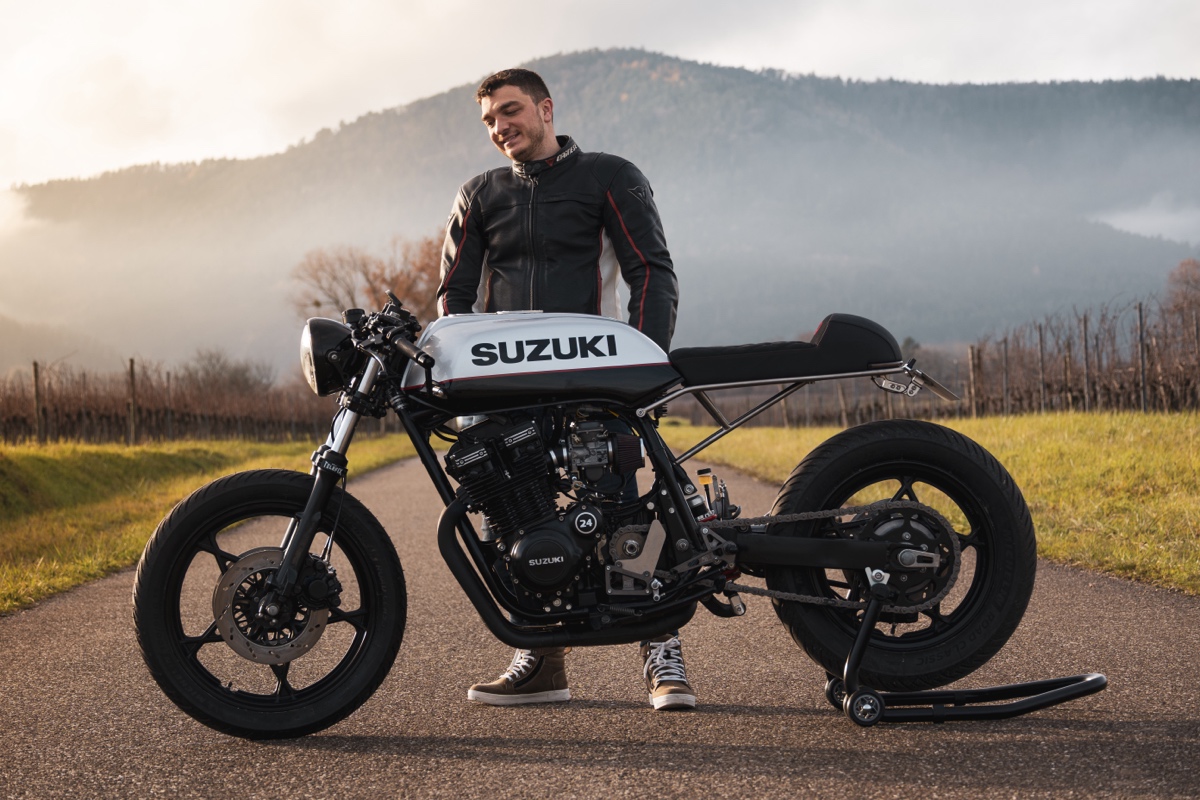
When I turned 24, I landed my first job, and things weren’t exactly smooth sailing. I decided to take on a personal project: to build a one-of-a-kind motorcycle, a café racer, different from the roadsters I’d owned before.
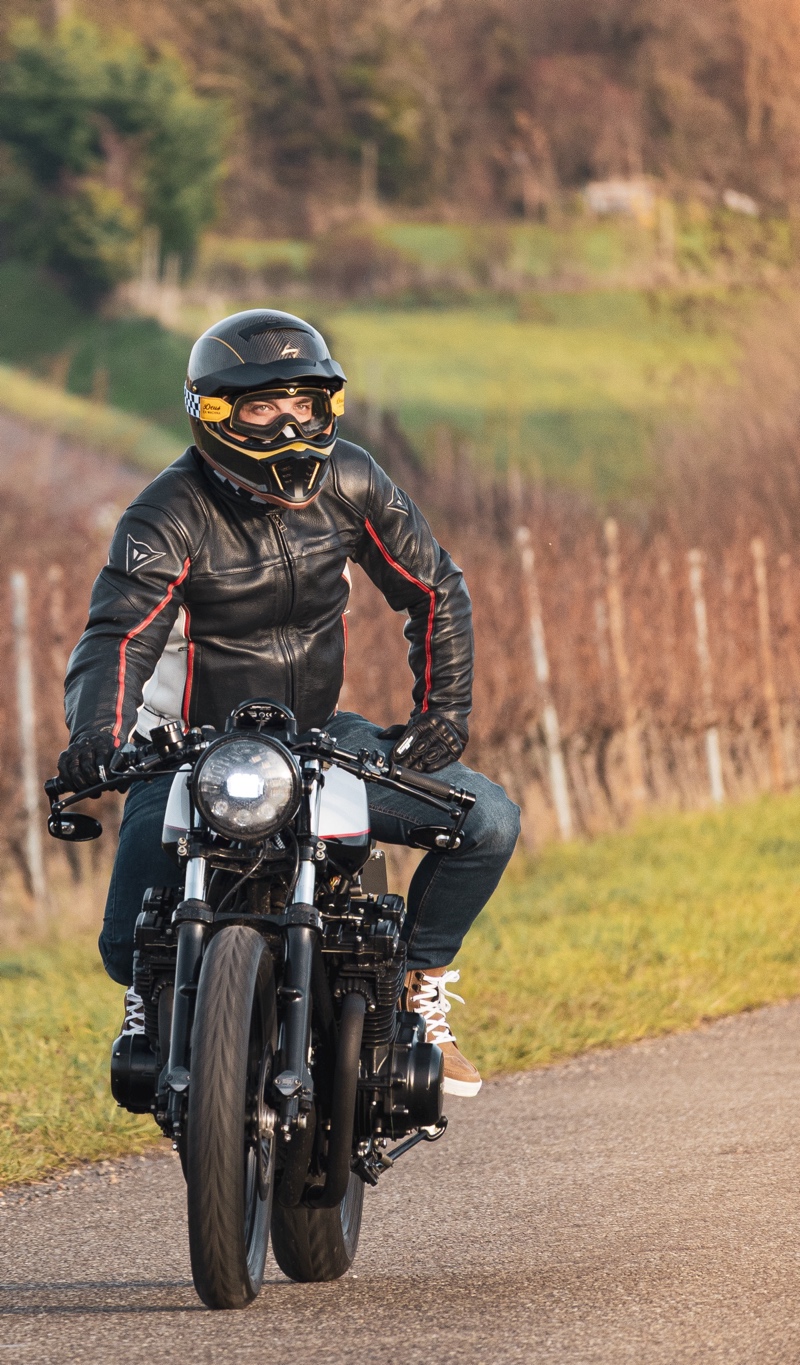
I came across an ad; someone was selling a motorcycle that wasn’t running. It was a 1982 GSX1100, a large-displacement bike — an unusual choice for a café racer, since few people had attempted that modification. On a whim, I went to pick it up, and the project was underway.
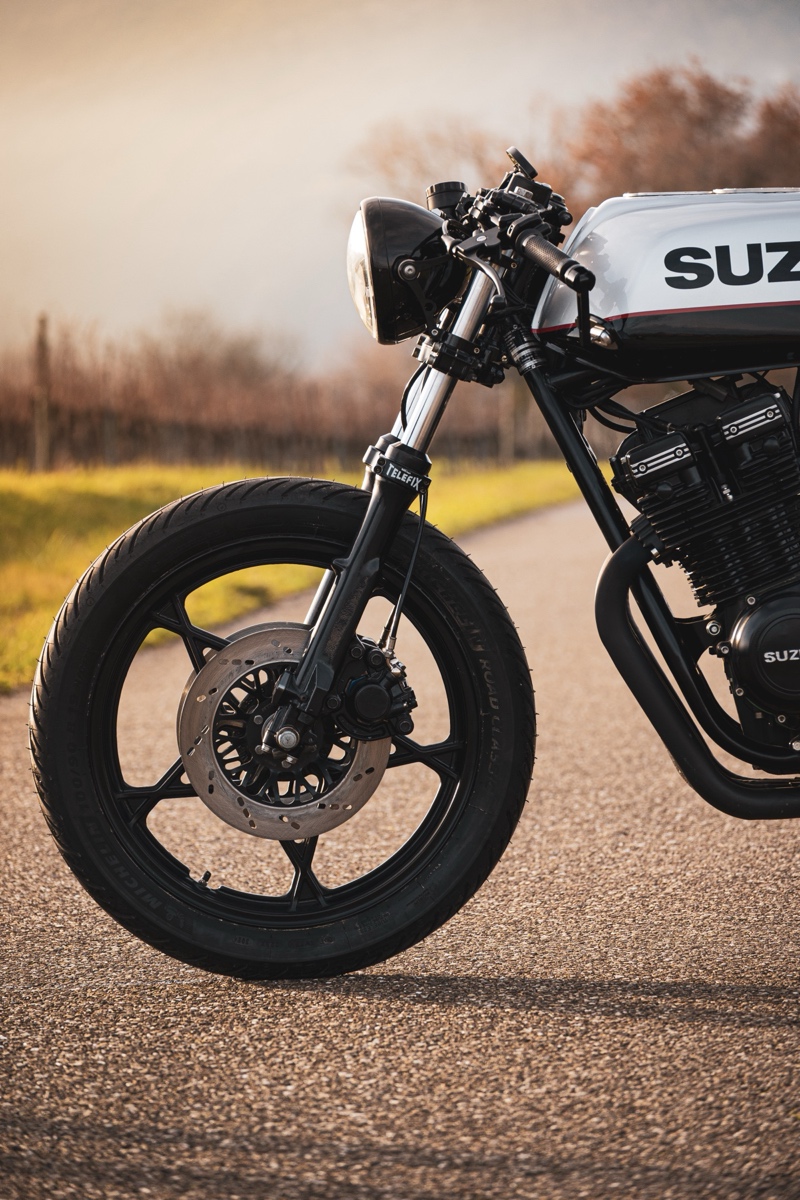
It was supposed to take a year, but like any first project, it took much longer than expected; in total, it took me five years of perseverance before I could get it running.
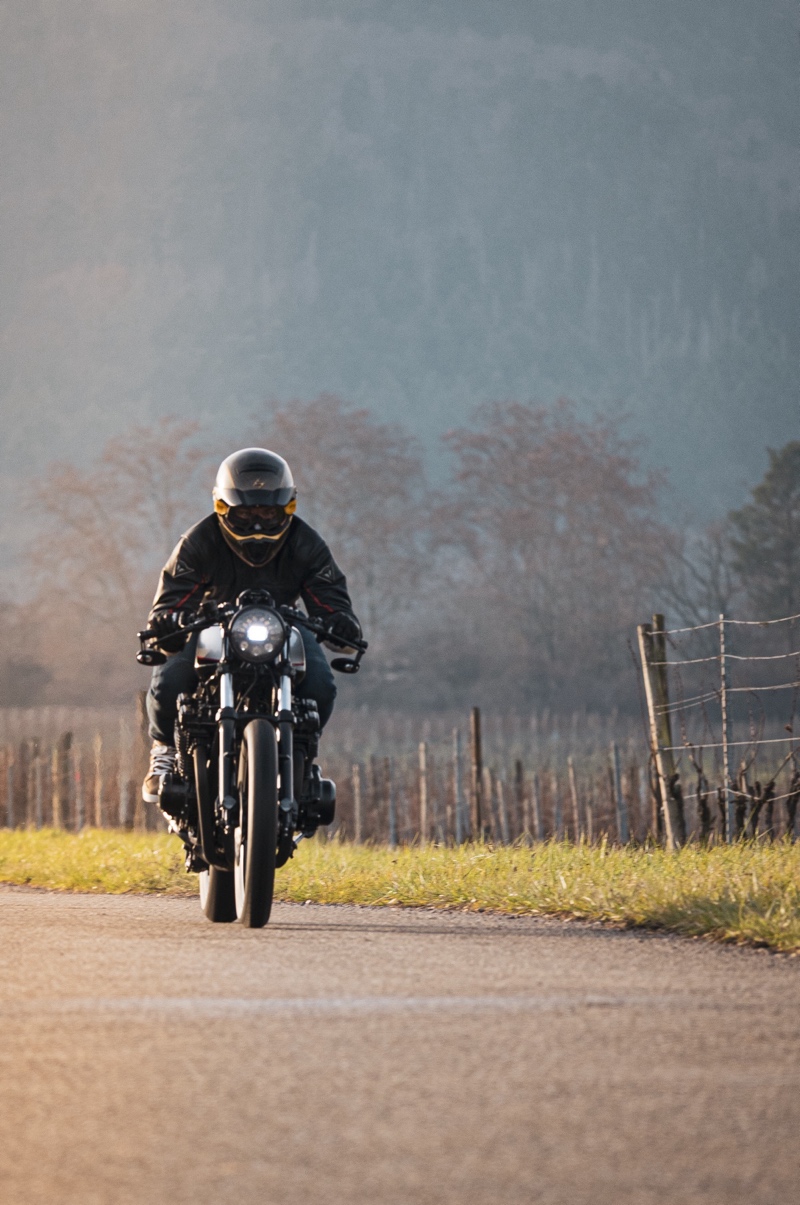
Why such a long journey? Between laughter, frustration, and resilience, this adventure taught me far more than I could have imagined.
This success would never have been possible without the lessons learned and the challenges overcome. Here are the key takeaways I’d like to share:
1. Resilience at the heart of success:
Throughout this project, I worked with four different partners before finding the one who truly understood my vision and could bring it to life. It reminded me that in project management, perseverance and adaptability are essential. Failures are part of the process, but persistence always leads to results.
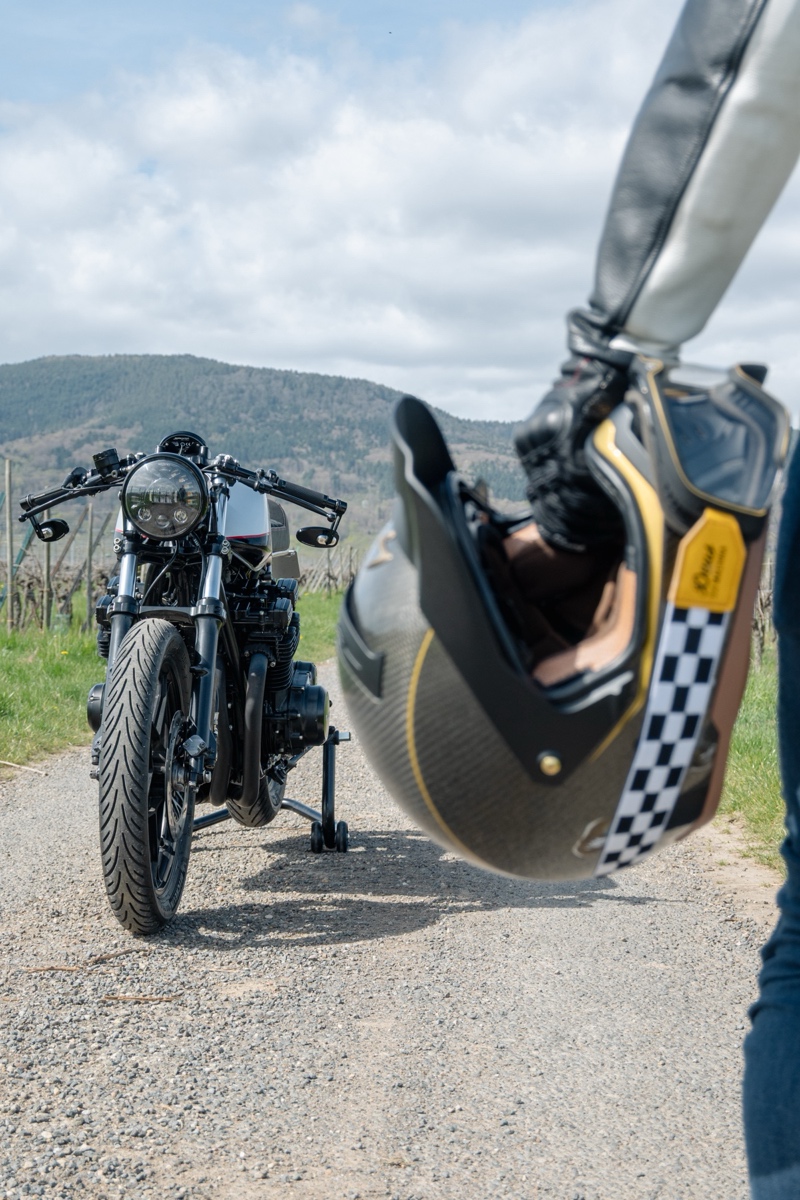
2. Finding the right partners, both an art and a science:
Just as in life, surrounding yourself with the right people is crucial. A partner with the right skills who understands the stakes and shares your vision can help transform a complex project into a success.
3. Learning about yourself:
This project developed my technical skills, but more importantly, it strengthened my soft skills: communication, patience, and expectation management. I discovered hidden strengths and learned how to navigate through uncertainty.
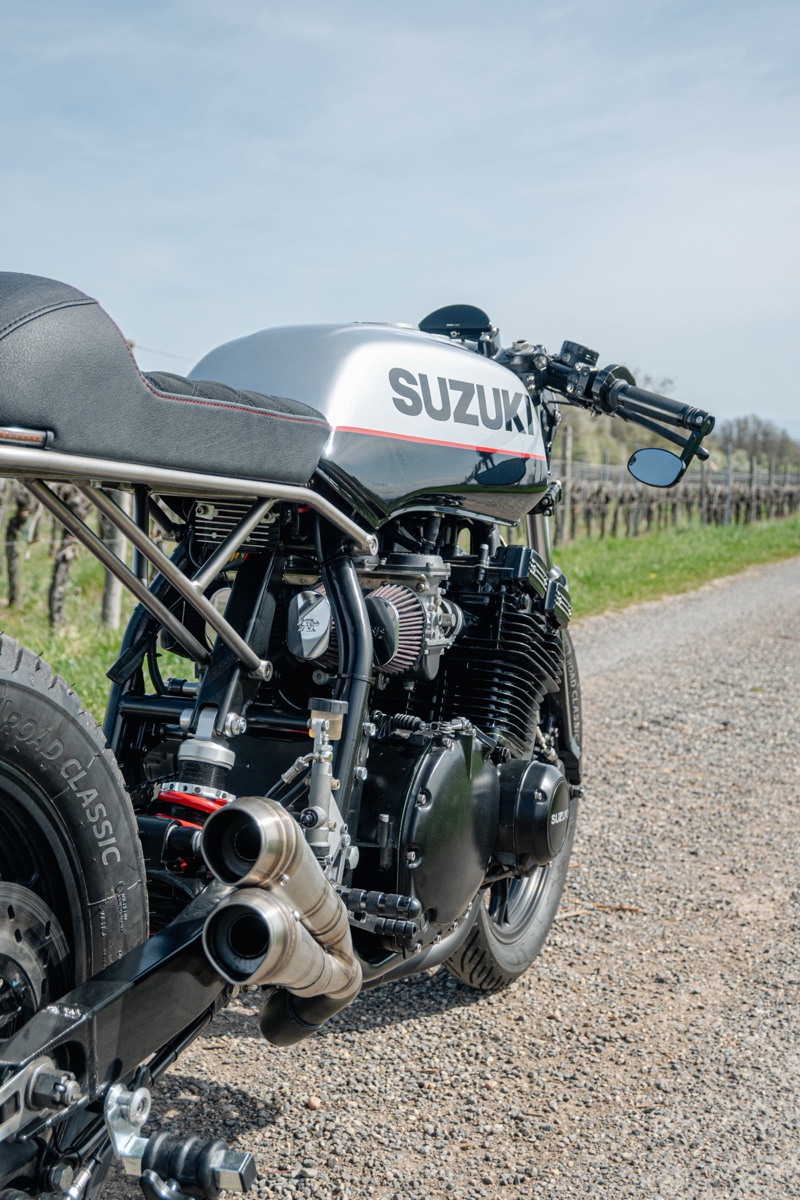
This motorcycle reflects my roots through the logo of my region embroidered on the seat; at the time, I was living abroad, and it was important to me to include this nod to home. After 10 years abroad, I returned to my hometown.
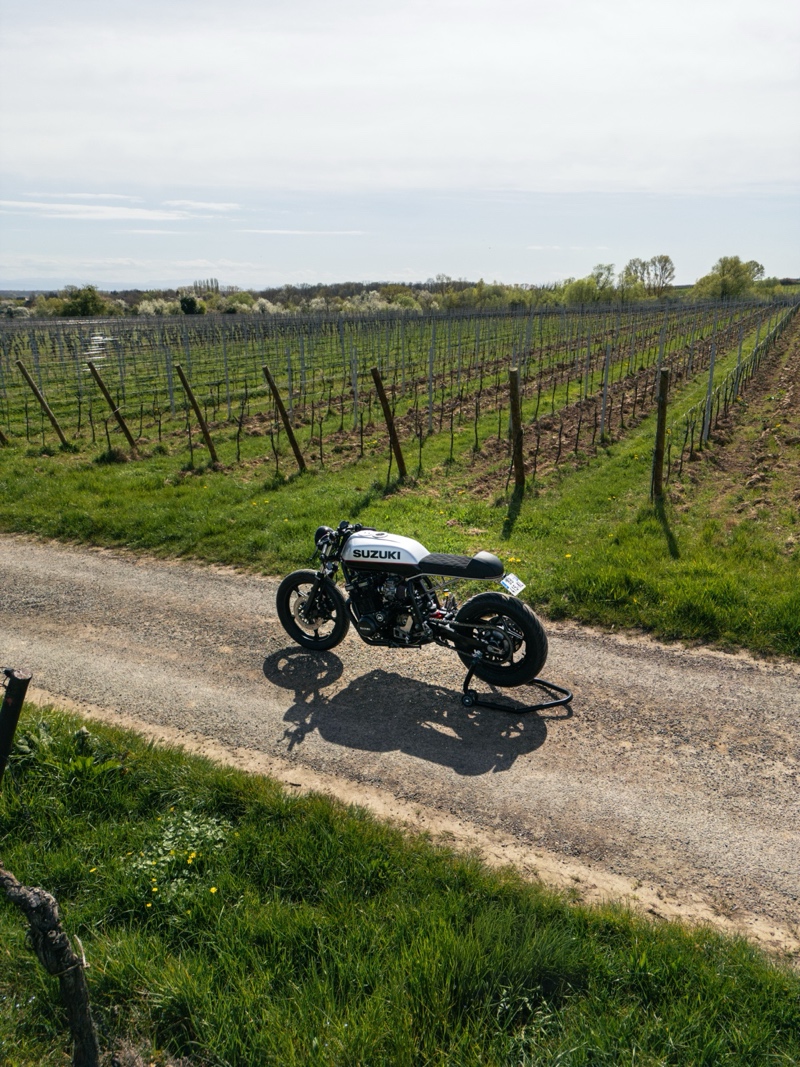
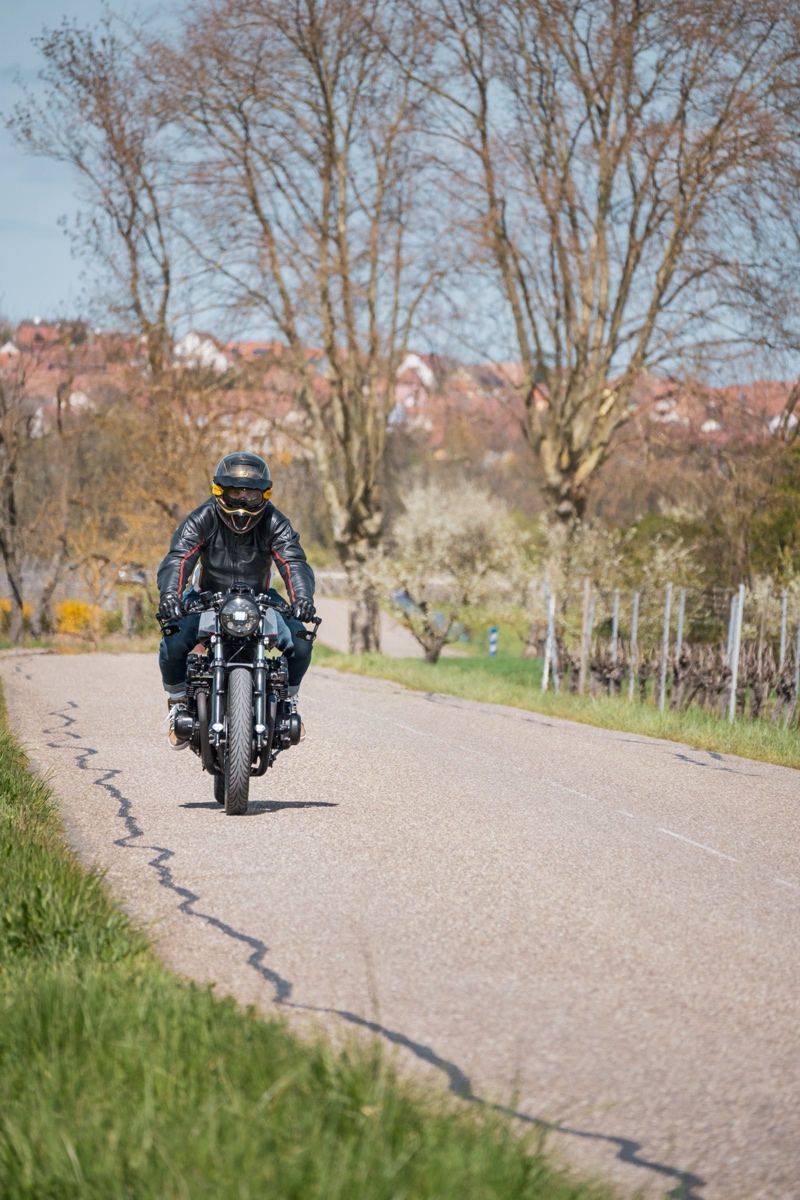
And today? This motorcycle, once just a dream, finally rides the open roads. But the project is more than just a bike, it reflects personal growth. I’ve evolved, ready to face new challenges with tools enhanced by this experience.
Build Sheet
Donor: Suzuki GSX1100 from 1982
Nickname: “La numéro 24” or “Number 24”
- Designed by myself
- Modified by myself and some mechanics (for welding for instance)
- Engine rebuild (no modification)
- GSXR swingarm adaptation with custom-made modification to fit the rear shock absorber
- Honda Bol d’Or tank modified for endurance intake
- K&N intake horn
- Simplified wiring harness from Motogadget
- Handmade rear buckle
- Handmade seat with “Alsace” logo (region I’m coming from)
- Handmade rear controls
- Rear lights included within the seat
Follow the Builder
Instagram: @Regarddemotard
Photos: @linstempspresent_photographie


