
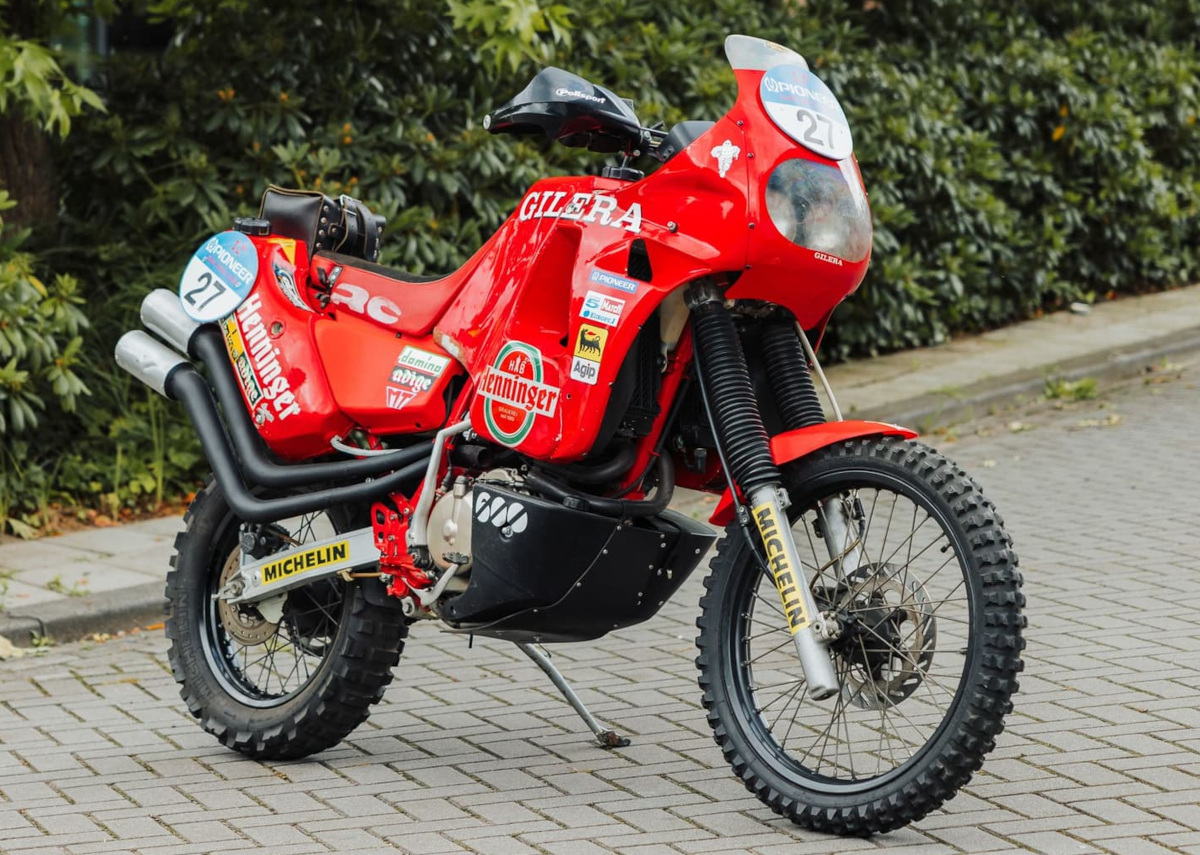
Italy’s Big Thumper in the Twin-Cylinder Era…
By the late 1980s, the Paris-Dakar Rally was no longer a romantic expedition but an escalating arms race among the major manufacturers. Twin-cylinder prototypes were growing larger and faster. Factory budgets were expanding. Aerodynamics and fuel capacity were pushing into new territory.
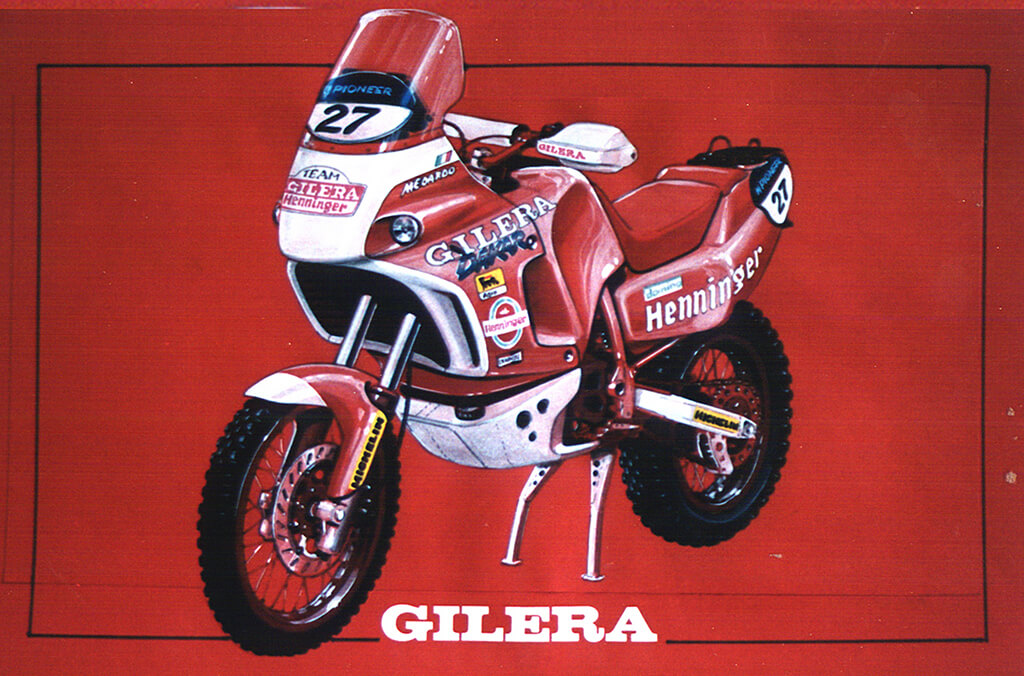
BMW had proven the viability of the big twin. Honda was building its NXR empire. Yamaha and Cagiva were deep into factory development. And then there was Gilera — smaller, fiercely Italian, and determined to prove that a properly engineered single-cylinder machine could still matter in the desert.
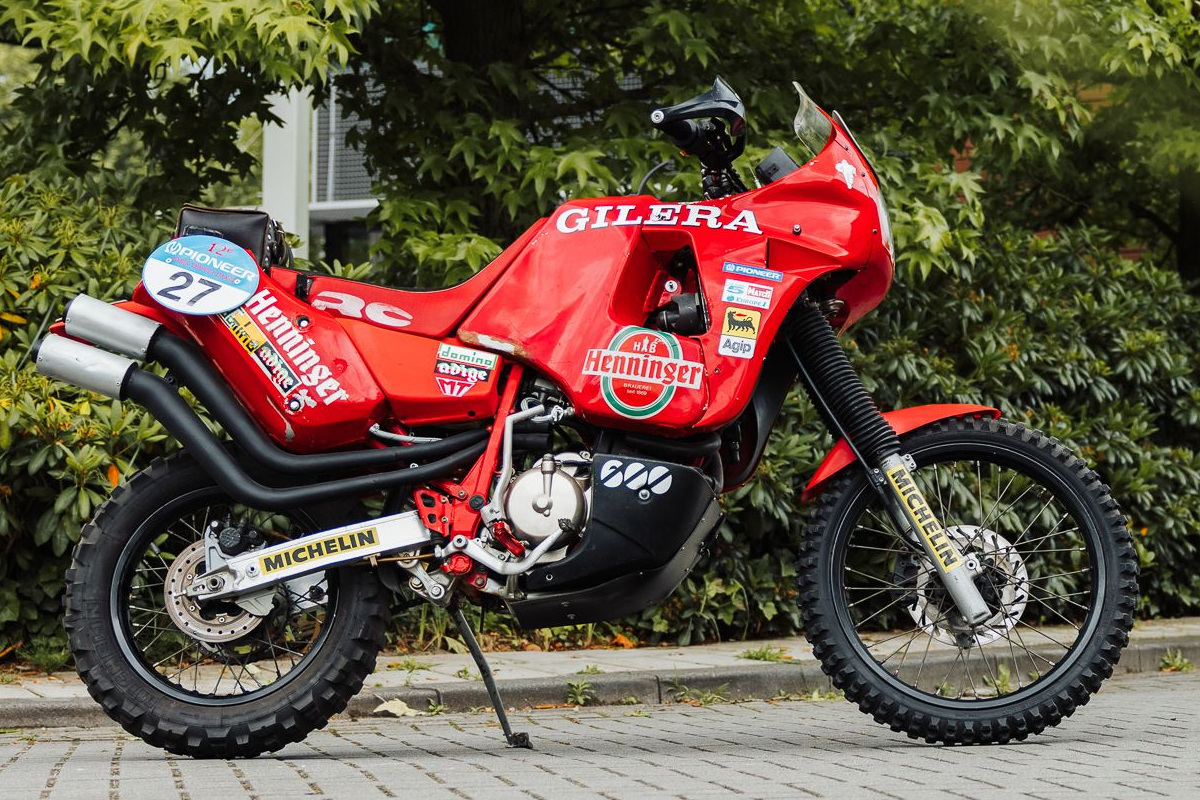
Rather than immediately chasing twin-cylinder displacement, the Italian marque refined and enlarged a production-based four-stroke single — first the RC600, then its big-bore evolution, the RC750. While these rally thumpers never won an outright Dakar victory, they performed incredibly well among the big twins and became a benchmark in their class. Together, they represent Gilera’s most serious factory assault on the desert.
The Silhouette Class: Where Gilera Made Its Mark
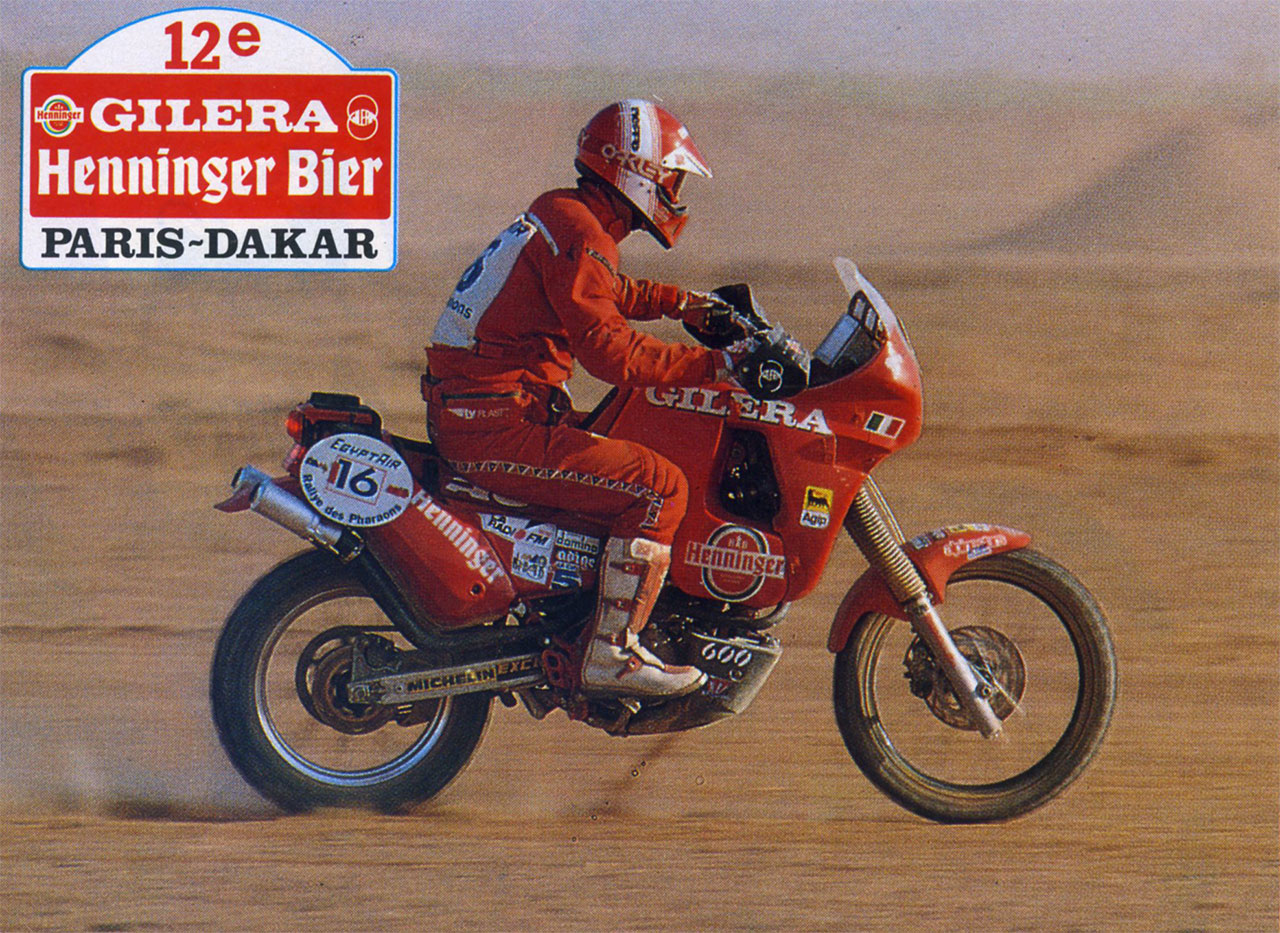 While headlines focused on overall victories, Dakar still maintained other classes and displacement categories. In the early 1990s, the sub-600cc “Silhouette” class grouped motorcycles derived from production models. While reinforced and adapted for rally use, they retained core architecture from showroom machines. This distinguished them from increasingly specialized factory prototypes.
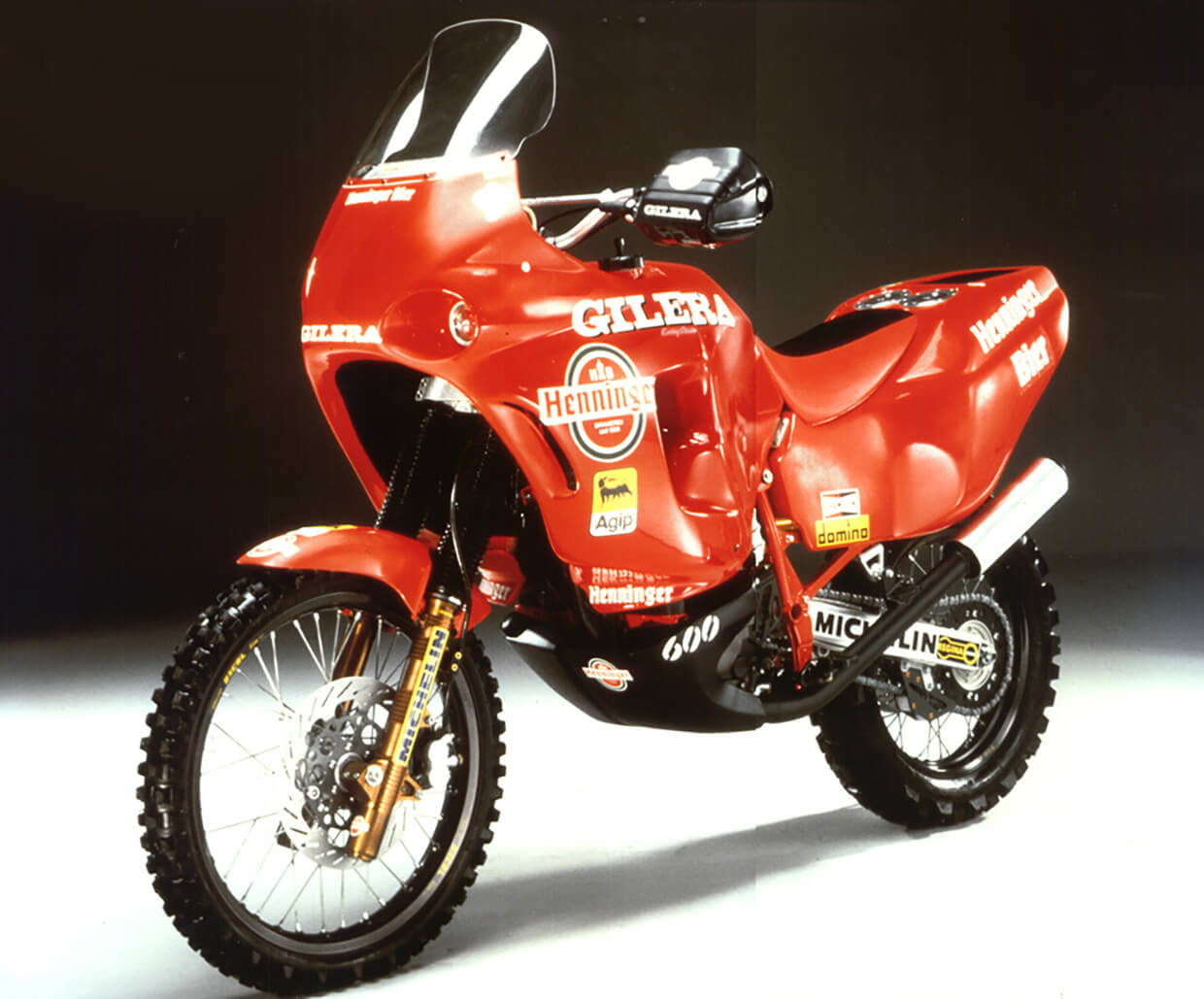
According to motorcycle historian Mick Walker, works-entered Gilera RC600 rally machines topped the 600cc Silhouette class in 1990 and 1991, during a period when twin-cylinder prototypes were increasingly dominating the overall standings.
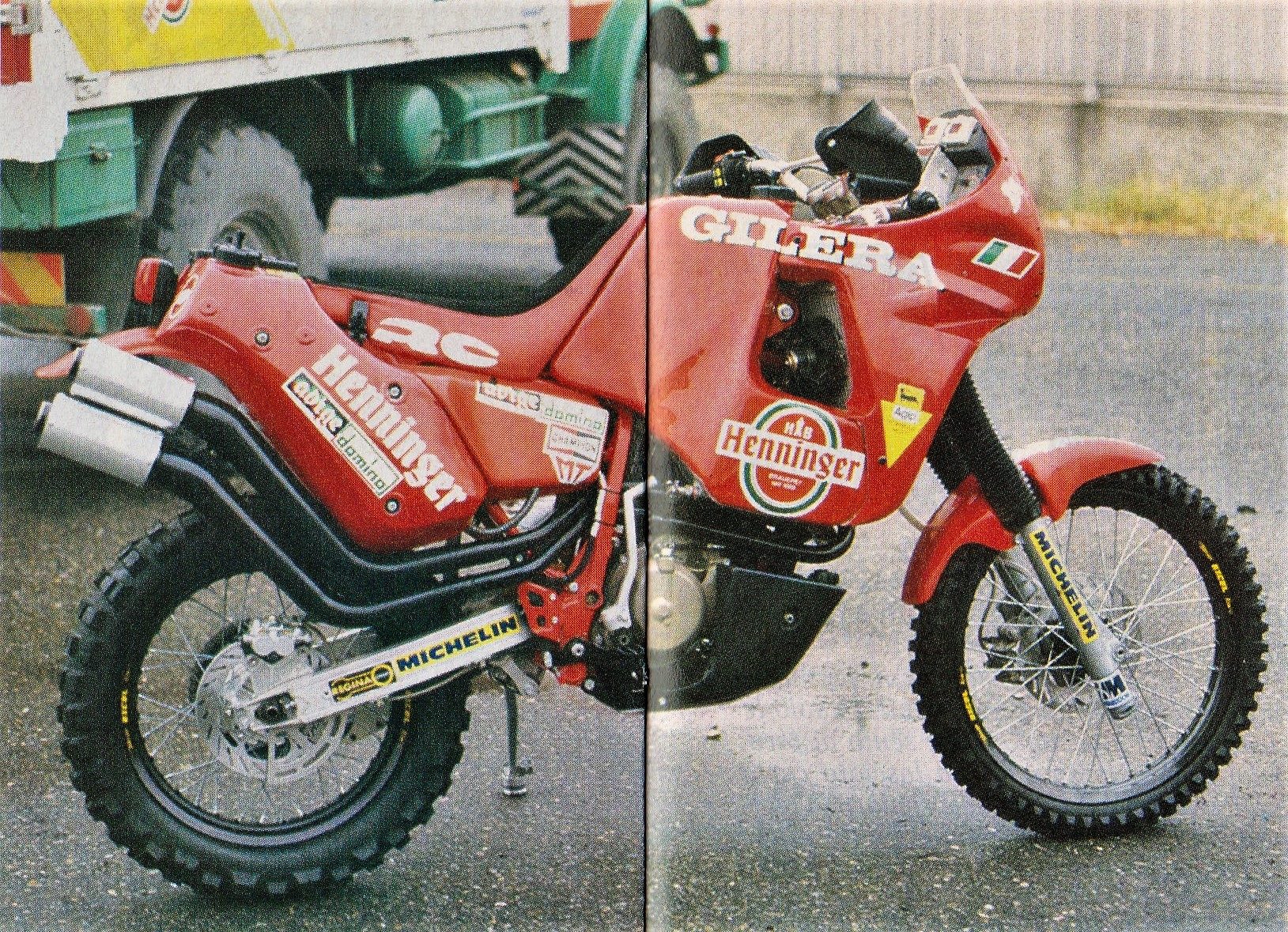
Gilera proved that a well-developed 569cc four-stroke single could not only outperform its displacement peers, but remain highly competitive overall. In 1990, Luigino Medardo finished 8th overall while winning the Silhouette class. In 1991, he improved to 7th overall and repeated his class victory, while Gilera rider Roberto Mandelli also finishing 9th.
That level of outright competitiveness, from a sub-600 single, underscored the RC600’s prowess.
The RC600 Dakar: Class Success and Overall Credibility
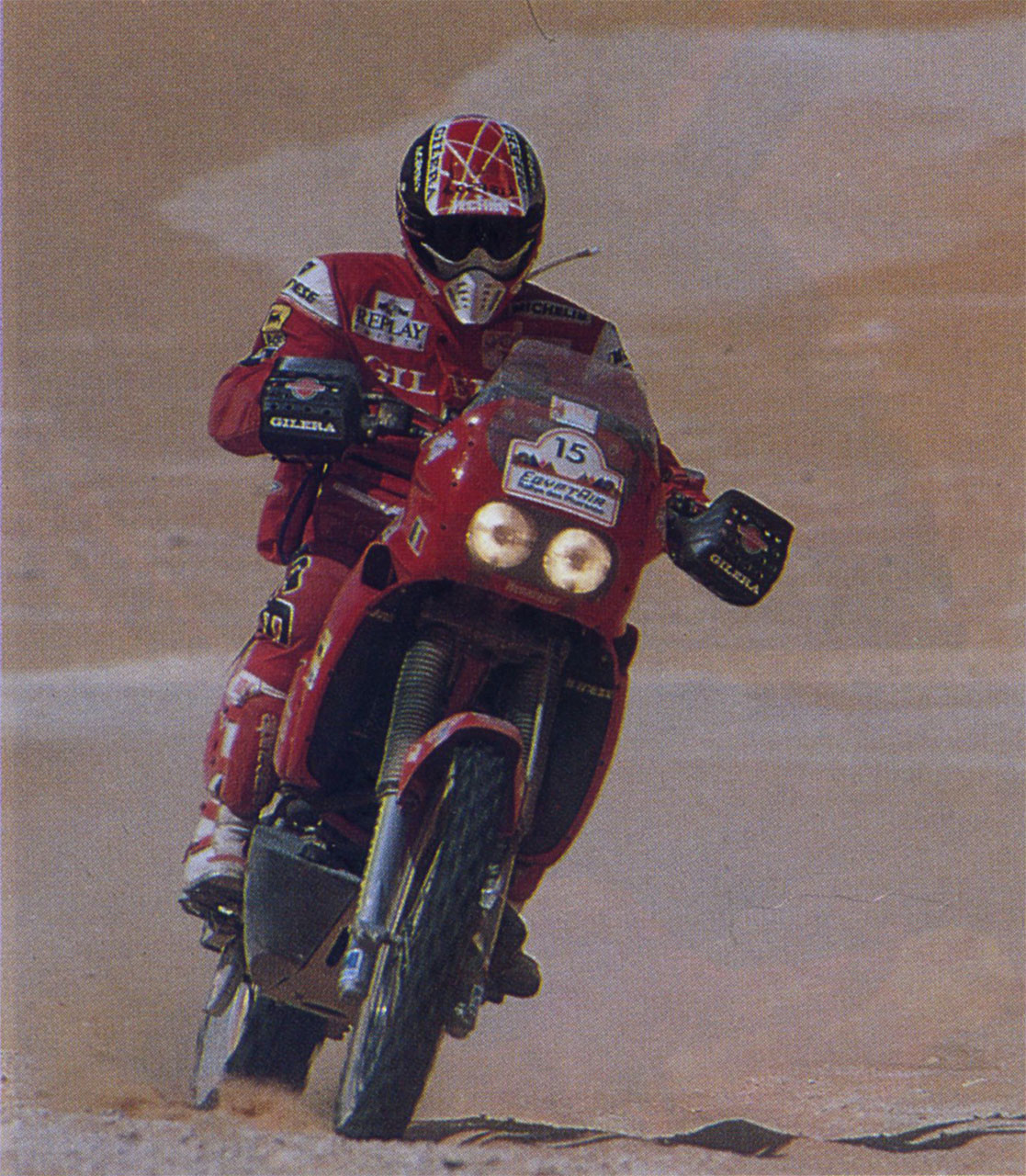 The Gilera RC600 was based on the company’s production platform but extensively reinforced for rally competition.
1990 Paris–Dakar
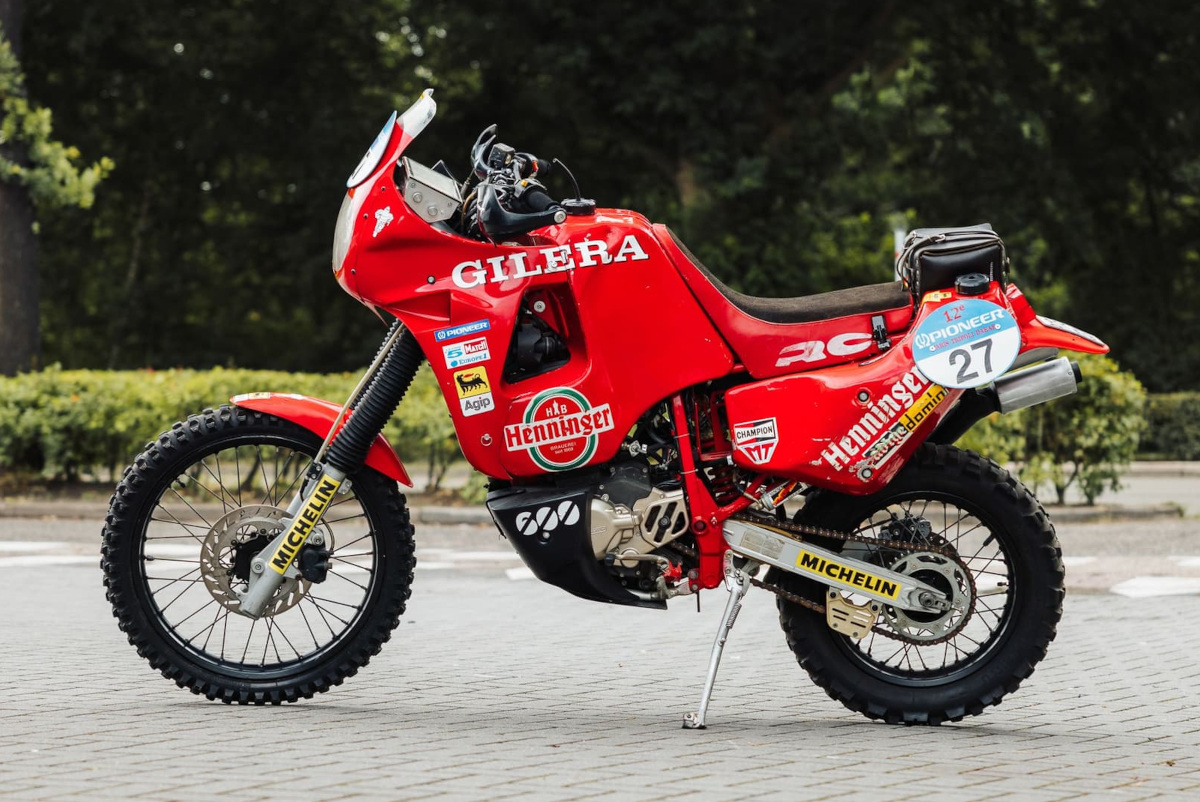
- Luigino Medardo wins the Silhouette (production-based) class
- Finishes 8th overall
That top-ten overall result is significant. Dakar in 1990 already featured larger twin-cylinder machines, yet a 569cc production-derived single finished among them.
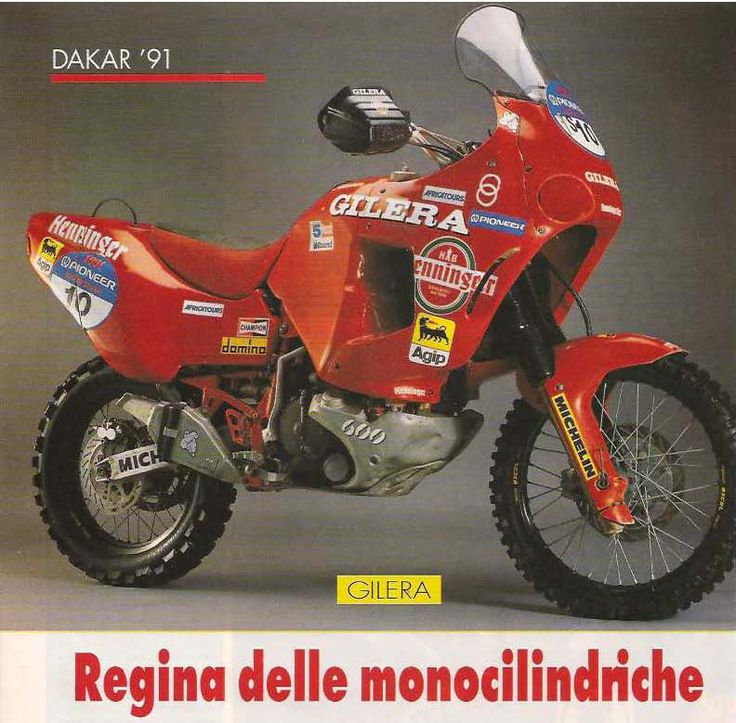
1991 Paris–Dakar
- Medardo again wins the Silhouette class
- Finishes 7th overall, while Roberto Mandelli takes 9th
Two consecutive class victories (1990 and 1991) established the RC600 as one of the most competitive production-based singles of its time.
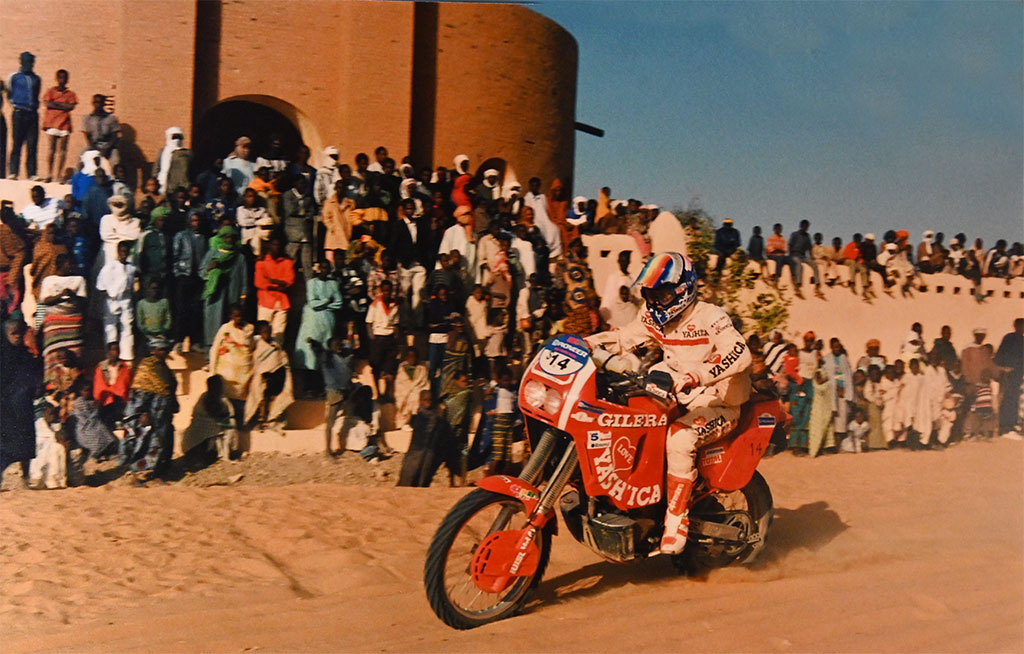
These were class wins — not outright overall victories — but they were achieved in an increasingly competitive field.
Engineering the RC600 Dakar
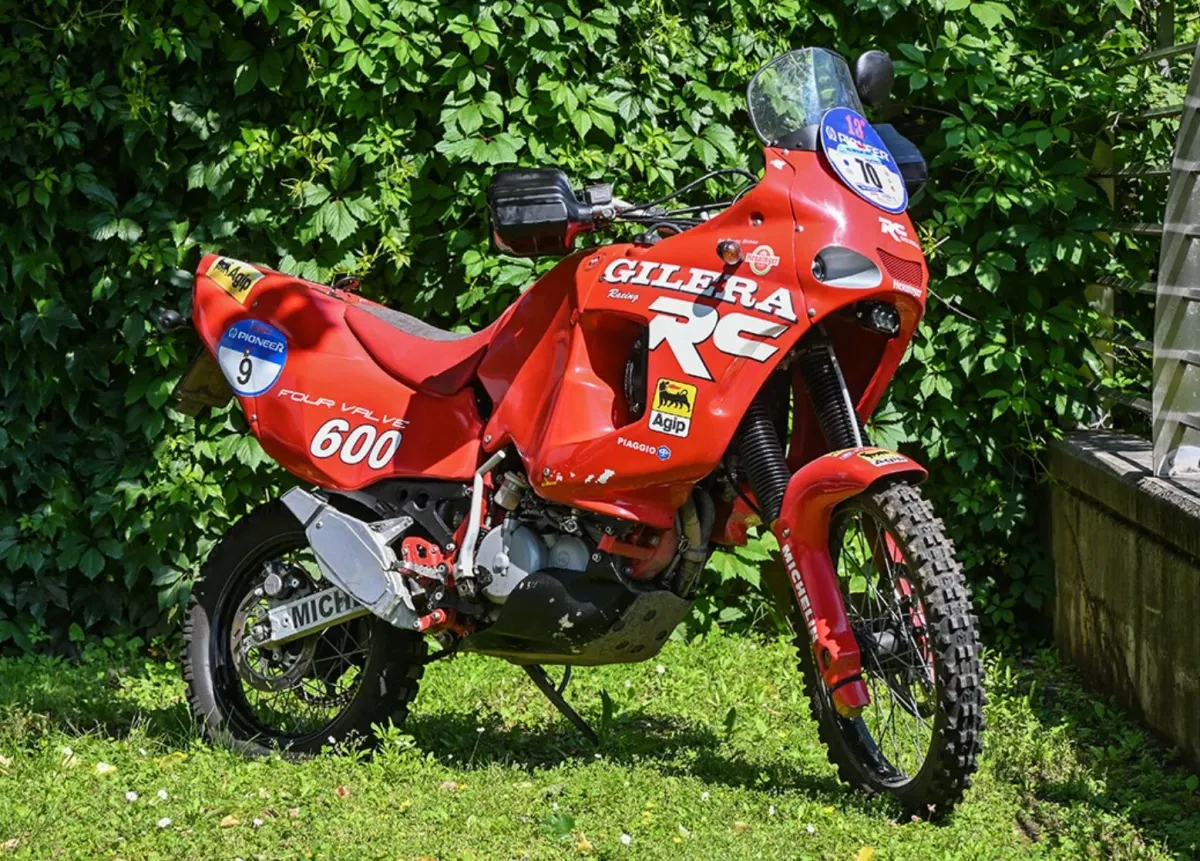 The rally-spec RC600 was derived from Gilera’s production RC platform but extensively reinforced for African competition. In rally trim, output is generally documented in the 53-60 horsepower range, tuned for broad midrange torque, sustained high-speed reliability, and thermal stability under desert load.


Top speed was reported at approximately 160–170 km/h (100–105 mph) depending on gearing and stage setup. Unlike earlier air-cooled singles of Dakar’s early years, the RC600’s liquid cooling provided a major durability advantage in African heat.
Engine (1990 Specification)

- Displacement: 569cc
- Configuration: Liquid-cooled DOHC, four-valve single
- Cam drive: Belt-driven
- Carburetion: Twin Teikei
- Power:
- ~48 hp stock
- ~53 hp in 1990 rally trim
1991 Evolution

- Larger 30mm carburetors
- Revised cam profiles
- Output increased to approximately 60 hp at the crank
- Fuel capacity expanded to nearly 60 liters
Chassis & Dimensions (1991)

By the early 1990s, the RC600 represented a fully modern rally platform — far removed from the twin-shock desert machines of the early 1980s.
- Frame: Reinforced steel perimeter chassis
- Front travel: ~270 mm
- Rear: Rising-rate monoshock
- Dry weight (no fuel): 165 kg
- Wheelbase: 1,515 mm
- Seat height: 910 mm
- Length: 2,280 mm


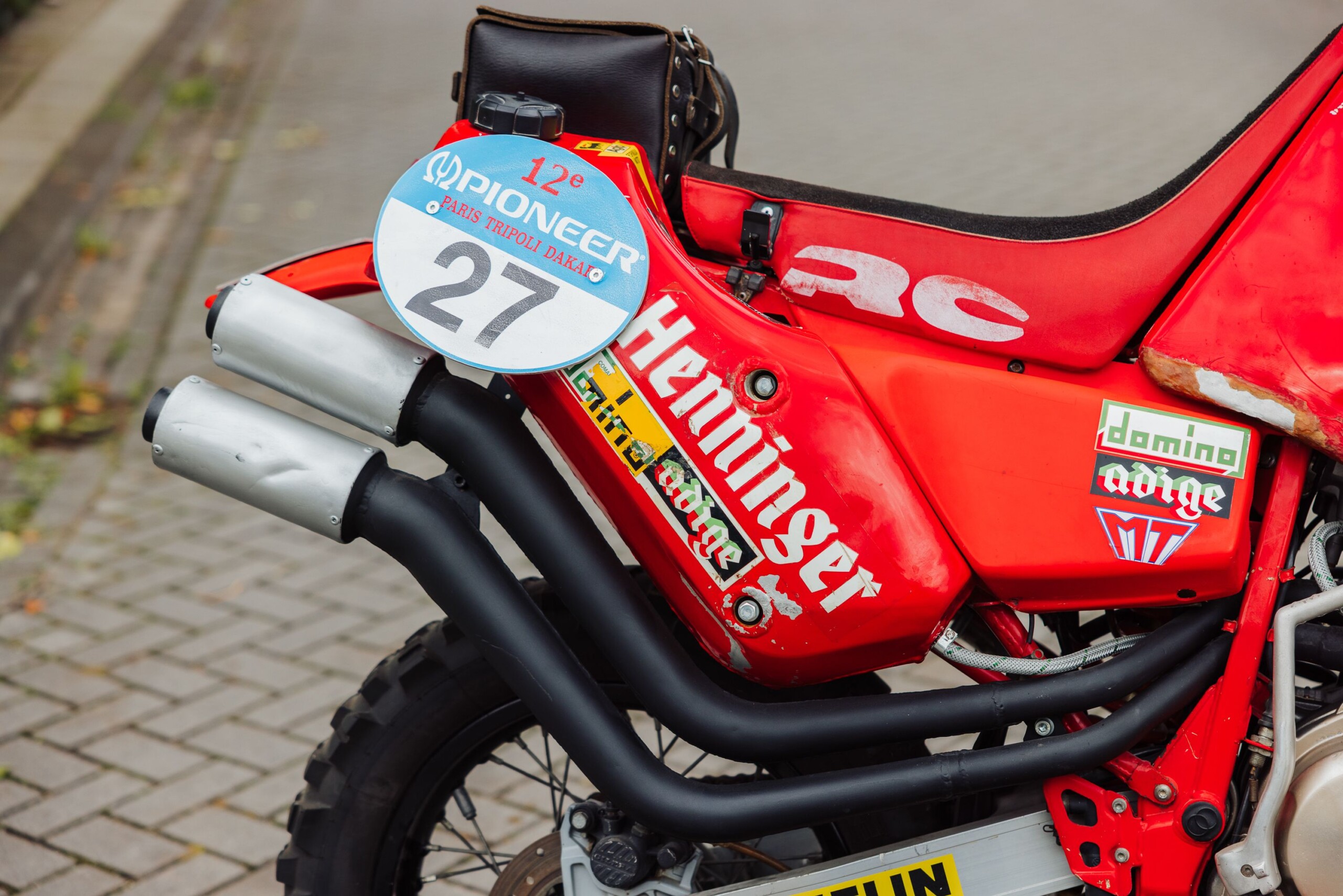

Fuel capacity typically exceeded 50 liters, integrated into large rally tanks and bodywork. While twin-cylinder competitors often carried even greater fuel loads, the Gilera retained a lighter overall package — part of its displacement-focused strategy.
The RC600 remained fundamentally production-derived — heavily adapted, but not a pure prototype…though it fared admirably well against those purpose-built factory machines.
Why the Single Still Worked…
 By the time the RC600 hit its stride, Dakar machines were becoming heavier, more complex, and increasingly specialized. The Gilera retained core advantages:
- Lower overall weight
- Simpler mechanical layout
- Strong torque in soft terrain
- Improved cooling versus earlier singles
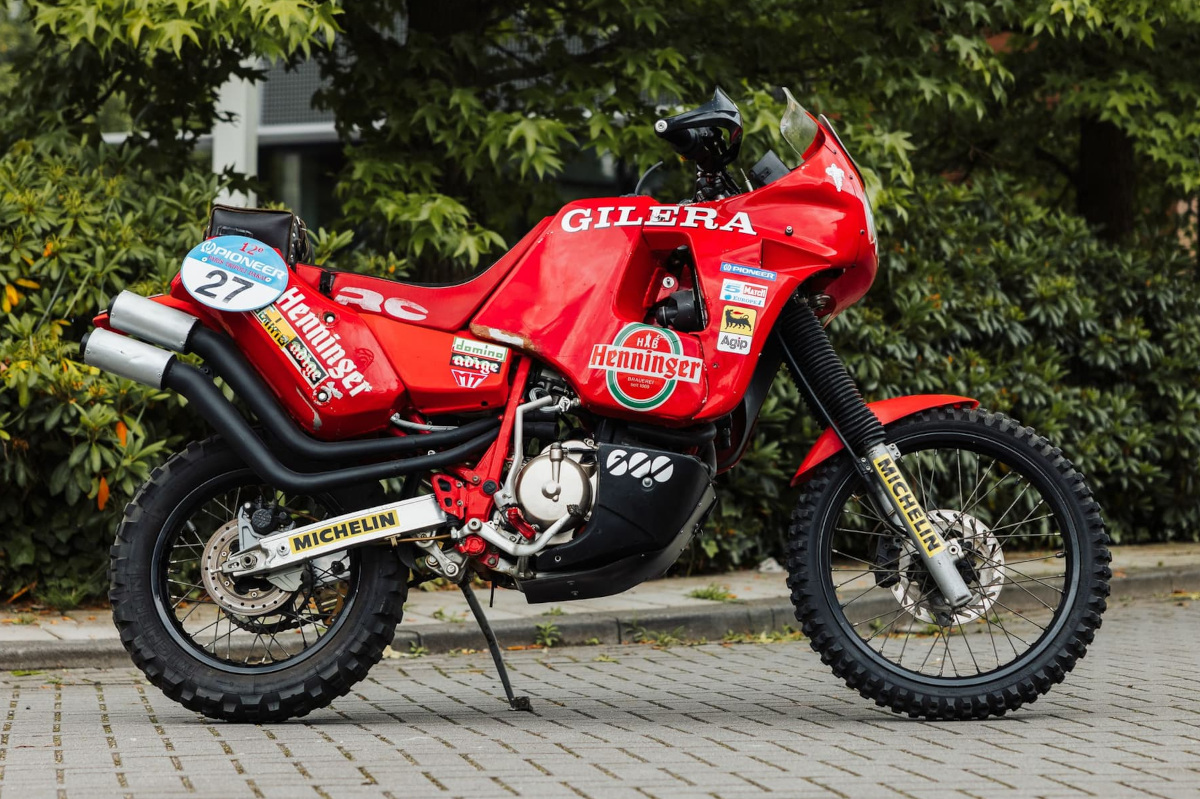 While twin-cylinder machines dominated in absolute top speed and stability across high-speed flats, the RC600 conserved energy — mechanical and human — across punishing stages. In Dakar, attrition has always been as decisive as outright speed. And in its class, the Gilera excelled.
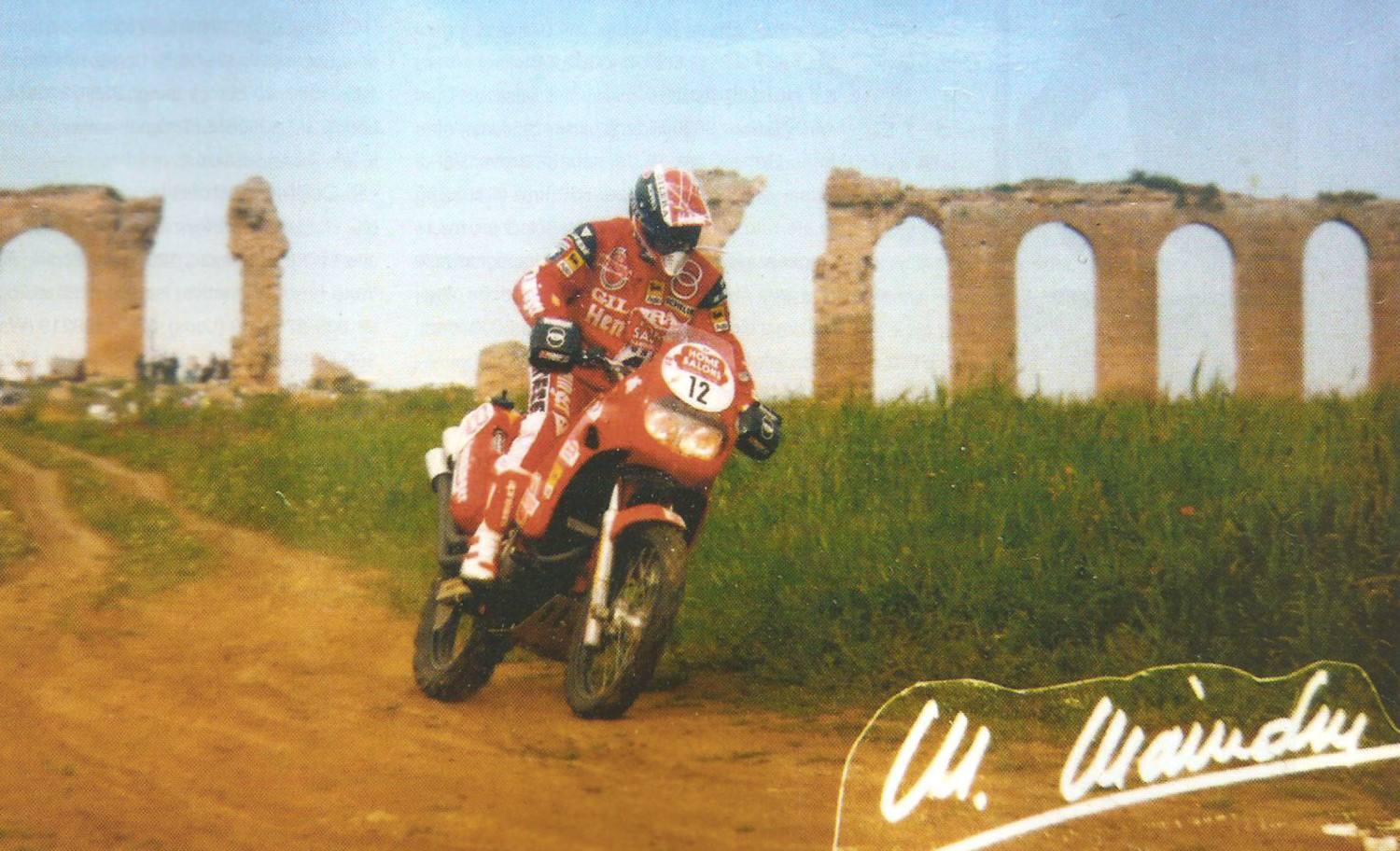
Honda’s NXR machines, Yamaha’s factory twins, and Cagiva’s Elefant program would dominate overall headlines as the sport moved toward larger displacements and escalating budgets. But during 1990 and 1991, in the 600cc class, Gilera proved that strategic engineering and disciplined development could still prevail.
1992: The Shift Toward the RC750
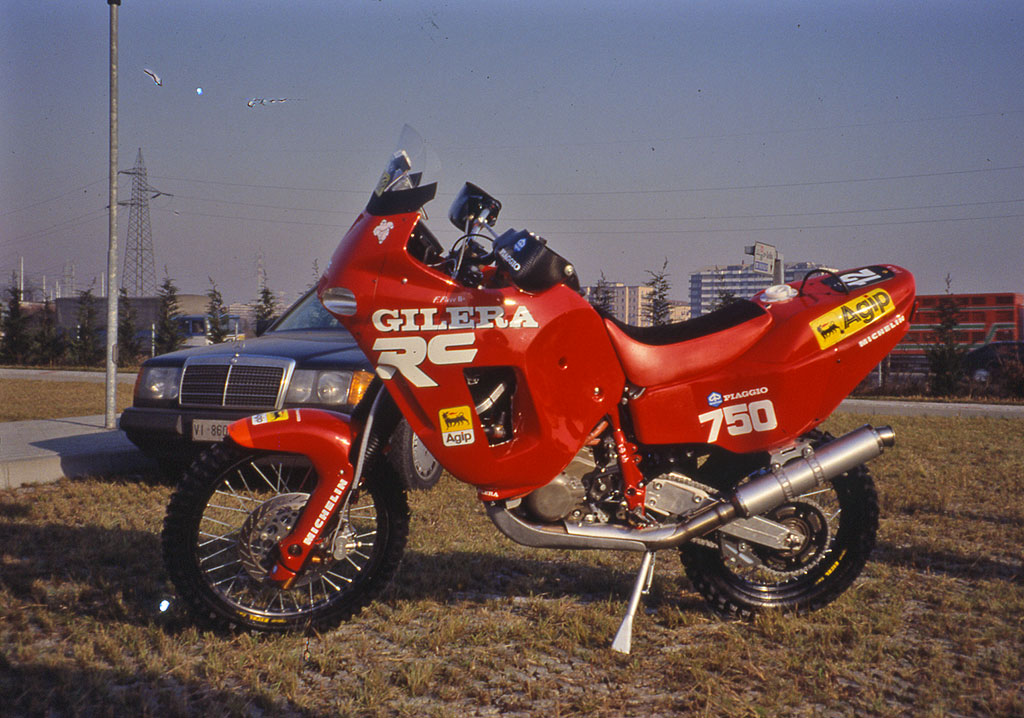
By 1992, Dakar competition was trending toward larger-capacity prototype machines. Honda, Yamaha, and Cagiva were fielding increasingly specialized rally bikes.
For 1992, Gilera began introducing the RC750 Dakar — a larger-capacity evolution of the same single-cylinder architecture — while the 600 platform remained part of the rally effort.
The RC750: Bigger Single, Same Philosophy
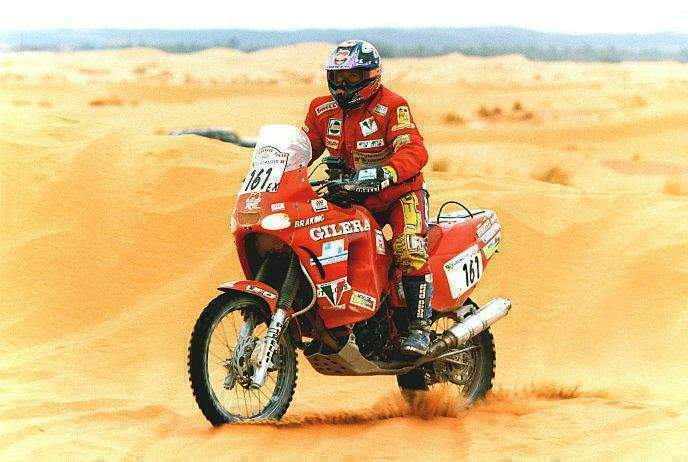
Despite the displacement increase, the RC750 remained:
- Single-cylinder
- Liquid-cooled
- DOHC
- Four-valve
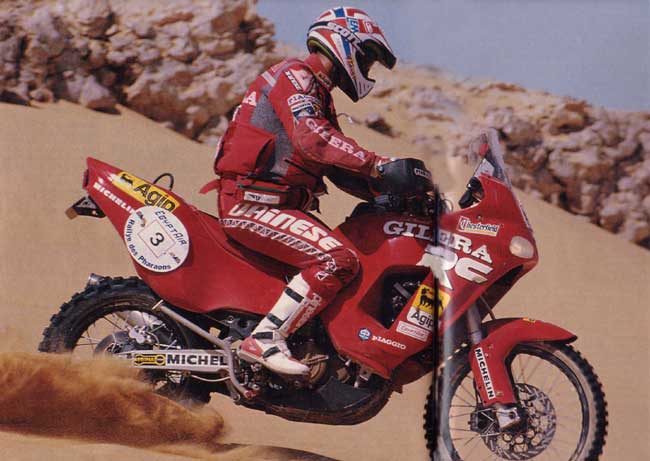
It was not a twin-cylinder machine, nor a clean-sheet departure. Instead, it was a big-bore evolution of the RC600 concept — intended to improve overall competitiveness against the dominant 750cc twins of the era. The RC750 delivered:
- Increased displacement (~750cc class)
- Greater torque output
- Continued emphasis on reliability and mechanical simplicity
However, by the early 1990s, the rally had shifted decisively toward highly developed twin-cylinder prototypes. The single-cylinder architecture, while still competitive, faced growing disadvantages in absolute top speed and sustained high-speed stability.
Factory Specification Summary
RC600 Dakar (1990–1992)
Engine: 569cc liquid-cooled DOHC single
Power: ~53 hp (1990), ~60 hp (1991 evolution)
Fuel Capacity: 30+ liters (1990); up to ~60 liters (1991)
Dry Weight: ~165 kg (no fuel)
Class Results: Silhouette class winner, 1990 & 1991
Best Overall Finishes: 8th (1990), 7th (1991)
RC750 Dakar (1992)
Engine: ~750cc liquid-cooled DOHC single
Configuration: Big-bore evolution of RC600
Final Drive: Chain
Chassis: Reinforced steel perimeter frame
Competition Context: Competing against factory twin-cylinder prototypes
Gilera’s Dakar Legacy
The RC600 Dakar may not carry the mythic dominance of the BMW boxer or the factory muscle of Honda’s NXR program, but it demonstrated that a production-based big single could compete well in a rally increasingly defined by big-twin prototypes.
In the years that followed, Dakar competition increasingly shifted toward lighter, purpose-built rally singles, with machines such as the BMW F650RR and KTM’s LC4-based rally bikes shaping the next era. By then, Gilera was no longer active in rally raids, but the RC600 remains one of the great underdogs in Dakar history — and could be seen as a harbinger of what was to come.
More Dakar Legends
 Dakar Legends: Gilera RC600 & RC750 Rallye - Italy’s Big Thumper in the Twin-Cylinder Era… By the late 1980s, the Paris-Dakar Rally was no longer a romantic expedition but an escalating arms race among the major manufacturers. Twin-cylinder prototypes were growing larger and […]
 Desert Bomber: BMW R80G/S Paris-Dakar Rally Bike - The Boxer That Changed the Desert Forever… In 1981, the Paris-Dakar Rally was still raw — more expedition than sport, more survival than spectacle. Riders crossed the Sahara on machines that were barely adapted from […]
 Desert Boxer: BMW R900RR Dakar Rally Bike - Dakar Legends: Last Roar of the Desert Bombers… In the late 1990s and early 2000s, BMW found itself at a turning point in rally-raid racing. The boxer twin had already written one of the most […]
 The Honda EXP-2: The Two-Stroke Desert Racer - Honda’s 400cc “Experimental 2-Stroke” Baja 1000 / Dakar Rally Bike… In the mid-1990s, as emissions regulations tightened worldwide and the future of two-stroke off-road bikes looked increasingly uncertain, Honda did something nobody expected: it built […]
 Dakar Legends: BMW F650RR Rally Bike - BMW F650RR: Grandfather of the Modern Rally Bikes… In the late 1990s, BMW quietly executed one of the most important strategic pivots in rally history. They developed and unleashed the BMW F650RR — a lean, […]
 The Four-Cylinder Dakar Bike: Yamaha FZ750 Ténéré - The Yamaha FZ750 Ténéré (0U26): Yamaha’s Radical Dakar Experiment… Before Super Ténéré, before big twins ruled the desert, before Dakar logic fully settled in, there was the sportbike-powered FZ750T. The 1986 Yamaha FZ750 Ténéré (0U26) […]
 Lucky Explorer: Cagiva Elefant Paris-Dakar Rally Bike - The Italian Powerhouse That Conquered Dakar… The Cagiva Elefant occupies a unique place in Paris-Dakar history. Where other manufacturers leaned on clinical efficiency or engineering conservatism, Cagiva brought Italian audacity to the table: massive V-twin […]
 Dakar Legends: Yamaha YZE750T Super Ténéré - The Bike That Built a Dakar Dynasty… The Yamaha YZE750T Super Ténéré is one of the most important motorcycles in rally-raid history. Purpose-built from the ground up for the Paris-Dakar Rally, it was the machine […]
 Desert Freight Train: Yamaha XTZ850R Paris-Dakar Rally Bike - The big twin that ruled the desert at the height of the Paris-Dakar era… In the early and mid-1990s, Yamaha dominated the Paris-Dakar Rally, the toughest off-road endurance race on the planet. At the heart […]
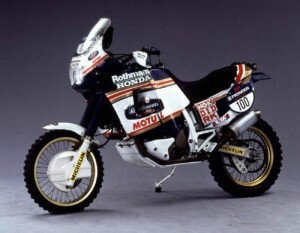 Desert Queen: Honda NXR750 Paris-Dakar Rally Bike - Honda’s NXR750: Queen of the Desert… Few motorcycles in history can claim to have dominated the most brutal race on earth the way Honda’s NXR750 did. Built specifically to conquer the Paris-Dakar Rally, the NXR750 […]


