
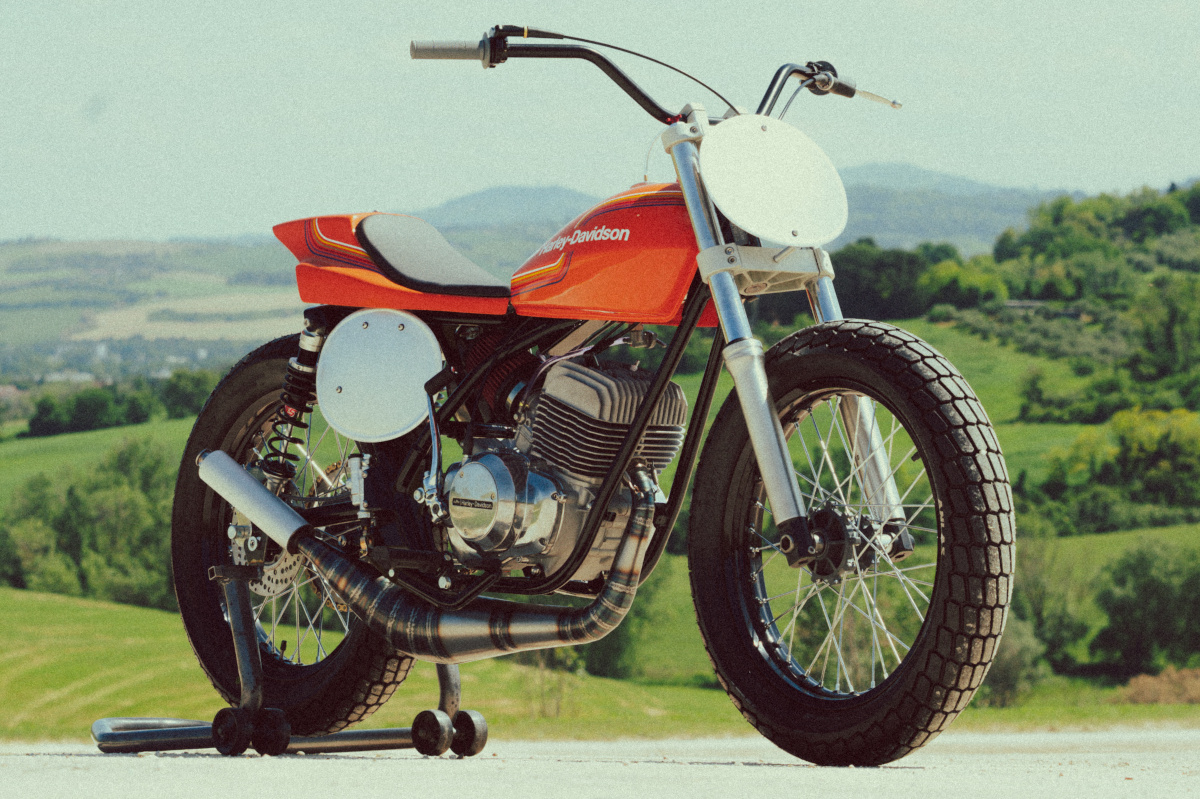
 Two-Stroke Italo-American Street Tracker from Fuchs Workshop…
Back in 1912, a firm called Nieuport-Macchi was founded to build Nieuport airplanes under license for the Italian military. Sometimes in the 1920s, as production shifted to seaplanes, the company was renamed Aeronautica Macchi. After World War Two, when Italians needed cheap transportation, the company began producing motorcycles in addition to aircraft, taking the name Aermacchi.
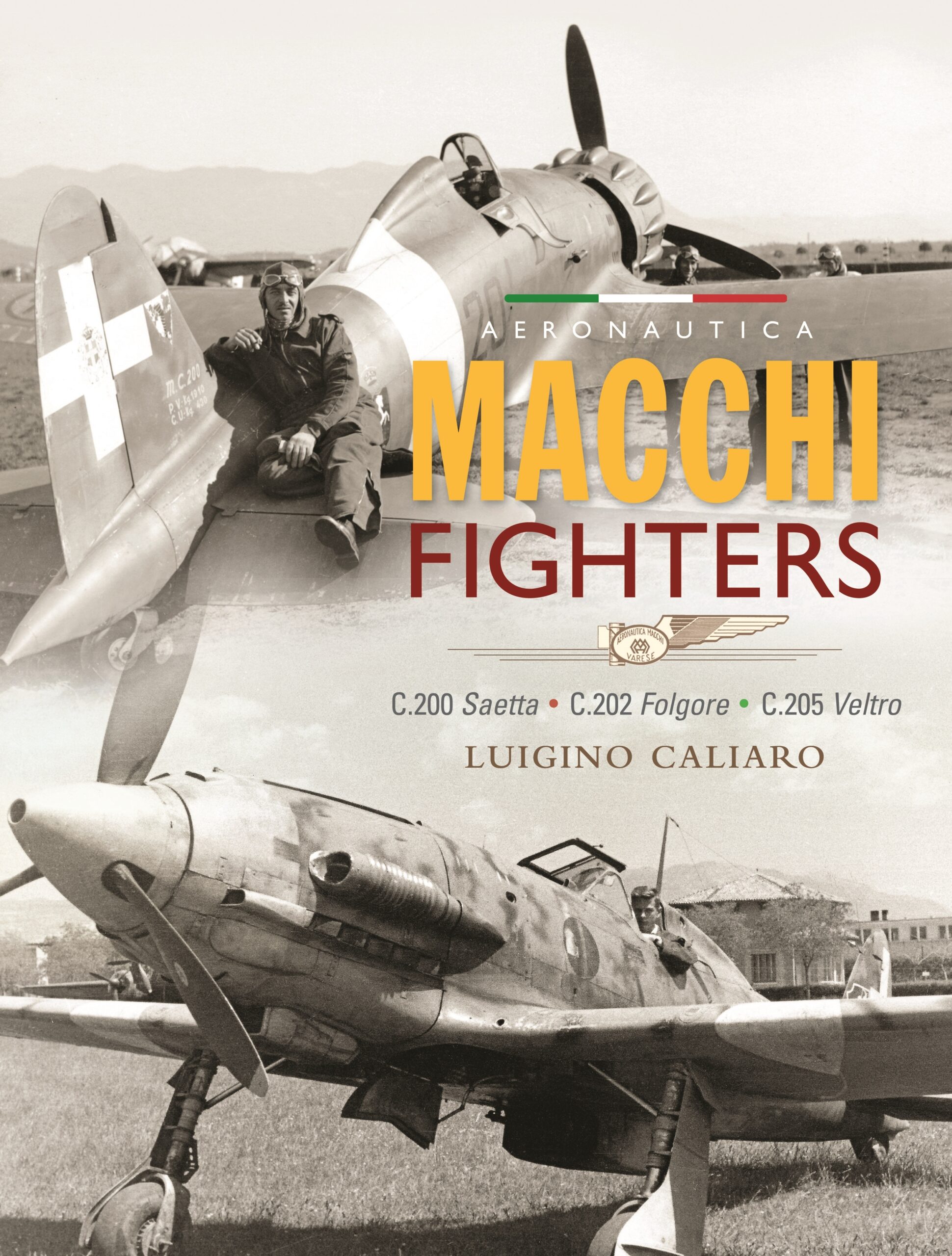
In the 1960s, Harley-Davidson purchased 50% of the motorcycle division to build and import lighter weight, two-stroke motorcycles to sell alongside their V-twin brutes. Period testers were well-pleased with the Italo-American imports:
“In Italy, economic conditions are such that many people ride motorcycles because they are such inexpensive transportation—and the motorcycles themselves must be rugged and dependable. On the other hand, the Italians are constitutionally incapable of doing anything without making a sport of it and all of their machinery reflects that as well. It is natural then, that the Aermacchi/Harley-Davidson should have taken the form it has: low, stretched-out and racy-looking, yet sturdy and not much given to fits of temperament.” –Cycle World, Sprint 250 Review, 1962
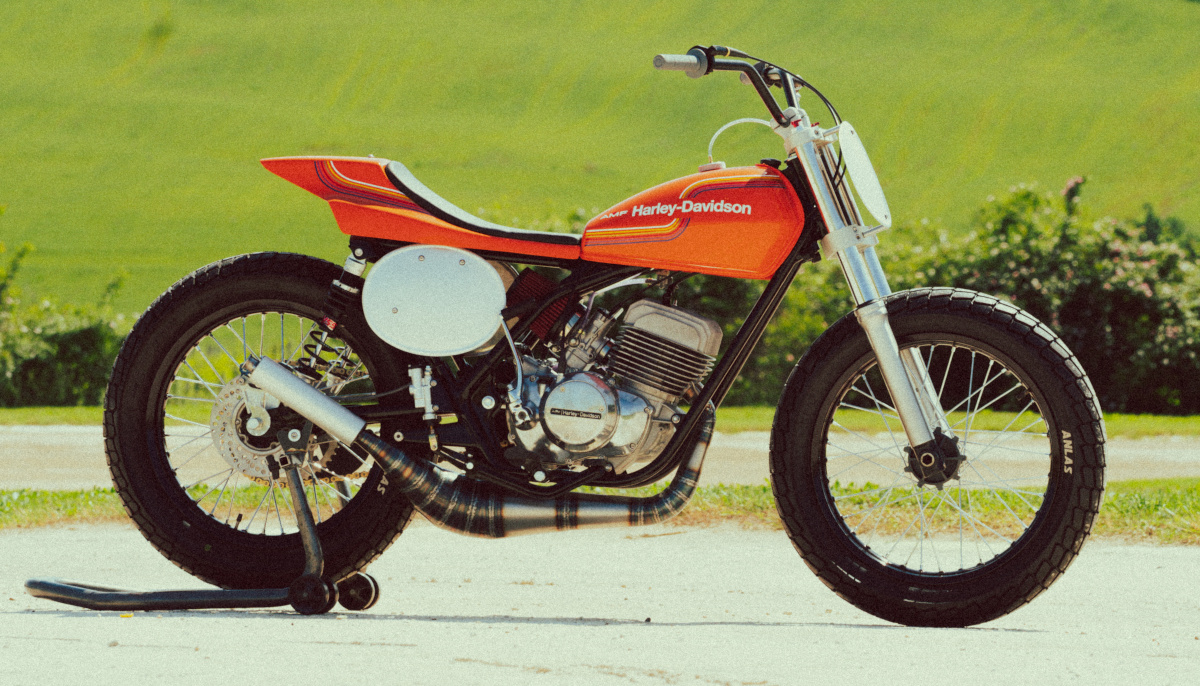
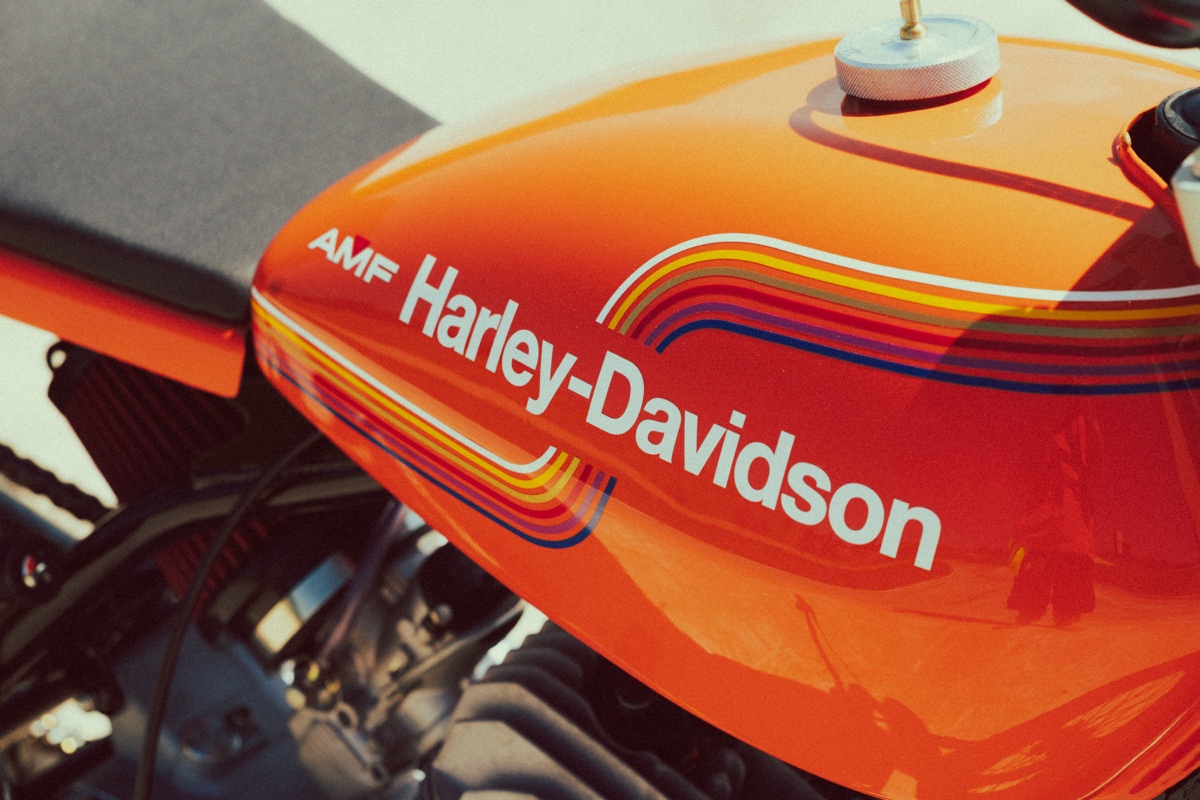
While never as highly regarded as their Japanese counterparts, the Aermacchi Harleys have an undeniable mystique — it’s just cool to have a lightweight two-stroke with Harley-Davidson badges.
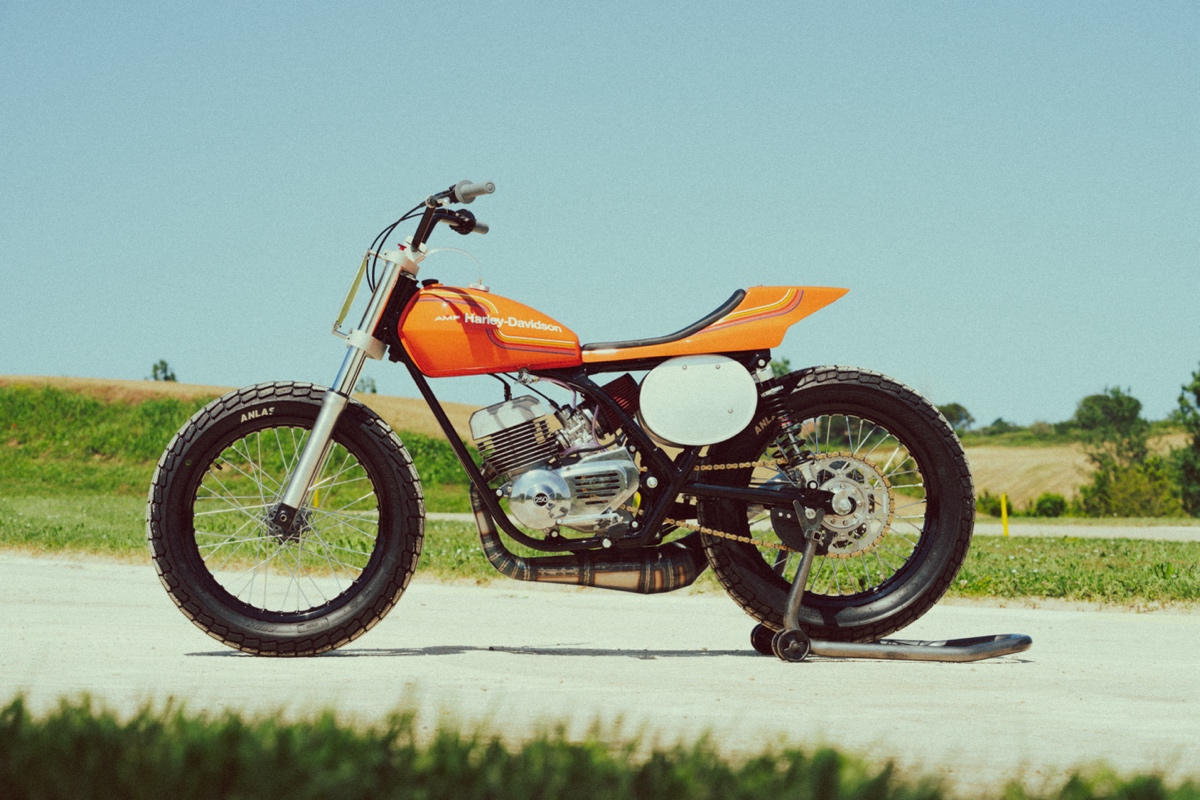
This Aermacchi-Harley SX250 flat tracker comes from our old buddy Massimo Rinchiuso of Italy’s Fuchs Workshop, who specializes in vintage flat track race bikes as well as regular custom builds, hand-shaped aluminum bodywork, 3D design, and CNC parts. You may remember the Honda NX650 Dominator “Thunderbike” he built for pro racer Niko Sorbo:
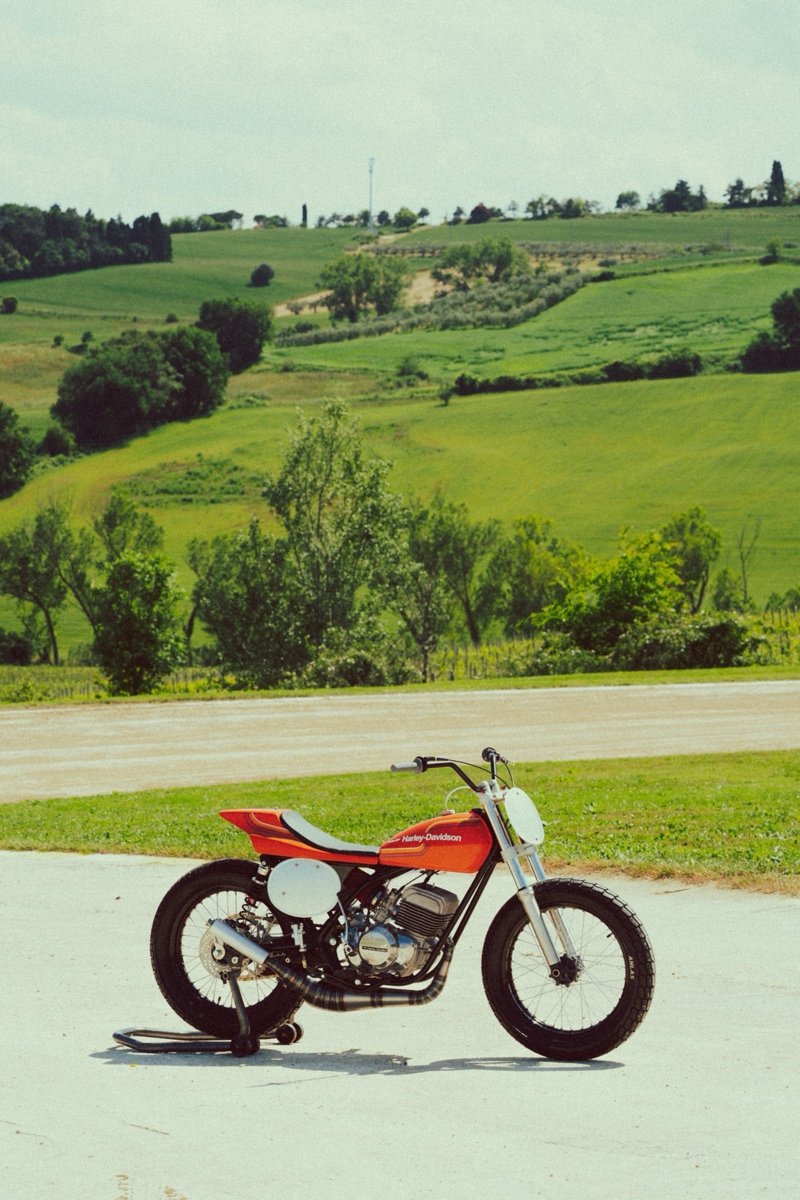
Nicknamed “The Seventy,” this 1970(ish) two-stroke tracker was built for client Marco Donati:
“The project was commissioned by Marco Donati, a Milan-based architect, motorcycle enthusiast, flat track rider, and partner at the renowned Deus Ex Machina. His vision was clear: reinterpret the spirit of old-school racing with a modern twist, without betraying the original identity of the motorcycle.”
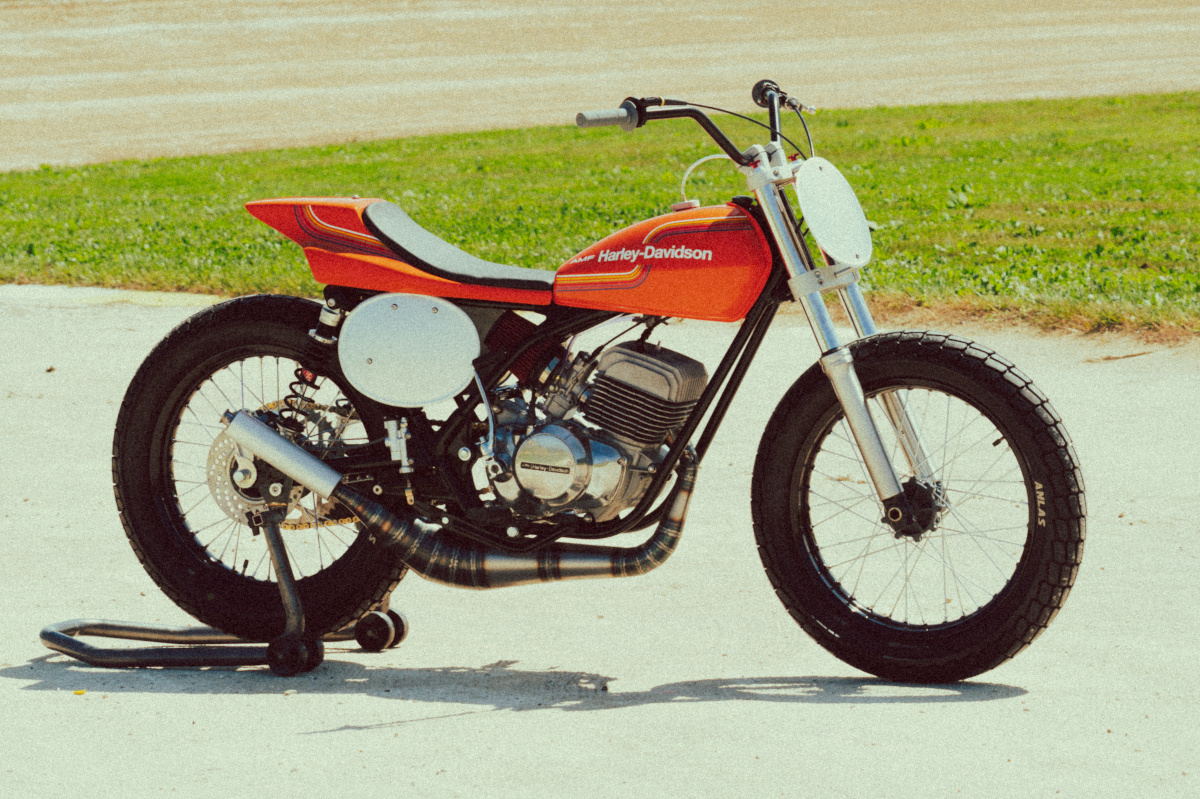
If “The Seventy” looks familiar, that’s because Marco and Massimo were inspired by Kaleb Zink’s Aermacchi-Harley SX175 tracker, which we featured here on BikeBound.
“It was a huge source of inspiration. The client showed me two images of that bike, but couldn’t give me the source.” -Massimo
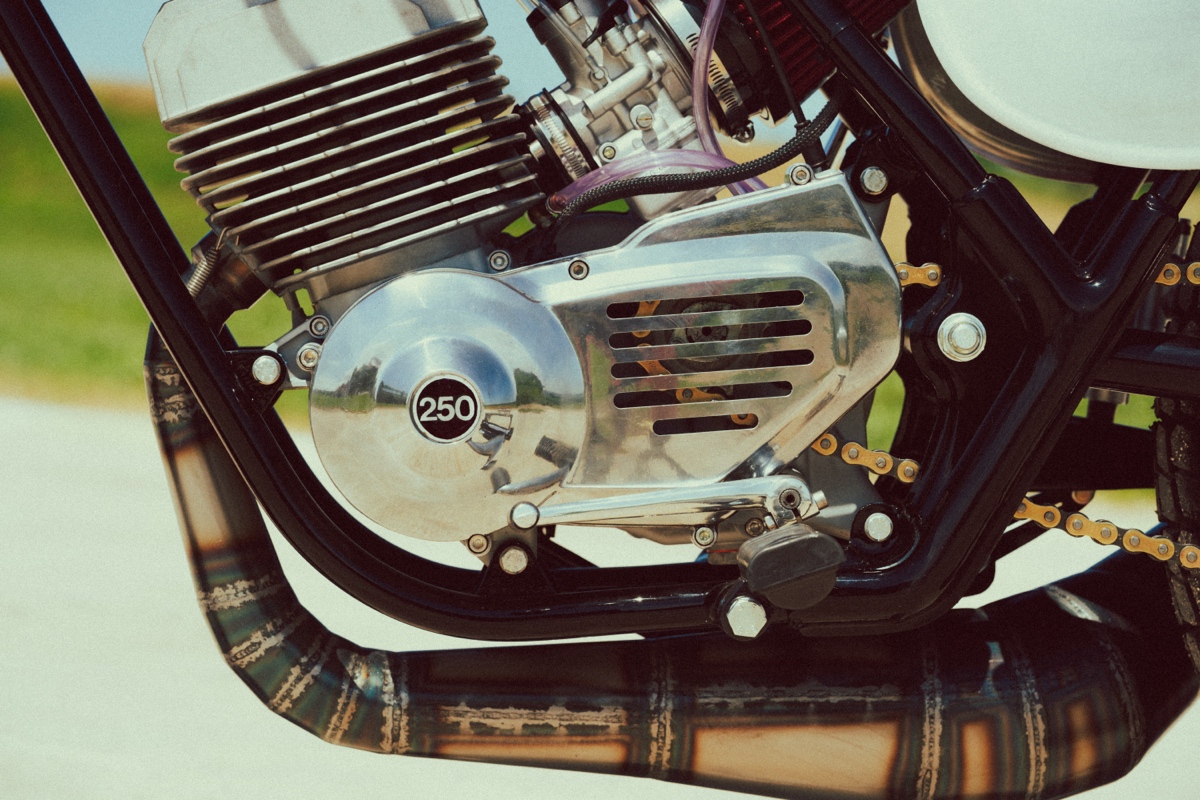
The project would be no walk in the park. The bike had sat dormant for years. Fuch’s master engine builder, Claudio Lanconelli, restored and rebuilt the single-cylinder engine. The chassis was completely overhauled, modified to achieve better flat track geometry. A set of CNC-machined triples hold a pair of Yamaha R6 forks in place, and YSS Italy set up the rear shocks specifically for this build.
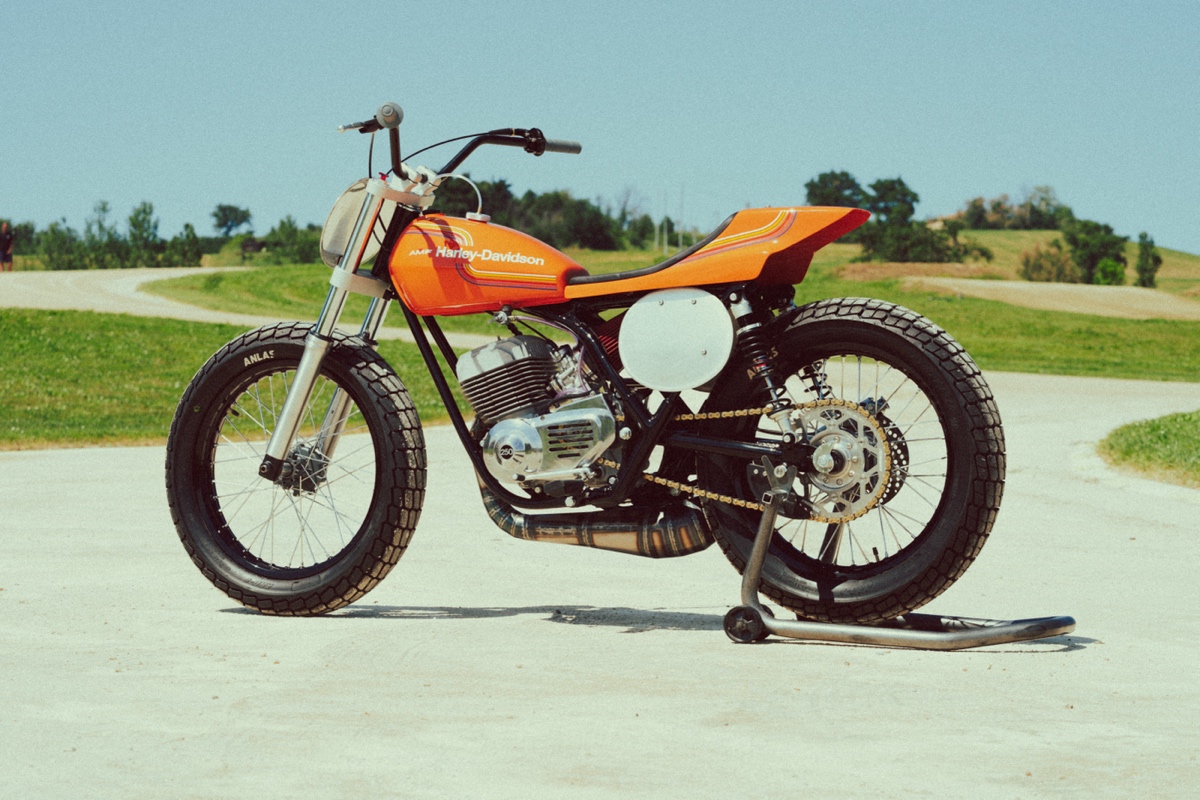
Italy’s JS Exhaust TIG-welded a system just for this bike, which Massimo matched with an oversize carburetor for maximum low end torque. The wheels are a 19-inch pair custom-built for the bike, and the bike is now running a rear disc.
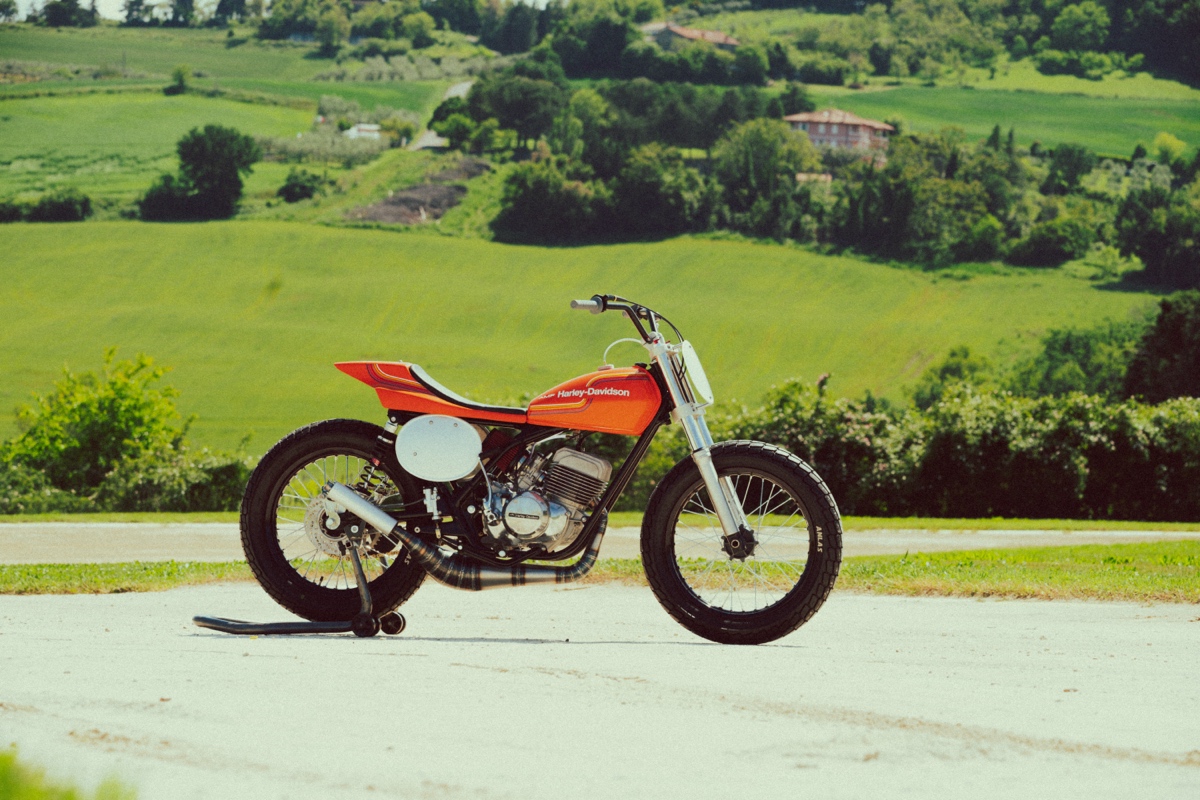
The number plates were hand-beaten from aluminum sheet, the fiberglass tail unit comes from Kompotech, and the original tank was retrofitted with a new filler neck. Massimo isn’t sure of the exact power output, but he says it’s wild to ride, weighing just 216 lbs.
“It’s extremely nostalgic; it brings fifty-year-olds back to their youthful dreams… Very fun, really. And the sensations given by the smell of the fuel mix are something that only a few people can understand nowadays.”
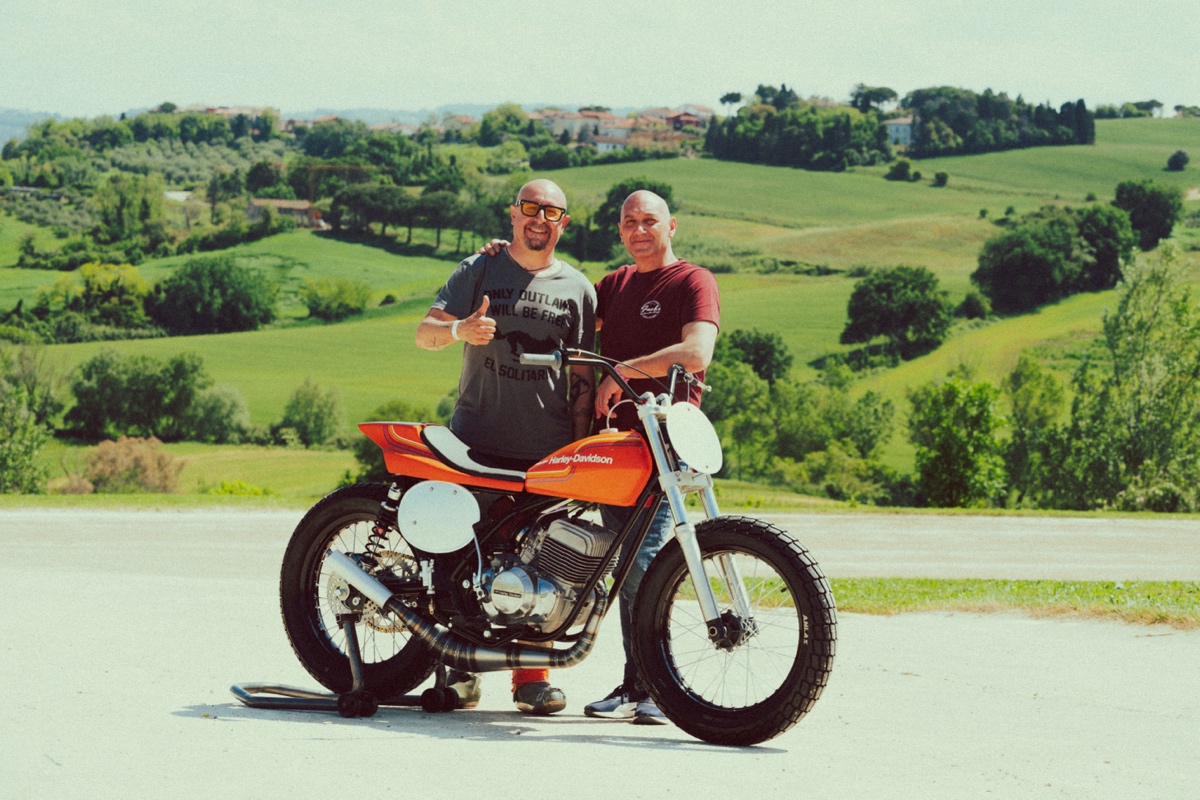
Below you’ll find our full interview with Massimo about the build, including more photos from Christian Fussi (@chrifussi) — taken at Rossi’s VR46 Ranch in Tavullia!
Aermacchi-Harley 250 Tracker: Builder Interview
• What’s the make, model, and year of the donor bike?
Was an old AMF 250 2T (Aermacchi Harley-Davidson), roughly 1970/74.
• Why was this bike built?
The project was commissioned by Marco Donati, a Milan-based architect, motorcycle enthusiast, flat track rider, and partner at the renowned Deus Ex Machina. His vision was clear: reinterpret the spirit of old-school racing with a modern twist, without betraying the original identity of the motorcycle.
• What was the design concept and what influenced the build?
The motorcycle I present here was born from a clear idea: bringing a vintage AMF Harley-Davidson 250 two-stroke back to life and transforming it into a pure flat track machine, ready to tear up the oval dirt with an old-school roar and a deeply handcrafted soul.
Inspired by this uniquely American discipline, the little Harley has been turned into a true tracker — designed to deliver vintage thrills, but with real performance on the track.
[Kaleb Zink‘s Aermacchi / Harley 175 tracker ] was a huge source of inspiration. The client showed me two images of that bike, but couldn’t give me the source.
• What custom work was done to the bike?
The process was anything but simple. The engine, which had been dormant for years, was completely rebuilt, with every part carefully restored and tuned to recover reliability and extract every ounce of performance from this two-stroke single-cylinder powerplant.
The chassis also underwent a complete overhaul. The frame was modified to accept new geometry and support more advanced components. The triple clamps were CNC-machined from solid billet to host new fork stanchions sourced from a Yamaha R6, while the rear end was matched with a set of dedicated shock absorbers.
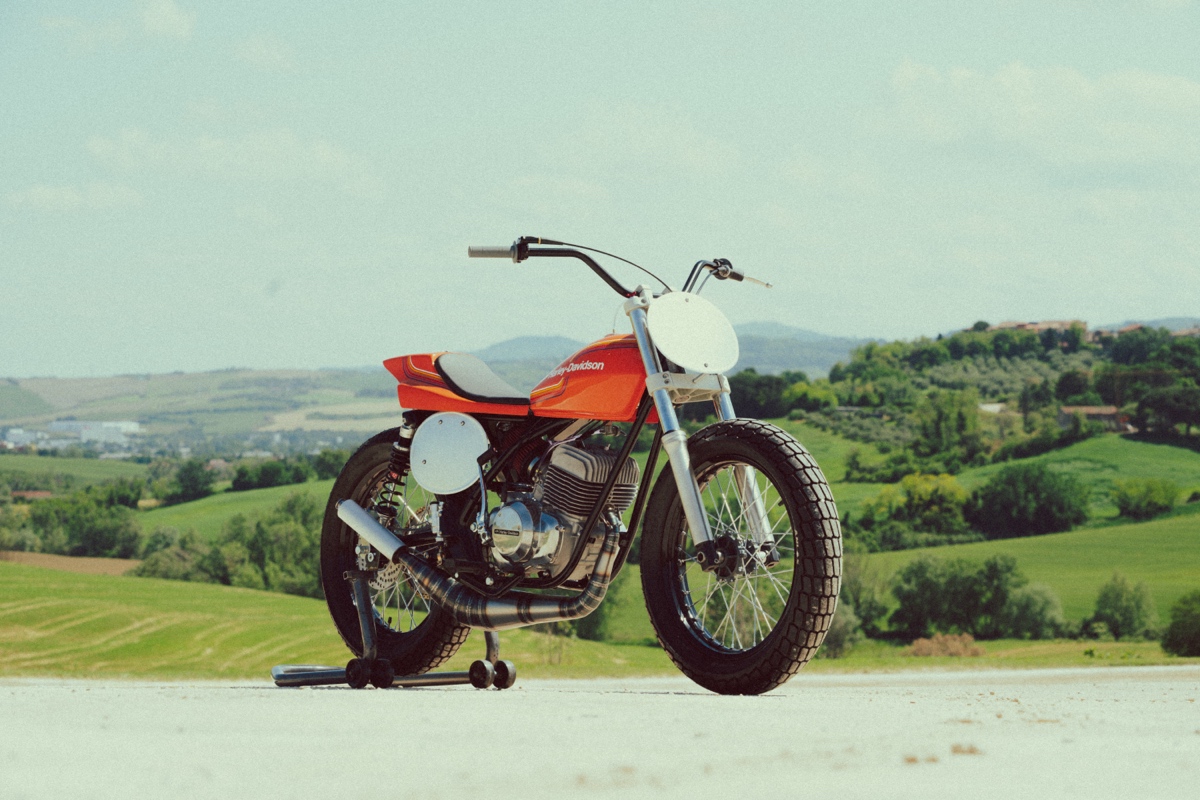
The exhaust system was purpose-built, featuring a carefully designed expansion chamber for optimal performance, paired with an oversized carburetor. The wheels — essential in flat track racing — are now a custom-built 19″ set, perfectly tailored to match the original swingarm and upgraded front end, and capable of supporting a rear disc brake setup.
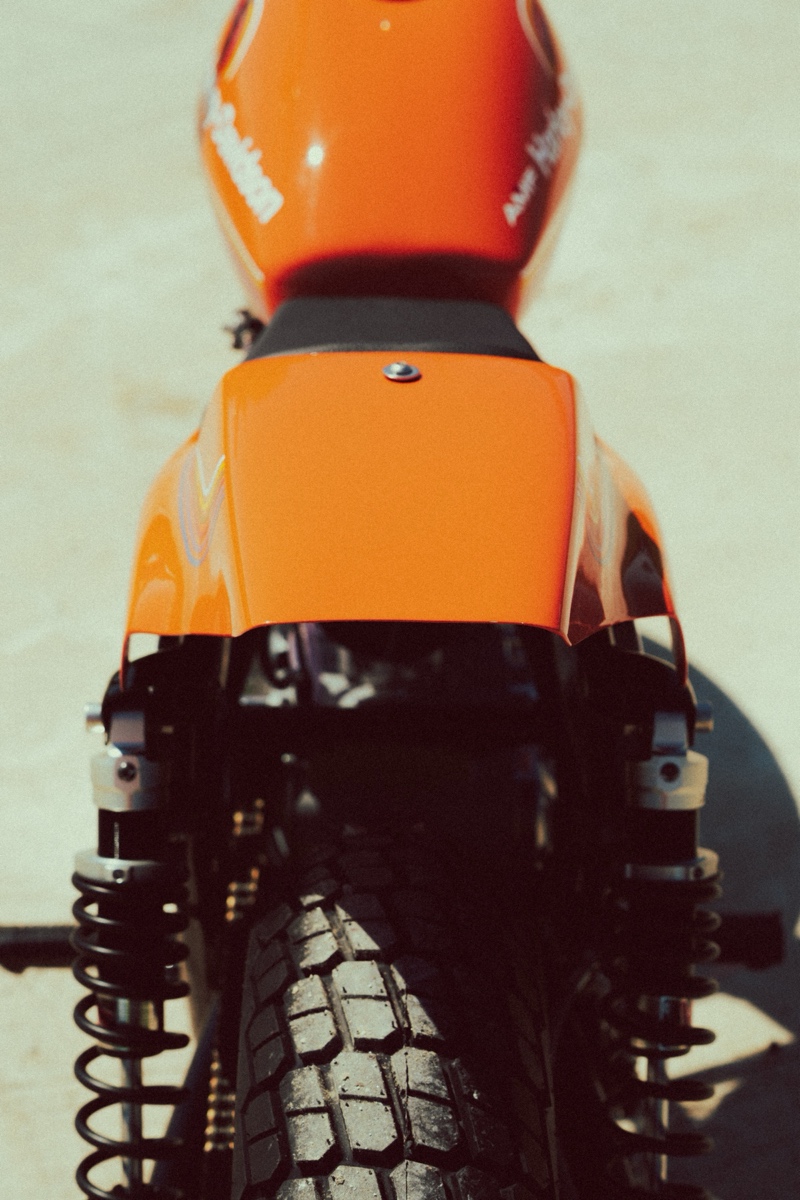
Many handcrafted details bring this bike to life, most notably the hand-beaten aluminum number plates — true artisan pieces that highlight the obsessive care that went into every component.
• Does the bike have a nickname?
“The Seventy.”
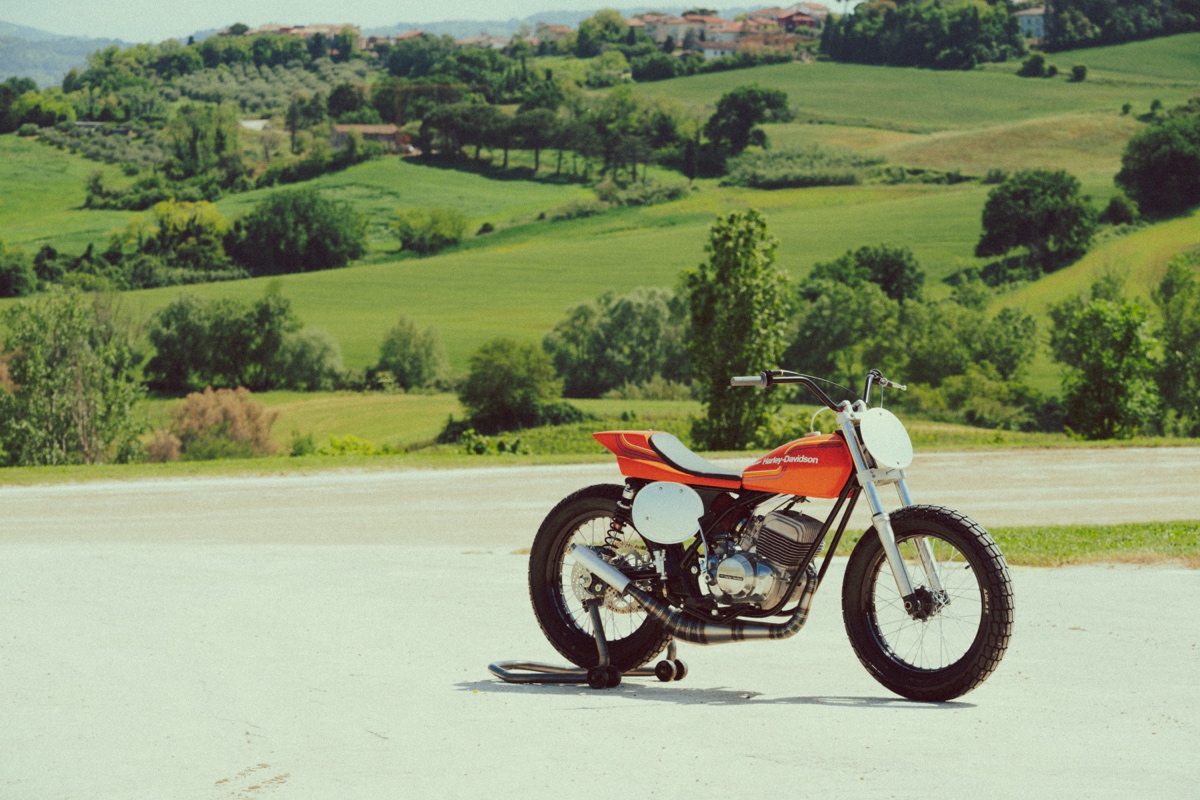
• Any idea of horsepower, weight, and/or performance numbers?
Weight 98kgs, but no idea of performance unfortunately… But it is wild!
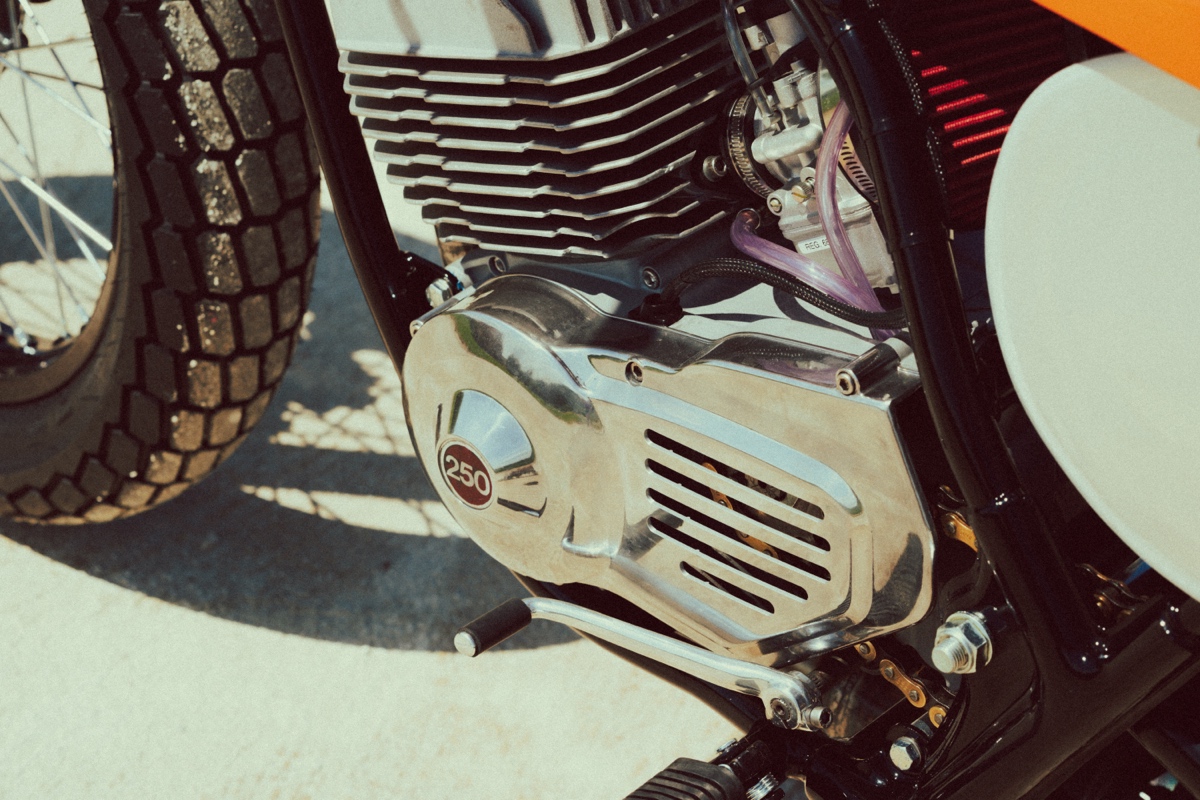
• Can you tell us what it’s like to ride this bike?
It’s extremely nostalgic; it brings fifty-year-olds back to their youthful dreams… Very fun, really. And the sensations given by the smell of the fuel mix are something that only a few people can understand nowadays.
• Is there anyone you’d like to thank?
- Claudio Lanconelli, Fuchs Workshop’s master engine builder, for his outstanding work on the motor.
- JS Exhaust, YSS Racing Italy.
- Christian Fussi, for the photo shoot carried out at the VR46 Ranch in Tavullia
Follow the Builder
Instagram: @fuchs_workshop
Facebook: @fuchsworkshop
Images: Christian Fussi (@chrifussi)
More from Fuchs Workshop
 Sleek, Narrow, Cohesive: Ducati Monster 900ie Café Racer - Eternal Iron Prize: 70s-Inspired M900 “Massimo” by Fuchs Workshop… We all know the story of the original Monster, “the bike that saved Ducati.” What began as a mere styling exercise in the early 90s evolved […]
 The Attitude of a Rodeo Bull: Yamaha “FTX500” Flat Tracker - Oldie But Speedy: Championship-Winning TX500 Tracker from Fuch’s Workshop… In 1972, Yamaha introduced their first middleweight four-stroke twin, the TX500, later to become the XS500. Whereas the TX/XS650 resembled the British twins of yesteryear, the […]
 Big Single Thunderbike: Honda XL600S Tracker - Honda XL600R Thunderbike from Fuchs Workshop… Last week we had the pleasure of featuring the #48 Honda 650 flat tracker of professional racer Niko Sorbo, built by Italy’s Fuchs Workshop to compete in the Thunderbike […]
 Sorbo’s Thunderbike: Honda Dominator 650 Flat Tracker - From Fuchs Workshop: Niko Sorbo’s Honda Thunderbike, “Rusinella”… More than two decades ago, Massimo Rinchiuso of Italy’s Fuchs Workshop began preparing track bikes. Today, his Ravenna-based workshop specializes in hand-shaped aluminum bodywork, 3D design, CNC […]
 Moto Guzzi “Riviera” Custom Cruiser - From the Land of Motors: Moto Guzzi “Riviera” from Fuchs Workshop… The Italian region of Emilia-Romagna has been christened the “Land of Motors” or “Motor Valley” for its high concentration of car and motorcycle manufacturers, […]
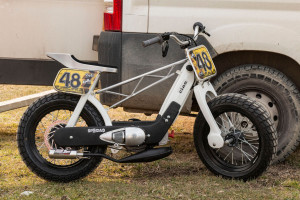 Special Ciao: “Speciao” 75cc Piaggio Tracker - Fuchs Workshop builds a Piaggio mini-tracker… In 1967, Piaggio introduced their first moped, the Ciao — a 50cc two-stroke with a belt drive, drum brakes, and 6-volt electrics. Produced in various versions well into […]


