

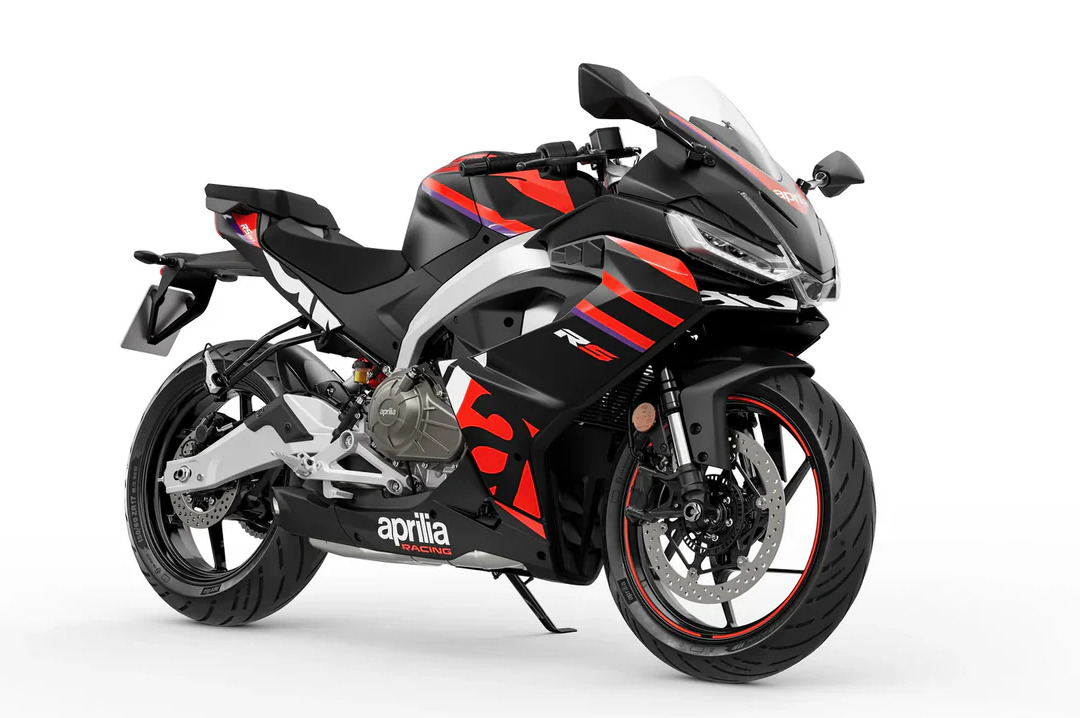
The Aprilia RS 457 is a standout in the sub-500cc sport bike category, combining racing-inspired design, strong engineering, and accessible performance. This machine proves that you don’t need a liter-class engine to deliver a thrilling, track-capable experience.
Design & Build
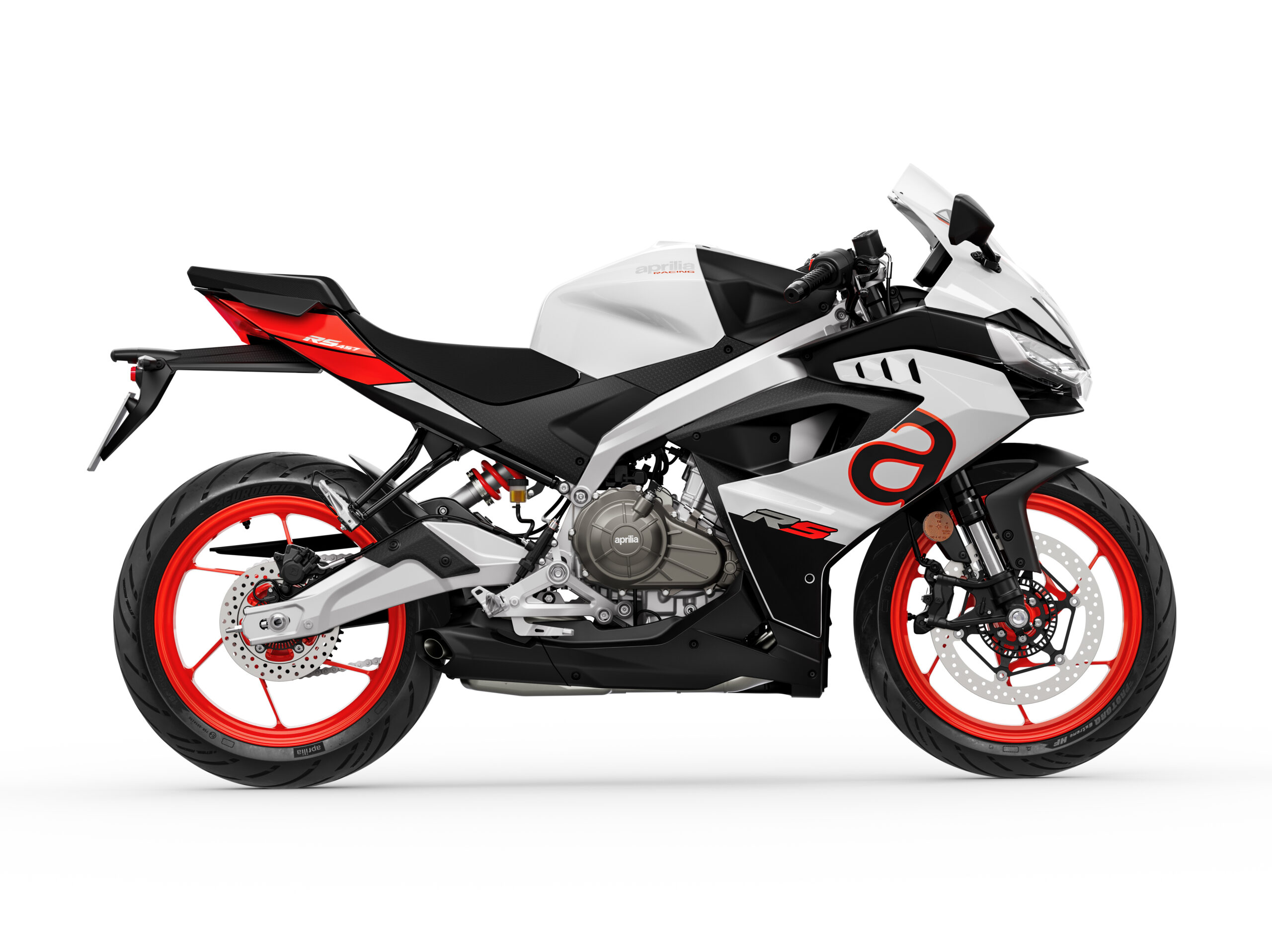
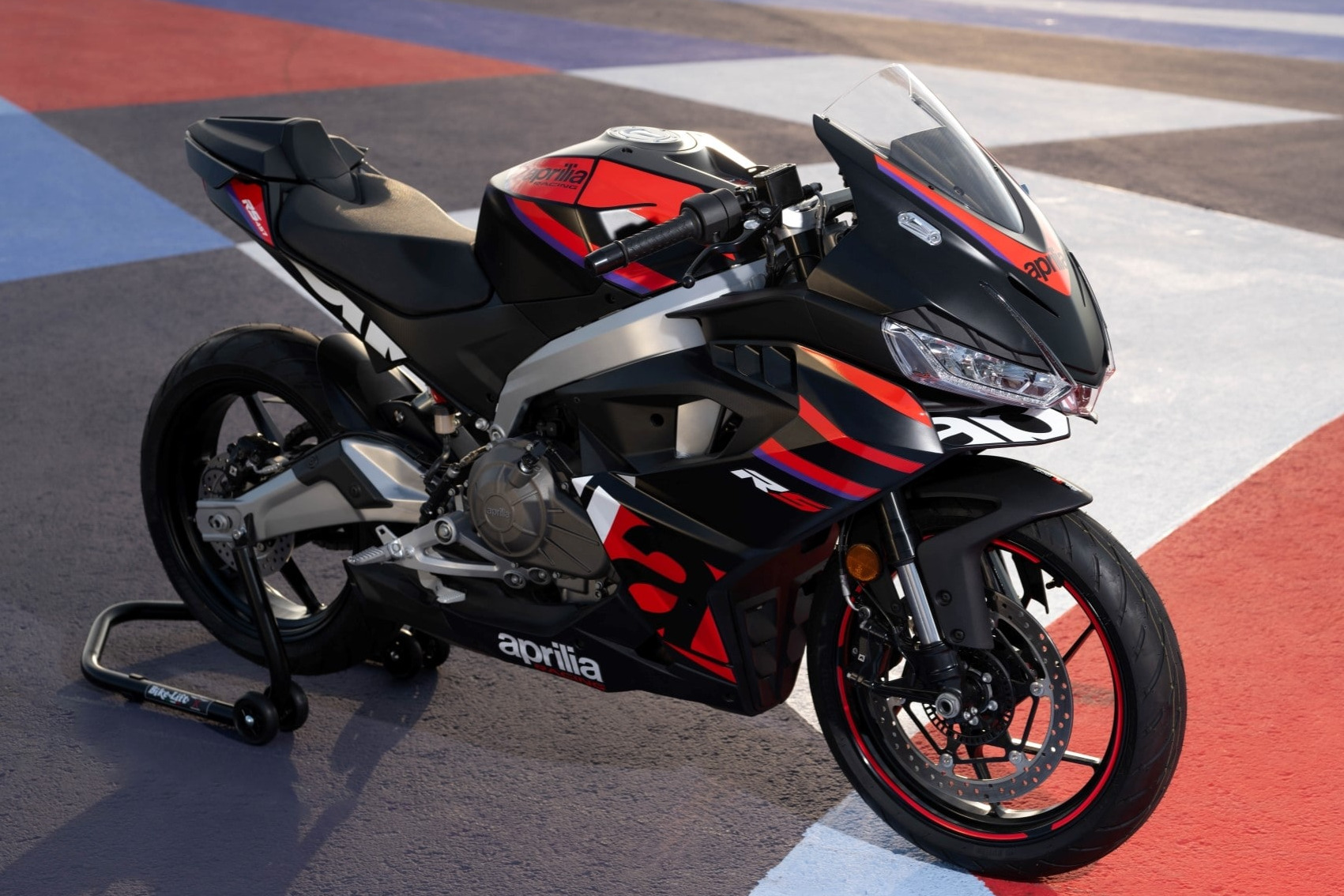
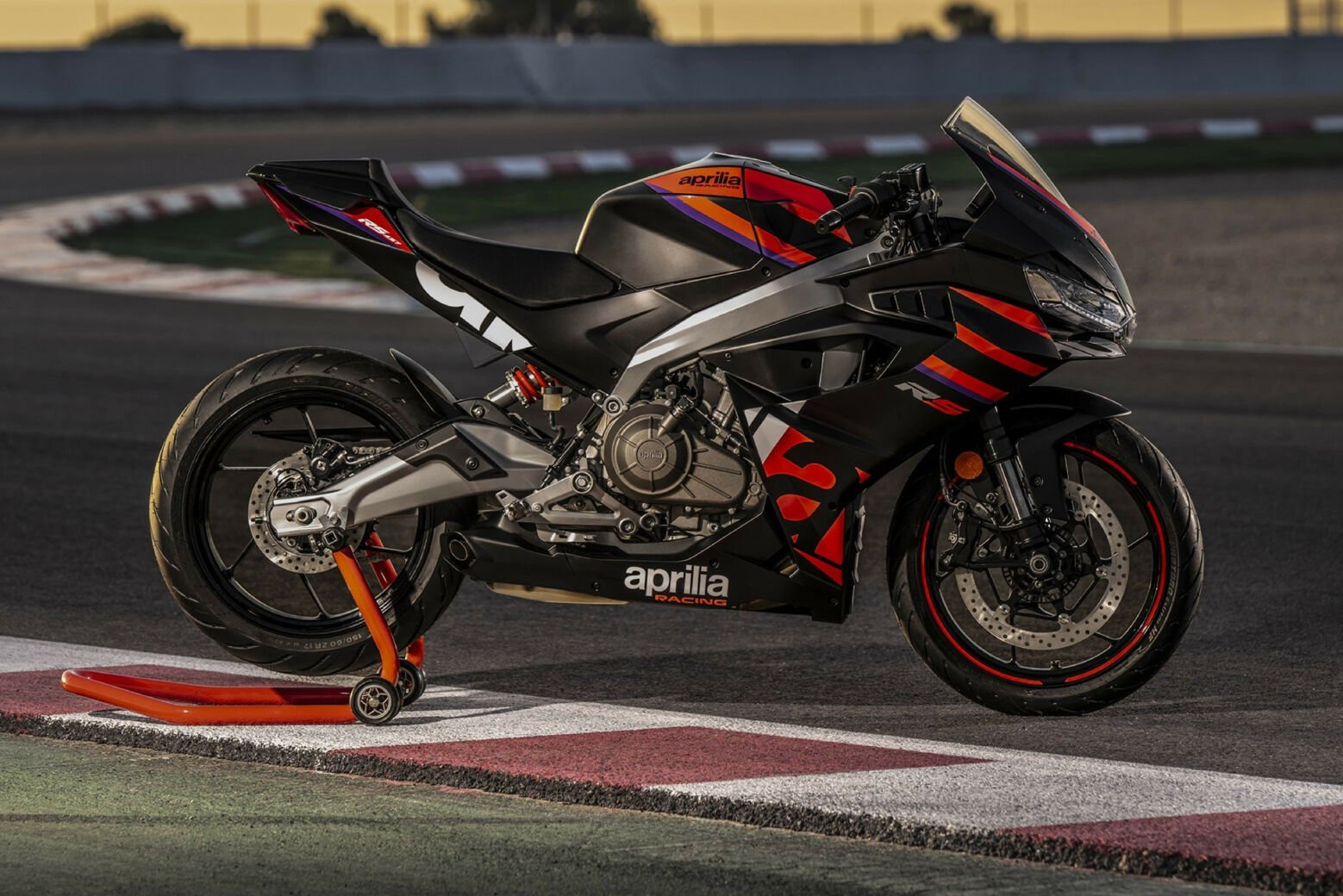
From first glance, the RS 457 wears its racing DNA proudly. Its sleek fairings, aggressive front cowl, and sharp lines would not look out of place in a MotoGP paddock. The bike’s aluminum frame — rare for its class — adds stiffness and responsiveness while keeping overall weight low. Paired with a minimalist but race-oriented tail, the RS 457 feels compact and purposeful.
Instrument-wise, the RS 457 offers a modern TFT display, giving riders clear access to speed, gear position, ride modes, and other relevant telemetry. The ergonomics strike a fine balance — sporty without being brutally aggressive, making it comfortable enough for city commuting or spirited canyon carving.
Engine & Performance
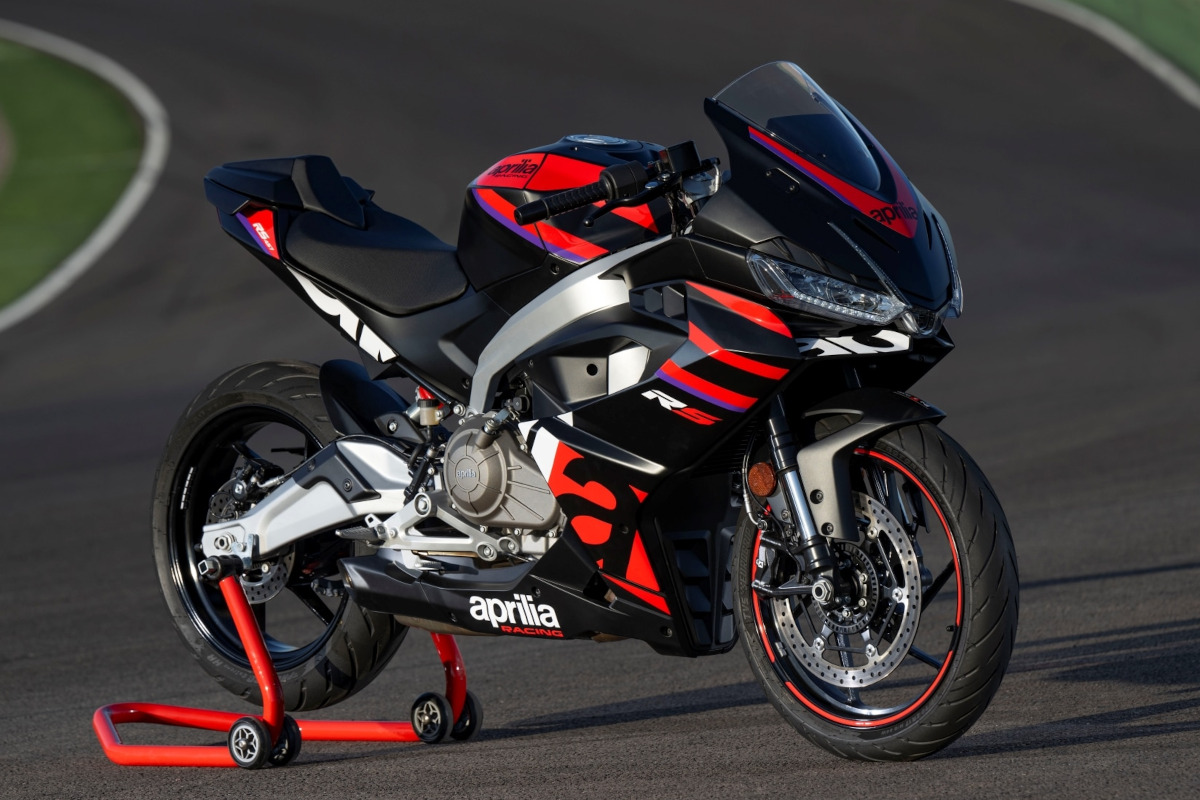
Under the fairings sits a 457cc liquid-cooled parallel-twin, tuned to deliver around 47 hp. While that doesn’t sound earth-shattering, the engine feels lively and smooth, especially in the midrange where you’ll be doing most of your riding. The low-end torque is surprisingly usable, making it easy to roll on in traffic, yet the top end continues to pull as revs build.
The bike’s lightweight (~385 lb curb weight) combines with a firm but compliant suspension setup, giving it a nimble feel. Quick direction changes are a blast, and the RS 457 feels planted through corners. Braking is strong, thanks to a 320 mm front disc with a high-performance calliper — plenty of bite when you need to scrub speed or push in hard.
Riding modes (like Rain, Sport, maybe a track-mode depending on spec) let you tailor throttle response. In Sport or Track mode, the throttle is sharp and responsive; in Rain mode it’s softened, giving less aggressive throttle mapping that helps with traction in slick conditions.
Handling and Rider Experience
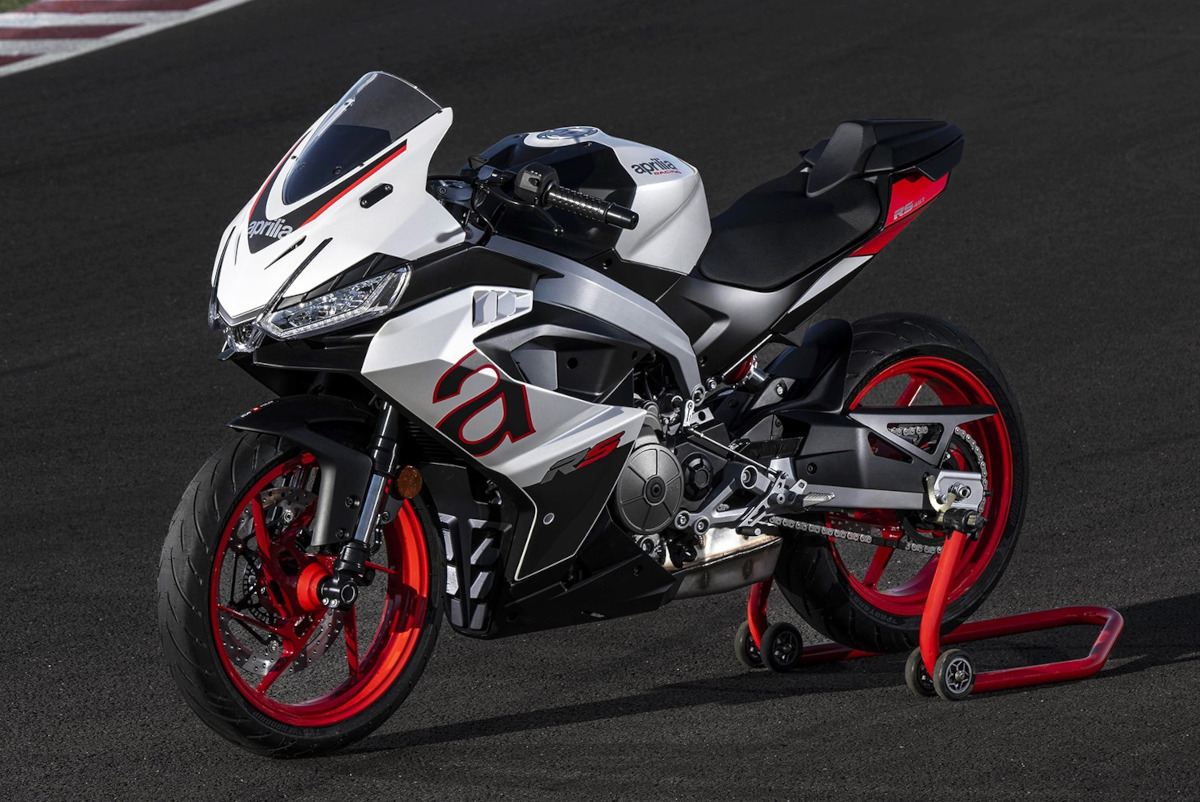
On the street, the RS 457 feels balanced and stable: tight enough to enjoy twisty roads, but not so harsh that every bump feels punishing. The frame, suspension, and geometry work together to create a harmonious ride. The steering feels precise, the chassis is stiff yet forgiving, and overall the bike gives you confidence to push in corners without feeling twitchy.
The ergonomics are sport-focused: footpegs are slightly rearward, but not so far that long rides become unbearable. The seat is fairly firm but shaped well, and rider triangle (bars, pegs, seat) feels natural and intuitive.
If you decide to take the RS 457 to the track, you’ll appreciate its agility even more. It’s light enough to flick through chicanes, strong enough to accelerate out of turns, and the braking system gives you confidence under hard braking. For newer track-day riders, this is a perfect step-up machine — powerful, but not overwhelming.
Electronics and Features
Aprilia has packed the RS 457 with useful electronic aids:
- Ride-by-wire throttle — smooth and responsive, especially across ride modes.
- Multiple riding modes — helps adjust behavior for road or track.
- Cornering ABS or standard ABS (depending on trim) — adds safety when braking mid-lean.
- Possibly traction control or different intervention levels — helps when it’s really pushy or when you just want to cruise.
These tech features are quite advanced for a sub-500cc sport bike, making the RS 457 feel modern and competitive.
Practicality & Daily Use
In daily riding conditions — city commuting, light highway — the RS 457 is very usable. The low to mid-range torque makes it manageable in stop-and-go traffic. Its weight keeps it relatively easy to maneuver at low speeds. Fuel economy should be good, thanks to the modest displacement and modern engine efficiency (though actual MPG will depend heavily on riding style).
Storage isn’t a strong point, but that’s typical for sport bikes: there’s no large under-seat compartment, and luggage options are limited. If you plan to use it as a daily driver, look into tail bags or tank bags.
Maintenance-wise, being a small-to-mid-size sport bike, costs will likely be lower than a big liter-class machine — but as with all performance bikes, servicing (oil changes, brake pads, chain maintenance) will be important. Parts — especially fairings — could be pricey, so keeping the bike well maintained matters.
Who Is It For?
The Aprilia RS 457 is ideal for:
- Newer sport-bike riders who want performance but don’t yet want a liter-class machine
- Track-day enthusiasts looking for a lightweight, flickable bike
- Commuters who want a more aggressive, fun bike that’s still practical for everyday use
- Riders wanting modern electronics and genuine Aprilia racing heritage
It’s less ideal for:
- Riders who prioritize long-distance touring (limited storage, firmer seat)
- Those who need passenger comfort as a first priority (sport ergos)
- Riders who want ultra high top speeds (457cc is sporty, but not a 1000cc beast)
Pros & Cons
Pros:
- Lightweight and agile
- Strong midrange torque
- Advanced electronics for its class
- High-quality braking and frame
- Genuine Aprilia racing DNA
Cons:
- Modest top-end power compared to larger bikes
- Limited storage
- Firm seat and sporty ergos may be less comfy on long rides
- Sport bikes’ bodywork (fairings, plastics) can be expensive to repair
Aprilia RS 457 Specs
Engine: 457cc liquid-cooled parallel twin
Power: 47 hp (A2-compliant / US equivalent output)
Torque: ~33 lb-ft (approx., varies by market)
Transmission: 6-speed with optional quickshifter
Weight: 386 lbs (wet)
Frame: Aluminum twin-spar
Suspension:
• 41mm USD fork, preload adjustable
• Monoshock, preload adjustable
Brakes:
• Front: 320mm disc w/ radial-mount 4-piston caliper
• Rear: 220mm disc
• Dual-channel ABS (switchable modes)
Electronics: Ride modes, traction control, ABS modes, TFT display
Seat Height: 31.7 in
Fuel Capacity: 3.4 gal
2025 Updates: What’s New for the Aprilia RS 457
For 2025, Aprilia has refined the RS 457 platform rather than overhauling it — understandable given how new the model is. However, the updates it did receive are meaningful:
Improved Cooling & ECU Refinements
Aprilia implemented small but effective updates to the cooling system and ECU mapping. The engine now runs slightly cooler in stop-and-go traffic and throttle transitions are smoother at lower RPM. Riders will notice less abruptness when rolling on after corner entry or navigating urban streets.
Revised Suspension Settings
The 2025 RS 457 features slightly updated damping characteristics in the fork and shock. The changes aren’t dramatic, but riders report:
- More compliant ride over rough pavement
- Slightly improved mid-corner stability
- Better front-end feel under hard braking
These tweaks make the bike feel more mature and confidence-inspiring, especially for intermediate riders pushing toward their limits.
Updated TFT Interface
The TFT display receives a minor UI refresh, improving visibility of ride modes and adding clearer gear-shift indicator prompts. The menu structure is slightly more intuitive, making adjustments easier on the fly.
New Color Options
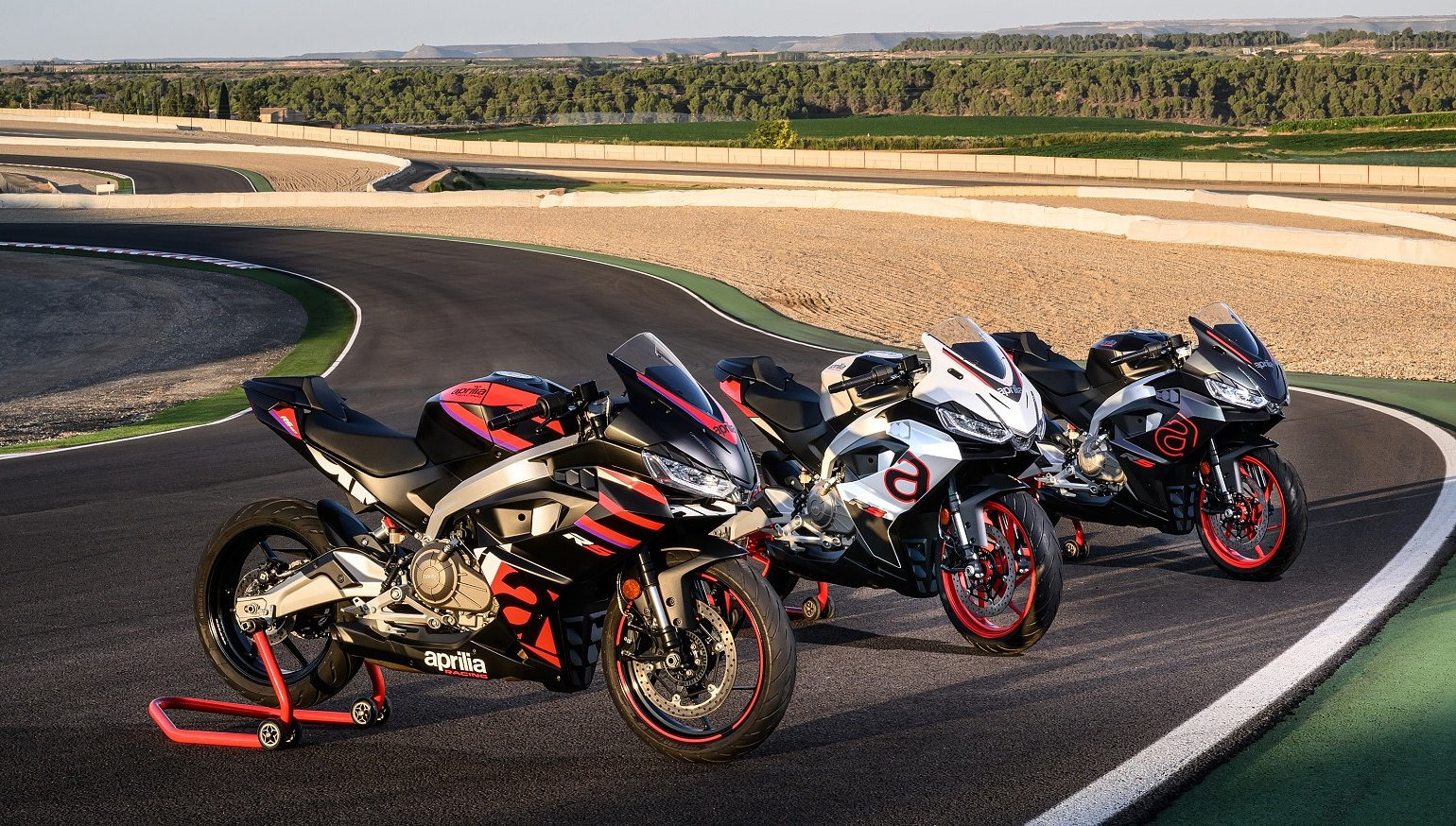
Aprilia introduced two new liveries for 2025 — both inspired by the RS-GP MotoGP color scheme — giving riders more visually aggressive options.
How the RS 457 Compares to Its Rivals
The lightweight-sport segment is more competitive than ever. Here’s how the RS 457 stacks up against its closest competitors:
RS 457 vs. KTM RC 390
The RC 390 has long been the benchmark for aggressive, track-focused machines. However:
- The Aprilia has more power and significantly better midrange punch.
- The aluminum frame gives the RS 457 a more planted, premium feel.
- The KTM still wins on weight and its single-cylinder engine’s raw character.
Verdict:
The RC 390 feels more raw and minimalist; the RS 457 feels more refined and “racebike proper.”
RS 457 vs. Kawasaki Ninja 400
The Ninja 400 remains the most forgiving and beginner-friendly. It’s smooth, reliable, and cheaper to insure. But:
- The RS 457 outperforms it in power, handling, and braking.
- The Ninja’s chassis is friendlier but less precise at high speeds or on the track.
Verdict:
If you want comfort and affordability → Ninja 400.
If you want performance → RS 457 without question.
RS 457 vs. Yamaha YZF-R7
Although classed as a “middleweight,” the R7 is a real competitor due to its price and power. But:
- The R7 is heavier and more demanding for newer riders.
- The RS 457 has better electronics and Yamaha’s build feels more dated in comparison.
- The R7 still wins on torque thanks to its 689cc twin.
Verdict:
Track-day veterans may prefer the R7’s torque.
Riders who want a lighter, more agile, modern-feeling bike will love the RS 457.
RS 457 vs. CFMoto 450SR
A surprising contender. The 450SR is cheaper and remarkably good value. But:
- The RS 457’s electronics, chassis, brakes, and overall refinement are superior.
- The 450SR still wins for budget and beginner affordability.
Verdict:
If price is the priority → CFMoto 450SR.
If performance and prestige matter → Aprilia RS 457.
Verdict
The Aprilia RS 457 is a brilliantly balanced sport bike — light, quick, and thoughtfully engineered. It brings race-inspired tech and handling into an accessible package, making it one of the most exciting sub-500cc bikes on the market. Whether you’re carving canyons, commuting to work, or taking your first steps into the world of track days, the RS 457 offers a genuinely fun, capable, and modern riding experience.
No other bike in this displacement class blends:
- Premium components
- Race-inspired engineering
- Modern electronics
- Low weight
- And approachable performance quite as effectively.
Whether you’re a newer rider stepping into sport bikes or an experienced track-day regular looking for a lightweight weapon, the RS 457 is one of the most compelling choices.
Interested in how much it will cost to insure? More about Aprilia RS 457 insurance here.


