

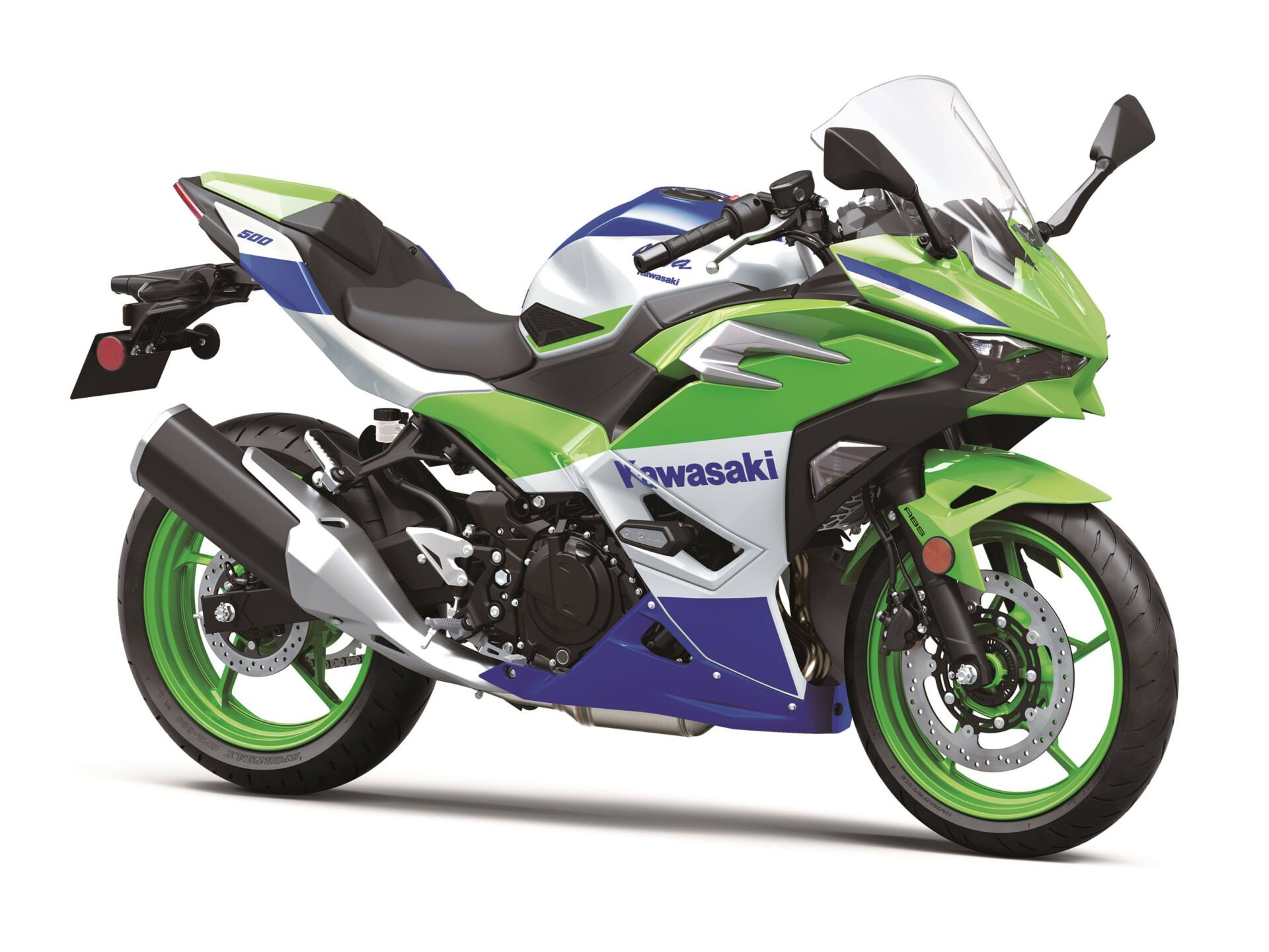
The Kawasaki Ninja 500 is a modern, lightweight sport bike that strikes a smart balance between approachable power and everyday usability. With its 451cc parallel twin, lean frame, and practical tech features, it’s positioned to appeal to both newer sportbike riders and seasoned commuters looking for a fun but reliable machine.
Kawasaki Ninja 500 Specs
Engine: 451cc liquid-cooled parallel-twin
Power: ~51 hp @ 10,000 rpm (varies by market)
Torque: ~30–35 lb-ft (varies by region)
Transmission: 6-speed manual, assist/slipper clutch
Weight (ready to ride): ~340–346 lbs (depending on ABS and trim)
Frame: Steel trellis-style frame
Suspension:
• Front: 41mm telescopic fork, ~4.7 in travel
• Rear: Horizontal back-link with preload adjustment, ~5.1 in travel
Brakes:
• Front: 310mm disc
• Rear: Disc brake (size varies by region)
• ABS available/standard depending on model
Electronics & Features:
• Assist/Slipper clutch
• Smartphone connectivity on SE trims
• LED lighting (varies by version)
Seat Height: ~30.9 in
Fuel Capacity: ~3.7 gal
Wheelbase: ~54.1 in
Performance:
• Top Speed: ~115–120 mph (estimated)
• 0–60 mph: Mid-4- to 5-second range (estimated)
• Fuel Economy: ~50–60+ mpg
Options & Packages:
• SE trims with TFT display and smartphone integration
• Color and graphics packages
• Accessories: windscreens, protection kits, luggage options
Design & Build
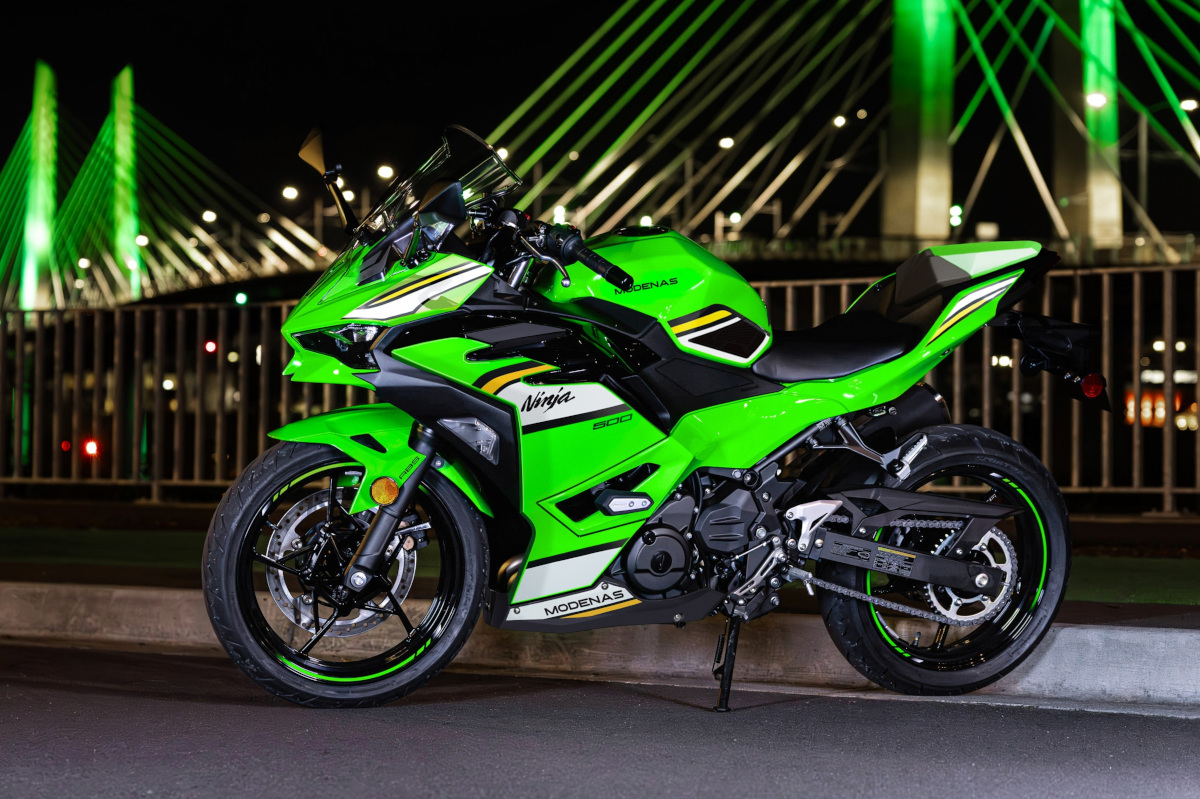
At first glance, the Ninja 500 carries classic Ninja styling — sharp fairings, aggressive front cowl, and a muscular, sportbike posture. It uses a trellis-style, high-tensile steel frame, which helps give it rigidity without making it overly heavy.
Ergonomically, the bike offers a balanced rider posture: the clip-on style bars lean sporty, but aren’t so low as to be uncomfortable. Footpegs are forward enough to keep things stable, but not so rearward that you feel cramped during daily rides. Kawasaki’s “ERGO-FIT” system further helps tailor the fit if needed.
The seat is well-padded, and the narrow tank allows a good connection for your knees. The overall build feels both functional and refined, making the Ninja 500 a versatile package — not just for weekend blasts, but for city commuting too.
Engine & Performance
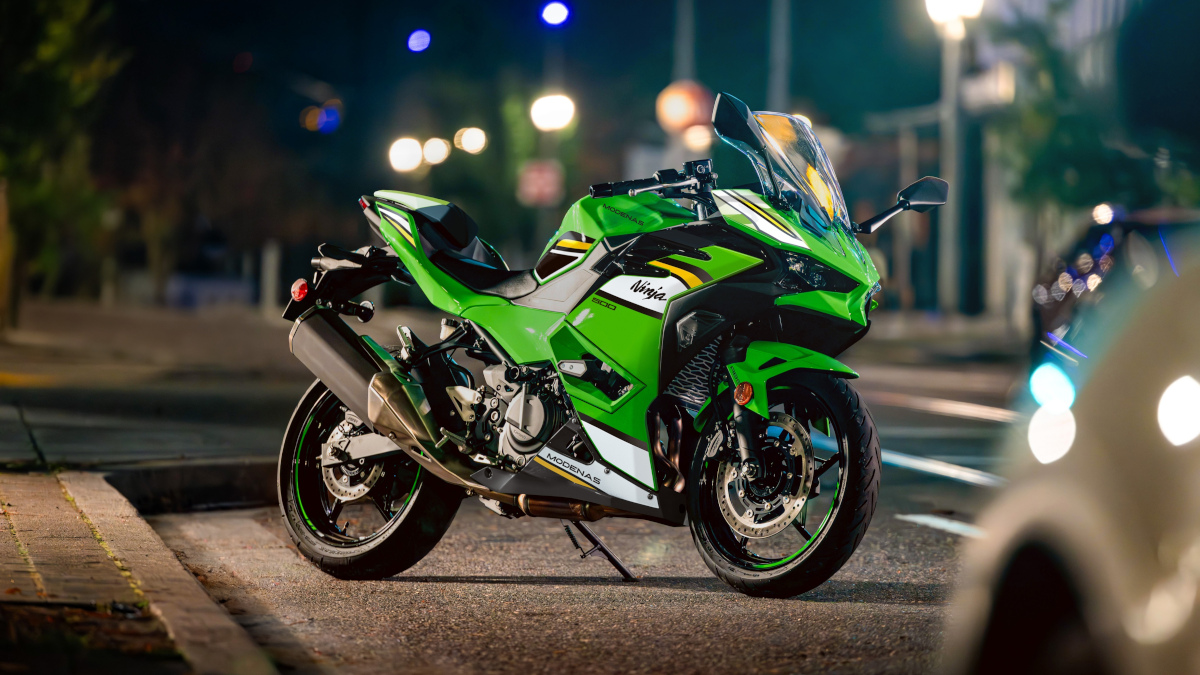
Powering the Ninja 500 is a 451cc liquid-cooled parallel twin. Kawasaki rates it at 51 hp at 10,000 rpm and 31.7 lb-ft of torque at 7,500 rpm. These numbers deliver a smooth, predictable power curve — strong enough for highway riding, but not overwhelming for beginners.
The assist & slipper clutch softens the clutch lever pull (making it easier for newer riders) while reducing rear-wheel hop during downshifts. The transmission is a 6-speed, which gives enough flexibility across various riding conditions.
Handling-wise, the lightweight frame (dry weight as low as 339.6 lb for non-ABS) and a compact chassis make the Ninja 500 feel flickable and nimble. The suspension setup features a 41 mm telescopic fork and a Uni-Trak® rear shock with preload adjustability, giving a good mix of comfort and responsiveness.
Braking is solid: a 310 mm front semi-floating disc with a 2-piston caliper, and a 220 mm rear disc. ABS is available for added safety.
Electronics & Features

Kawasaki equips the Ninja 500 with some thoughtful modern tech:
- Economical Riding Indicator: helps guide more efficient throttle use.
- Smartphone Connectivity via Kawasaki’s “RIDEOLOGY The App” — through the app, you can view ride logs, maintenance reminders, and more.
- Assist & Slipper Clutch, as mentioned above, gives smoother engagement and better downshift behavior.
- On SE (special edition) models, there’s a full-TFT display, KIPASS proximity key, frame sliders, USB-C port, and more premium touches.
These features make the Ninja 500 feel modern without being overly complex.
Practicality & Daily Use

One of the strongest points of the Ninja 500 is how usable it is day to day:
- The mid-sized twin engine produces enough torque for highway merging, but also behaves smoothly in stop-and-go traffic.
- Its relatively light weight means it’s manageable for city riding and for newer riders.
- Fuel capacity is 3.7 gallons (about 14 L), which is decent for commuting and moderately long rides.
- Seat height is 30.9 in, making it accessible for many riders.
Storage is limited (as is typical of sport bikes), but the Ninja 500’s design and ergonomics make it a solid all-around option — not just for weekends, but as a daily ride too.
Reliability & Rider Feedback
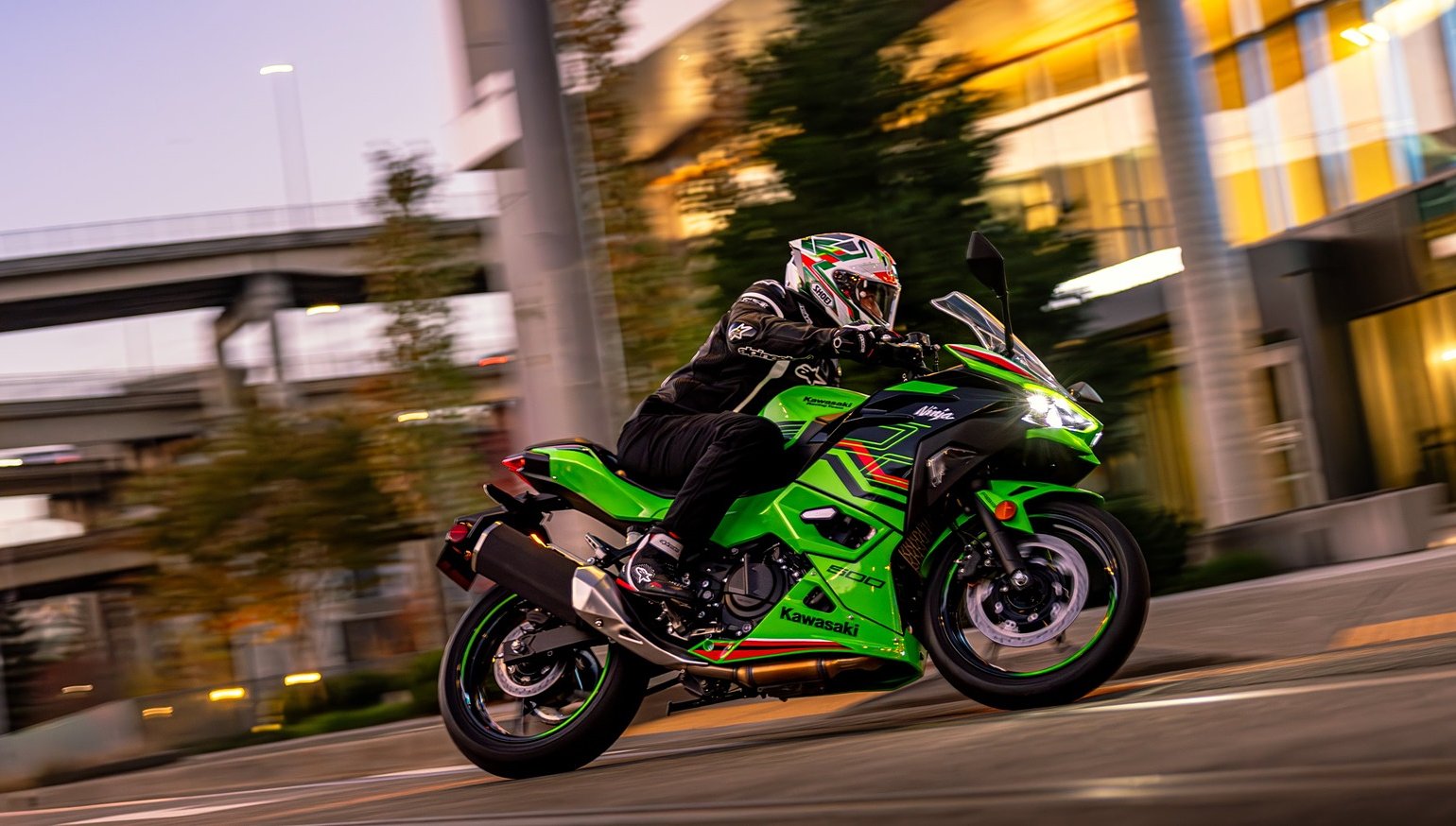
From owner communities, the Ninja 500 is often praised as a dependable, well-balanced machine:
- Many say it’s great for learners and experienced riders alike:
“Great starter bike … one of the best… It can be a first bike, second bike or even a forever bike.” (Reddit)
- Some report “throttle snatch” (a jerky feeling when rolling on the throttle), though opinions vary:
“It has … the same clutch issue … still has throttle snatch iirc.” (Reddit)
- Regarding mods:
“There is very little performance to be gained with mods … If you want to do some cosmetics, go ahead … but those are some handsome bikes.” (Reddit)
These insights suggest that while the bike isn’t a high-horsepower race weapon, it’s very usable, well-built, and earns trust from its owners. It’s also less expensive to insure than a 600-class super sport.
2025–2026 Model Highlights
For the latest model years, Kawasaki continues to refine the Ninja 500:
- 2025/2026 MSRP: Non-ABS starts around $5,299, ABS versions go up to $5,899, depending on trim.
- New color options for 2026: Lime Green, Black, and special edition tones.
- Improved SE package: The SE ABS model gets the full-color TFT, KIPASS keyless start, USB-C, and more.
How It Compares to Rivals
Here’s how the Ninja 500 stacks up against a few competitors in its class:
- Versus Aprilia RS 457:
- The RS 457 is more performance-oriented, with sportier ergonomics and possibly more aggressive chassis feel.
- The Ninja 500 is more balanced, with more usable torque for everyday riding and better comfort.
- Versus Kawasaki Ninja 400:
- The Ninja 400 is lighter and has a very strong following.
- The 500 gives more displacement and a more refined twin-cylinder feel, though some feel the throttle response isn’t as clean.
- Versus Yamaha MT-03 / R3:
- The R3 has more sportbike pedigree and very light weight.
- The Ninja 500 offers more mid-range power, a more substantial frame, and (in SE) more tech features.
Pros & Cons
Pros:
- Strong, usable mid-range power
- Light and agile chassis
- Assist & slipper clutch
- Modern electronics and smartphone connectivity
- Very accessible seat height
Cons:
- Not a high-horsepower race machine
- Limited storage (typical for sport bikes)
- Some users report throttle snatch
- SE version costs more, though adds nice features
What Is the Ninja 500 KRT Edition?
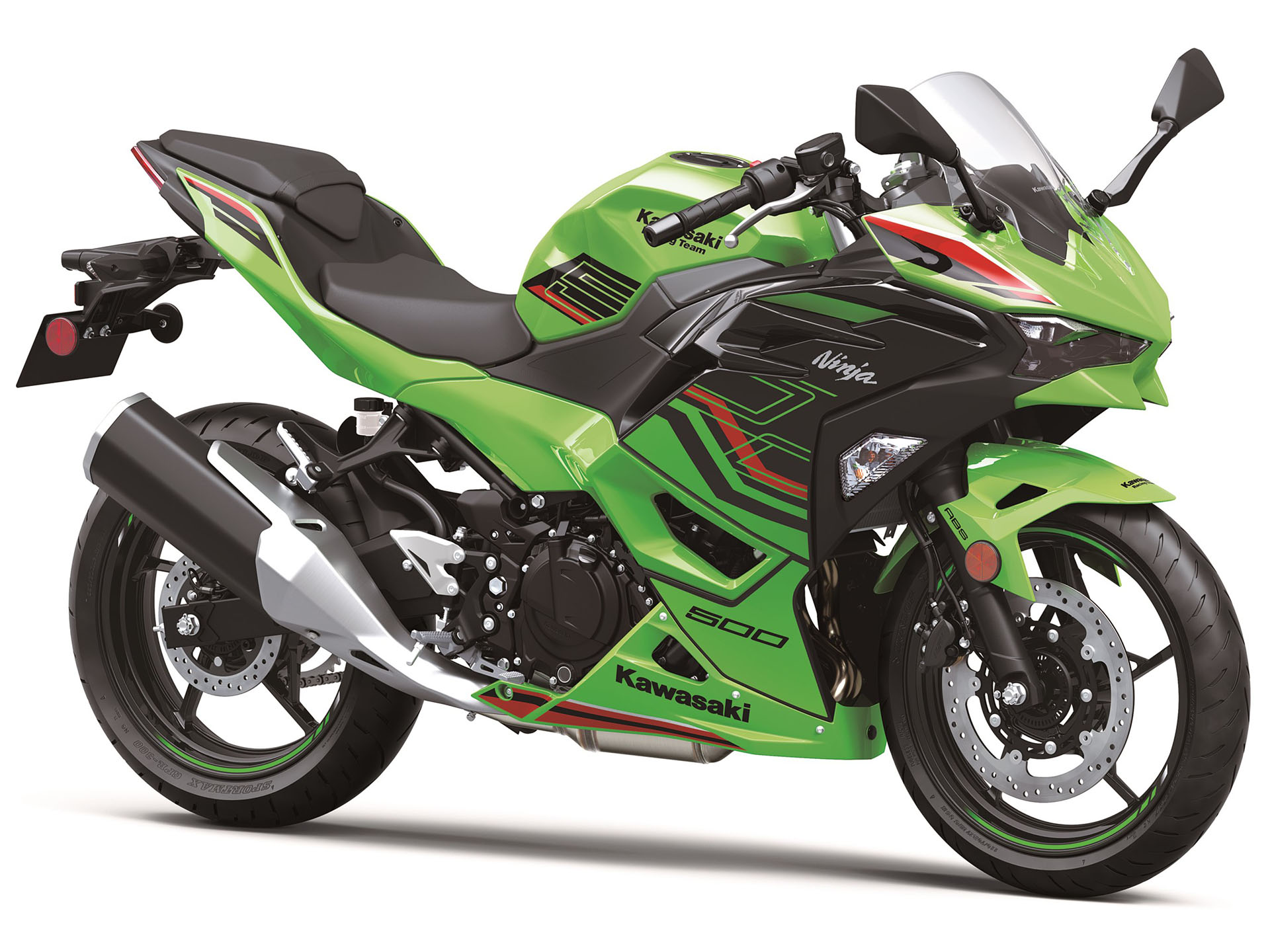
- KRT = Kawasaki Racing Team
- “KRT” stands for Kawasaki Racing Team. The edition’s main distinguishing feature is its race-inspired livery: bright “Kawasaki green,” white, and black graphics in a style that evokes Kawasaki’s racing heritage.
- According to Kawasaki, the KRT Edition has “exclusive Kawasaki Racing Team (KRT) color and graphics.” (Kawasaki)
- Same Core Mechanics, Slight Feature Differences
- Mechanically, the KRT Edition uses the same 451cc parallel-twin engine as the standard Ninja 500: 51 hp @ 10,000 rpm, 31.7 lb-ft torque @ 7,500 rpm.
- The frame, suspension, brakes, and most specs are the same as the base model: trellis steel frame, 41 mm front fork, 310mm front brake disc, etc.
- It includes “Assist & Slipper Clutch” and the “Economical Riding Indicator” like other 500s. (Kawasaki)
- Weight & Dimensions
- Dry weight: ~339.6 lb (for non-ABS KRT Edition)
- Seat height: 30.9 in.
- Fuel capacity: 3.7 gallons.
- Price
- Kawasaki lists the 2025 Ninja 500 KRT Edition (non-ABS) MSRP at $5,499.
- There’s also a KRT SE Edition (with ABS and extra features) that costs more.
- Electronics & Rider Aids
- Includes Kawasaki’s “RIDEOLOGY The App” for smartphone connectivity.
- Uses their ERGO-FIT system, making the ergonomics more adaptable.
- Limited to Specific Color Scheme
- The KRT Edition is typically offered in the Lime Green / Ebony / Pearl Blizzard White colorway for the 500.
- According to owner reports, the KRT is mostly about the paint and graphics, not about extra performance parts. > “KRT edition are bikes with Kawasaki Racing Team inspired decals … It’s the same as the base … except for livery.” (Reddit)
Why Get the KRT Edition?
- Aesthetic Appeal: If you like race-bike styling, the KRT color scheme is very iconic and eye-catching — a big part of the appeal is cosmetic.
- Value: You get the same engine and chassis as the base model but with unique graphics; for many riders, that style upgrade is worth it.
- Brand Identity: The KRT Edition connects more visually to Kawasaki’s racing legacy, which is cool for fans of sporty, heritage-inspired bikes.
Things to Consider / Trade-Offs
- No Performance Boost: There’s no increased horsepower or upgraded engine — it’s mostly cosmetic.
- Price Premium: You may pay more just for the livery and “special edition” label.
- Resale Consideration: Depending on demand, special editions can either help or slightly limit resale value — buyers looking for base models may overlook KRT, but race-livery fans will pay up.
Bottom line: The Ninja 500 KRT Edition is essentially the same bike under the skin — but dressed in Kawasaki’s racing colors. It’s a stylistic “special edition” rather than a performance-focused upgrade.
Ninja 500: Verdict
The Kawasaki Ninja 500 is a brilliantly practical sport bike that doesn’t compromise on fun. It’s friendly enough for newer riders but has enough character and capability to satisfy more experienced ones. With modern tech, a responsive but manageable engine, and a chassis that balances agility and stability, the Ninja 500 stands out as one of the most complete mid-displacement bikes on the market.
If you want a sport bike that’s “real” but not overkill — whether for commuting, canyon rides, or even weekend blasts — the Ninja 500 is a seriously smart choice.
Bikes to Compare


