


The Kawasaki Ninja ZX-4R is a very interesting and unique sport bike — it brings a 400cc inline-four engine into a supersport chassis, which is relatively rare and gives it a lot of character.
This small-displacement supersport doesn’t act small. With a 399cc inline-four engine tucked into a race-derived chassis, this bike blends supersport performance and high-rev dynamics into a package that’s fun both on the street and (potentially) the track.
Design & Build

The ZX-4R’s design is clearly inspired by Kawasaki’s larger supersport machines (like the ZX-6R and ZX-10R). It has full-fairing styling, sharp dual headlights, and a muscular tail section.
Its frame is a high-tensile steel trellis, providing good rigidity while helping to keep the weight manageable. The aggressive lines, combined with world-supersport chassis cues, give it real premium sport-bike feel in a small-displacement package.
Engine & Performance

Under the fairings, the ZX-4R packs a 399cc inline-four, DOHC, 16-valve, liquid-cooled engine.
- Kawasaki claims multiple rider aids: power modes, three-mode traction control (KTRC), and a ram-air intake, which helps with high-RPM performance.
- The assist & slipper clutch improves downshift stability.
- For 2025, the MSRP for the base ABS model is $8,999.
Power and Torque:
- According to Kawasaki’s US spec sheet, the engine generates 56.0 hp @ 11,500 rpm and 26.5 lb-ft (36 Nm) @ 11,000 rpm in the base 4R model. (
- According to autoevolution, the top-end screaming nature is substantial, with very high redline characteristics.
- Some versions (or markets / tuned) report up to 77 PS (~76 hp) with ram air or in certain conditions.
Chassis, Suspension & Brakes

- Front Suspension: 37 mm inverted Showa fork (SFF-BP — Separate Function Fork, Big Piston) with 120 mm of travel.
- Rear Suspension: Horizontal back-link Showa shock with preload adjustment.
- Brakes: Dual 290 mm semi-floating discs up front with 4-piston radial calipers + ABS, and a 220 mm rear disc with ABS.
- Tires: 110/70-17 front, 160/60-17 rear.
Dimensions & Ergonomics

- Seat Height: ~31.5 in (800 mm).
- Curb Weight: 414.5 lb (188 kg) according to Kawasaki spec.
- Fuel Capacity: 4.0 gallons (~15.1 L).
- Wheelbase: 54.3 in (1379 mm) for stable handling.
Electronics & Features
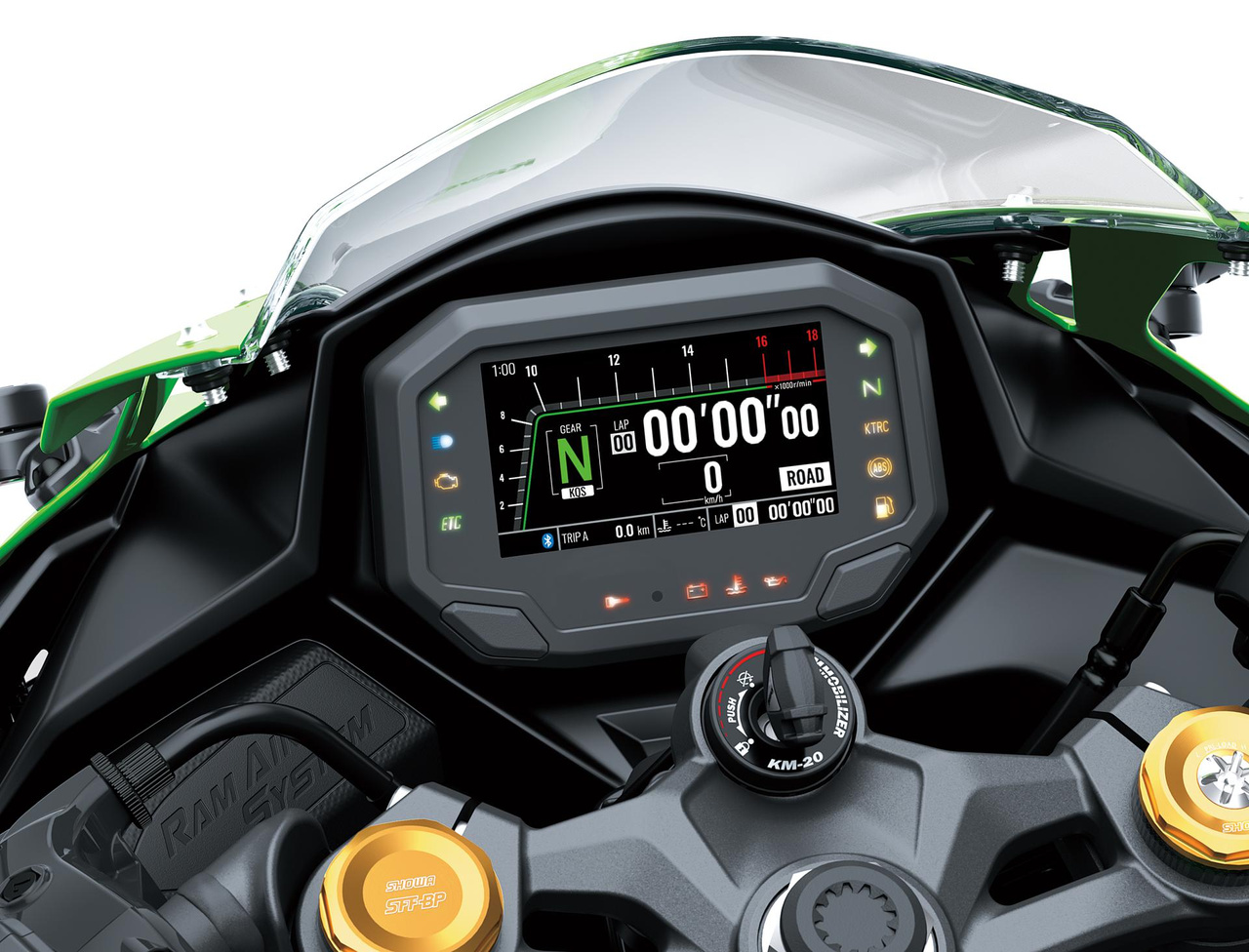
The ZX-4R is pretty well-equipped for a 400cc / small supersport:
- 4.3″ full-color TFT display, with a “circuit mode” view for track-like readouts.
- Smartphone connectivity via Kawasaki’s Rideology app.
- Riding modes + power modes: Allows you to tune throttle response.
- Traction Control (KTRC): 3 modes, helps with grip at high revs.
- Economical Riding Indicator: Supports more efficient riding.
Riding Experience
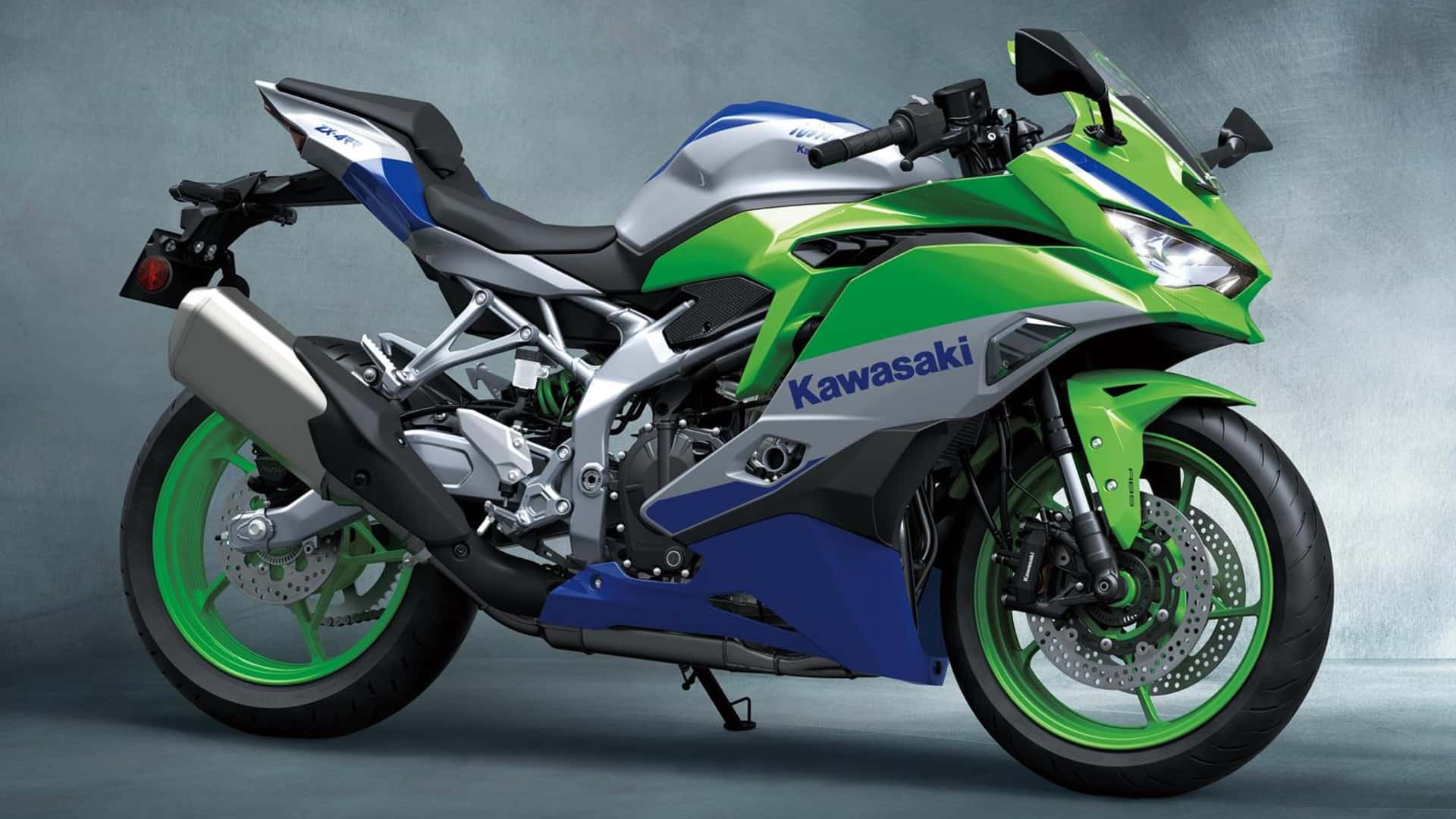
- High Rev Character: One of the biggest draws is the inline-four — it revs like a sportbike much more than typical 300–400cc twins or singles. Riders describe a “screamer” feel. (YouTube)
- Mid-Range & Top-End: While peak power is high in the RPM range, the back half of the rev band still feels usable; ram-air intake helps boost high-RPM performance for sport riding or track.
- Handling: The trellis frame + quality suspension mean the ZX-4R feels very planted, but still nimble — quite capable of carving corners.
- Comfort: Ergonomically, it’s sport-oriented. The seat height and aggressive chassis may be less comfortable for very long rides, but very usable for spirited road riding and short track days.
Real-World Feedback

From rider communities:
-
“400cc, 4 cylinders … shrieks!” — Riders love the high-rev thrill. (reddit.com)
- On tuning:
“Graves slip-on + ECU flash + DNA air-filter = great combo.” (reddit.com)
- On choosing between versions:
“If you’re not tracking, just get the 4R; the suspension difference on the RR isn’t worth it for street-only use.” (reddit.com)
Who Is the ZX-4R For?
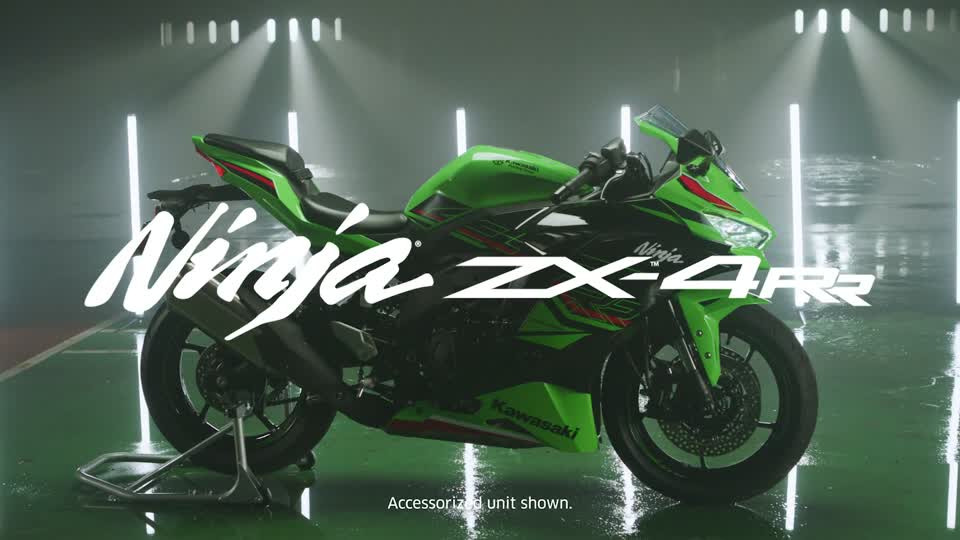
Great For:
- Riders who want supersport-level excitement in a smaller-displacement, more manageable bike.
- Track-day enthusiasts who want a 400cc “screamer” without going to 600+ cc.
- Experienced riders looking for a second “fun” bike that’s very rev-happy.
- Riders who appreciate the sound and character of an inline-four — very different feel than twin or single cylinders.
Less Ideal For:
- Absolute beginners: the high RPM nature and inline-four power delivery may be a lot to manage for someone totally new.
- Commuters prioritizing low-end torque: for city-focused low-speed riding, an inline-4 tuned for high RPM might not feel as strong.
- Riders on a tight budget: with its tech, 4-cylinder engine, and premium feel, maintenance and cost could be higher than entry-level bikes.
Kawasaki Ninja ZX-4R Specs
Engine: 399 cc liquid-cooled inline-four-cylinder
Power: ~77 hp @ ~14,500 rpm
Torque: ~29–30 lb-ft (~39 Nm) @ ~13,000 rpm
Transmission: 6-speed manual, chain drive
Weight (ready to ride): ~414 lbs (~188 kg)
Frame: High-tensile steel trellis/diamond-style frame
Suspension:
• Front: Inverted fork (37–41 mm) with SFF-BP internals, ~4.7 in travel
• Rear: Back-link horizontal shock w/ spring preload adjustment, ~4.4–5.0 in travel
Brakes:
• Front: Dual 290 mm semi-floating discs, radial-mount 4-piston calipers
• Rear: Single 220 mm disc
• ABS: Dual-channel
Electronics & Features:
• Riding modes & power mode selection
• Traction control
• TFT instrumentation / Smartphone connectivity (in higher trims)
• Assist & slipper clutch
Seat Height: ~31.5 in
Fuel Capacity: ~4.0 gal (≈15 L)
Wheelbase: ~54.3 in
Performance:
• Top Speed: ~120–125 mph (est.)
• 0–60 mph: Mid-4-second range
• Fuel Economy: ~45–55+ mpg (varies by market/conditions)
Options & Packages:
• Special editions with upgraded suspension, distinctive finishes
• Accessory options: quick shifter, frame protection kits, touring/luggage add-ons
• Colour/graphics variants including SE and RR trims
Pros & Cons
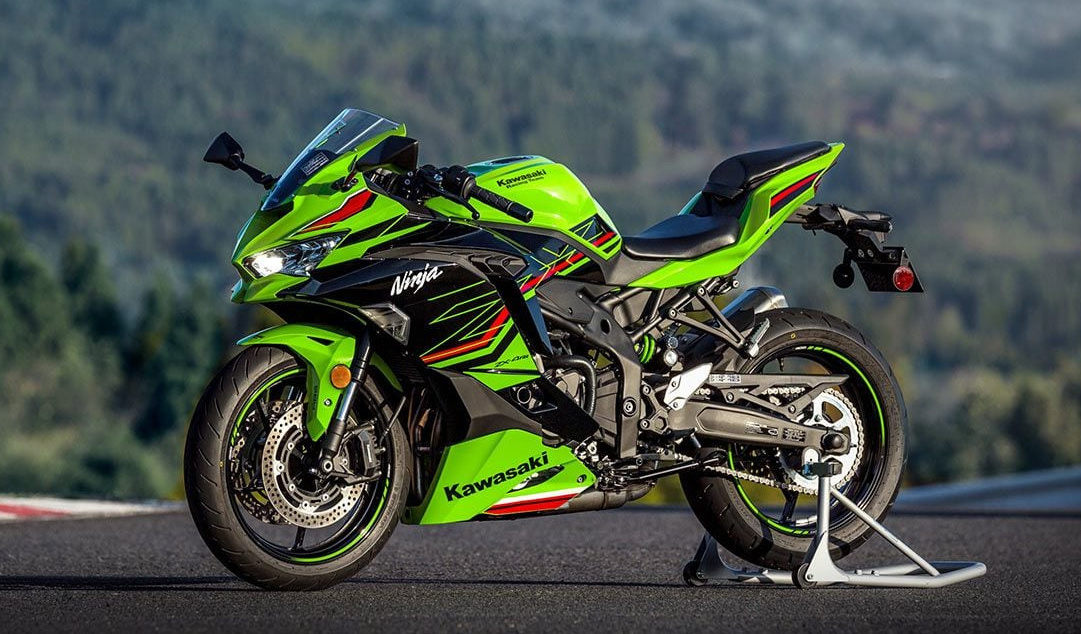
Pros:
- High-revving, exciting 4-cylinder engine
- Lightweight chassis with trellis frame gives very sporty handling
- Modern rider electronics (modes, traction control, TFT)
- Strong braking setup
- Good for both track and spirited street use
Cons:
- Less torque at very low RPM (compared to twins)
- Sporty ergonomics — not super relaxed for long-distance cruising
- Inline-4 maintenance / cost is likely more than simpler twin or single engines
- Stock exhaust / fueling might feel restrictive without modification
What’s the Ninja ZX-4RR?

- More Premium / Track-Focused Version
- The ZX-4RR is essentially a “higher-spec” version of the ZX-4R.
- It shares the same 399 cc inline-four engine, but adds more performance-oriented components.
- Slightly More Power
- The RR makes about 77 PS (or up to 80 PS with ram air on some markets) vs ~77 bhp / 37.6 Nm for the base 4R depending on region.
- According to Kawasaki EU spec, max torque hits 39 N·m.
- Upgraded Suspension
- The RR gets 37 mm USD forks (with preload adjustability) and a high-grade Showa BFRC lite rear shock with preload, compression, and rebound adjustability.
- This is a significantly more sophisticated suspension setup than the non-RR model. (Top Speed)
- Quickshifter & Electronics
- Comes with Kawasaki Quick Shifter (KQS) for both upshifts and downshifts in many markets.
- Rider aids: ABS, KTRC (traction control), power modes, and economical riding indicator.
- TFT display (4.3″) with selectable “Circuit Mode” helps when riding aggressively or on track.
- Chassis & Weight
- Uses a high-tensile steel trellis frame like the 4R.
- Seat height is 800 mm.
- Curb weight is ~188–189 kg.
- Styling / Aesthetics
- The RR often comes in KRT-style color schemes (Kawasaki Racing Team) for a more aggressive, race-inspired look.
- Ram-air intake design is more pronounced; contributes both to performance feel and aesthetics.
- Fuel & Economy
- Fuel capacity is 15.0 liters (larger than many small sport bikes), which helps for both commuting and spirited riding.
- According to Kawasaki, the high-revving 4RR can still be reasonably efficient with an economical riding indicator.
- Pricing
- According to Kawasaki’s US spec sheet, the 2024 ZX-4RR ABS MSRP was $9,499.
- The higher cost relative to the base 4R is justified by upgrades in suspension, quick shifter, and more high-spec parts.
Kawasaki ZX-4R vs ZX-4RR
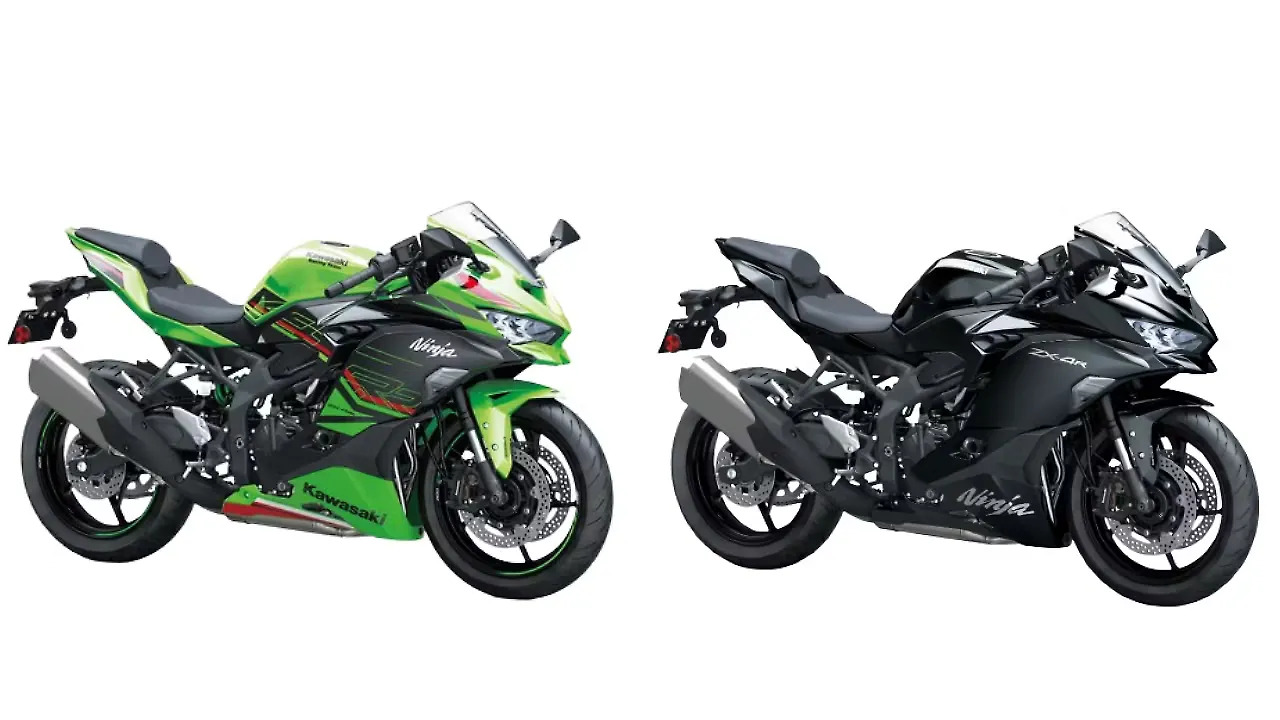
How the ZX-4RR Compares to the Standard ZX-4R…
- Performance: Slight bump in power + marginally more torque.
- Handling: Better suspension allows finer tuning, more confidence on the track.
- Comfort / Use: The 4RR is more “race-ready” — likely more appealing if you plan on pushing it harder or doing track days.
- Cost: Higher initial cost and potentially more expensive to maintain due to premium suspension and components.
- Value for Track Use: If you ride aggressively or want a “mini 600cc feel” with better suspension, the RR is very compelling. For casual street riding, the base 4R is probably more than enough.
Who Should Consider the ZX-4RR?
- Riders looking for a small-displacement supersport but don’t want to compromise on performance hardware.
- Track-day enthusiasts who want a 400cc inline-4 with real suspension adjustability and quick-shifting.
- Those who like Kawasaki’s racing styling / KRT graphics and want the bike to look as track-focused as it rides.
- Sport riders who are okay with a slightly higher price for better parts and performance.
Kawasaki Ninja ZX-4R vs. Its Main Rivals
The ZX-4R sits in a strange but exciting niche: a 400cc inline-four supersport in a world dominated by twins and singles. Here’s how it stacks up.
1. Kawasaki Ninja ZX-4R vs. Aprilia RS 457
What They Are:
- ZX-4R: High-revving 399cc inline-four supersport; track-oriented, premium components.
- RS 457: Modern, lightweight 457cc parallel twin with great electronics and approachable ergonomics.
How They Compare
| Category | ZX-4R | RS 457 |
|---|---|---|
| Engine | Inline-4 (unique in class) | Parallel twin |
| Character | Screamer, high-RPM power | Strong low/mid torque, friendlier |
| Power | Higher peak hp | Slightly lower but torquier |
| Weight | Heavier | Very light |
| Electronics | Advanced rider modes, TC | Surprisingly strong tech for price |
| Riding Position | Aggressive | Sporty but more comfortable |
| Price | Higher | More accessible |
Verdict
The ZX-4R is for riders who want pure supersport thrills.
The RS 457 is for those who want a modern, agile, tech-forward sportbike that’s easier to live with daily.
2. Kawasaki Ninja ZX-4R vs. KTM RC 390
What They Are
- ZX-4R: Premium, high-rev, inline-four supersport.
- RC 390: Lightweight, sharp-handling single-cylinder sportbike with tons of character and user-friendly torque.
How They Compare
| Category | ZX-4R | RC 390 |
|---|---|---|
| Engine | Screaming inline-4 | Punchy single |
| Power Delivery | High RPM, needs revving | Instant torque, city-friendly |
| Weight | Significantly heavier | Light and flickable |
| Handling | Stable, planted | Razor-sharp and nimble |
| Maintenance | Higher | Lower |
| Price | Much higher | Budget-friendly supersport option |
Verdict
The RC 390 is more accessible and extremely agile — perfect for smaller riders, beginners looking to grow, and track-day amateurs.
The ZX-4R is for riders wanting a small-displacement superbike that behaves like a mini ZX-6R.
3. Kawasaki Ninja ZX-4R vs. Yamaha YZF-R7
What They Are:
- ZX-4R: High-strung inline-4 that behaves like a true supersport.
- R7: Middleweight twin built more for real-world torque than top-end horsepower.
How They Compare
| Category | ZX-4R | R7 |
|---|---|---|
| Power | Similar peak hp depending on market | Stronger real-world torque |
| Riding Style | Track-focused, rev-happy | Sporty but more usable daily |
| Weight | Lighter | Heavier (600-class size) |
| Components | Premium brakes & suspension | Also very good but calmer |
| Price | High for its displacement | Middleweight pricing |
Verdict
The R7 is better for everyday riding and torque-driven corners.
The ZX-4R offers a more exhilarating top-end and race-bike personality.
4. ZX-4R vs. Yamaha R3 & Ninja 500
While not “rivals” in the same performance class, many buyers cross-shop them:
Yamaha R3
- Much cheaper, lighter, friendlier
- Twin-cylinder with modest power
- Better for beginners; nowhere near ZX-4R performance
Kawasaki Ninja 500
- Affordable, torquey, and very beginner-friendly
- Great commuter and first sportbike
- Not comparable to ZX-4R in speed or handling
Overall Comparison Summary
| Bike | Strengths | Ideal Rider |
|---|---|---|
| Kawasaki ZX-4R | Screaming inline-4, premium brakes/suspension, track-ready | Riders wanting mini-supersport thrills; experienced riders |
| Aprilia RS 457 | Lightweight, modern electronics, balanced twin | Newer riders or those wanting a modern, forgiving sportbike |
| KTM RC 390 | Ultra-nimble, torquey single, affordable | City riders, track beginners, lightweight sport fans |
| Yamaha R7 | Strong midrange, practical yet sporty | Street-focused sport riders wanting torque & stability |
| Yamaha R3 / Ninja 500 | Very user-friendly, cheaper, lighter | First-bike shoppers or commuting riders |
ZX-4R: Final Verdict
The Kawasaki Ninja ZX-4R is one of the few bikes that really brings a miniaturized supersport experience. It doesn’t feel like a small sport bike — it feels like a real sport bike, but compact.
If you want a thrilling ride with a screaming engine, great handling, and more sophistication than your typical 300–400cc bike, the ZX-4R is a standout. It’s not for everyone — but for the right rider, it’s a very smart pick.


