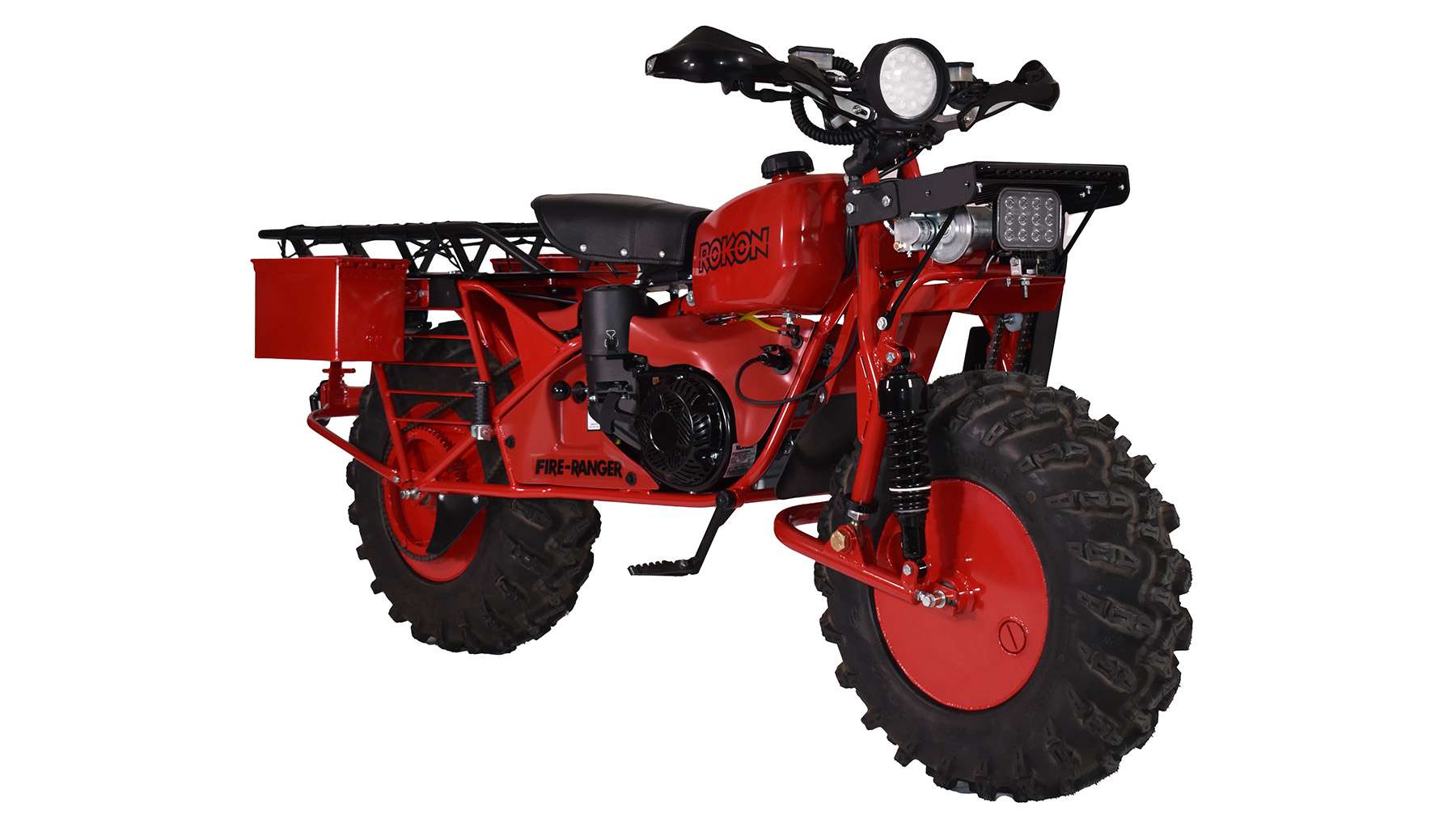
 Full-time two-wheel drive. 15 inches of ground clearance. A 2,000-pound towing rating. And a rescue trailer designed to carry an injured patient out of terrain too narrow for a conventional ATV…
The Rokon Trail-Breaker has spent more than six decades doing jobs most motorcycles were never designed to perform. Hunters use them to retrieve game, trail crews haul equipment with them, farmers put them to work around remote property, and first responders have discovered that the little two-wheel-drive motorcycles can reach places where larger off-road vehicles simply will not fit. Eventually, Rokon decided to build a version specifically for that last group.
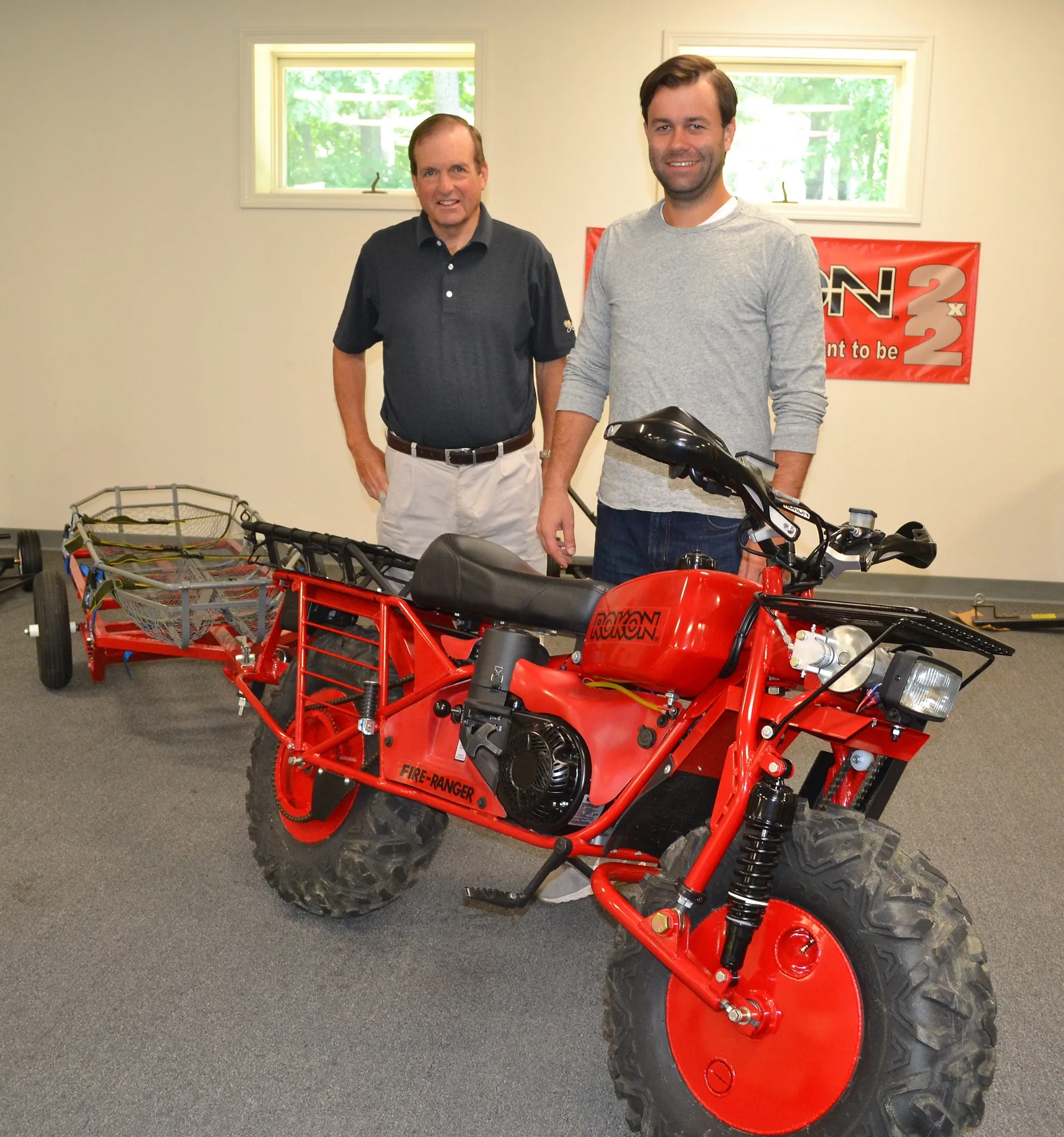
Introduced in 2024, the modern Rokon Fire-Ranger package takes the company’s 208cc Trail-Breaker and turns it into a purpose-equipped search-and-rescue machine. It retains full-time drive to both wheels, enormous low-pressure tires, 15 inches of ground clearance, and the ability to ford two feet of water, then adds extra storage, improved lighting, hand protection, upgraded radial tires, and towing hardware designed around an optional patient-carrying rescue trailer.
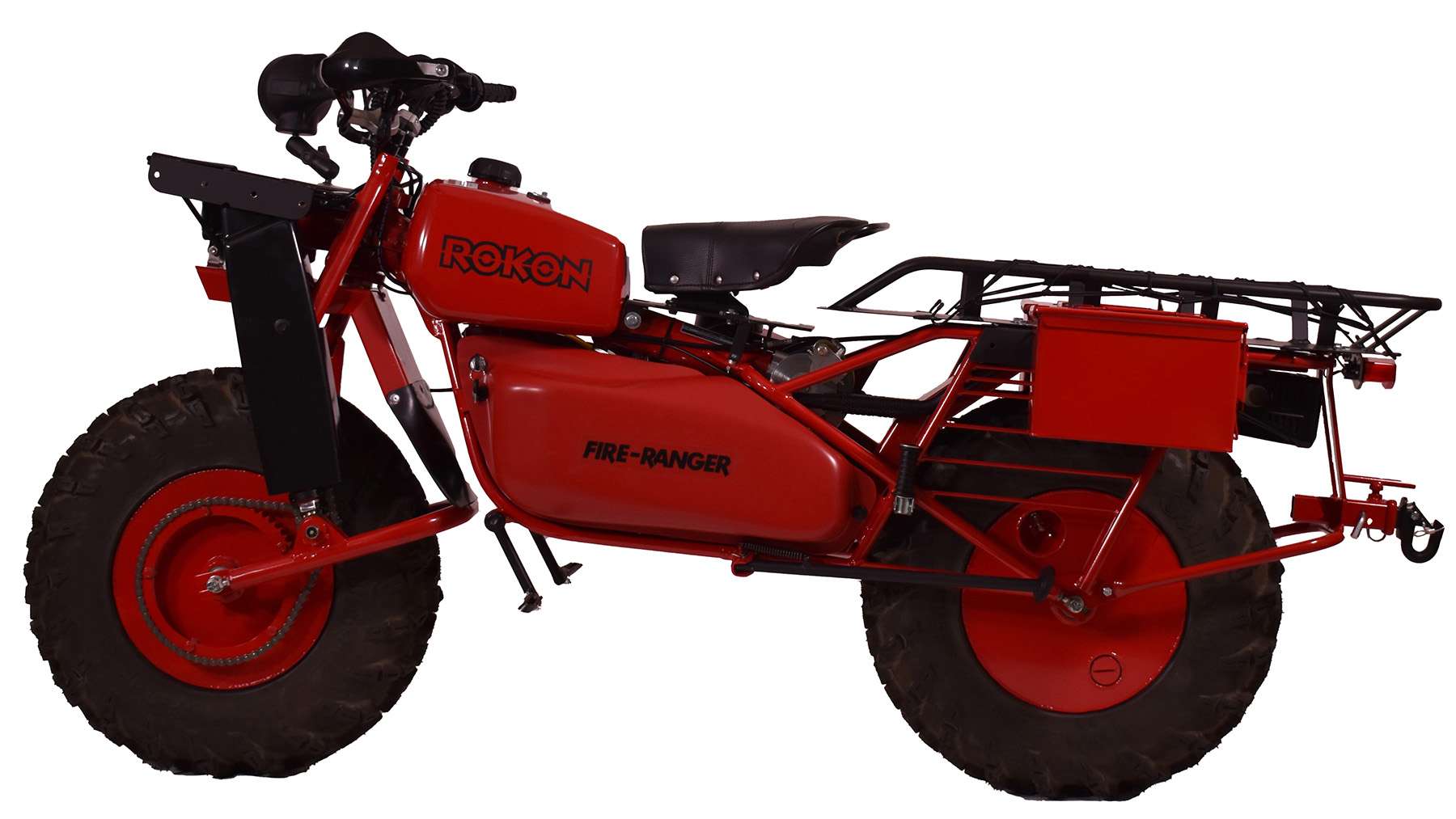
Despite the name, the Fire-Ranger is not primarily a firefighting motorcycle in the sense of carrying a pump, hose, or onboard fire-suppression system. Its real specialty is getting first responders and equipment into difficult terrain — and getting an injured person back out.
Born from an Existing Rescue Tool
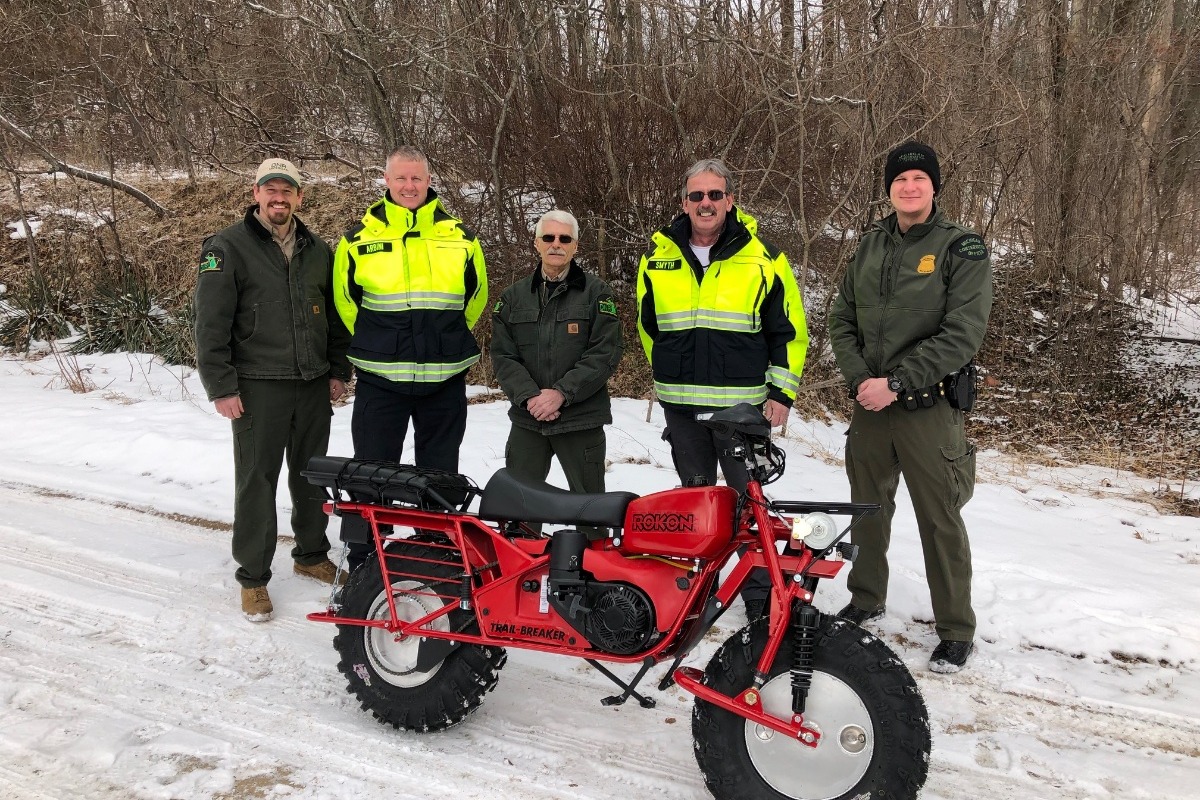
Rokon did not invent the Fire-Ranger use case in 2024. Emergency services had already discovered the basic Trail-Breaker’s usefulness years earlier. Its narrow width allows it to negotiate hiking and mountain-bike trails that may be inaccessible to side-by-sides, conventional ATVs, ambulances, or utility vehicles. Its low gearing and two-wheel drive allow it to crawl over steep, loose, or muddy terrain without requiring much speed.
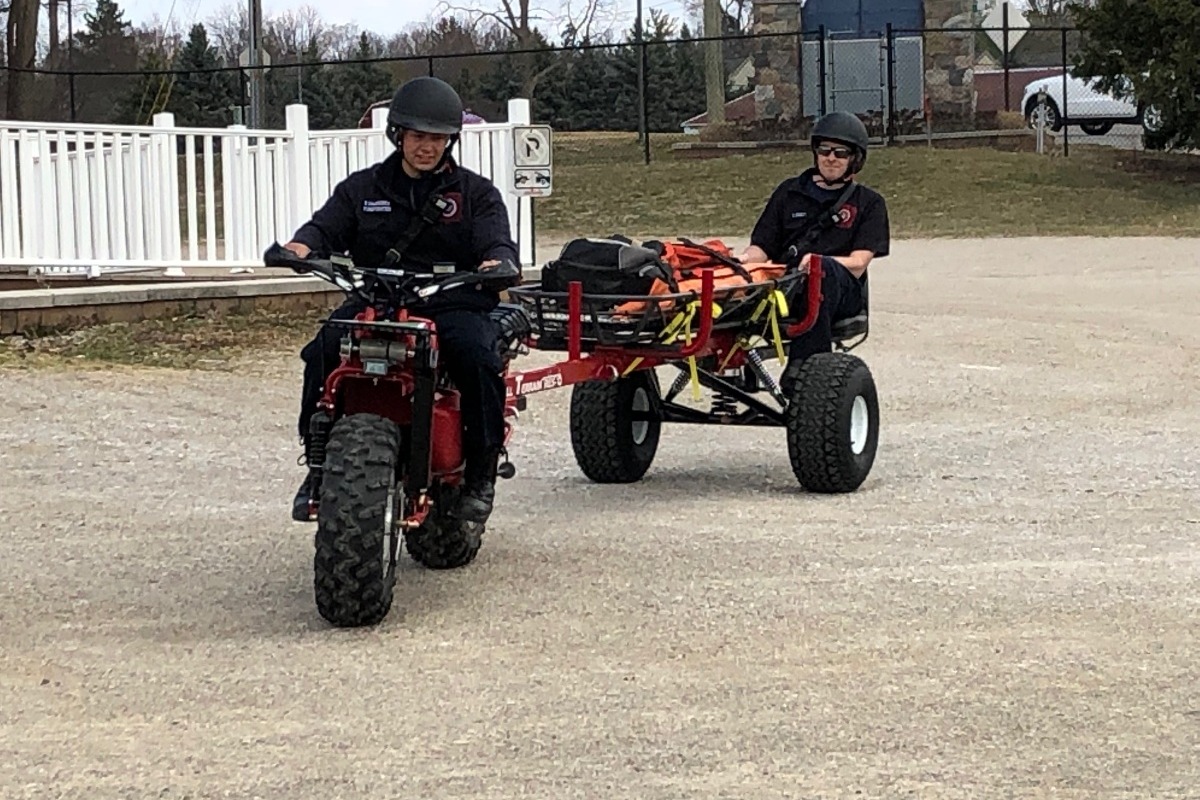
Fire departments were already pairing Rokons with rescue trailers before the factory Fire-Ranger existed. In 2019, for example, Michigan’s Chelsea Area Fire Authority purchased a Rokon and rescue trailer specifically to reach injured people in the Waterloo and Pinckney recreation areas. The department expected the equipment to substantially reduce the time required to extract patients from remote trails.
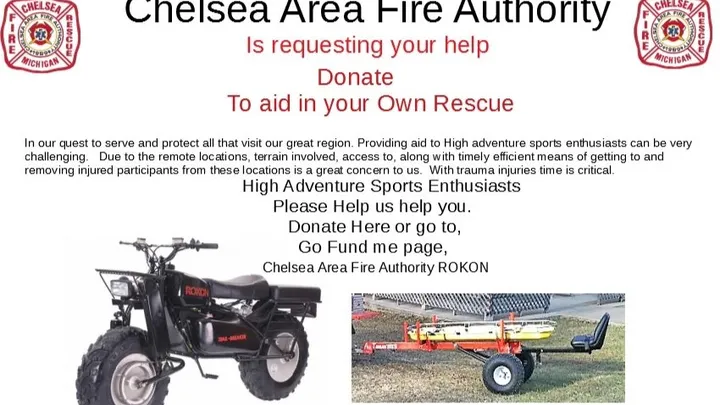
Rokon says it saw similar applications elsewhere. First responders were buying the motorcycles and developing their own towing and rescue arrangements, so the company created a dedicated package around the work they were already doing. The result was the Fire-Ranger.
A Trail-Breaker Underneath
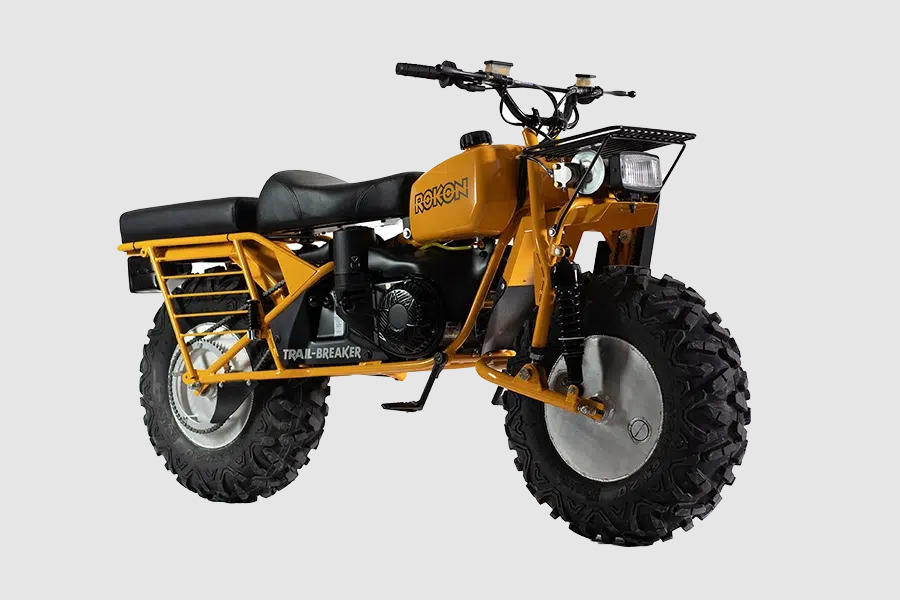
Mechanically, the Fire-Ranger begins with Rokon’s Trail-Breaker rather than introducing a new motorcycle platform. That means a 208cc Kohler air-cooled four-stroke single producing 7 horsepower at 3,600 rpm and 9.1 lb-ft of torque at 2800 rpm. Those figures seem tiny compared with almost any contemporary off-road motorcycle, but the Rokon is designed around gearing and traction rather than horsepower.
An automatic torque converter feeds a three-range transmission. First gear covers approximately 0-10 mph, second extends to 20 mph, and third takes the motorcycle to around 35 mph.
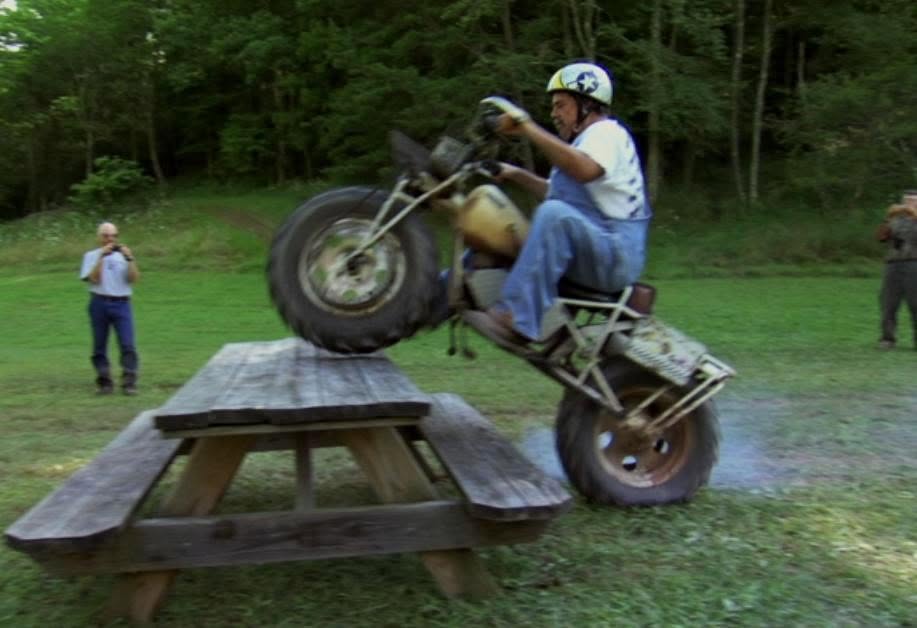
For rescue work, first gear may be the most important. The ability to move extremely slowly while maintaining drive at both wheels lets the rider negotiate rocks, roots, mud, snow, steep grades, and narrow trails without relying on momentum. When the cargo behind the motorcycle happens to be an injured person, controlled low-speed movement matters far more than top speed.
Full-Time Two-Wheel Drive
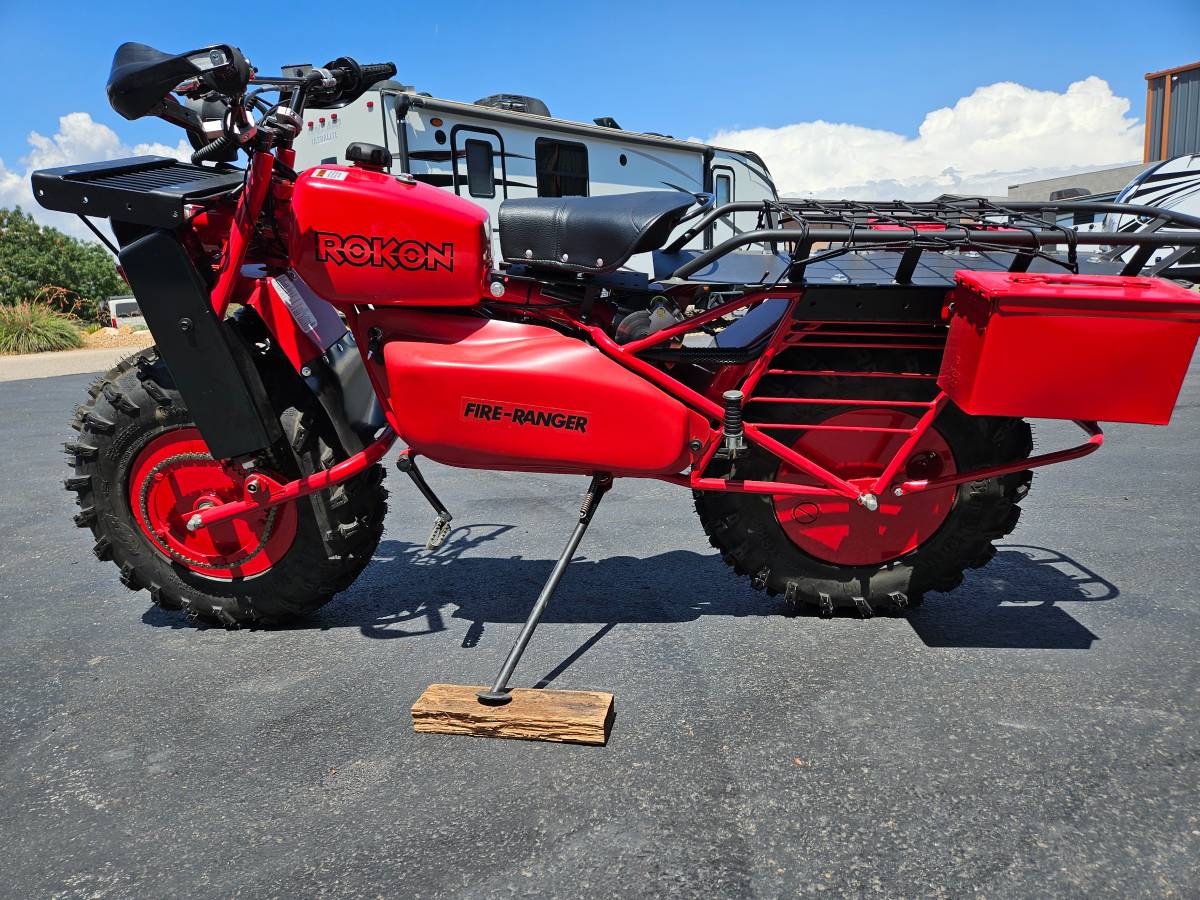
The drivetrain remains the defining feature. Power goes to the rear wheel while a mechanical driveline also carries torque forward through the center of the motorcycle. A universal joint allows the front end to steer, while a gearbox and chain transmit power to the front wheel. Both tires therefore contribute to propulsion.
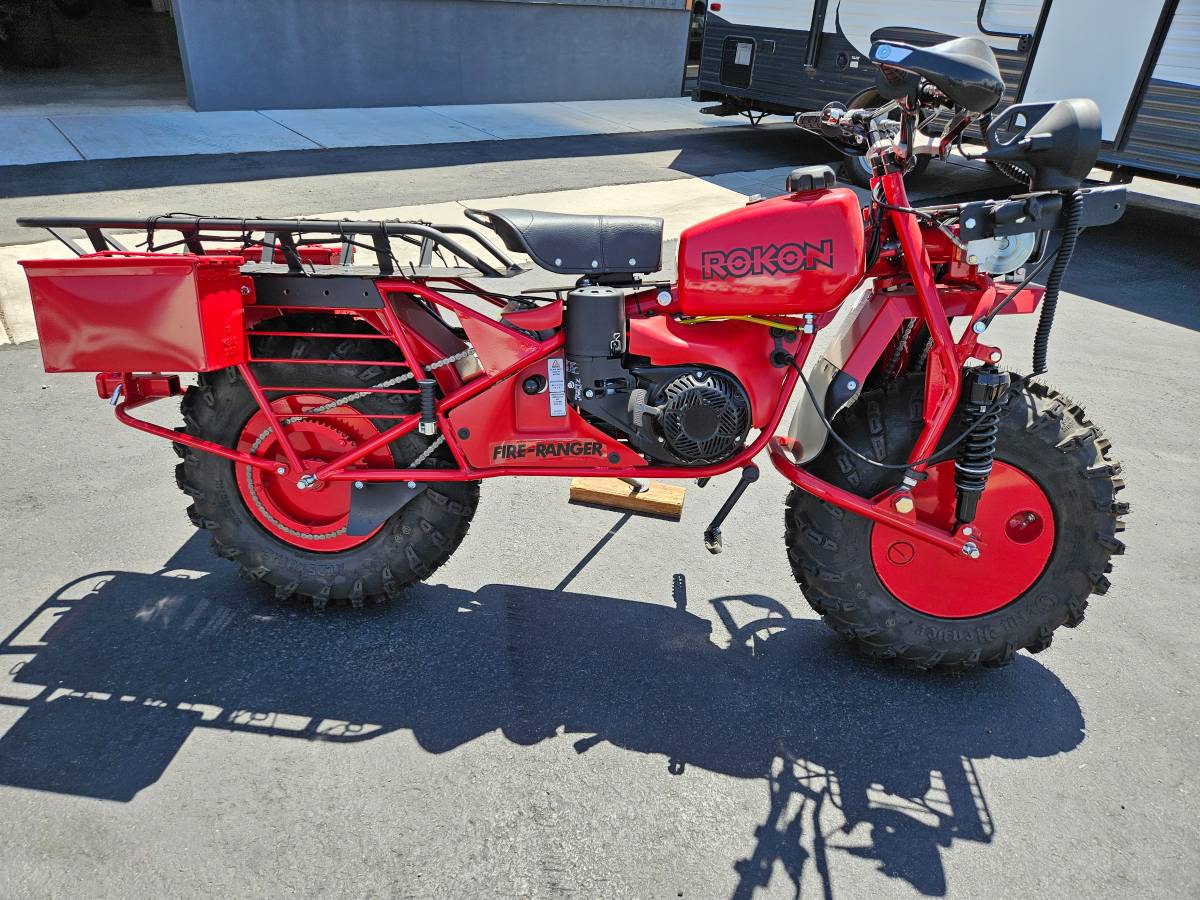
That is particularly useful on steep or low-traction surfaces because the rear tire does not have to transmit all of the engine’s torque by itself. If one end of the motorcycle encounters poor footing, the other may still be able to pull or push the machine forward. The system also contributes to the unusual stability for which Rokons are known at very low speed.
Rokon rates the Fire-Ranger for a 60-percent grade and gives it 15 inches of ground clearance. Its large 25 x 8 x 12-inch tires spread the load over a much greater area than conventional dirt-bike tires, helping the bike stay on top of soft ground instead of cutting deeply into it. For a search-and-rescue vehicle, those characteristics are more relevant than acceleration or suspension performance at speed.
The Real Party Trick: The Rescue Trailer
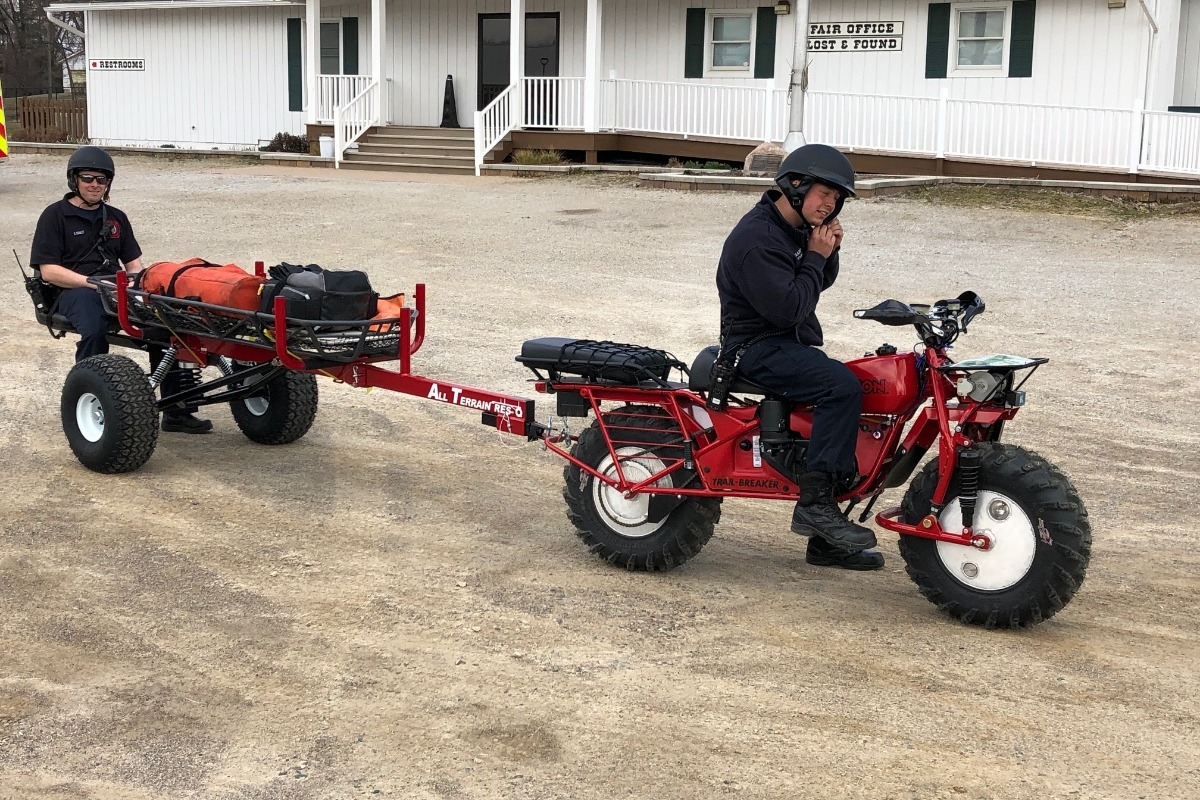
The most important Fire-Ranger accessory may be the optional Rescue-Utility Trailer. The trailer was developed specifically to extract injured hikers, mountain bikers, and other patients from narrow trails. In rescue configuration, a standard litter can be secured to the trailer frame using six tie-down points. The trailer itself is only 36 inches wide at the wheels, preserving one of the Rokon’s greatest advantages over larger off-road vehicles.
Its hitch is especially interesting. The Fire-Ranger uses a receiver tow bar with a pintle-style insert that connects to a lunette on the trailer. The arrangement allows substantial articulation between motorcycle and trailer as the two vehicles cross uneven ground. More importantly, the bike and trailer can rotate independently. If the Rokon falls onto its side, the trailer does not necessarily fall with it. The patient can remain upright and secured while the rider recovers the motorcycle.
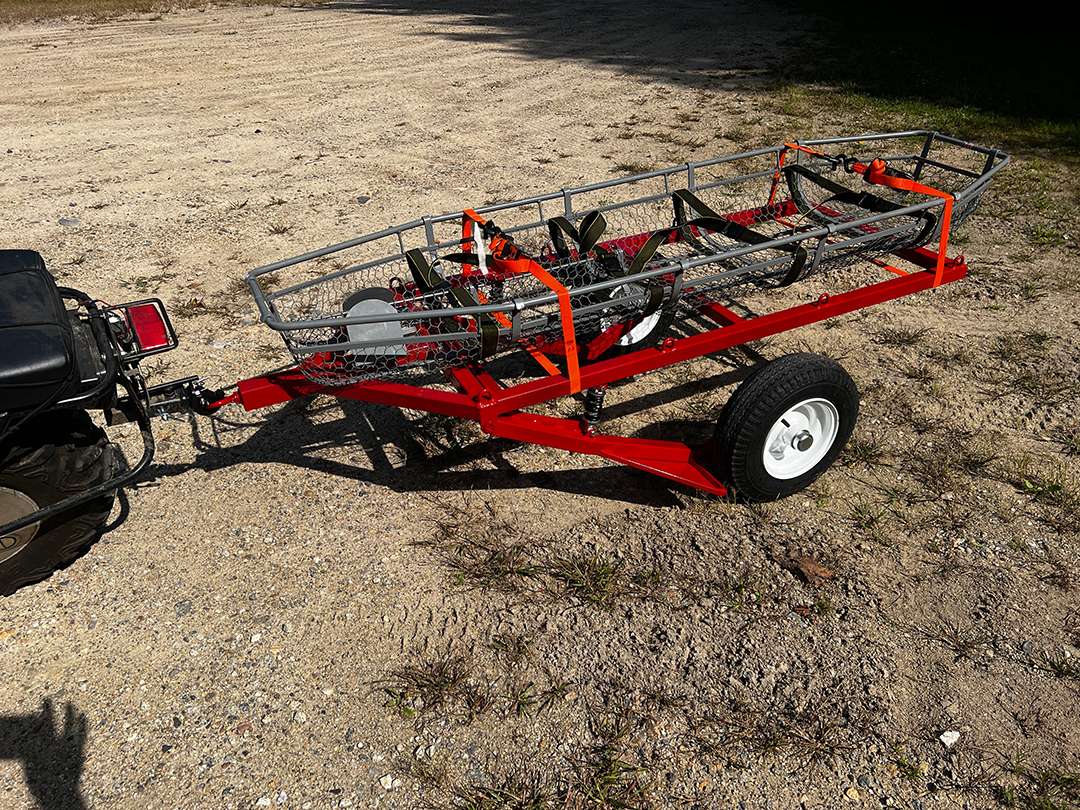
That’s a small mechanical detail with obvious importance when the load being towed is a person with an injury.
300 Pounds Behind a 7-HP Motorcycle
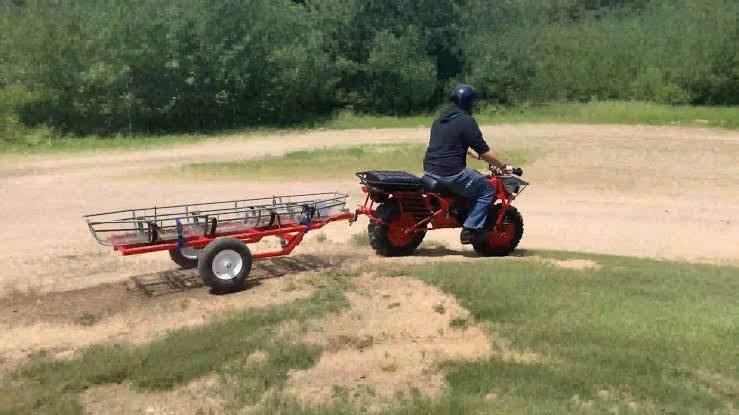
The Rescue-Utility Trailer itself weighs about 50 pounds and is rated to carry up to 300 pounds. In rescue form, its job is carrying a litter and patient. Rokon also offers a flat deck that converts it into a utility trailer, while optional side panels create an enclosed cargo basket. That modularity matters because a rescue team going into the backcountry may need to carry medical equipment on the outbound trip before transporting the patient on the return.
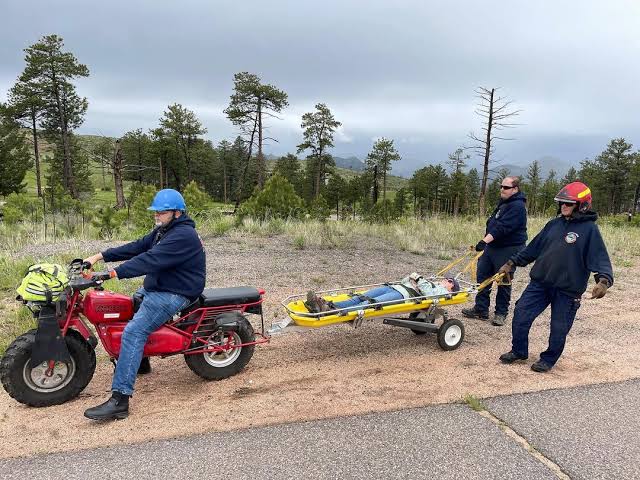
The Fire-Ranger’s broader towing capacity is even more surprising. Rokon rates the underlying motorcycle to tow as much as 2000 pounds under appropriate conditions. That figure should not be mistaken for the rating of the patient trailer, which remains 300 pounds. Nor does it mean a seven-horsepower motorcycle is intended to tow a ton at road speed.
The rating reflects the enormous mechanical advantage available through the Rokon’s low gearing and its ability to put torque through both wheels. Again, the Trail-Breaker behaves more like a small tractor than a conventional motorcycle.
More Storage Than Any Other Rokon
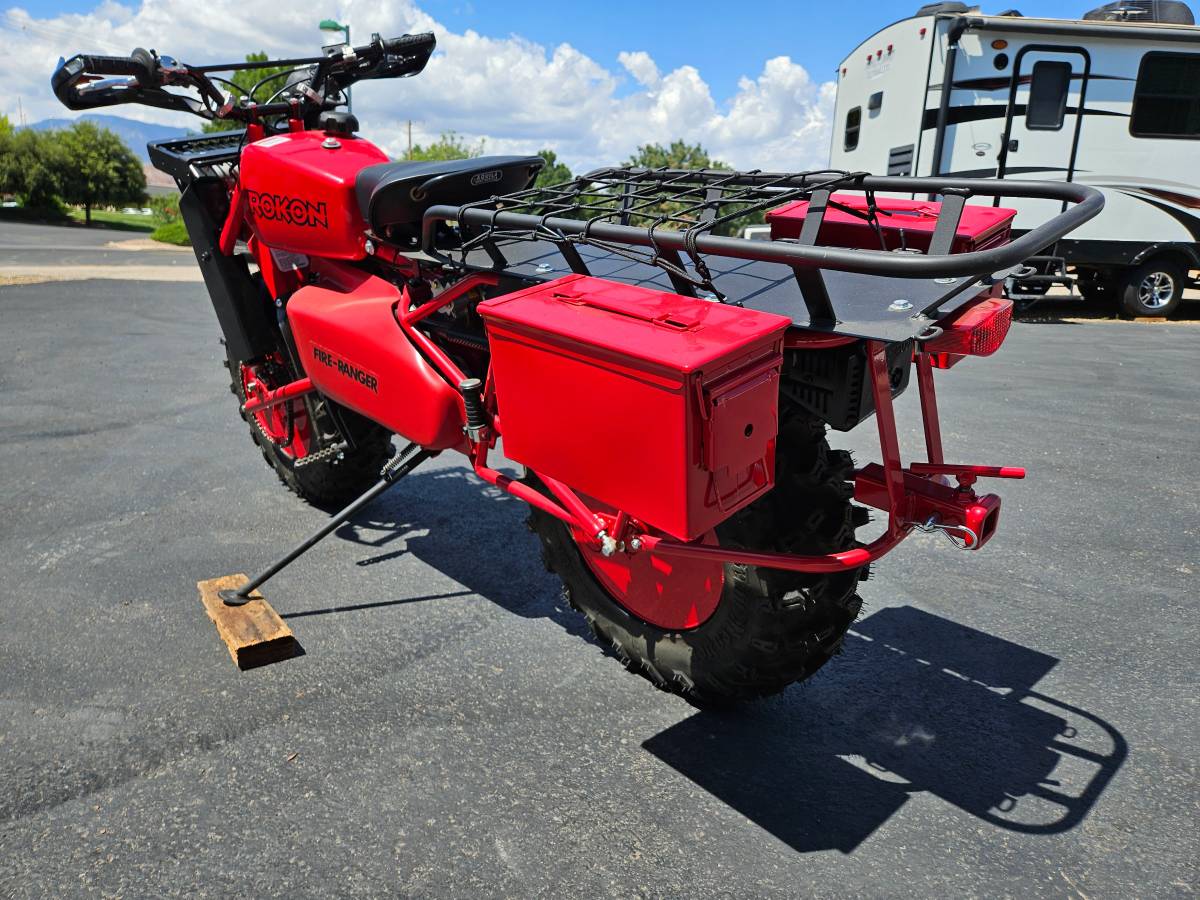
The Fire-Ranger package also addresses another obvious rescue problem: where do you put the equipment? Rokon replaces the conventional seat arrangement with its Retro Front Seat, opening space for an extended rear cargo rack.
Universal Accessory Rails are installed at both ends of the motorcycle, allowing bags, boxes, tools, lighting, and other accessories to be attached or repositioned as required. The standard Fire-Ranger package also includes a pair of metal ammunition-style storage cans mounted through the accessory-rail system.
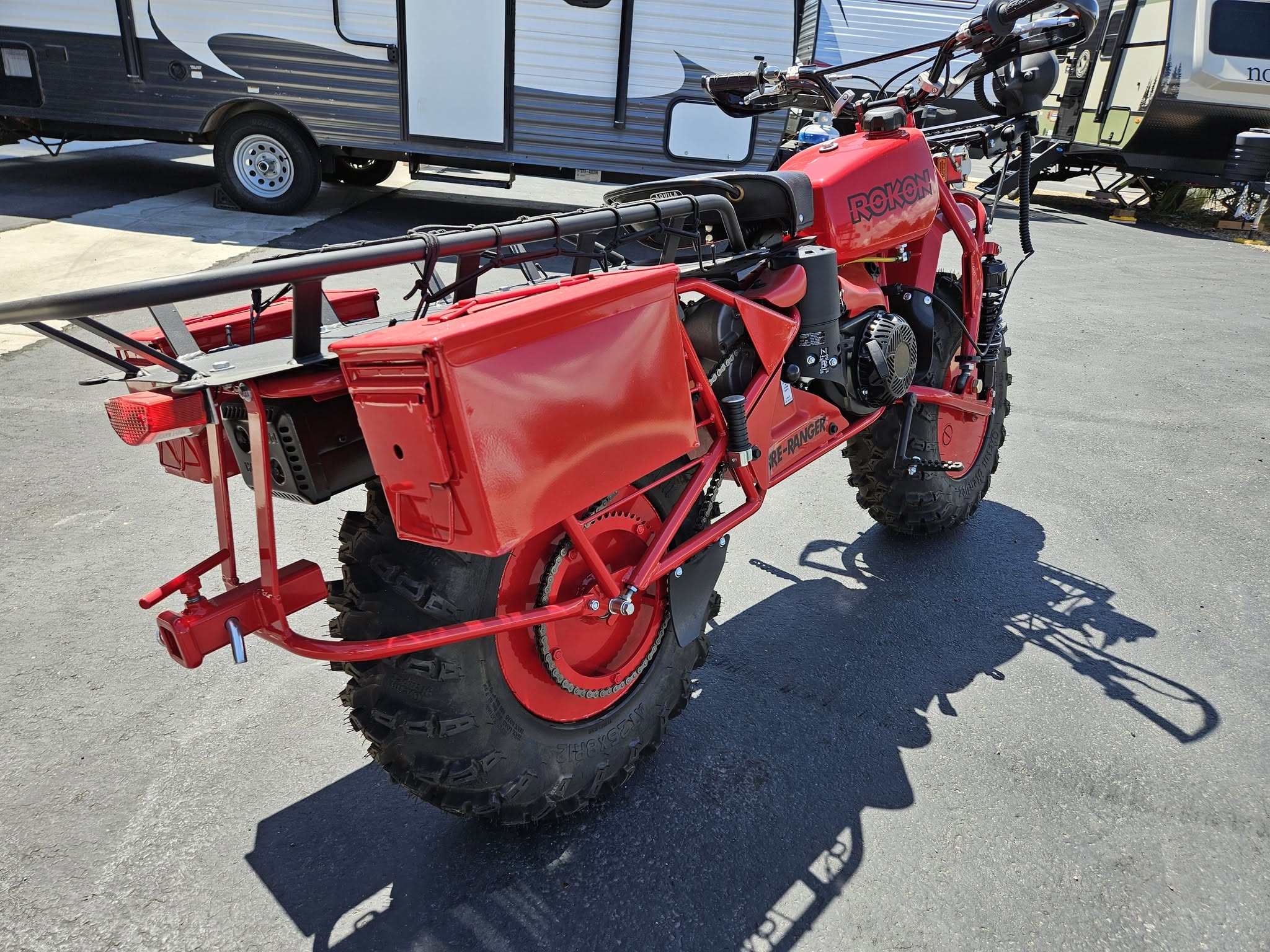
Rokon describes it as having more storage capacity than any of its other factory packages. That makes sense for a vehicle intended to carry medical supplies, recovery equipment, tools, water, communications gear, or other first-responder equipment into remote areas.
Lighting for Work, Not Just Riding
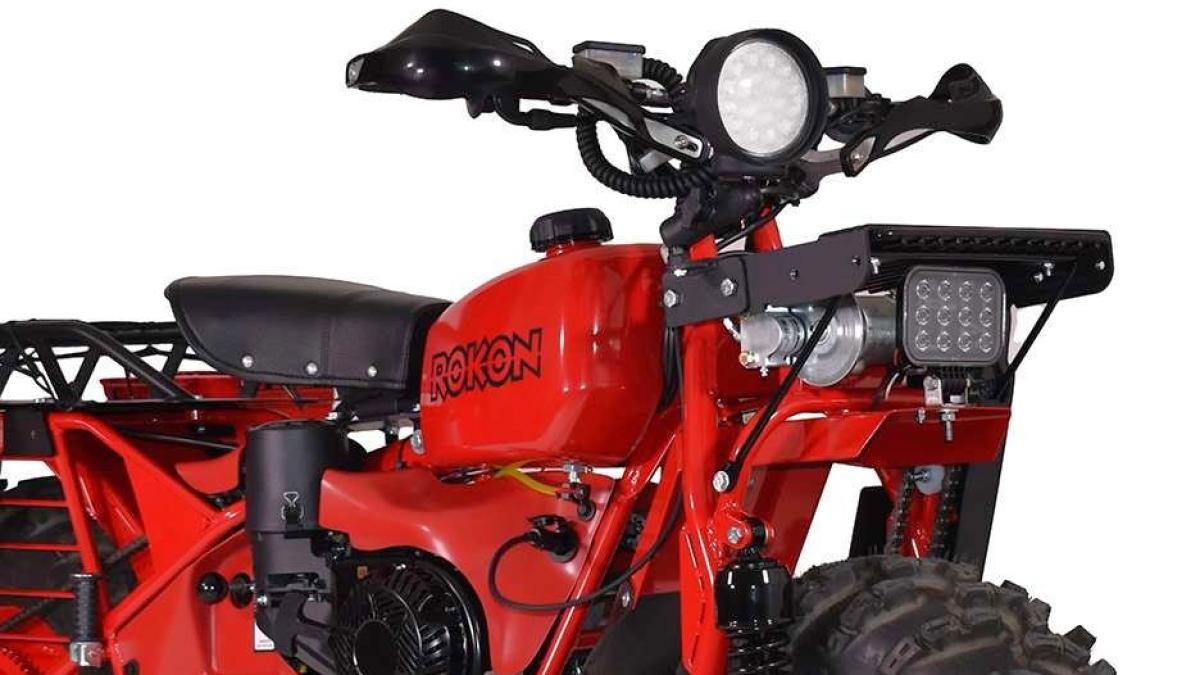
Standard lighting is upgraded as well. The Fire-Ranger receives an LED headlight for riding after dark, along with a separate movable LED work light mounted to the accessory rail. The spotlight can be repositioned to illuminate a patient, equipment, trail obstacle, or work area instead of simply pointing wherever the front wheel happens to be aimed.
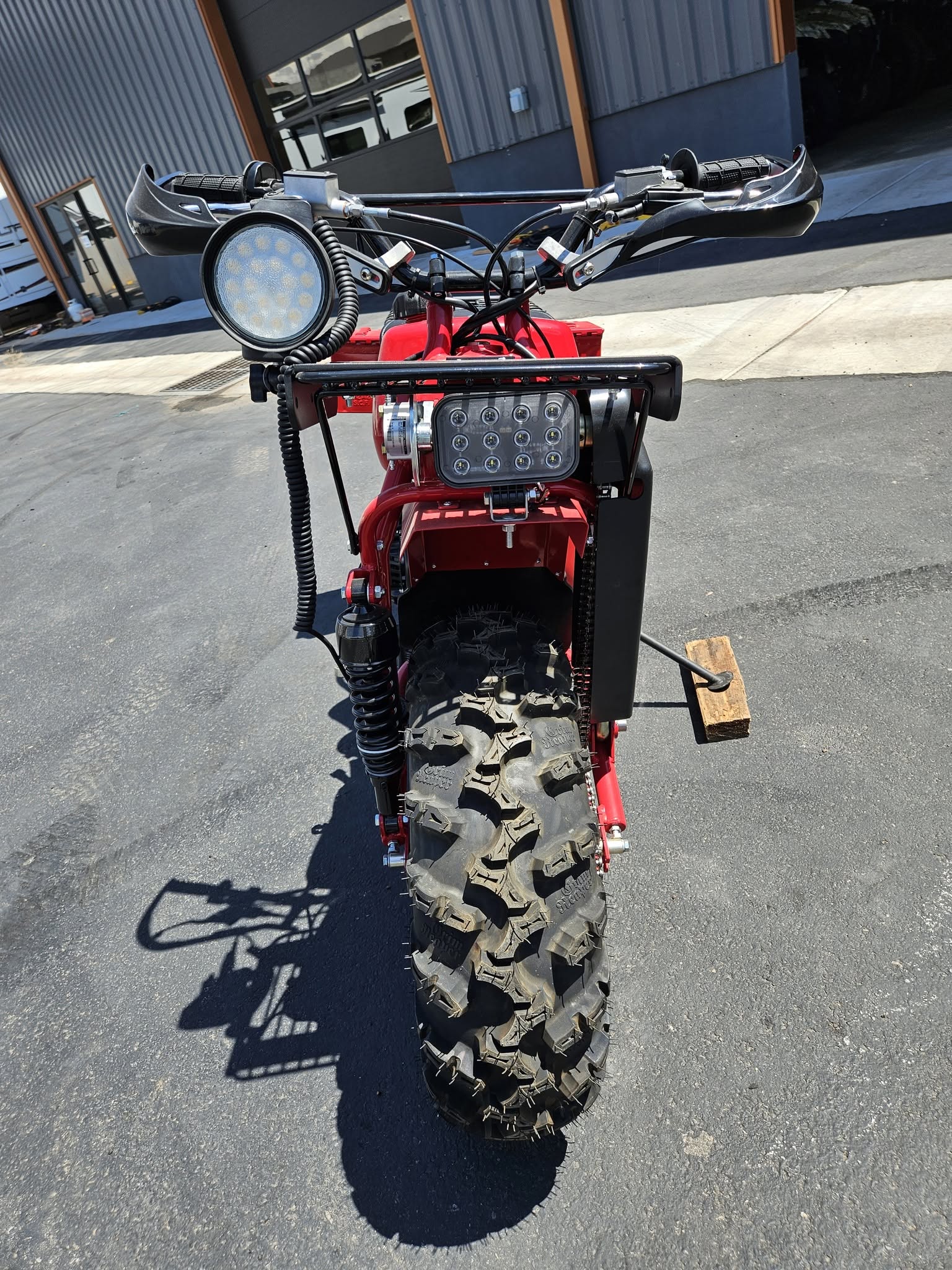
A 12-volt power point supplies accessories. Brush guards protect the rider’s hands and, just as importantly, the brake levers from branches and impacts on tight trails. The changes are not glamorous, but they illustrate the difference between building a motorcycle for recreation and equipping one as a tool.
Radial Tires for “Maximum Traction”
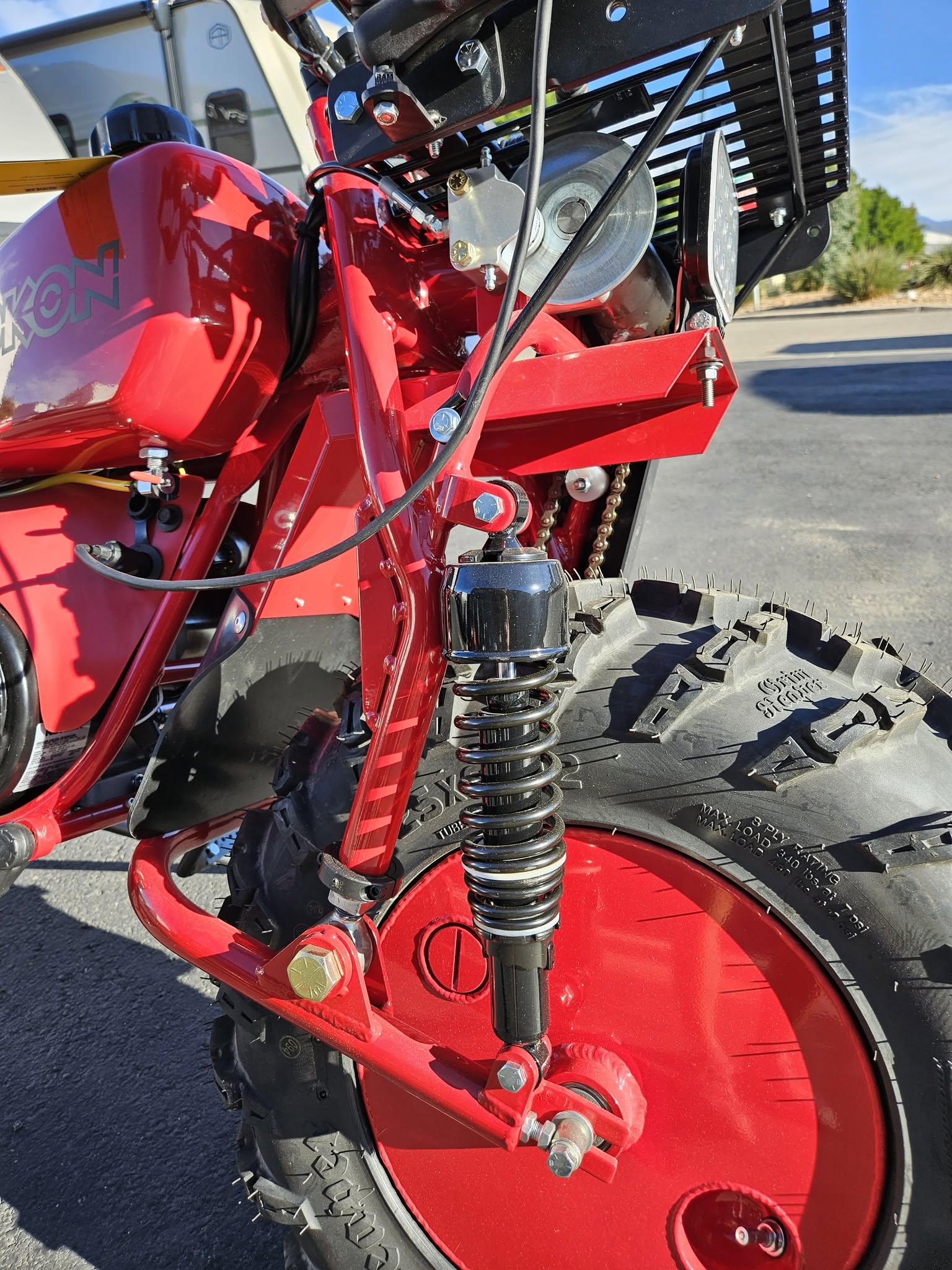
The Fire-Ranger also receives upgraded radial tires, which Rokon says provide maximum traction. They retain the same enormous 25-inch diameter and 8-inch width that define the Rokon’s appearance. At the very low pressures used off-road, the broad tires conform to uneven terrain and create a large contact patch on mud, sand, snow, rocks, and roots.
They also perform some of the work normally handled by suspension. The Trail-Breaker uses Rokon’s AutoGrab front suspension but retains a rigid rear end. With a motorcycle designed primarily for low-speed operation, the compliance of those large tires becomes an important part of the effective suspension system.
Rokon lists the dry weight of the Trail-Breaker platform at just 218 pounds. The fully equipped Fire-Ranger will necessarily weigh more once racks, storage boxes, lights, tow hardware, and other accessories are installed, though Rokon does not publish a separate ready-to-use weight for the complete package.
Hollow Wheels Still Serve Two Jobs
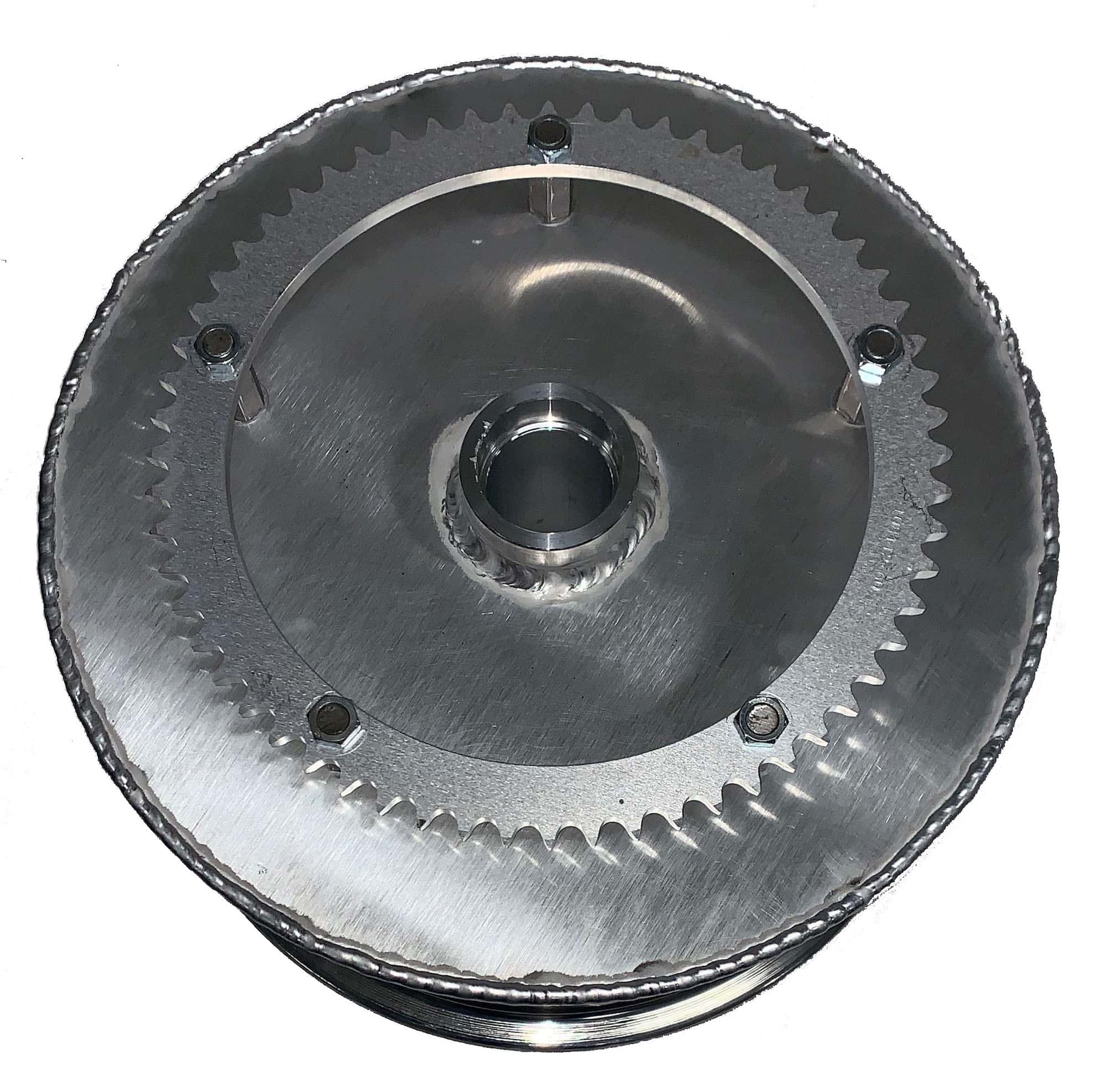
Like the regular Trail-Breaker, the Fire-Ranger retains Rokon’s distinctive hollow aluminum drum wheels. Those sealed drums can be used to carry additional fuel or water — up to 2.5gallons per wheel or 5 gallons combined — or left empty to provide additional buoyancy. The motorcycle itself can float when configured appropriately, although it is not an amphibious vehicle capable of propelling itself across open water.
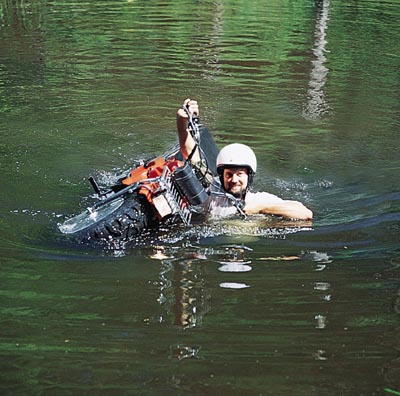
For normal riding, Rokon rates the machine to ford water up to 24 inches deep. That combination could have practical value in rescue situations involving flooded trails, stream crossings, marshy terrain, or areas where conventional wheeled vehicles cannot safely travel.
Why Not Just Use an ATV?
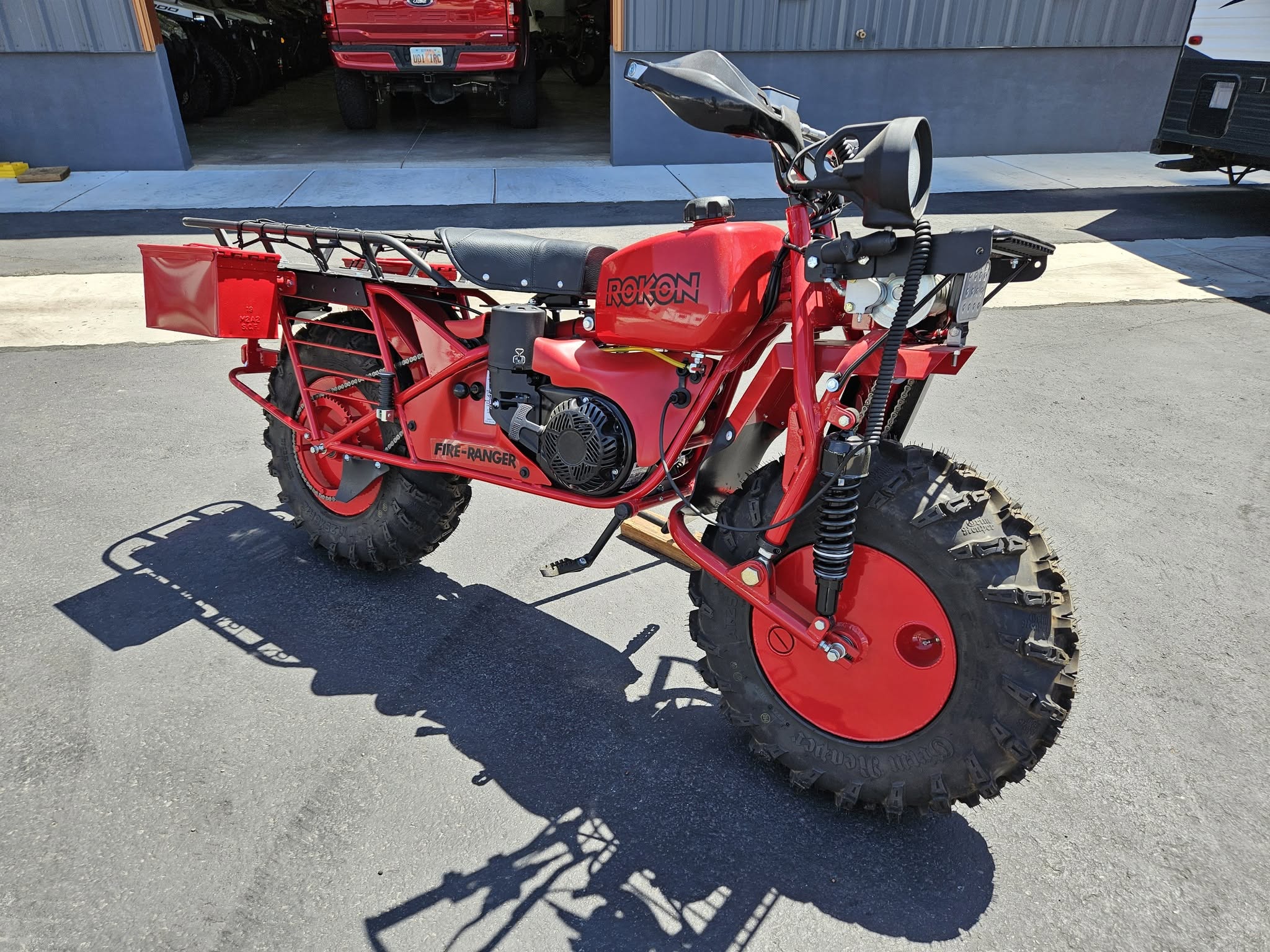
A four-wheel ATV or side-by-side can carry more equipment and may provide greater stability in many circumstances. The Rokon’s advantage is size. The Fire-Ranger is only about 32 inches wide without the trailer, narrower than many hiking trails and dramatically narrower than most side-by-sides.
It also weighs a fraction of what a utility UTV does. That makes it easier to maneuver through trees, around rocks, over narrow bridges, and along single-track trails where a conventional emergency vehicle cannot physically go. If the rider reaches a section that cannot be ridden, a 218-pound base motorcycle is also far easier for several rescuers to reposition manually than a 1500-pound side-by-side.
So the Fire-Ranger isn’t a replacement for every other rescue vehicle. It fills the gap between arriving on foot and bringing in something much larger.
The Original Fire-Ranger Actually Fought Fires
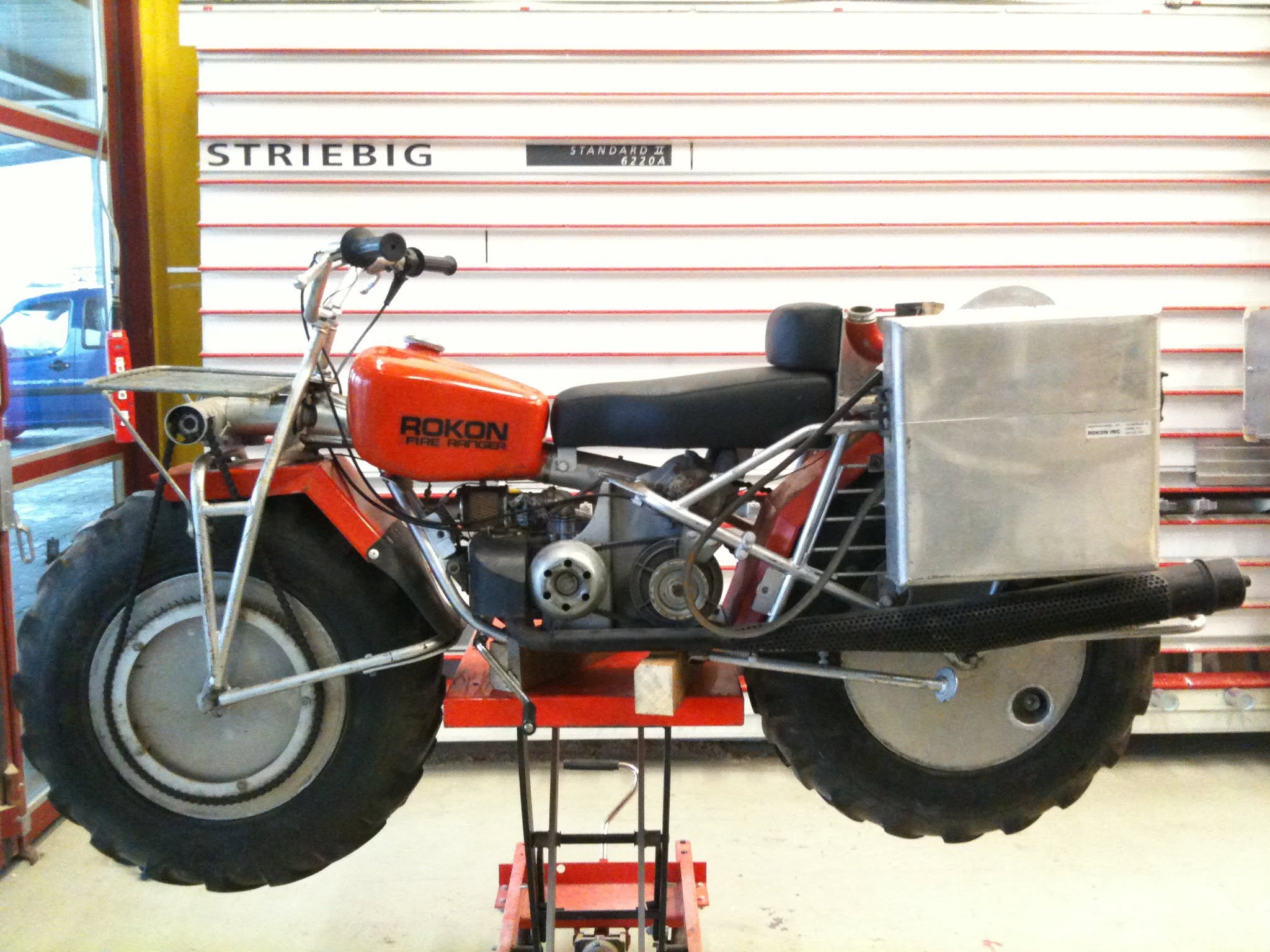
The Fire-Ranger name is actually much older than the current search-and-rescue model — and the earlier version really was intended for firefighting. Rokon offered a Trail-Breaker-based Fire-Ranger equipped with a portable fire pump for use by state forestry personnel. Rokon parts catalogs continued to list firefighting equipment including an irrigation/fire pump, mounting plate, hose, and tow-behind fire-hose reel.
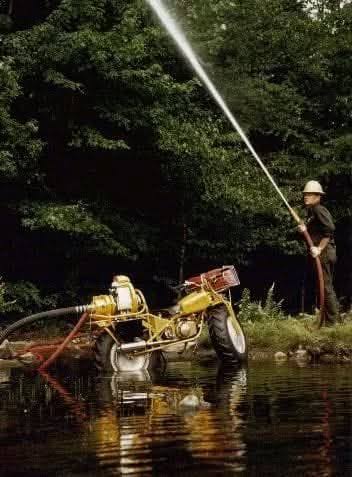
That makes the current model an interesting reuse of an old Rokon name. The original Fire-Ranger was configured to help forestry crews reach remote fires and operate pumping equipment; the modern version, introduced in 2024, shifts the emphasis toward search and rescue, carrying medical gear and towing an injured patient out of difficult terrain.
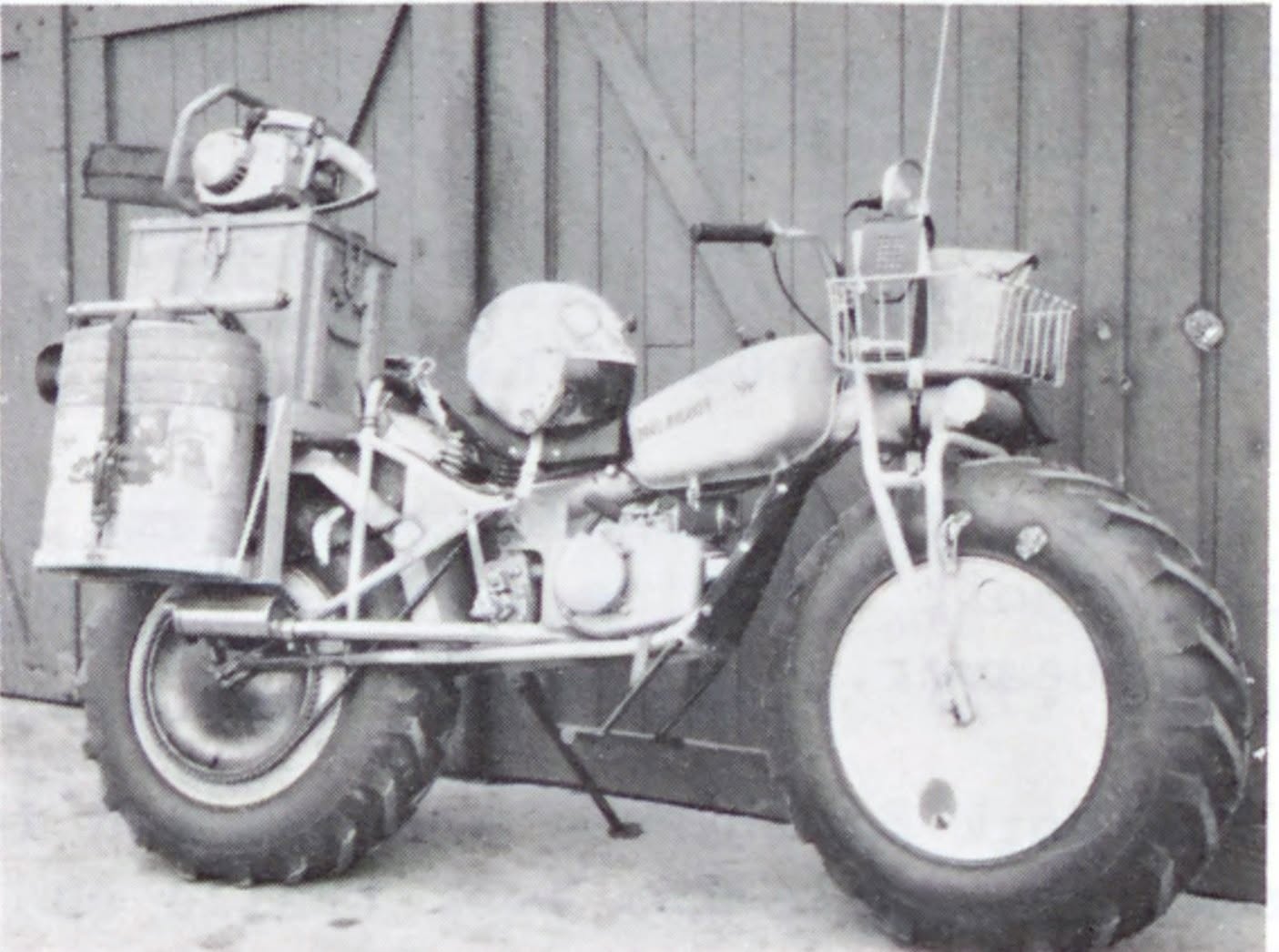
So while today’s Fire-Ranger doesn’t carry a fire-suppression system as standard equipment, the name isn’t merely a reference to fire departments. Earlier Rokons bearing the name were genuinely equipped for firefighting duties.
Why Call It the Fire-Ranger?
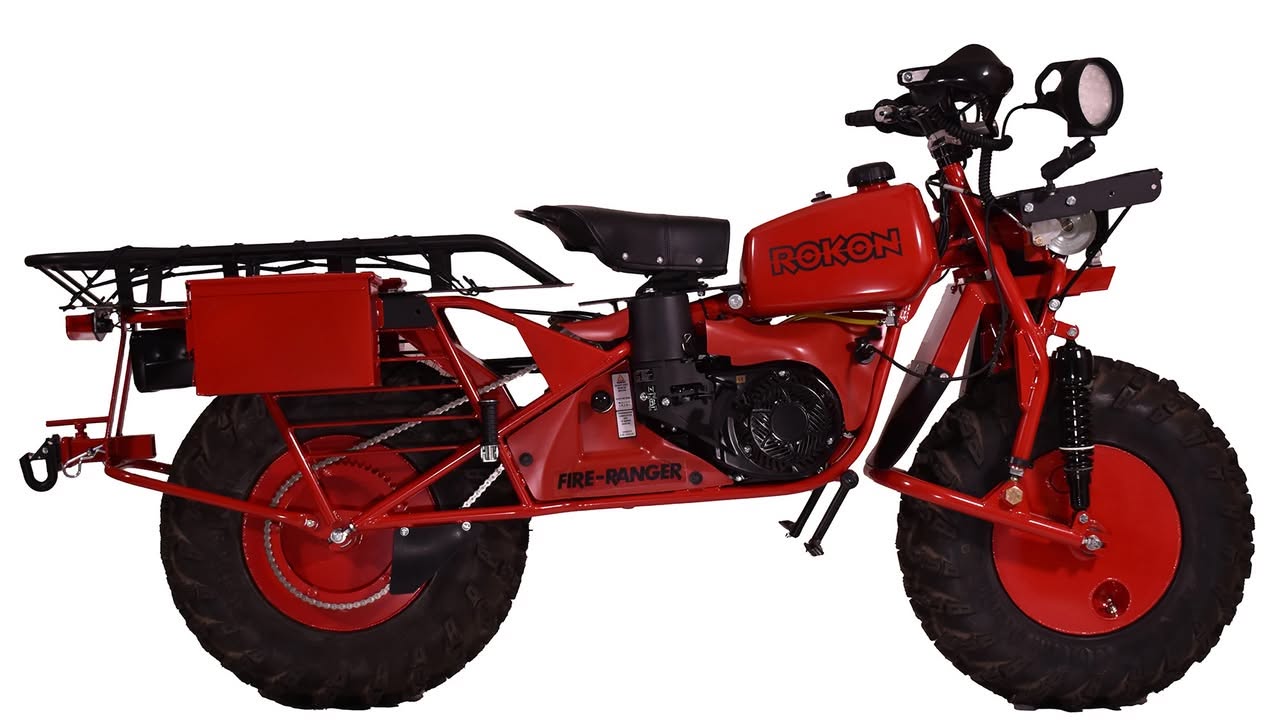
The name can initially be misleading. Nothing in the standard Fire-Ranger package is specifically designed to extinguish a fire. There is no onboard water tank, pump, or hose system, although the hollow wheels can carry liquids and the motorcycle’s power takeoff potentially lends itself to specialized equipment. Instead, the name reflects its intended customers: fire departments, rescue squads, and other first-response organizations whose responsibilities often extend far beyond fighting structure fires.
A rural or mountain fire department may respond to injured hikers, mountain-bike crashes, lost persons, wilderness medical calls, and incidents miles from a road. For those situations, reaching the patient can be one of the hardest parts of the rescue. Getting the patient back out can be harder still. The Fire-Ranger is designed around both problems.
Customer Improvisation to Factory Model
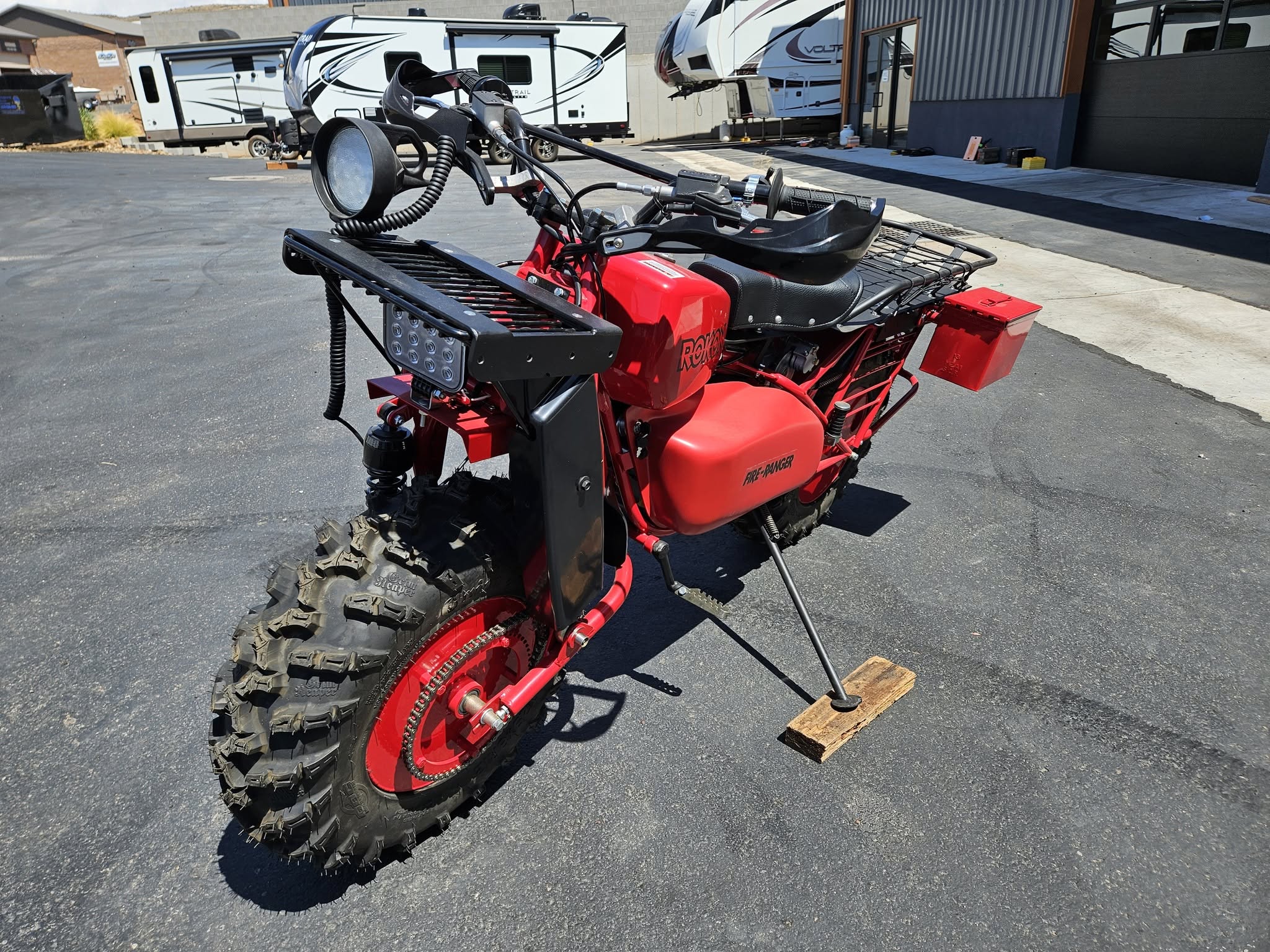
There is something appropriately Rokon-like about the Fire-Ranger’s development. The company didn’t identify an entirely new market and then design an elaborate new machine for it. Customers had already figured out the use. First responders were taking the Trail-Breaker’s existing combination of narrow dimensions, two-wheel drive, low gearing, and towing ability and adapting it to patient extraction.
Rokon watched what they were doing, then packaged the necessary accessories and developed a trailer system specifically around the job. The modern Fire-Ranger package debuted as a factory model in 2024. It remains in Rokon’s lineup at $10,875 before the optional Rescue-Utility Trailer, which starts at $2,000. That makes it significantly more expensive than a basic dirt bike but far cheaper and much narrower than many specialized rescue UTVs.
Built for the Worst Part of the Trail
The Fire-Ranger isn’t fast. It has seven horsepower, a rigid rear end, enormous agricultural-looking tires, and a maximum speed of roughly 35 mph. None of those things matter much when the trail is six feet wide, covered in rocks, climbing a muddy hillside, and an injured rider needs to be carried three miles back to the road. That’s where the Rokon concept starts making sense.
Full-time two-wheel drive helps it keep moving. Low gearing lets it crawl. Its narrow footprint lets it travel on single-track trails. Racks and boxes carry rescue equipment, while the articulated trailer provides a way to transport the patient without requiring a team of people to carry a litter the entire distance.
It’s less a motorcycle built for riding into the wilderness than a compact rescue machine that happens to balance on two wheels.
2026 Rokon Fire-Ranger Specifications
| Specification | Details |
|---|---|
| Base motorcycle | Rokon Trail-Breaker |
| Engine | Kohler air-cooled four-stroke single |
| Displacement | 208cc |
| Power | 7 hp @ 3,600 rpm |
| Torque | 9.1 lb-ft / 12.4 Nm @ 2,800 rpm |
| Drive | Full-time front and rear wheel drive |
| Transmission | Automatic torque converter, three-range selector |
| 1st gear | 0-10 mph |
| 2nd gear | 0-20 mph |
| 3rd gear | 0-35 mph |
| Front suspension | Rokon AutoGrab |
| Rear suspension | Rigid |
| Brakes | Hydraulic discs, front and rear |
| Wheels | 12-inch hollow aluminum drums |
| Tires | 25 x 8 x 12 radial |
| Wheelbase | 51 in |
| Ground clearance | 15 in |
| Seat height | 32.5 in |
| Fuel capacity | 2.69 US gal |
| Base dry weight | 218 lb |
| Grade rating | 60 percent |
| Fording depth | 24 in |
| PTO | Up to 7 hp |
| Motorcycle towing rating | Up to 2,000 lb |
| Rescue-Utility Trailer capacity | 300 lb |
| Rescue-Utility Trailer weight | 50 lb |
| Fire-Ranger debut | 2024 |
| 2026 base price | $10,875 |
More 2WD Motorcycles
 Rokon Fire-Ranger: The 2WD Search-and-Rescue Motorcycle - Full-time two-wheel drive. 15 inches of ground clearance. A 2,000-pound towing rating. And a rescue trailer designed to carry an injured patient out of terrain too narrow for a conventional ATV… The Rokon Trail-Breaker has […]
 Rokon Trail-Breaker: The 2WD Motorcycle That Floats - Two-wheel drive. Hollow drum wheels. Seven horsepower. More than 60 years after Charles Fehn conceived it, the Rokon Trail-Breaker is still being built in New Hampshire… Most motorcycles are designed around some combination of speed, […]
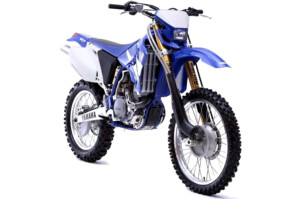 2WD Dakar Legend: Yamaha WR450F 2-Trac - Remembering Yamaha x Öhlins’ Hydraulic 2WD Enduro… Every so often, a motorcycle appears that seems to point toward an entirely different future. The Yamaha WR450F 2-Trac was one of those machines. At first glance, it […]
 2WD Hayabusa: Suzuki GSX-R1300 NUDA - A 2WD ‘Busa from Suzuki! Suzuki has announced plans to launch a production version of their two-wheel-drive GSX-R1300 NUDA for 2024, utilizing the 1340cc liquid-cooled inline four-cylinder engine from the Suzuki GSX1300R Hayabusa. The most […]
 Yamaha WR450F 2-Trac (2WD) by Deus Italy - In the mid-2000s, Yamaha produced a limited series of Yamaha WR450F 2-Trac rally bikes. These competition-only machines offered a 2WD system developed by Ohlins, which featured a patented hydraulic drive that could deliver up to […]


